 Bellingham Siding
 Roofing in Silver Beach Isn't the Same as Roofing Inland
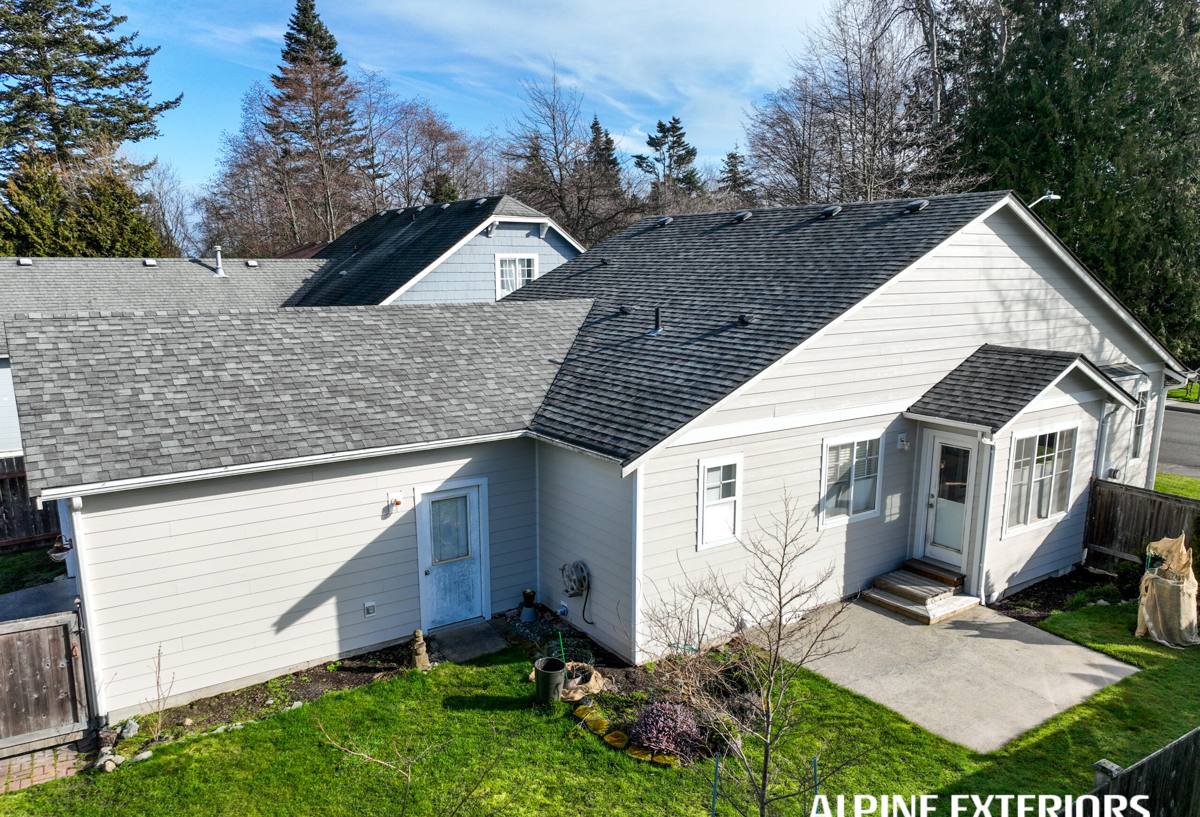
Silver Beach sits close enough to the water that the air itself works against a roof. Salt-laden moisture drifts in off Bellingham Bay, settles on shingles and metal flashing, and slowly accelerates corrosion and granule wear in ways that inland Whatcom County neighborhoods don't experience at the same rate. Add driving, wind-blown rain that finds every weak seam, and a wet season that stretches long enough for moss and algae to take hold on north-facing slopes, and you have a roofing environment that rewards careful material choices and correct installation detail far more than it rewards the cheapest bid.
This page is about one job in one neighborhood: asphalt shingle roofing for Silver Beach homes. Not a general overview of every roofing product we offer, but a straight explanation of what this climate does to a shingle roof, what a properly built roof needs to hold up here, and how we approach the work.
What Salt Air, Rain, and Moss Actually Do to a Shingle Roof
Salt Air and Metal Components
Asphalt shingles themselves tolerate salt air reasonably well, but the metal parts of a roofing system — nails, flashing, drip edge, vent stacks — are where salt exposure shows up first. Untreated or lower-grade fasteners can corrode faster near the water, and corroded fasteners lose their grip long before the shingles around them wear out. This is why fastener selection and flashing material matter more here than they would forty minutes inland.
Driving Rain and Wind-Driven Water
Bellingham's weather regularly pushes rain sideways during winter storms, which means water doesn't just fall on a roof — it gets forced up and under shingle edges, around chimneys, and along valleys. A roof that would perform fine under straight-down rain can still leak if the underlayment and flashing weren't built to handle wind-driven moisture. Silver Beach's exposure to weather coming off the water makes this a real, ongoing consideration rather than a rare storm-event concern.
The Long Moss Season
Moss and algae need shade, moisture, and time — and Whatcom County's long, wet stretch from fall through spring gives them plenty of all three. North- and east-facing roof slopes, areas under tree cover, and roofs with poor airflow underneath the decking are the most common trouble spots. Moss doesn't just look bad; as it grows it holds moisture against the shingle surface and can lift shingle edges over time, which shortens the roof's working life if it's left unaddressed.
What a Correctly Installed Roof Needs Here
A shingle roof built for Silver Beach isn't a different product line — it's the same asphalt shingle system installed with extra attention to the details that matter in this climate.
- Ice and water shield at eaves and valleys — a self-adhering waterproof membrane installed under the shingles at the roof's most vulnerable points, where wind-driven rain and ice-related backup are most likely to find a way in.
- Corrosion-resistant fasteners and flashing — hot-dip galvanized or better-grade metal for nails, step flashing, and drip edge, chosen specifically because of the salt air exposure this close to the water.
- Proper underlayment coverage — a synthetic or felt underlayment layer across the full deck, not just at the edges, so the roof has a second line of defense if wind ever drives water past the shingles themselves.
- Balanced attic ventilation — intake at the eaves and exhaust at the ridge, sized correctly for the roof, so moisture from inside the house doesn't condense against the underside of the decking during our wet months.
- Algae-resistant shingle granules — most major manufacturers now build algae-resistant technology into their granule coating, which slows the blue-green algae staining that shows up on shaded, moisture-prone slopes.
None of this is exotic. It's standard, well-understood roofing practice — the difference is simply installing every one of these details correctly, every time, because in this location the consequences of skipping one show up faster.
Choosing the Right Shingle for This Climate
Homeowners often ask whether they need a "special" shingle for a coastal-adjacent property. The honest answer is that the shingle line matters less than the installation quality underneath it — but shingle type still affects how the roof handles moss, wind, and wear over time.
| Shingle Type | Best Suited For | Moss & Algae Behavior | Wind Performance |
|---|---|---|---|
| 3-tab (standard) | Budget-conscious replacements, secondary structures | Adequate with algae-resistant granules; flatter profile sheds moss growth less effectively | Lower wind ratings than architectural options |
| Architectural / laminate | Primary residences, most Silver Beach homes | Thicker profile and better granule adhesion; performs well with algae-resistant coating | Higher wind ratings, better for exposed, water-facing slopes |
| Premium / designer laminate | Homes wanting a heavier, dimensional look | Best granule retention over time; strong moss resistance when combined with good airflow | Among the highest wind ratings in asphalt shingle lines |
For most Silver Beach homes, we recommend architectural shingles as the practical middle ground: meaningfully better wind performance and granule durability than 3-tab, at a cost premium that's usually modest relative to the total project. We'll walk through the actual options and pricing for your roof during the estimate rather than push one line by default.
How We Approach an Asphalt Shingle Roofing Project
1. Roof Assessment
We start by inspecting the current roof — deck condition, existing ventilation, flashing points, moss coverage, and any soft or spongy areas that signal trapped moisture. This tells us whether the project is a straightforward re-roof or whether deck repair needs to happen first.
2. Tear-Off and Deck Inspection
We remove the old roofing down to the deck rather than layering over it. This lets us actually see the plywood or plank decking underneath, replace any sections that have rotted or delaminated, and confirm the deck is solid before anything new goes on.
3. Underlayment and Waterproofing
Ice and water shield goes down first at eaves, valleys, and any roof penetrations, followed by full-deck underlayment. This is the layer that does the real waterproofing work if wind-driven rain ever gets past the shingles.
4. Flashing and Ventilation Work
New drip edge, step flashing, and vent boots go in using corrosion-resistant materials. We also correct or install intake and exhaust ventilation as needed — this step gets skipped by less careful crews, and it's one of the most important for long-term moss control and deck health.
5. Shingle Installation
Shingles are installed to manufacturer nailing specifications — correct nail count, placement, and exposure — because under-nailing is one of the most common causes of early wind damage on coastal-adjacent roofs.
6. Final Walkthrough
We walk the finished roof and the site with the homeowner, confirm cleanup is complete, and go over care and maintenance expectations specific to a Silver Beach property.
Maintenance That Actually Matters in Silver Beach
A well-installed roof still benefits from basic seasonal attention in this climate, particularly because of the moss season and salt air exposure.
- Have gutters and downspouts cleared before the fall rains start, so water isn't backing up under the roof edge.
- Have moss growth treated or gently removed before it spreads across a full slope — early, light treatment is far less disruptive than removing established moss later.
- Check attic ventilation isn't blocked by insulation, storage, or debris; poor airflow accelerates both moisture buildup and moss growth from underneath.
- After major windstorms, do a visual check (from the ground) for lifted or missing shingles, especially on water-facing slopes.
- Have flashing around chimneys, skylights, and vent penetrations checked every few years, since these are the first places a slow leak tends to start.
What Affects the Cost of a Silver Beach Roofing Project
| Factor | Why It Matters Here |
|---|---|
| Roof size and pitch | Steeper roofs and larger square footage take more material and labor time regardless of location |
| Current deck condition | Moisture-related rot from trapped rain or poor prior ventilation may require deck replacement before shingles go on |
| Shingle line selected | 3-tab, architectural, and premium laminate shingles carry different material costs and wind/moss performance |
| Flashing and fastener grade | Higher-corrosion-resistance materials cost more up front but reduce salt-air related failures over the roof's life |
| Ventilation upgrades | Adding or correcting intake/exhaust ventilation is a smart pairing with a re-roof, since the deck is already exposed |
| Access and site conditions | Tree cover, steep lots, and tight access near the water can add time to tear-off and material staging |
We won't quote a number without seeing the roof, but these are the honest variables that move a bid up or down. Any contractor who gives you a firm price over the phone, sight unseen, isn't looking closely enough at the roof you actually have.
Why It Matters to Hire a Crew That Already Works Silver Beach
A roofing crew that regularly works this specific stretch of Bellingham already knows which slopes tend to hold moss, how far wind-driven rain typically pushes water under an eave, and which flashing and fastener grades hold up against the salt air here versus a roof five miles inland. That familiarity shows up in fewer callbacks and a roof that's built for the conditions it will actually face, not a generic textbook installation.
It also means a crew that understands Whatcom County permitting and inspection expectations, works efficiently around this region's weather windows for tear-off and installation, and can speak plainly about trade-offs instead of upselling products that aren't necessary for your specific roof and slope orientation.
Ready for a Straight Answer About Your Roof?
If you're dealing with moss buildup, granule loss, a roof nearing the end of its service life, or you just want an honest read on where your roof stands, we're happy to take a look. Request a free, no-pressure estimate using the form below and we'll walk the roof with you and lay out real options — no obligation attached.