 Bellingham Siding
 Windows Built for South Hill's Exposure
South Hill sits up above the flatter parts of Bellingham, which means most homes here catch more wind and more weather than houses tucked into a valley or shielded by tree cover. That elevation is part of what makes the neighborhood desirable — the views, the light, the breeze on a summer evening — but it's also exactly why windows fail here faster than a generic product spec sheet would suggest. A window rated for a mild inland climate on paper can still struggle once it's facing sustained wind-driven rain and salt-laden air off Bellingham Bay year-round.
Salt air off the bay
Whatcom County's marine air carries fine salt particulate that settles on exterior surfaces and slowly works into metal fasteners, weep systems, and low-grade hardware. On a hill lot with more open exposure, that salt load is higher than it would be a few blocks inland. Over years, it corrodes cheap cranks, hinges, and screws, and it accelerates finish breakdown on lower-quality vinyl and aluminum frames.
Driving rain, not just rain
Bellingham gets plenty of straight-down rain, but the rain that damages windows is the wind-driven kind — rain pushed sideways into a wall assembly under pressure. On an exposed hill site, wind-driven rain finds every gap in flashing, every under-caulked joint, and every window that wasn't shimmed and sealed correctly. A window can be excellent hardware and still leak if it was installed as though the site were sheltered.
A long moss season
Whatcom County's moss season runs long — shaded north sides, tree-canopy lots, and damp sills all favor it. Moss and algae hold moisture against sills, trim, and cladding far longer than a dry surface would, which is exactly the condition that rots wood trim and stains vinyl and fiberglass finishes. Window trim details that shed water quickly, rather than trapping it, matter more here than in a drier climate.
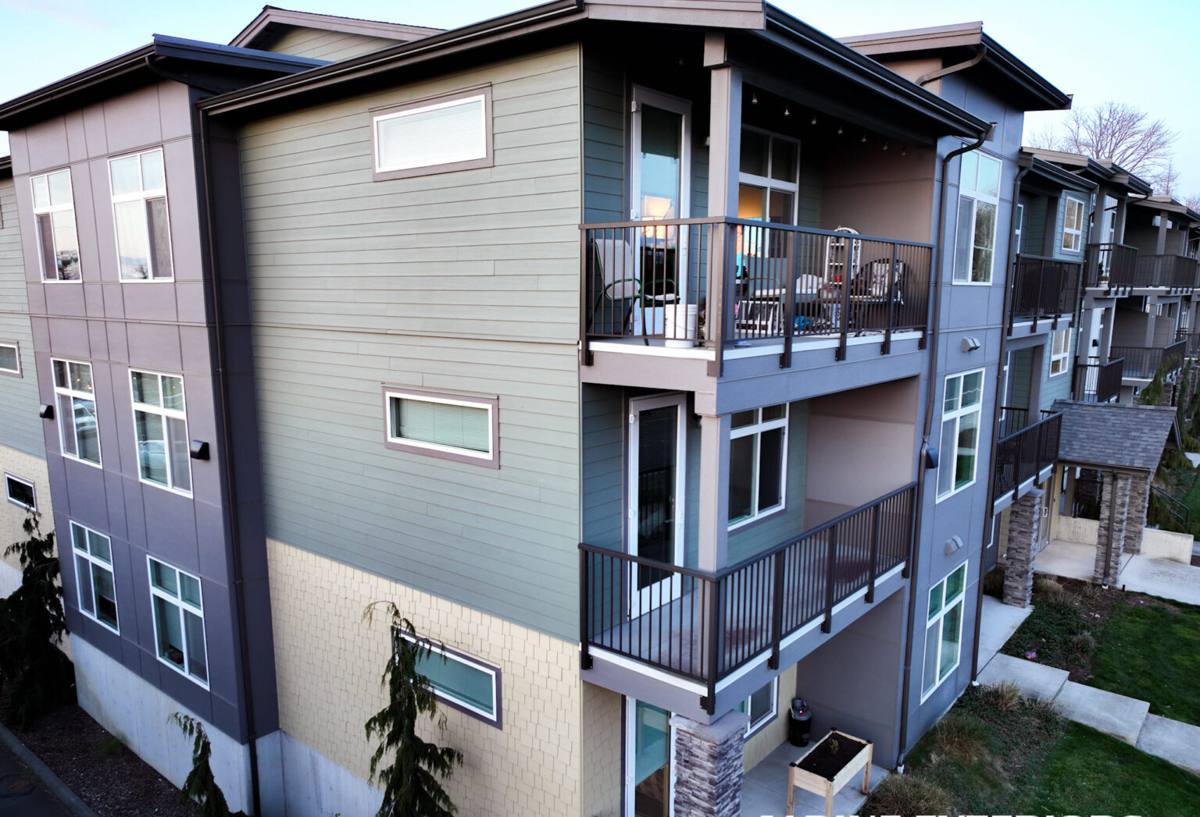
What "Custom" Actually Means on a South Hill Home
"Custom" doesn't have to mean an unusual shape or a premium price tag — most of the custom windows we install on South Hill are custom because the home demands it, not because the homeowner wanted something exotic. Older houses in this part of Bellingham often have rough openings that were never perfectly square to begin with, settled over decades, or built to dimensions that simply don't match anything off a shelf. Retrofitting those openings correctly, rather than forcing a stock size and papering over the gaps, is what "custom" means in practice.
It also means matching the character of the house. A lot of South Hill homes have real architectural detail — divided lites, distinct trim profiles, specific sightlines from room to room — and a window that's technically well-built but visually wrong for the house is still a bad outcome. We measure and spec for the opening and the house, not for whatever's fastest to order.
Choosing the Right Window Materials for This Climate
There's no single "best" window material — there's a best material for a given exposure, budget, and how much upkeep a homeowner wants to do. Here's how the common options actually perform on a marine-exposed hill site like South Hill.
| Material | Moisture & salt-air resistance | Maintenance | Typical lifespan |
|---|---|---|---|
| Vinyl (quality-grade) | Good — won't rot or corrode, but lower-grade vinyl can warp with sun/temperature swings | Low | 20-30 years |
| Fiberglass | Very good — dimensionally stable, holds up well to wind and moisture cycling | Low | 30-40+ years |
| Aluminum-clad wood | Good on the exterior face; wood interior needs the seal maintained | Moderate | 25-35 years, dependent on seal upkeep |
| Bare wood | Weakest in this climate unless finish is maintained religiously | High | Highly variable |
We steer most South Hill customers toward fiberglass or a solid vinyl line for full sun/weather exposures, and reserve wood-look or clad-wood options for covered porches, sheltered elevations, or homes where matching original wood trim is the priority. That's a maintenance and moisture-behavior call, not a brand preference — any material can be a poor fit if it's put in the wrong location on the house.
Glazing and Performance Choices That Matter Here
Glass and gas-fill specs matter as much as the frame material, especially with the temperature and humidity swings this region sees between a cold, damp winter and warmer, drier stretches in summer.
- Low-E coatings reduce heat loss through the glass in winter and heat gain in summer — worth having on every window, not just south-facing ones, given how much overcast, diffuse light Bellingham gets.
- Argon or krypton gas fill between panes improves insulation value over plain air fill, at a modest cost difference.
- Double-pane vs. triple-pane — double-pane with a good Low-E coating is adequate for most South Hill homes; triple-pane earns its extra cost mainly on north- or west-facing rooms that take the brunt of the weather, or for homeowners prioritizing sound reduction from wind and traffic.
- Condensation resistance is a real spec (not marketing language) — ask for the CR rating on any window you're comparing, since interior condensation on cold, humid mornings is a common complaint in this climate and a higher CR rating directly reduces it.
Installation Details That Prevent Failures
Most window failures we get called out to fix aren't product failures — they're installation shortcuts that only show themselves after a few wet seasons. On an exposed hill lot, there's no margin for skipping these steps.
- Sloped sill pan flashing so any water that gets past the window drains back out, not into the wall cavity
- Proper head, jamb, and sill flashing sequenced correctly (shingle-style, water always directed outward and downward)
- Backer rod and quality exterior sealant at the frame perimeter — not sealant alone spanning a gap it wasn't designed to bridge
- Correct shimming so the frame isn't racked, which stresses seals and hardware over time
- Insulation in the gap between frame and rough opening, sized so it doesn't compress the frame
- Interior air-sealing, not just exterior weatherproofing — both sides matter for keeping moisture out of the wall assembly
Our Process for South Hill Projects
- On-site assessment — we look at the existing opening, framing condition, current water damage (if any), and how that elevation and orientation of the house sees weather.
- Measurement and product selection — precise measurements of each opening, and a materials/glazing recommendation based on that specific wall's exposure, not a one-size answer for the whole house.
- Permitting — replacement windows in existing openings typically don't require a permit in Bellingham, but structural changes, egress changes, or new openings do; we handle that determination and any Whatcom County or City of Bellingham paperwork it requires.
- Installation — removal of the old unit, inspection and repair of any hidden rot or damage found in the opening, correct flashing and sealing, and setting the new window plumb, level, and square.
- Interior and exterior finish work — trim, caulking, and paint or stain matching so the finished opening looks intentional, not patched.
- Walkthrough and warranty paperwork — we go over the operation of each window and what maintenance it needs, and make sure product and labor warranty information is in your hands.
Common Problems We Get Called to Fix on South Hill
A lot of our work in this neighborhood is repair-driven replacement — homeowners who noticed a problem and want it done right this time.
| Symptom | Usual cause | What correct repair/replacement involves |
|---|---|---|
| Soft or rotted sill/trim | Moisture trapped by moss, failed caulk joints, or missing sill flashing | Remove and inspect framing for hidden rot, replace flashing, install new sill pan, then new window and trim |
| Fogged or hazy glass | Failed seal on an older double-pane insulated glass unit | Full sash/unit replacement — a failed seal can't be reliably resealed |
| Drafts around the frame | Missing or compressed weatherstripping, poor original shimming, or gaps in insulation | Reset and re-air-seal, or replace if the frame itself is warped |
| Water staining on interior sill or wall below window | Wind-driven rain bypassing inadequate exterior flashing/sealant | Correct flashing detail at reinstall, not just a caulk touch-up |
Maintaining Custom Windows in This Climate
Even a well-installed, quality window benefits from a little seasonal attention in a climate like this one:
- Rinse salt residue and grime off frames and glass a couple of times a year, especially on exposed elevations
- Keep moss and organic debris cleared from sills, tracks, and weep holes so drainage paths stay open
- Check and refresh exterior caulk lines every year or two — sealant is a wear item, not a permanent fix
- Operate hardware (cranks, locks, hinges) periodically through the wet months so components don't seize
- Watch for early water staining on interior sills — it's far cheaper to address a small leak than a rotted opening
Why Hiring a Crew That Already Works South Hill Matters
South Hill's older housing stock, hillside lot access, and mix of covered and fully exposed elevations all shape how a window job actually gets done — scaffolding or lift access on a steep lot, scheduling around Bellingham's wetter stretches, and knowing which elevations on a typical South Hill house take the worst of the weather. A crew that's worked this specific neighborhood isn't guessing at any of that on your job. We also know what a City of Bellingham permit reviewer will and won't flag on a window replacement versus a structural change, which keeps straightforward jobs straightforward.
Beyond logistics, it's about accountability. We stand behind flashing and sealing details that don't show up again until the first hard winter storm tests them — that's not something a homeowner can verify at the time of installation, which is why who you hire matters as much as what window you buy.
If you're weighing a window project on a South Hill home, we're happy to take a look and give you a straightforward, no-pressure estimate — including an honest read on whether repair, partial replacement, or full replacement is the right call for your situation. Reach out using the form below to get started.