 Bellingham Siding
 South Hill's Setting Makes Siding Choice a Bigger Deal Than People Think
South Hill sits above downtown Bellingham, with homes catching wind and weather that lower, more sheltered parts of the city don't see as directly. That elevation and exposure is a mixed blessing — it's part of why people love living up here, and it's exactly why siding on South Hill homes takes more of a beating than siding on a house tucked into a flat, tree-shaded lot a mile inland. Wind-driven rain off Bellingham Bay hits these homes at angles that flat siding installs and short trim details weren't built to handle. Add Whatcom County's long wet season and the salt-laden air that comes with living near the water, and you've got a climate that actively hunts for weak points in a home's exterior.
We install James Hardie fiber cement siding exclusively, and South Hill is one of the neighborhoods where that decision shows up the fastest. Homeowners here don't need a siding product that looks good in a showroom — they need one engineered for sustained moisture exposure, salt air, and a moss season that can run from October through May in a bad year.
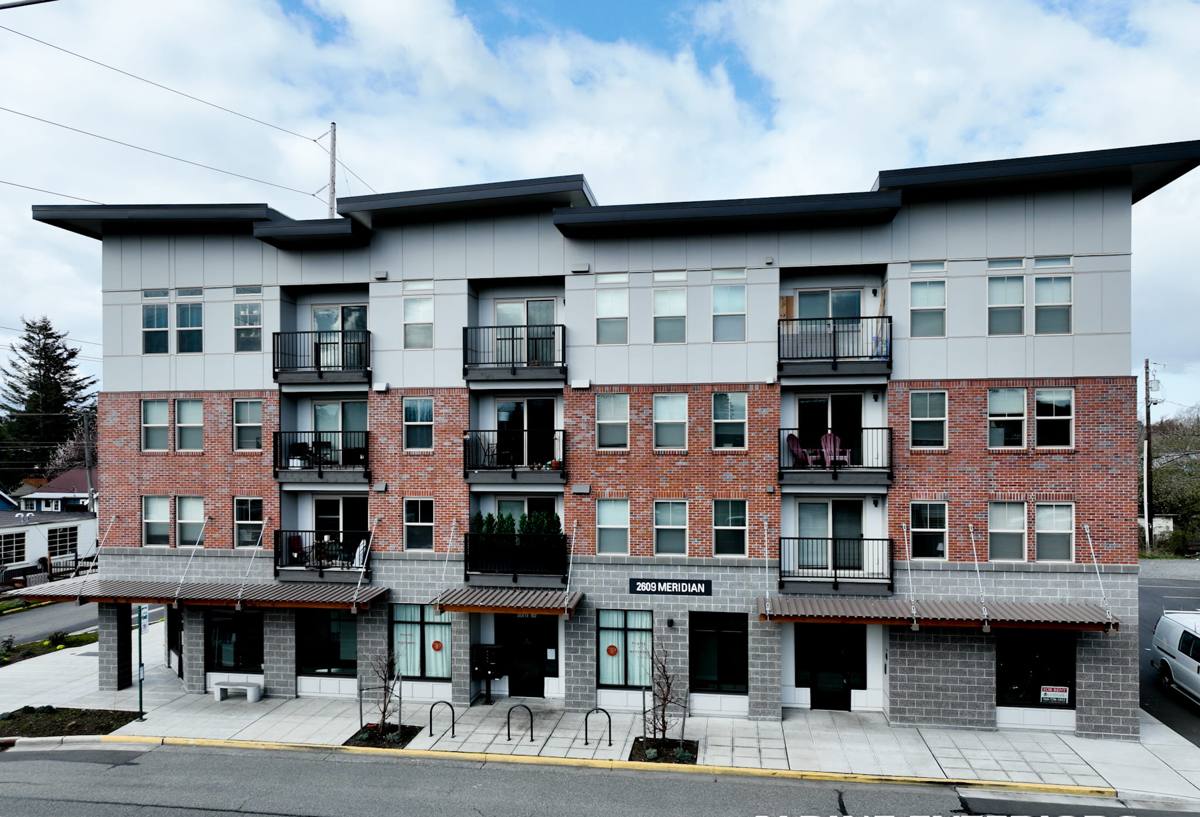
What South Hill's Climate Actually Does to a Home's Exterior
Wind-Driven Rain and Elevation
Rain that falls straight down is easy on siding. Rain that gets pushed sideways by wind coming off the water is not — it finds gaps at trim joints, works its way behind loose caulk, and wicks into any seam that wasn't detailed correctly. Hillside homes with less wind protection from surrounding structures or terrain take more of this than homes lower in the valley.
Moss and Shade
Many South Hill lots carry mature trees and established landscaping, which is part of the neighborhood's character but also means siding on north-facing walls and shaded elevations rarely gets a chance to dry out fully between rain events. That's the exact condition moss and algae need to take hold, and it's a slower, quieter kind of damage than a leak — it holds moisture against the surface for months at a time.
Salt Air
Proximity to Bellingham Bay means airborne salt is a constant, low-level factor in how fast fasteners corrode, how paint film holds up, and how wood-based products swell and shrink. It's rarely dramatic on its own, but over a decade or two it compounds every other weakness in a siding system.
Why We Standardized on James Hardie for Homes Like These
James Hardie fiber cement is manufactured in HardieZone formulations engineered specifically for wet, marine-influenced climates like ours — that's the HZ5 product line used throughout Western Washington. It's non-combustible, dimensionally stable in a way wood-based and wood-adjacent products aren't, and it carries a factory-applied ColorPlus finish baked on under controlled conditions rather than field-applied after installation. That matters directly for a neighborhood like South Hill: a finish that's already cured and bonded before it ever sees Whatcom County weather holds up to salt air and driving rain far better than a coating applied on-site and left to cure outdoors.
We don't install LP SmartSide, vinyl, Cemplank, Allura, primed spruce, or cedar. Each of those has legitimate uses somewhere, but on hillside, moisture-exposed, salt-air homes we've made the call that the trade-offs — moisture sensitivity, maintenance burden, weaker factory finishes, or shorter real-world service life in this specific climate — aren't worth it. James Hardie, installed correctly, is what we're willing to stand behind here.
What "Correct Installation" Actually Means on a Job Like This
Fiber cement siding fails less often because of the material and more often because of how it was hung. On South Hill homes specifically, we pay close attention to the details that matter most in wind-driven rain and shaded, moss-prone conditions:
- Proper drainage plane and weather-resistive barrier behind the siding, not just tacked over old sheathing
- A rainscreen gap or approved furring where conditions call for it, so any moisture that gets behind the siding can actually drain and dry
- Correct minimum clearance from grade, decks, and roof lines — a spec that gets skipped constantly and is one of the top causes of rot at the bottom course
- Flashing at every window, door, and horizontal trim intersection, not just caulk standing in for flashing
- Manufacturer-specified fastener type and placement, since the wrong nail pattern voids warranty coverage and invites early corrosion in salt air
- Factory-cut and factory-primed edges sealed at every field cut, so exposed cut ends aren't left to absorb water
- Joint and butt-seam treatment that accounts for expansion and contraction rather than caulking everything solid
Skip two or three of those and the siding can still look right for a few years — the failures on a poorly installed job usually show up as rot, staining, or bowed boards three to seven years in, well after the crew that did the fast, cheap version is gone.
How We Approach a South Hill Project
Assessment First
We start by walking the exterior and identifying exposure patterns specific to that lot — which elevations take the brunt of wind-driven rain, which walls stay shaded and damp longest, and what condition the sheathing and framing are in underneath the existing siding. On a hillside lot, that assessment also has to account for how water moves across the site, not just how it falls.
Tear-Off and Inspection
We don't panel over existing siding. Full tear-off lets us inspect sheathing, framing, and flashing for hidden rot or moisture damage before anything new goes up — problems that are cheap to fix while the wall is open and expensive to fix later.
Installation to Spec
Drainage plane, flashing, fastening, and joint details are done to James Hardie's published installation requirements for our climate zone, not shortcuts that happen to look finished from the curb.
Final Walkthrough
We walk the finished job with the homeowner, check caulk lines, trim reveals, and touch-up paint at any field cuts, and make sure everything matches what was scoped before we call it done.
James Hardie Product Lines for South Hill's Mix of Home Styles
South Hill has a real mix of housing stock — older homes with traditional lap siding, some with shingle-style detailing, and newer construction with cleaner panel lines. James Hardie's product lines cover that range without forcing every home into the same look.
| Product | Look | Best Fit |
|---|---|---|
| HardiePlank Lap Siding | Traditional horizontal lap, multiple textures and reveal widths | Most South Hill homes, especially traditional and craftsman-influenced styles |
| HardieShingle | Staggered or straight-edge shingle profile | Homes with shingle-style gables or accent areas |
| HardiePanel | Vertical panel with battens or smooth reveal | Modern builds, accent walls, garages, and outbuildings |
| HardieTrim | Smooth or woodgrain trim boards | Window and door surrounds, fascia, corner boards on any of the above |
Every one of these is available with a factory ColorPlus finish in a range of colors engineered to hold up under UV and moisture exposure, which matters more on south- and west-facing walls that take direct sun between rain systems than it does on a shaded, moss-prone wall — different elevations on the same house can genuinely benefit from different color and texture choices.
What Drives Cost on a South Hill Siding Job
Every home is different, and we won't quote a number without seeing the actual site, but the factors that move a South Hill project up or down in cost are fairly consistent:
| Factor | Why It Matters |
|---|---|
| Site access and slope | Steep or tight hillside lots take longer to stage material and scaffold safely |
| Tear-off scope | Full removal of old siding and any needed sheathing repair adds labor but is not optional for a correct install |
| Story height and roof lines | Multi-story hillside homes with complex rooflines require more staging, flashing detail, and trim work |
| Trim and detail complexity | Homes with shingle accents, multiple reveals, or heavy trim take more labor per square foot than a simple lap job |
| Hidden damage found at tear-off | Rot or moisture damage discovered once old siding comes off adds repair cost before new siding can go on |
Keeping Moss and Moisture From Winning Long-Term
Even correctly installed siding needs a little homeowner attention in a climate like ours, especially on shaded elevations. None of this is heavy maintenance — it's mostly about not letting small problems sit through an entire wet season.
- Rinse siding annually, focusing on shaded, north-facing, and tree-covered walls where moss and algae build up fastest
- Keep gutters clear so overflow doesn't run directly down a wall section
- Trim back vegetation and tree branches that keep siding shaded and damp longer than the rest of the house
- Check caulk at trim joints and penetrations every year or two and have it redone before it cracks and lets water in
- Have any impact damage or hairline cracks repaired promptly rather than waiting — small damage is a small repair, ignored damage becomes a moisture path
Why It Matters That We Already Work This Neighborhood
A crew that's worked South Hill's hillside lots knows the access challenges, the exposure differences between a view-facing wall and a shaded backyard wall, and the older housing stock's quirks before they ever start tear-off. That's not a marketing point — it's the difference between a crew that plans a job correctly from day one and one that discovers the site's problems mid-project. It also means we're not guessing at what this climate does to a home over ten or fifteen years; we're basing the install details on what we've actually seen hold up and what hasn't.
If you're weighing a siding replacement on a South Hill home, we're happy to walk the exterior with you, point out what your specific exposure and shading actually call for, and give you a straight, no-pressure estimate — no obligation, no pressure to sign anything on the spot. Use the form below to get started.