 Bellingham Siding
 Roof Repair for South Hill Homes
South Hill sits up above downtown Bellingham with some of the best views in Whatcom County — and roofs up here earn every one of those views. The elevation and exposure that make the neighborhood desirable also mean more direct wind-driven rain off Bellingham Bay, more salt-laden air working on metal fasteners and flashing, and a shaded, tree-heavy tree canopy on many lots that keeps roofs damp long after a storm has passed everywhere else. We repair roofs on South Hill regularly, and the failures we find here follow a recognizable pattern tied directly to that combination of conditions.
This page is about roof repair specifically — patching, fixing, and extending the life of a roof that isn't ready for full replacement. If your roof is sound structurally but has a leak, damaged flashing, moss intrusion, or storm damage, repair is very often the right call, and doing it correctly the first time is what keeps it that way.
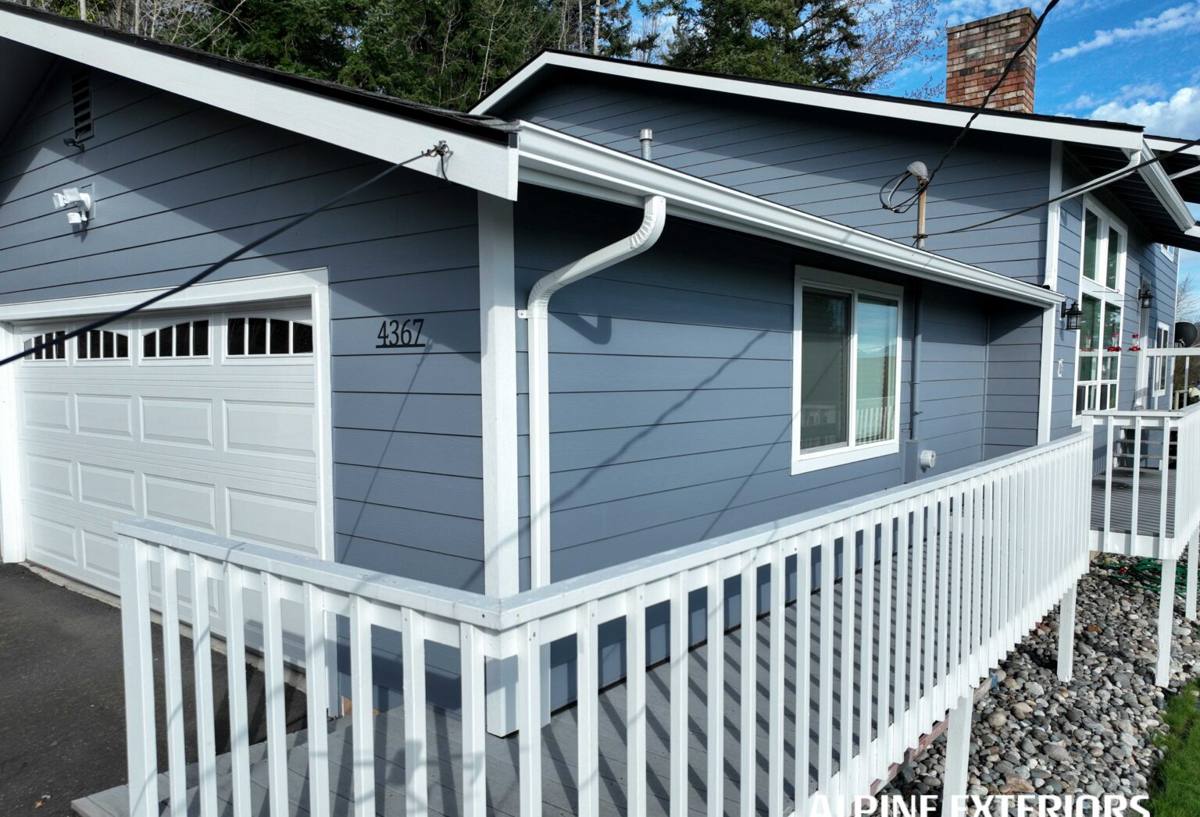
Why South Hill Roofs Wear the Way They Do
Every roof in Whatcom County deals with rain. What's different on South Hill is the combination of factors working on a roof at once:
- Salt air: Proximity to the bay accelerates corrosion on exposed nails, flashing, and metal roof panels — especially on the sides of the house that face the water.
- Driving rain: Elevation and open exposure mean rain hits roof planes at an angle more often, not just straight down. That pushes water into laps, seams, and flashing details that a flatter, more sheltered roof might never test.
- Long moss season: Mature trees and the region's mild, wet stretch from fall through spring keep north-facing and shaded roof sections damp for months at a time — ideal conditions for moss to establish and spread.
- Older housing stock: South Hill has a lot of established homes with roofs that have been re-covered or patched over the years. Older decking, older flashing details, and mismatched repair history all factor into how a current repair needs to be approached.
None of these on their own is unusual for this part of Washington. Together, on a hillside lot with tree cover, they shorten the interval between roof issues compared to a roof in a more sheltered, lower-elevation part of Bellingham.
Common Roof Problems We Fix in South Hill
Moss-Related Damage
Moss doesn't just look bad — it holds moisture against the roof surface, lifts shingle edges as it grows, and works its way under flap seams and into fastener lines. On older asphalt shingle roofs especially, a moss mat left too long can cause granule loss and soft spots in the decking underneath.
Flashing Failures
Flashing around chimneys, skylights, vent pipes, and roof-to-wall transitions is the single most common source of leaks we're called out for. Salt air speeds up corrosion on metal flashing and fasteners, and driving rain finds any gap that opens up.
Valley and Penetration Leaks
Roof valleys concentrate a lot of water flow, and any penetration — a vent, a pipe boot, a satellite mount — is a weak point. On a hillside home with more wind exposure, these spots take more abuse than they would on a sheltered roof.
Gutter Backup and Edge Rot
Tree cover means more debris in gutters. When gutters back up, water sheets back under the roof edge instead of draining, which leads to fascia and edge decking damage that shows up as a repair need even though the roof field itself may be fine.
What a Correct Repair Actually Involves
A roof repair that's done right starts with figuring out why the roof failed, not just patching where water is showing up inside. Water often travels along the underside of the roof deck before it drips somewhere visible, so the leak point and the drip point are frequently not the same spot. Our approach on every repair includes:
- A full inspection of the affected roof plane, not just the immediate leak area — problems on South Hill roofs are rarely isolated to one spot once moss or flashing corrosion is involved.
- Tracing the actual water path, including checking attic or interior framing where accessible, before deciding what gets replaced.
- Removing and replacing damaged decking, underlayment, and shingles or roofing material — not just sealing over the surface.
- Correcting flashing details properly, with new step flashing, counter-flashing, or pipe boots as needed rather than caulking over failing metal.
- Matching materials as closely as possible to the existing roof so the repair blends in and performs consistently with the surrounding field.
- Clearing moss and treating the surrounding area so the same failure doesn't recur in the same spot within a season or two.
Repair vs. Replacement: How We Help You Decide
| Situation | Repair usually makes sense | Replacement worth discussing |
|---|---|---|
| Leak location | Isolated to one flashing point, penetration, or valley | Multiple leaks across different roof planes |
| Decking condition | Solid, with only localized soft spots | Widespread soft or spongy decking |
| Roofing material age | Well within expected service life | At or past typical age for the material |
| Granule loss / wear | Localized to the damaged area | Widespread across most slopes |
| Moss history | First or infrequent occurrence | Repeated moss damage over several years |
We'll always tell you plainly which category your roof falls into. Most of the calls we get for "repair" genuinely are repairs — full replacement gets recommended only when a repair wouldn't hold or wouldn't be a responsible use of your money.
Our Repair Process
- Inspection and diagnosis. We get on the roof, examine the affected area and surrounding sections, and identify the actual source of the problem.
- Written scope and estimate. You get a clear explanation of what we found, what needs to be done, and what it costs before any work starts.
- Repair work. Damaged materials come out, the deck and underlayment are addressed, flashing is corrected, and new roofing material is installed to match.
- Moss and debris cleanup. We clear moss and debris from the repaired area and, where relevant, gutters and adjacent sections so water can actually drain the way it's supposed to.
- Final check. We walk the repair with you, confirm the area is sealed and finished correctly, and answer any questions about maintenance going forward.
What Affects the Cost of a South Hill Roof Repair
| Factor | Why it matters |
|---|---|
| Roof pitch and access | Steeper hillside roofs and limited access take more time and safety setup than a simple, accessible roof plane. |
| Extent of hidden damage | Decking and underlayment damage isn't visible until the roofing material is pulled back — the true scope sometimes grows once we're into it. |
| Material match | Matching an existing shingle color, profile, or metal panel style can affect sourcing and cost, especially on older roofs. |
| Number of flashing points | Chimneys, skylights, and multiple penetrations each add labor and material to a repair. |
| Moss severity | Light moss is a quick treatment; established moss mats require more thorough removal before repair work can even start. |
We don't quote a repair without seeing the roof. Anyone offering a firm price sight-unseen for South Hill's tree-covered, sloped lots is guessing.
Why a Crew That Already Works South Hill Matters
Roofing crews that mainly work flatter, more sheltered parts of Whatcom County can still do competent work, but they're not necessarily calibrated to how fast moss re-establishes under South Hill's tree cover, or how much extra attention salt-exposed flashing needs on the water-facing sides of the neighborhood. A crew that repairs roofs in this area regularly recognizes these patterns quickly, which means less time spent diagnosing and more time spent fixing the actual problem correctly the first time.
Local familiarity also means knowing what to expect from hillside access, tighter lot setbacks common in older South Hill construction, and coordinating work around mature trees without cutting corners on either the tree or the roof.
Between-Repair Maintenance Checklist
A repair lasts longer when the roof is kept ahead of the conditions that caused the problem in the first place. Between service calls, South Hill homeowners can extend a roof's life with a few habits:
- Clear gutters at least twice a year, more often if you have overhanging trees.
- Have moss treated before it establishes a thick mat, ideally before the wettest months set in.
- Trim back branches that keep a roof section shaded and damp longer than the rest of the roof.
- After any significant windstorm, do a visual check from the ground for lifted shingles or displaced flashing.
- Check attic ventilation periodically — poor ventilation traps moisture and accelerates deck and shingle deterioration from underneath.
If you're dealing with a leak, storm damage, or a roof that's showing its age on South Hill, we're glad to take a look and give you an honest read on what it actually needs. Request a free, no-pressure estimate using the form below.