 Bellingham Siding
 Why Barkley Homes Face Tougher Window Conditions Than Most
Barkley sits inside a stretch of Whatcom County where the weather rarely does anything extreme, but it also rarely lets up. Bellingham's marine climate means wind off the water carries salt-laden moisture well inland, driving rain comes in sideways more often than straight down, and a long, damp stretch from fall through spring keeps moss and algae growing on anything that stays wet. Windows sit right at the intersection of all three. A frame, sash, or sill that can't shed water fast, resist corrosion, and survive repeated wet-dry cycling will show its age years before it should.
This isn't a reason to panic about your windows — it's a reason to be specific about what you install and how it's flashed in. Custom windows done right for a Barkley home account for the direction the weather usually comes from, the amount of shade and moisture a particular elevation holds onto, and how the window ties into the rest of the wall assembly. Done wrong, even an expensive window will leak, fog, or rot at the sill within a handful of seasons.
What We Mean by "Custom" Windows
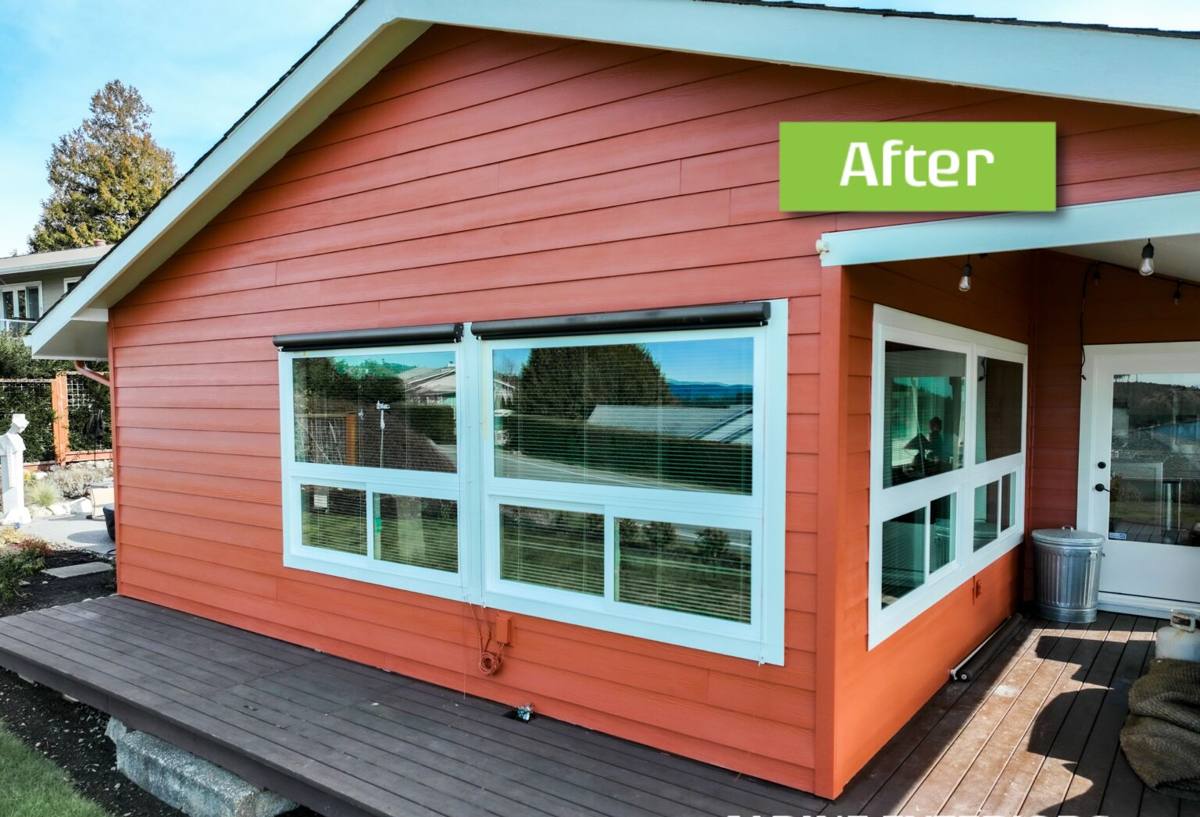
"Custom" doesn't necessarily mean unusual shapes, though we do those too. Most of the custom work we do in Barkley is custom-sized replacement: matching a window to a rough opening that doesn't match today's standard sizes, especially in homes built before manufacturers standardized dimensions. Retrofitting a modern, properly insulated window into an older opening without tearing the wall apart takes accurate measurement and the right frame style — insert (pocket) replacement versus full-frame, new-construction replacement.
Custom also covers matching sightlines and grid patterns across a home so new windows don't look like a patchwork of styles, building out picture windows or bay/bow configurations, and handling additions or remodels where the opening has to be built to spec rather than picked off a shelf. Whatever the shape, the goal is the same: a window built for that specific opening and that specific exposure, not a generic size that happens to fit close enough.
Common Reasons Barkley Homeowners Go Custom
- Older home with rough openings that don't match current standard window sizes
- Wanting to enlarge or reshape an opening for more light or a different look
- Replacing a failed bay, bow, or picture window that needs to be rebuilt to fit
- Matching new windows to existing grid patterns and trim on the rest of the house
- Room additions or renovations where openings are framed new, not inherited
Signs Your Windows Are Overdue for Replacement
Window failure in this climate is usually gradual and easy to write off as normal until it isn't. A few signs are worth acting on before they turn into wall or framing damage.
- Fogging or a permanent haze between the panes — the seal has failed and the insulating gas is gone
- Soft, discolored, or spongy wood at the sill or lower corners of the frame
- Visible gaps, drafts, or a cold spot you can feel standing near the window on a windy day
- Paint or finish that keeps failing in the same spot no matter how often it's touched up
- Moss or dark streaking building up on the sill or exterior casing faster than on the rest of the siding
- Windows that are difficult to open, close, or lock — frames can swell or warp as they take on moisture
Frame Material Comparison for Our Climate
There's no single "best" window material for every home — it depends on exposure, budget, and how much upkeep you want to take on. Here's how the common options hold up against salt air, driving rain, and moss:
| Material | Moisture & Salt Air Resistance | Maintenance | Best Fit |
|---|---|---|---|
| Vinyl | Good — won't rot or corrode | Low; occasional cleaning | Budget-conscious replacements, most standard openings |
| Fiberglass | Very good — stable in wet/dry cycling | Low | Larger openings, custom sizes, homeowners wanting longevity |
| Wood-clad | Good on the exterior; interior wood still needs protection | Moderate to high | Homes prioritizing a traditional interior wood look |
| Aluminum | Prone to condensation and corrosion near salt air unless thermally broken | Moderate | Specific architectural or commercial-style applications |
For most Barkley homes, we steer clients toward vinyl or fiberglass because they hold up to repeated wetting without the ongoing sealing and refinishing that wood or bare aluminum demand. That's a maintenance and moisture-performance judgment, not a knock on any manufacturer — plenty of well-built wood windows exist, they just ask more of the homeowner in a climate like this one.
How We Approach a Custom Window Project
- On-site assessment. We look at the existing opening, framing condition, current flashing, and how water has historically moved around that window.
- Precise measurement. Custom orders are built to the actual opening, not a nominal size, so accuracy here avoids gaps and shimming problems later.
- Product selection. We walk through frame material, glass package, and hardware based on the window's exposure — a north-facing window shaded most of the day gets treated differently than one that takes rain head-on.
- Removal and opening prep. Old units come out carefully so we can inspect the sill, jack studs, and sheathing underneath for hidden rot before anything new goes in.
- Flashing and sealing. This is where most long-term failures actually start or get prevented — covered in detail below.
- Installation and shimming. The window is set plumb, level, and square, then fastened per the manufacturer's specifications to preserve the warranty.
- Interior and exterior finish. Trim, caulking, and insulation around the frame are completed and cleaned up.
- Final walkthrough. We check operation, locks, and seals with you before calling the job done.
Flashing and Moisture Management: The Part That Actually Matters
A window is only as good as the water management around it. In a climate with regular driving rain, a beautiful window installed without a proper sill pan, correctly lapped flashing tape, and integration into the house wrap or building paper will eventually leak — often into the wall cavity, where it stays hidden until there's rot or a stain on the interior wall.
Our standard on every custom window install includes a sloped sill pan so any water that gets past the sash drains back out instead of sitting on the sill, flashing tape lapped in the correct shingle-style order (bottom to top, so upper layers overlap lower ones), and integration with the existing weather-resistive barrier rather than just caulking the window and calling it sealed. Sealant has a role, but it's the last line of defense, not the whole strategy — caulk alone fails eventually, and when it does, a well-flashed window keeps water out anyway.
Glass and Energy Performance Choices
Glass selection affects comfort and energy bills more than most homeowners expect, and the right choice depends on orientation and how the room is used.
| Factor | Why It Matters Here |
|---|---|
| Double vs. triple pane | Triple pane adds insulating value and sound dampening; double pane with a good low-E coating is often sufficient and more budget-friendly for most rooms |
| Low-E coatings | Reduce heat loss in our cool, overcast winters without meaningfully darkening the room |
| Gas fill (argon/krypton) | Improves insulating performance between panes; more valuable in larger window units |
| Frame thermal break | Prevents condensation buildup on the interior frame during cold, damp stretches |
We size glass recommendations to the specific opening — a large picture window facing prevailing weather is a different decision than a small bathroom window, and we'll walk through the trade-offs rather than defaulting everyone to the most expensive package.
Living With Moss Season and Salt Air: Upkeep After Installation
Even a correctly installed custom window benefits from a little seasonal attention in this climate. None of it is complicated, but skipping it lets moss and grime shorten the life of an otherwise good installation.
- Rinse sills and tracks periodically during the wet months to keep organic buildup from holding moisture against the frame
- Keep nearby gutters clear so overflow doesn't run directly down onto window heads
- Check exterior caulking lines once a year and touch up any that have cracked or pulled away
- Wipe down hardware and tracks if you're close enough to the coast to notice salt residue on metal surfaces
- Trim back vegetation that keeps a window shaded and damp for long stretches, which encourages moss growth
Why Hire a Crew That Already Works in Barkley
Window performance in Bellingham isn't theoretical to us — we see which details hold up over years in this specific climate and which ones don't. That shapes real decisions: how much flashing overlap we build in, which frame materials we steer clients toward for exposed elevations, and how we sequence work around the wetter months so openings aren't left exposed longer than necessary.
Barkley is also a planned community, and depending on where your property sits, there may be architectural or association guidelines that affect exterior changes like window style or grid pattern. If that applies to your home, it's worth checking before ordering custom units — we're happy to work from whatever guidelines are in place. Beyond that, being local means faster response if a question comes up after installation, and a crew that's already familiar with typical Whatcom County permitting expectations for window replacement.
Questions Worth Asking Any Contractor Before You Hire
- Will the quote include sill pan flashing and proper weather barrier integration, or just the window and basic caulk?
- Who inspects the opening for rot or damage before the new window goes in?
- What's the manufacturer's warranty, and does the installation meet the requirements to keep it valid?
- How are custom sizes measured and verified before the order is placed?
- What's the expected timeline, and how are openings protected if weather moves in mid-project?
Getting Started
If your windows in Barkley are drafty, fogged, hard to operate, or just due for an honest look, we're glad to come take a look and talk through what makes sense for your home and budget. We offer free, no-pressure estimates — use the form below to get started.