 Bellingham Siding
 Asphalt Shingle Roofing Built for Ferndale's Weather, Not Just Any Roof
Ferndale sits close enough to the water and open enough to the wind that its roofs take a different kind of beating than a roof forty miles inland. Homes here deal with salt-laden air rolling in off the Salish Sea, long stretches of driving rain that comes in sideways more often than straight down, and a wet season that stretches on long enough to grow a healthy crop of moss on anything that isn't shedding water fast. An asphalt shingle roof can handle all of that, but only when it's specified, installed, and detailed with this specific climate in mind. A roof that would be perfectly adequate in a drier part of the state can fail early here if the underlayment, flashing, and ventilation aren't matched to what Whatcom County actually throws at a house.
This page is about that one job, done right, for Ferndale homes specifically — not a generic rundown of shingle roofing in the abstract.
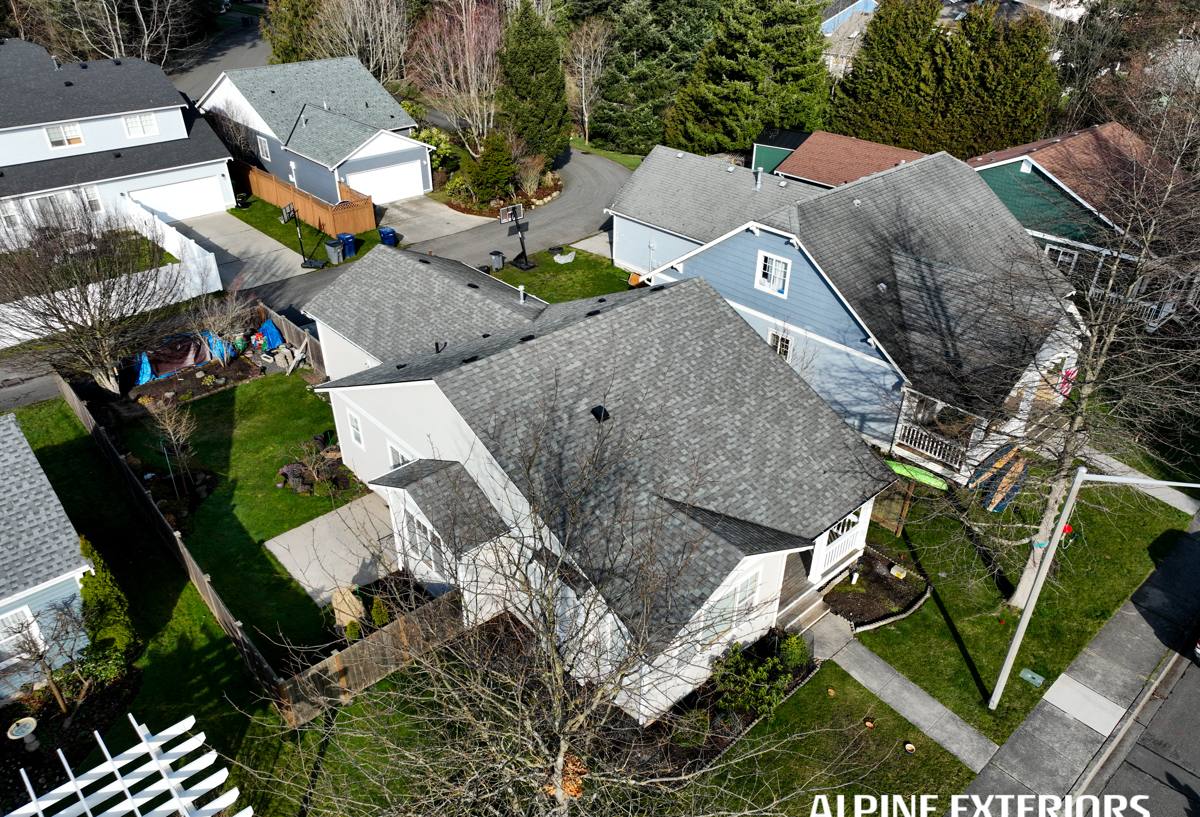
What Ferndale's Climate Actually Does to a Roof
Salt Air and Corrosion
Coastal exposure means airborne salt settles on roofing metal — flashing, fasteners, gutters, vent stacks — and accelerates corrosion over time. Cheap or mismatched metal components rust faster here than they would even twenty miles inland. It's one of the reasons we pay close attention to what flashing and fastener materials we're using on a Ferndale roof, not just the shingles themselves.
Driving Rain and Wind-Driven Water
Steady rain is one thing; rain pushed sideways by wind off open water is another. Wind-driven rain finds its way under shingles that are otherwise in fine shape if the underlayment, valleys, and edge details weren't built to handle water moving uphill or sideways, not just down. This is a bigger factor in how we detail a roof here than in calmer, more sheltered areas.
The Long Moss Season
Mild, wet winters and shaded lots give moss and algae a long runway to establish themselves. Once moss gets a foothold, it holds moisture against the shingle surface, lifts shingle edges as it grows, and shortens the life of the roofing underneath it — even if the shingles themselves are otherwise sound.
What a Correct Asphalt Shingle Job Involves Here
A shingle roof is a system, not just a layer of shingles nailed to plywood. For Ferndale conditions, every layer matters:
- Deck inspection and repair — soft, delaminated, or water-stained sheathing gets replaced before anything new goes down, not covered up
- Ice-and-water shield at vulnerable points — eaves, valleys, and around penetrations, where wind-driven rain and ice damming risk are highest
- Synthetic underlayment across the field — a durable water and wind barrier as the real second line of defense, not an afterthought
- Corrosion-appropriate flashing and fasteners — chosen with the area's salt exposure in mind, at valleys, walls, chimneys, and any roof-to-wall transition
- Balanced intake and exhaust ventilation — so moisture-laden attic air actually gets out instead of condensing under the deck
- Proper nailing pattern and exposure — installed to the manufacturer's wind-rating specs, not just "close enough"
- Ridge cap and hip detailing — the first place a rushed job shows, and a common leak point when skipped or shortcut
Skip or shortcut any one of these and the roof may look fine for a year or two before the local climate finds the gap.
Shingle Options Worth Considering for a Ferndale Roof
Not every asphalt shingle product performs the same way in a marine, moss-prone climate. Here's how the common categories stack up for a home in this area:
| Shingle Type | Typical Lifespan Here | Considerations for Ferndale |
|---|---|---|
| 3-tab shingles | Shorter end of the range | Lower upfront cost, but less wind resistance and less algae-resistant granule coverage than laminate options |
| Architectural (laminate) shingles | Longer end of the range | Heavier, better wind ratings, and the most common choice we install here for durability against driving rain and wind |
| Algae-resistant (AR) shingles | Same as base product, plus longer clean appearance | Copper- or zinc-infused granules resist the algae streaking and moss growth that's common under tree cover and in damp shade |
| Premium/designer laminate | Longest of the asphalt options | Thicker profile and stronger warranties; worth it on homes where long-term low maintenance matters more than upfront cost |
For most Ferndale homes, we lean toward architectural shingles with algae-resistant granules as the baseline recommendation — the added cost over basic 3-tab is modest, and the payoff shows up directly in how long the roof stays clean and tight.
Why We Don't Push the Cheapest Option
A basic 3-tab shingle isn't a bad product, but on a shaded, damp lot in this climate it's usually the wrong trade-off — it puts a homeowner back on the roof for moss and algae cleaning sooner, and its lighter weight and lower wind rating make it more likely to lift in a driving storm. We'll always tell you honestly when a lower-cost option is a reasonable fit and when it isn't.
Moss and Algae: The Maintenance Issue Nobody Mentions Upfront
Moss doesn't just look bad — it holds water against the roof surface, works its way under shingle tabs as it grows, and can shorten the effective life of an otherwise good roof. Whatcom County's wet season gives moss more time to establish than drier climates, especially on north-facing slopes or roofs under tree cover.
A few things help control it long-term:
- Zinc or copper strips near the ridge, which release trace metals that inhibit moss growth as rain washes over them
- Algae-resistant shingle granules, built into the product rather than added after the fact
- Keeping nearby branches trimmed back so the roof gets more sun and airflow
- Periodic gentle cleaning — never pressure washing, which strips granules and shortens shingle life faster than the moss would on its own
Ventilation: The Part of the Roof You Can't See but Really Matters Here
An asphalt shingle roof relies on attic ventilation to manage heat and moisture from underneath. In a climate with this much ambient humidity and rainfall, poor ventilation shows up as condensation on the underside of the deck, premature shingle aging from trapped heat, and in some cases mold or rot in the attic that has nothing to do with a leak at all. We check intake (soffit vents) and exhaust (ridge or box vents) as a matched pair — one without the other doesn't work, and it's a common gap we find on older Ferndale homes during inspections.
Signs a Ferndale Roof Needs a Closer Look
Most roofing problems here don't start as a dramatic leak — they start small and get missed until moss, granule loss, or flashing corrosion has done real damage. Worth checking for:
- Granules collecting in gutters or at downspout outlets
- Moss or dark algae streaking, especially on shaded or north-facing slopes
- Curling, cupping, or lifted shingle edges
- Rust staining or visible corrosion around flashing and vent stacks
- Soft spots or sagging when walked (from the ground, this shows as an uneven roofline)
- Daylight visible through the attic at eaves, ridge, or around penetrations
- Water stains on interior ceilings, even faint or old-looking ones
Any one of these is worth a look before the next wet season, not after.
What Drives the Cost of a Shingle Roof in This Area
| Factor | Why It Matters Here |
|---|---|
| Roof size and pitch | More surface area and steeper slopes mean more material and labor, and steeper roofs need more care in wet conditions |
| Existing deck condition | Rot or delamination found during tear-off, more common on older homes exposed to persistent moisture, adds repair scope |
| Number of layers being removed | Tear-off of old layers takes longer and costs more than a single-layer removal |
| Shingle grade selected | 3-tab versus architectural versus premium laminate shifts material cost and long-term value |
| Flashing and ventilation upgrades | Corrosion-resistant flashing and added ventilation cost more upfront but reduce callbacks in this climate |
| Roof complexity | Valleys, dormers, skylights, and multiple roof planes all add labor and detail work |
We'll always walk through these factors on the actual roof before giving a number — a phone estimate on a roof nobody has walked is a guess, not a quote.
Our Process for a Ferndale Roofing Job
- On-site inspection of the existing roof, attic ventilation, and deck condition
- A written scope and estimate that spells out shingle grade, underlayment, flashing, and ventilation plan — no vague line items
- Tear-off and deck inspection, with any soft or damaged sheathing replaced before covering it
- Ice-and-water shield, underlayment, flashing, and shingle installation in that order, per manufacturer specification
- Ridge and hip detailing, vent installation, and a final walk-through with photos of anything that was hidden before the new roof went on
- Site cleanup, including a magnetic sweep for stray nails
Why a Crew That Already Works in Ferndale Makes a Difference
A roofing crew that regularly works Whatcom County knows the wet-season weather windows for tear-off and dry-in, knows which local details tend to fail first on older homes here, and isn't guessing at how salt exposure or moss pressure should change a spec. That familiarity shows up in small decisions — which flashing to use, how much ventilation is really needed, when to push a start date back a day for weather rather than rush a dry-in — that add up to a roof that holds up over years, not just through the first inspection.
If you're weighing a repair against a full replacement, or just want an honest read on what your current roof needs, we're happy to take a look. Reach out for a free, no-pressure estimate using the form below.