 Bellingham Siding
 Deck Repair in Barkley: Built for Bellingham's Climate
Barkley sits close enough to Bellingham Bay and the surrounding wetlands that decks here take a different kind of beating than decks inland. Salt-laden air moves in off the water, driving rain comes sideways during fall and winter storms, and a long, damp moss season settles in and doesn't let go until late spring. None of that is unusual for Whatcom County. But it does mean a deck that would last two decades in a drier climate can start showing structural problems in half that time if it wasn't built or maintained with this environment in mind.
We repair decks throughout the Barkley area and the rest of Bellingham, and the failures we see are consistent enough that we can usually tell what's going on before we even pull up a board. Understanding why decks fail here is the first step to fixing them right instead of just patching what's visible.
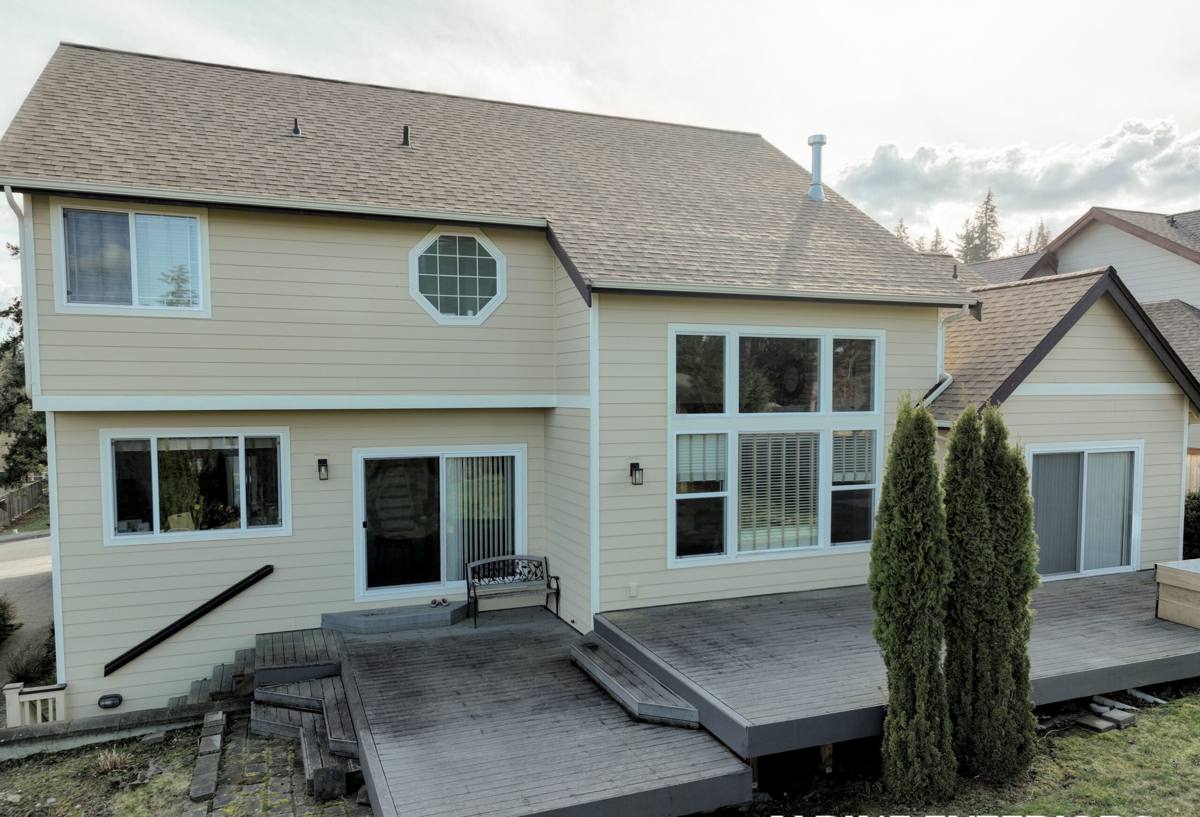
Signs Your Barkley Deck Needs Repair, Not Replacement
Most decks don't need to be torn out and rebuilt. They need targeted repair of the parts that took the damage — usually the framing, fasteners, and ledger connection — while the rest of the structure is still sound. Here's what we check for before recommending anything:
- Soft, spongy, or dark-stained decking boards, especially near the house or in shaded corners
- Rust streaking around fastener heads or visible corrosion on structural hardware
- Movement or bounce in the deck when you walk near the rail or stairs
- Gaps opening up where the deck ledger meets the house wall
- Persistent moss or algae growth on the deck surface, even after cleaning
- Wobbly, loose, or cracked railing posts
- Stair stringers that feel spongy or have visible splitting at the base
- Standing water that doesn't drain within an hour or two after rain
If you're seeing one or two of these, it's usually a repair. If you're seeing several at once, especially structural movement combined with soft framing, it's worth a closer inspection before you use the deck at all.
Common Deck Problems We See in This Part of Bellingham
Ledger Board and Rim Joist Rot
The ledger board — where the deck attaches to the house — is the single most important structural connection on most decks, and it's also the piece most exposed to the moisture that collects between the deck and the siding. In a climate with as much driving rain as Whatcom County gets, a ledger that wasn't flashed correctly when it was installed will trap water against the house framing. This is the repair we take most seriously, because a failed ledger connection is a genuine safety issue, not just a cosmetic one.
Post Bases and Footings
Where a post meets a concrete footing is another spot that holds moisture longer than the rest of the structure. Posts set directly into concrete, or posts without a proper standoff base, tend to wick water and rot from the bottom up — often invisibly, under a post base or skirt board, until there's noticeable give underfoot.
Railings and Stairs
Rail posts take constant stress from people leaning on them, and stairs take direct rain and foot traffic with almost no roof protection. Both are common failure points, and both are safety-critical, so we don't treat loose rail posts as a minor cosmetic fix.
Surface Boards and Moss
A long moss season means deck surfaces that don't get much direct sun stay damp for weeks at a stretch. Wood decking absorbs that moisture and cups or checks over time. Even composite decking can hold a moss film that makes the surface slick and, if never cleaned, can trap moisture against fasteners underneath.
Wood vs. Composite: What Changes for Repair
What material your deck is built from changes how we approach a repair — and how long the fix will hold up under Bellingham's weather.
| Factor | Wood Decking | Composite Decking |
|---|---|---|
| Moisture response | Absorbs water directly; cups, splits, or rots if not sealed and maintained | Doesn't absorb water into the board itself, but can trap moisture underneath if drainage is poor |
| Moss and algae | Grows into the wood grain; needs cleaning and periodic sealing to resist it | Grows on the surface; usually cleans off without lasting damage if addressed regularly |
| Repair matching | Easier to source matching boards and blend a repair into the existing deck | Discontinued colors or profiles can make an exact match harder; sometimes a full-plane replacement is more practical |
| Structural framing underneath | Usually wood in both cases — this is where most of our repair work happens regardless of surface material | Usually wood in both cases — this is where most of our repair work happens regardless of surface material |
| Typical repair cost driver | Extent of rot in framing and ledger, not just surface boards | Extent of rot in framing and ledger, not just surface boards |
That last row is the important one. Whether your deck surface is cedar, pressure-treated pine, or composite, the framing underneath is almost always wood, and that framing is what determines whether a repair is straightforward or extensive. We inspect the structure first, not just the surface, because that's what actually tells us the scope of the job.
What a Correct Deck Repair Involves
A repair that only replaces what's visibly damaged, without addressing why it failed, tends to fail again in the same spot within a few years. In a climate like Bellingham's, that usually means the underlying moisture path was never fixed. A repair done right includes:
- Pulling enough decking to actually see the framing condition, not guessing from the surface
- Checking the ledger flashing and house connection for water intrusion, since this is the most common source of hidden rot
- Replacing corroded fasteners with hardware rated for treated lumber and coastal exposure — mismatched metals corrode faster around here
- Confirming post bases and footings are sound, not just re-securing a wobbly post to a compromised base
- Re-establishing proper drainage and airflow under the deck so water doesn't pool against framing again
- Matching or replacing decking boards so the repaired section performs and weathers consistently with the rest of the deck
Our Repair Process
1. On-Site Inspection
We walk the deck, check the framing where we can access it, and identify what's driving the damage — not just where it shows. For Barkley homes, that often means paying close attention to the ledger connection and any low-sun areas prone to moss.
2. Written Scope and Estimate
You get a clear picture of what needs to be repaired, what's optional, and what it costs before any work starts. If a section is beyond repair and needs replacement, we'll tell you that plainly rather than patching over a structural problem.
3. The Repair
We remove and replace only what's compromised, correct the moisture or drainage issue that caused the damage, and rebuild the connection points — ledger, posts, rails, stairs — to current structural standards.
4. Final Check
Before we consider the job done, we check that the deck is solid underfoot, railings are secure, and drainage is working the way it should.
Timing Matters in a Whatcom County Winter
Deck repair can happen almost any time of year, but there are practical reasons to plan around Bellingham's seasons. Late fall through winter is when driving rain does the most damage to any exposed framing, and it's also when moss growth accelerates on shaded surfaces. Spring and summer are the more forgiving windows for structural repair work, since drier conditions make it easier to confirm framing is fully dried out before it's closed back up. If you're seeing signs of trouble now, it's worth having it looked at before the wetter months add to the damage rather than waiting until a board gives way.
Why a Crew That Already Works in Barkley Makes a Difference
Deck repair isn't identical everywhere. A crew that mostly works drier inland climates may not think twice about ledger flashing details or moss-prone shaded framing, because it's simply not what they deal with day to day. We work throughout Bellingham and Whatcom County, including Barkley, and we see the same climate-driven failure patterns often enough to know what to check first and what corners never get cut here — fastener corrosion, ledger moisture, and drainage under low-sun sections of decking. That familiarity usually means a faster, more accurate diagnosis and a repair that's built to actually hold up through the next wet season, not just look fixed for now.
Get a Free Estimate for Your Barkley Deck
If your deck has soft spots, rust stains, loose railings, or just doesn't feel as solid as it used to, we're happy to take a look. Fill out the form below for a free, no-pressure estimate — we'll tell you honestly what needs repair, what can wait, and what it will cost to fix it right.