 Bellingham Siding
 Why Roofs in York Wear Differently Than Roofs Inland
York sits close enough to the water and the weather patterns that roll off Bellingham Bay that its roofs take a different kind of beating than a roof twenty minutes inland in Whatcom County. It's not one dramatic storm that does the damage — it's the combination. Salt-laden air corrodes exposed metal fasteners and flashing faster than it would in a dry climate. Driving rain, pushed sideways by wind off the water, finds every weak seam around chimneys, skylights, and valleys. And the long, wet moss season that runs from fall through spring gives organic growth months to take hold on north-facing slopes and shaded sections of roof.
None of that means a York roof is doomed to fail early. It means the roof has to be built and maintained with those specific stresses in mind, rather than installed the same generic way you'd do it in a drier part of the country. That's the difference between a roof that looks fine for a few years and one that actually holds up through fifteen or twenty Bellingham winters.
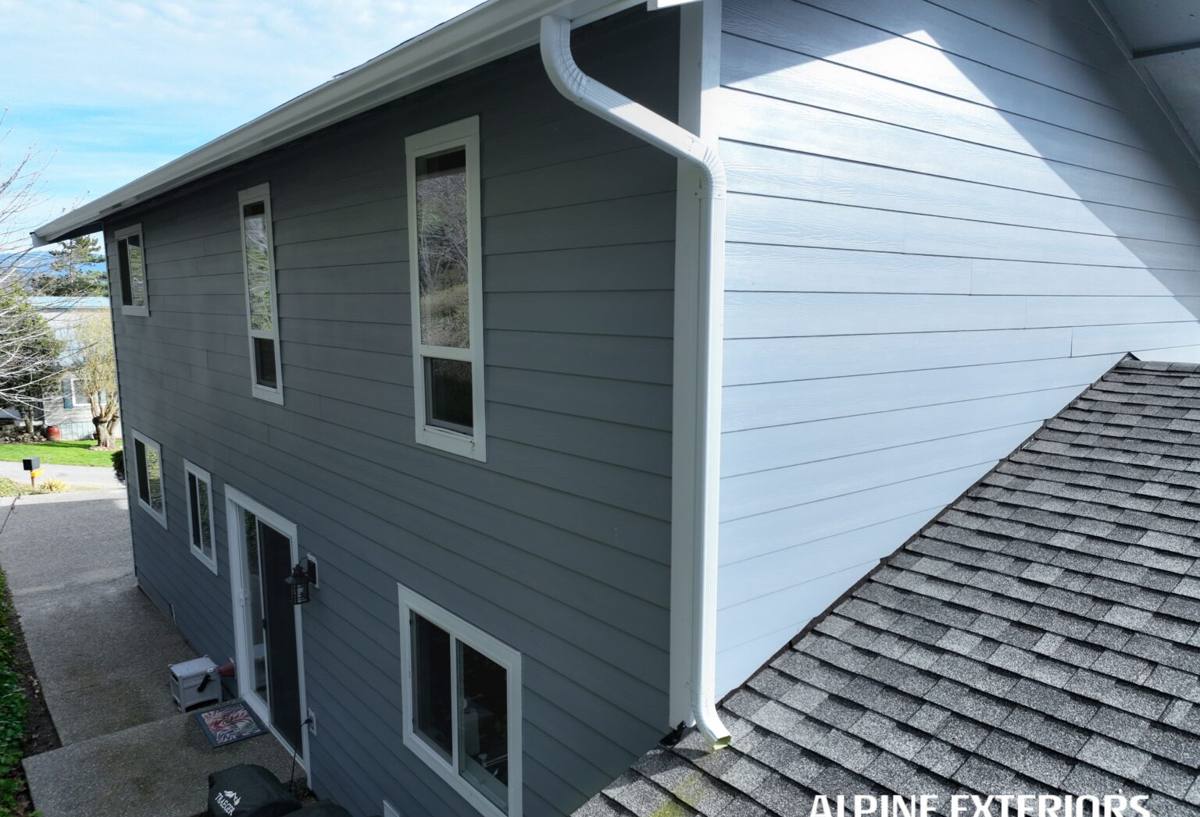
What a Correct Asphalt Shingle Roof Actually Involves Here
A shingle roof is a system, not a single layer. The shingles themselves get the attention, but in this climate the layers underneath and around them matter just as much, if not more.
Underlayment and Ice-and-Water Protection
In a region with this much sustained rainfall, synthetic underlayment is the baseline, not an upgrade. We also run self-adhered ice-and-water membrane at the eaves, valleys, and around every roof penetration — the spots where wind-driven rain is most likely to work its way backward under a shingle course. Skipping this step is one of the most common shortcuts we see on roofs that develop soft decking or interior leaks within a few years.
Flashing That's Actually Sized and Sealed Right
Chimneys, skylights, dormers, and wall-to-roof transitions all need step flashing, counter-flashing, or kickout flashing sized to the detail — not a smear of roofing cement standing in for proper metal work. Salt air accelerates corrosion on the wrong grade of metal, so we pay attention to what we're fastening and how it's protected, not just that something is there.
Nailing Pattern and Wind Exposure
Because York can catch real wind off the water, correct nail placement and count per shingle matters more than it would in a sheltered inland yard. Manufacturers publish exact nailing patterns for a reason — high-nailing or under-nailing a roof is invisible from the ground and shows up years later as lifted or blown-off shingles in the first serious windstorm.
Moss, Algae, and Salt Air: What They Actually Do to a Roof
Moss doesn't just look bad. As it establishes on a shaded or north-facing slope, it holds moisture against the shingle surface far longer than the roof would otherwise stay wet, and it can work its way under shingle edges as it grows, lifting them slightly and giving wind and rain an opening. Left unchecked over several seasons, that's a direct path to premature granule loss and, eventually, decking rot underneath.
Algae staining — the dark streaking you see on older roofs — is a separate issue from moss. It's cosmetic rather than structural, but it's also avoidable with the right shingle choice, which we cover below. Salt air's main effect is on metal: exposed fasteners, flashing, and vent components corrode faster near the water than they do further inland, which is part of why fastener and flashing material choice deserves real thought on a York roof rather than a one-size-fits-all approach.
Choosing the Right Shingle for a York Roof
Not every asphalt shingle is built the same way, and for a coastal Whatcom County property the differences matter more than the price tag alone suggests.
| Shingle Type | Typical Lifespan | How It Handles Moss & Algae | Best Fit |
|---|---|---|---|
| 3-tab (economy) | 15–20 years | No built-in algae resistance; more prone to moss holding moisture | Budget-driven projects, secondary structures |
| Architectural / laminate | 25–30 years | Usually available with algae-resistant granules | Most primary homes — the common choice in this area |
| Premium / designer | 30+ years | Algae-resistant granules standard, heavier profile sheds debris and holds up to wind better | Higher-exposure roofs, homeowners planning to stay long-term |
For most York homes, we recommend an architectural shingle with algae-resistant (AR) granules as the practical baseline — the upgrade cost over a basic 3-tab is modest, and the payoff in reduced staining and moss resistance is worth it in a climate this wet. We install shingles from major manufacturers such as GAF, CertainTeed, and Owens Corning, matched to what the specific roof and budget call for rather than pushing one brand across every job.
Our Process, Start to Finish
- On-site assessment. We walk the roof (or inspect from a lift when pitch or access requires it), check the decking condition where visible, note existing moss or algae growth, and look at ventilation and flashing details.
- Honest scope and estimate. You get a written estimate that spells out materials, underlayment, flashing work, and any decking replacement contingencies before anything is signed.
- Tear-off and decking check. Old roofing comes off down to the deck so we can actually see what's underneath — soft or delaminated decking gets replaced, not covered over.
- Underlayment, ice-and-water shield, and flashing installed. This is the layer that does the real waterproofing work; we don't rush it to get to the visible shingles faster.
- Shingle installation to manufacturer spec. Correct nailing pattern, proper exposure, and attention to valleys and penetrations.
- Cleanup and magnetic sweep. Debris and stray fasteners removed from the property, not left for you to find later.
- Final walkthrough. We go over the finished roof with you before calling the job done.
Ventilation and Moisture: The Part You Don't See From the Ground
A shingle roof can be installed perfectly on top and still cause problems if the attic underneath isn't ventilating correctly. In a climate as wet as Bellingham's, trapped attic moisture leads to condensation on the underside of the decking, which shortens the life of the roof from the inside out — regardless of how good the shingles are. Balanced intake (soffit) and exhaust (ridge or roof vents) keeps air moving through the attic space, which does two things: it helps the decking dry out properly between rain events, and it reduces the risk of ice damming during the occasional hard freeze. When we're already up on a roof for a replacement, we check existing ventilation and flag it if it's undersized or blocked, rather than reinstalling shingles over a system that was already struggling.
Maintenance That Actually Extends a York Roof's Life
A correctly installed roof still benefits from basic upkeep, especially given the moss season here. None of this requires a contractor visit every time — most of it is homeowner-manageable with the right approach.
- Keep gutters clear of debris so water isn't backing up under the shingle edge during heavy rain
- Have moss physically removed (not just chemically treated and left in place) from shaded slopes once it establishes
- Trim back overhanging branches that keep sections of roof shaded and slow-drying
- Check attic ventilation isn't blocked by insulation or storage
- After major windstorms, look for visibly lifted, cracked, or missing shingles
- Have flashing around chimneys and skylights inspected every few years, since that's where most leaks originate
What Affects the Cost of a Shingle Roof in This Area
We won't quote a number without seeing the roof, but the main variables that move the price up or down are consistent from job to job.
| Factor | Why It Matters |
|---|---|
| Roof size and pitch | Steeper roofs take longer and require more safety setup |
| Number of valleys, penetrations, and flashing details | Each one adds labor and material for proper waterproofing |
| Decking condition underneath the old roof | Rot or soft spots found during tear-off require replacement before shingles go on |
| Shingle tier chosen | 3-tab, architectural, and premium products carry different material costs |
| Access and site conditions | Tight lots, tall roofs, or landscaping that limits staging can affect labor time |
We'd rather give you a real number based on an actual look at your roof than a broad estimate that doesn't hold up once we're up there.
Why a Crew That Already Works York Matters
Knowing the general climate patterns of Whatcom County is one thing; knowing how a specific neighborhood's exposure to wind, rain direction, and shade actually plays out on real roofs is another. A crew that regularly works in and around York has already seen which details tend to fail first on homes with this kind of exposure, and builds around that rather than treating every roof the same. That local pattern recognition — plus being close enough to respond quickly if something comes up after the job is done — is the practical reason to hire a crew rooted in this area rather than one passing through.
If you're weighing a repair against a full replacement, or just want an honest read on how much life is left in your current shingles, we're glad to take a look. Reach out for a free, no-pressure estimate using the form below.