 Bellingham Siding
 Deck Replacement in Fairhaven: Built for the Climate You Actually Live In
Fairhaven sits close enough to the water that homeowners here deal with a different set of deck problems than folks further inland in Whatcom County. Salt-laden air, driving rain off Bellingham Bay, and a moss season that seems to stretch longer every year all work on wood, fasteners, and footings in ways that shorten a deck's usable life. If your deck is cupping, soft underfoot, or growing green faster than you can pressure-wash it, you're not imagining things — the neighborhood's exposure is genuinely harder on decking than a yard a few miles inland.
This page covers what a proper deck replacement looks like specifically for Fairhaven homes: what the climate demands, what a correct rebuild involves from the ground up, and how we run the project from first look to final walkthrough.
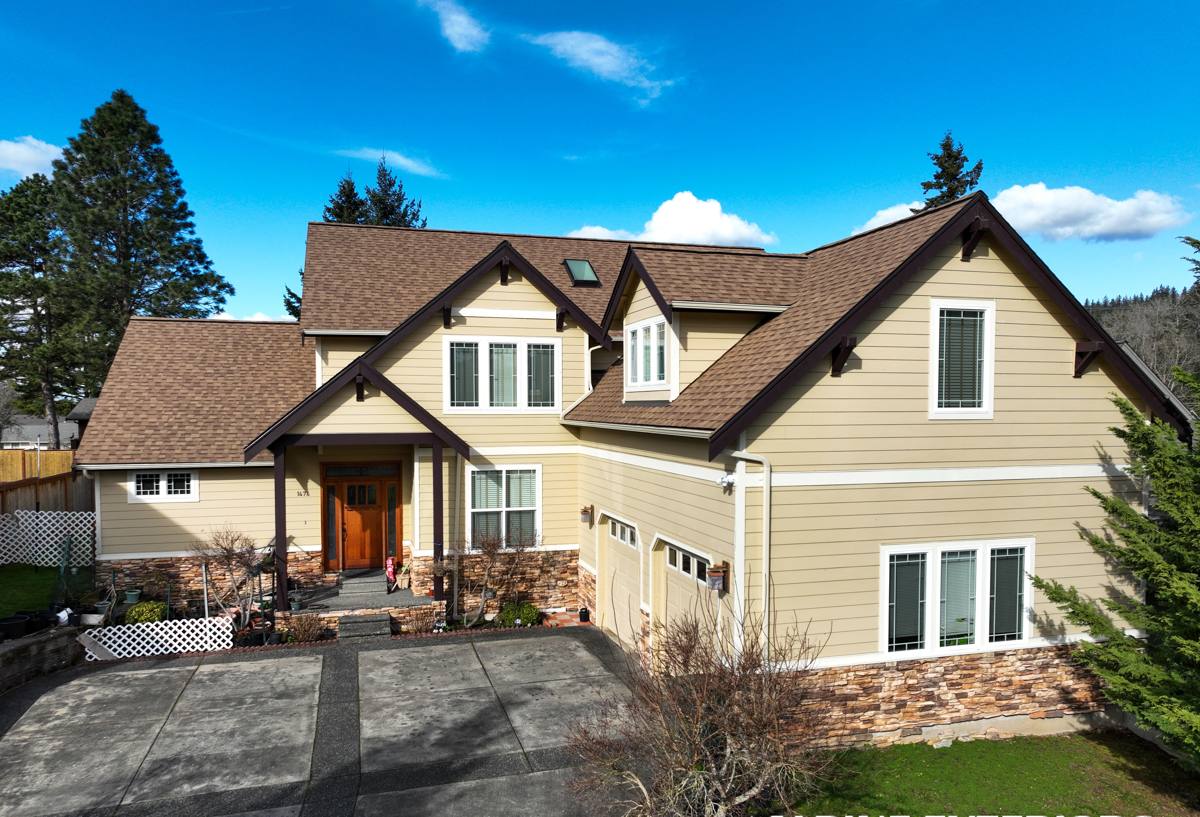
Why Fairhaven Decks Wear Out Faster
Salt Air and Metal Fasteners
Proximity to the bay means airborne salt settles on everything, including your deck's hardware. Standard galvanized nails and screws can start corroding years before the boards themselves fail. Once a fastener rusts, it loses grip strength and can streak the surrounding wood — and a deck is only as strong as the connections holding it together, not just the boards on top.
Driving Rain and Trapped Moisture
Bellingham's rain doesn't just fall straight down — wind off the water pushes it sideways, driving water into ledger connections, under railings, and between deck boards that are spaced too tight. Moisture that gets trapped and can't dry out is the single biggest reason decks rot from the inside before they look bad on the surface.
Moss, Algae, and a Long Wet Season
Shade from mature trees combined with a long stretch of damp months gives moss and algae plenty of time to establish on deck surfaces, especially on the north side of a house or under overhangs. Beyond being a slip hazard, moss holds moisture against the wood, which accelerates rot in exactly the spots that already dry out the slowest.
Signs Your Deck Needs Replacing, Not Just Repairing
- Boards that feel spongy, springy, or soft when you walk on them, especially near the house or stair landings
- Visible gaps opening up between boards from years of swelling and shrinking
- Railings that wiggle or posts that have any give when pushed
- Rust streaks running down from screw heads or nail holes
- Persistent moss or algae that comes back within weeks of cleaning
- A ledger board (where the deck attaches to the house) that shows staining, soft spots, or gaps at the flashing
- The deck is original to a home built more than 15-20 years ago and has never had structural work done
A few soft boards can sometimes be repaired in place. But once the framing, ledger, or multiple structural members are compromised, patching individual boards just delays a bigger problem and can mask decay that's spreading underneath.
What a Correct Deck Replacement Involves
Starting With the Structure, Not the Surface
The part of a deck that fails first is almost never the decking boards — it's the framing underneath: ledger attachment, joists, beams, and footings. A replacement done right means evaluating and, where needed, rebuilding that structure to current code, not just laying new boards over old framing that's already compromised.
Ledger Flashing Done Properly
The ledger board — where the deck ties into your house — is the single most common failure point on decks in wet climates like ours. Correct flashing detail keeps water from running behind the ledger and into your home's rim joist and wall framing. This is not an area to cut corners, and it's one of the first things we check on any Fairhaven deck.
Fastener and Hardware Selection
Given the salt exposure common in Fairhaven, we favor stainless steel or heavy-duty coated fasteners and structural hardware rated for coastal or wet-use environments over standard galvanized options. It costs a bit more upfront, but replacing corroded hardware in eight years instead of twenty is a false economy.
Board Spacing and Drainage
Proper gapping between boards lets water and debris pass through instead of pooling, and it gives boards room to expand and contract without buckling. We also pay attention to grading and drainage underneath the deck itself so water has somewhere to go rather than sitting against footings.
Decking Material Options for Fairhaven's Climate
There's no single "best" decking material for every home — it depends on your budget, how much maintenance you want to do, and how the deck is used. Here's an honest comparison of the main options we work with.
| Material | Maintenance | Moisture Performance Here | General Cost Range |
|---|---|---|---|
| Pressure-treated wood | Needs regular sealing/staining, especially with our rain exposure | Good if maintained; rot risk climbs fast if sealing is skipped | Lowest upfront cost |
| Cedar | Periodic staining or oiling to hold color and resist moisture | Naturally rot-resistant but still benefits from sealing near salt air | Mid-range |
| Composite decking | Occasional washing; no staining or sealing | Excellent — doesn't absorb water or rot, resists moss staining better | Higher upfront, lower lifetime maintenance cost |
| PVC decking | Lowest maintenance of all options | Fully moisture-resistant; unaffected by salt air | Highest upfront cost |
For homes closer to the water or under heavy tree shade, we often steer homeowners toward composite or PVC simply because the maintenance burden of wood in that specific microclimate gets old fast. That said, plenty of Fairhaven homeowners are happy with cedar or treated wood as long as they're realistic about the sealing schedule it takes to keep it performing.
Our Deck Replacement Process
1. On-Site Assessment
We walk the existing deck with you, check the framing, ledger connection, footings, and any visible rot or corrosion, and talk through what's driving the failure — this matters because a deck failing from ledger moisture needs a different fix than one failing from UV and weather wear on the boards alone.
2. Honest Scope and Material Discussion
We'll tell you plainly whether your existing footings and framing can be reused or whether they need to come out. We'd rather lose a sale than talk you into reusing structure that won't hold up, and we'll walk through material trade-offs based on your budget and how you actually use the deck.
3. Permitting
Deck replacements involving structural changes typically require a permit through the City of Bellingham or Whatcom County, depending on your property's location. We handle that process rather than leaving it to you.
4. Demo and Rebuild
Old decking, and any compromised framing or footings, come out. We rebuild from the ground up with correctly flashed ledger connections, appropriately rated hardware, and framing sized to current code — then install the new decking surface and railings.
5. Final Walkthrough
Before we consider the job done, we walk the finished deck with you, check that railings are solid, boards are properly spaced, and everything meets the standard we'd want on our own homes.
Why a Crew That Already Works Fairhaven Matters
Deck problems in Fairhaven aren't generic — they're shaped by this specific stretch of Bellingham's exposure to salt air and weather off the bay. A crew that's worked other decks in this neighborhood already knows which fastener grade holds up here, where moss tends to establish first, and which ledger and flashing details actually keep water out given the wind-driven rain this area gets. That local pattern recognition means fewer surprises mid-project and a deck built to hold up to the conditions it'll actually face, not a generic spec pulled from a manual written for a drier climate.
We're also familiar with the permitting process through the relevant local jurisdiction, which keeps the project moving instead of stalling on paperwork.
Maintaining Your New Deck
- Rinse or sweep off moss and debris regularly, especially in shaded areas, rather than letting it sit through the wet months
- If you chose wood, keep to a sealing or staining schedule rather than waiting until it visibly needs it
- Keep gutters and downspouts near the deck clear so runoff isn't dumping extra water onto or under the structure
- Check railings and stair connections once a year for any looseness
- Trim back vegetation that's shading the deck and keeping it damp longer than it needs to be
If your Fairhaven deck is showing its age, we're happy to take a look and give you a straight assessment — no pressure, no sales pitch, just an honest read on what your deck needs. Use the form below to request a free estimate.