 Bellingham Siding
 Building Decks That Hold Up to Birch Bay Conditions
Birch Bay sits close enough to the water that salt air, wind-driven rain, and a long stretch of damp, shaded weather are just part of owning a home there. A deck built the way it would be built inland doesn't last as long here. The fasteners corrode faster, the framing stays wet longer, and moss gets a head start on any surface that doesn't drain and dry properly. A deck that's actually built for this stretch of Whatcom County starts with different material choices and different construction details than a generic build, and that's the difference between a deck that looks good for two summers and one that holds up for twenty years.
This page covers what we look at specifically for custom deck projects in Birch Bay: what the local climate does to decking materials and hardware over time, how we frame and flash a deck to keep water moving instead of pooling, which materials make sense for a property this close to salt air, and what our build process looks like from first visit to final walkthrough.
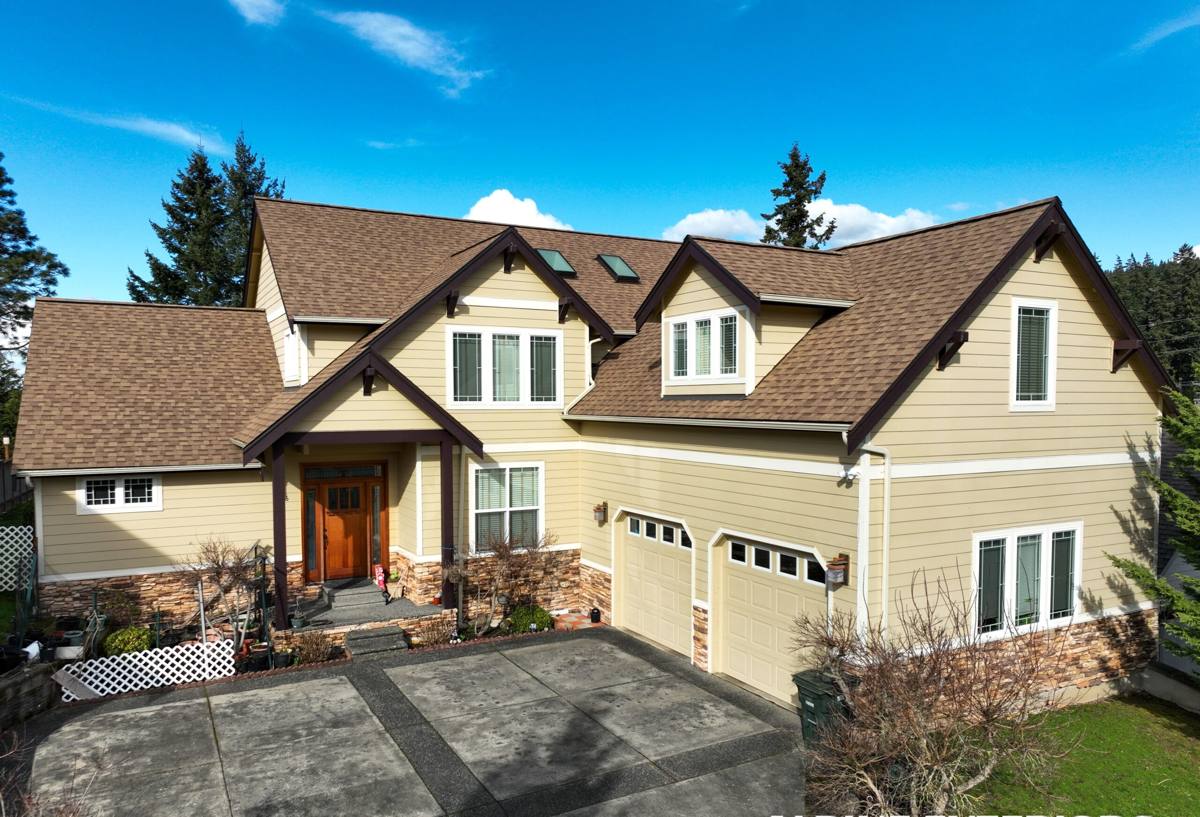
What Birch Bay's Climate Does to a Deck Over Time
Salt Air and Corrosion
Proximity to Birch Bay and the Strait of Georgia means airborne salt is a real factor, even a few blocks back from the water. Salt accelerates corrosion on anything metal — fasteners, joist hangers, railing brackets, and structural screws. Standard hot-dipped galvanized hardware can start showing rust streaks within a few seasons in a coastal-exposure setting like this. Once a fastener starts corroding, it loses holding strength long before it looks obviously bad, which is part of why so many premature deck failures start underneath, not on the surface.
Driving Rain and Moisture Cycling
Whatcom County gets a lot of rain, and Birch Bay's exposure to wind off the water means that rain often comes in sideways rather than straight down. That matters for decking because driving rain gets up under railings, behind ledger boards, and into end grain and fastener holes that a straight-down rain would never reach. Wood and wood-composite products that aren't detailed correctly at these points absorb moisture, swell, and eventually rot or delaminate from the inside out — often while the top surface still looks fine.
Moss, Algae, and Shade
Long wet seasons plus tree cover common in this area add up to a lot of moss and algae growth on any deck surface that stays damp. Moss holds moisture against the decking material, and on wood it accelerates rot; on any material it makes the surface slick and, over time, can stain permanently if it's not addressed. Deck orientation, gaps between boards, and how much a deck is shaded all affect how much of a moss problem a homeowner ends up managing.
Choosing the Right Decking Material for This Area
There's no single "best" decking material — the right choice depends on how much maintenance a homeowner wants to do, budget, and how close the property is to direct salt exposure. Here's how the common options actually perform in Birch Bay's conditions:
| Material | Moisture & Salt Air Performance | Maintenance | Typical Lifespan Here |
|---|---|---|---|
| Pressure-treated wood | Decent if sealed regularly; end grain and fastener holes are vulnerable points | Annual cleaning, re-sealing every 1-2 years | 10-15 years with upkeep |
| Cedar | Naturally rot-resistant but still needs sealing near salt air; can gray and check over time | Cleaning and oil/sealer every 1-2 years | 15-20 years with upkeep |
| Capped composite | Strong performer — cap layer resists moisture and salt exposure well | Occasional washing, no sealing | 25-30+ years, manufacturer warranty backed |
| PVC decking | Fully synthetic, handles moisture and salt air with minimal concern | Occasional washing | 25-30+ years, manufacturer warranty backed |
We're honest with Birch Bay homeowners about the trade-off: wood costs less up front but asks for real annual maintenance to hold up against this climate, and skipping that maintenance is exactly how wood decks fail early here. Composite and PVC cost more initially but are far more forgiving of salt air and driving rain, which is why we recommend them more often for properties with direct water exposure or heavy shade.
What a Correctly Built Substructure Looks Like
The framing underneath a deck matters more than the surface material, and it's the part most likely to be shortcut on a lower-quality build. For decks we build in Birch Bay, that means:
- Ledger board flashing that directs water away from the house rather than trapping it against the wall — one of the most common failure points on older decks in wet coastal areas
- Joist tape over the top of every framing member, so fasteners bite through a sealed surface instead of exposed end grain
- Stainless steel or heavy-duty coated fasteners and hardware rated for coastal exposure, not standard interior-grade galvanized
- Proper board spacing and airflow underneath the deck so surfaces can actually dry between rain events instead of staying damp
- Footings sized and set to the frost depth and soil conditions typical in this part of Whatcom County
None of this is visible once the deck is finished, which is exactly why it's worth asking a contractor how they handle it before signing anything. A beautiful surface over corner-cut framing is a deck that looks fine at the final walkthrough and starts causing problems within a few years.
Railings, Fasteners, and Hardware That Won't Let You Down
Railings take a lot of abuse from wind and driving rain, and they're also the part of the deck people touch and lean on the most, so hardware failure there is a safety issue, not just a cosmetic one. We spec stainless steel or coated corrosion-resistant hardware for railing posts, brackets, and structural connections on every Birch Bay project, and we pay particular attention to any point where two dissimilar materials meet — that's typically where galvanic corrosion shows up first. It costs more than standard hardware, but it's a small percentage of the total project cost against a system that's supposed to last decades and keep people safe.
Our Process for Birch Bay Deck Projects
We keep the process straightforward and give homeowners real information at each stage rather than surprises later:
- Site visit and assessment — we look at sun/shade exposure, wind direction, drainage, soil, and how close the property sits to direct salt exposure, since all of that shapes material and design recommendations.
- Design and material selection — we walk through the trade-offs between wood, composite, and PVC honestly, based on your budget and how much maintenance you actually want to do.
- Permitting — most new decks and significant deck rebuilds in unincorporated Whatcom County require a building permit; we handle that process so you don't have to chase it down yourself.
- Construction — proper flashing, joist tape, coastal-grade fasteners, and code-compliant footings and framing, built to hold up to the conditions specific to this area.
- Final walkthrough — we go over the finished deck with you, including basic care specific to whatever material you chose.
Maintenance Checklist for Birch Bay Deck Owners
Whatever material a deck is built from, a little seasonal attention goes a long way in this climate. Here's what we tell homeowners to stay on top of:
- Sweep debris and standing leaves off the surface regularly, especially in fall and winter when moss growth accelerates
- Wash down the deck surface at least once or twice a year to remove algae and moss buildup before it stains or gets slick
- Check railing posts and structural connections annually for any looseness — a sign hardware may be corroding
- For wood decking, reapply sealer or stain on the schedule recommended for the product, paying extra attention to end grain
- Keep gutters and downspouts near the deck clear so runoff isn't dumping extra water onto or under the structure
- Trim back vegetation that's shading the deck and keeping it damp longer than necessary
Why Hire a Crew That Already Works in Birch Bay
Deck-building fundamentals don't change much from town to town, but the details that make a deck last do. A crew that's already worked on homes in Birch Bay knows which hardware actually holds up to this level of salt exposure, how the local permitting process works, and where driving rain tends to find its way into a poorly detailed build. That's knowledge you don't get from a contractor who mostly works inland or in drier parts of the region. We've built and repaired decks across this stretch of Whatcom County, and we bring that same standard — proper flashing, coastal-grade hardware, and honest material recommendations — to every Birch Bay project, whether it's a full custom build or a rebuild of something that didn't hold up the first time.
If you're planning a new deck or need to replace one that's showing its age, we're happy to take a look and talk through what makes sense for your property. Reach out for a free, no-pressure estimate using the form below.