 Bellingham Siding
 Building a Deck That Actually Holds Up in Cordata
Cordata sits on the north side of Bellingham, and like the rest of Whatcom County it gets the full Pacific Northwest treatment: months of low, driving rain, a long stretch of gray damp weather that never quite dries out, and enough moisture in the air year-round that anything built with the wrong materials or the wrong details starts to suffer within a few seasons. A deck built for a drier climate, or built to a generic national spec, is not the same thing as a deck built for this specific corner of Washington. This page is about what actually matters when you're putting a deck in the ground here — not decking trends, but the structural and material choices that decide whether your deck looks good and stays solid for fifteen-plus years, or starts showing soft spots, black streaks, and loose hardware by year five.
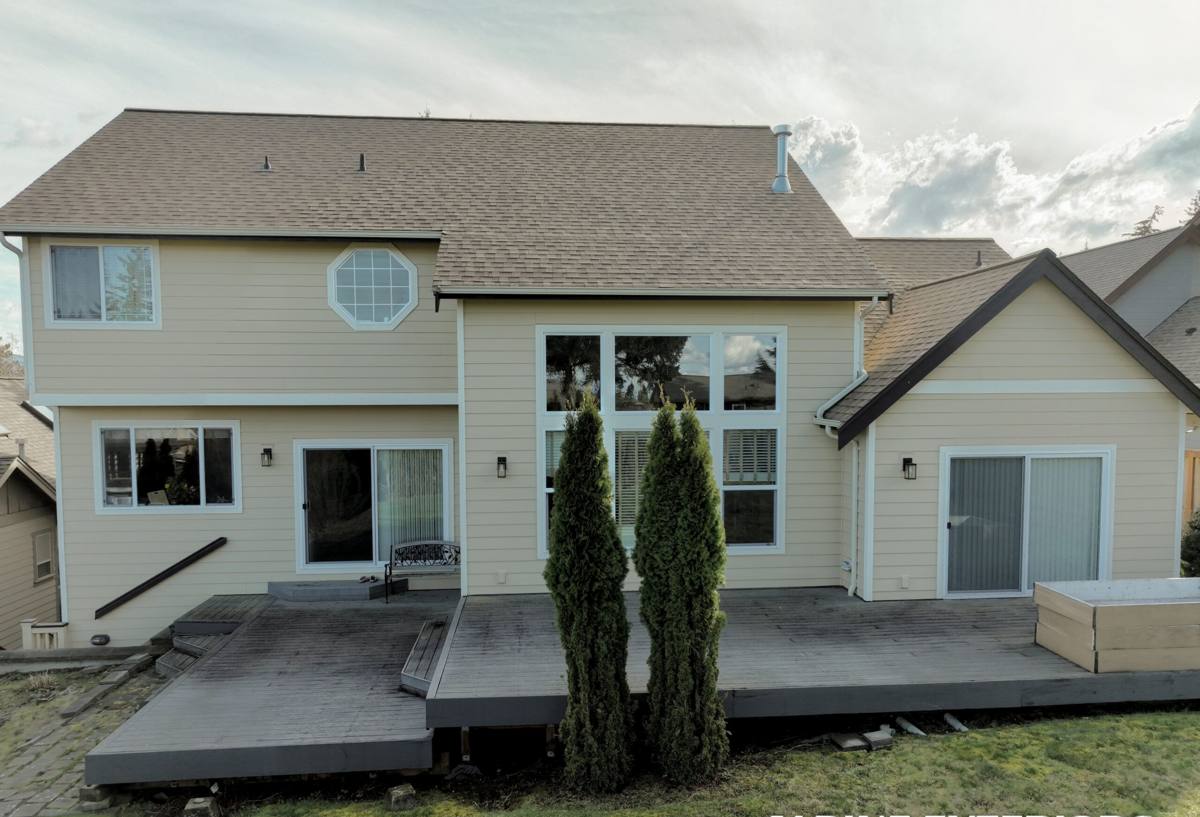
What Local Weather Does to an Outdoor Deck
Three things define deck wear in this area, and they compound each other.
Driving rain and standing moisture
Rain here doesn't just fall straight down — wind-driven rain gets pushed sideways into ledger boards, under railings, and into any joint that isn't properly flashed or sealed. Combined with long periods where wood simply doesn't get a chance to dry between storms, this is the single biggest reason decks fail early: moisture sits where it shouldn't and starts working on fasteners, framing, and finishes.
Salt air
Bellingham's proximity to the Salish Sea means a measurable amount of salt-laden air moves through the region, and Cordata isn't far enough inland to be fully insulated from it. Salt air accelerates corrosion in cheap or improperly coated fasteners, hinges, and railing hardware. It's a slower process than direct coastal exposure, but it adds up over the life of a deck built with the wrong-grade hardware.
A long moss and algae season
Cool, wet, and shaded conditions for much of the year mean moss and algae aren't a cosmetic afterthought here — they're a structural consideration. Moss holds moisture against decking boards and framing, which keeps wood wet far longer than rain alone would, and it makes surfaces slick and slippery underfoot for a good part of the year. A deck design that ignores drainage, airflow, and sun exposure is signing up for a moss problem from day one.
Choosing the Right Decking Material for This Neighborhood
There's no single "best" decking material — there's the right material for your budget, your maintenance appetite, and how much shade your particular lot gets. Cordata has a mix of newer subdivisions with young trees and more established, tree-shaded lots, and shade level changes the calculus quite a bit.
| Material | Moisture & Moss Behavior | Maintenance | Typical Lifespan | Best Fit |
|---|---|---|---|---|
| Pressure-treated fir/pine | Resists rot when properly finished, but end grain and cut edges need re-sealing or they wick moisture | Annual cleaning, re-stain or seal every 2-3 years | 10-15 years with upkeep | Budget-conscious builds, sunnier lots |
| Cedar | Naturally rot- and insect-resistant, but still needs finish maintenance to fight graying and moss in shade | Cleaning plus finish every 2-3 years | 15-20 years with upkeep | Owners who want a natural wood look and will keep up on care |
| Composite (wood-plastic blend) | Won't rot, but can still grow surface moss/algae in heavy shade — needs periodic washing | Occasional washing, no staining or sealing | 25-30 years | Low-maintenance priority, shaded or exposed lots alike |
| PVC / capped composite | Fully moisture-sealed surface, best resistance to staining and moss adhesion | Lowest maintenance of all options — soap and water | 25-30+ years | Heavily shaded lots, owners who want to set it and forget it |
Our standard is to steer customers away from budget composite blends with thin or no capping — in this much year-round moisture, an uncapped or lightly capped board can absorb water at cut edges and fastener holes over time, which shows up as swelling or discoloration well before the warranty period some of those products carry. That's a maintenance and moisture-behavior tradeoff we'd rather flag up front than let a homeowner discover it in year six.
Framing and Structure: What's Underneath Matters Most
The decking boards are what you see, but the framing underneath is what determines whether the deck is still safe in fifteen years. In a climate this wet, we pay close attention to a few things that get skipped on cheaper jobs:
- Ledger board attachment and flashing where the deck meets the house — this is the single most common source of hidden rot on older decks
- Joist tape or a moisture barrier on top of every joist, so decking screws don't create an open wound in bare wood
- Proper footing depth for our frost and soil conditions, not a shortcut spec
- Post bases that hold posts up off the concrete rather than embedding wood directly in a wet footing
- Adequate airflow underneath the deck so the framing has a chance to dry out between rain events
None of this is visible once the deck is finished, which is exactly why it's the part most likely to get corners cut on a low-bid job. It's also the part that determines whether you're calling someone back out in five years for a structural repair.
Drainage, Slope, and Keeping Moss From Taking Over
Every deck we build gets a slight slope built into the decking so water sheds off the surface instead of pooling. On lower decks close to grade, we also think about ground drainage underneath — if water sits under the deck, it keeps the framing damp long after the surface has dried, which is exactly the condition moss and rot both prefer. Where a lot is shaded most of the day, we'll talk through spacing and orientation options that let a little more air and light reach the deck surface, since that alone cuts down significantly on how often you'll be scrubbing green growth off the boards.
Fasteners, Flashing, and the Small Details That Fail First
On a deck, the hardware usually fails before the lumber does. We use stainless or high-grade coated fasteners rated for the corrosion exposure this region sees, not the cheapest galvanized option available — the cost difference over a whole deck is modest, but the difference in how long hinges, brackets, and screws last in salt-influenced, damp air is significant. The same goes for flashing at the ledger board and any post-to-beam connection: it's inexpensive material, but it's the piece that keeps water from getting into end grain and framing joints where rot starts.
Our Deck Building Process
We keep the process straightforward and give homeowners a clear idea of what's happening at each stage:
- On-site assessment — we look at your lot's drainage, sun/shade exposure, soil, and how the deck will tie into the house, since that shapes both material and structural recommendations
- Design and material selection — we walk through decking options, railing style, and layout with honest tradeoffs on cost versus long-term maintenance
- Permitting — we handle the paperwork with the applicable local jurisdiction so the deck is built and signed off to code
- Footings and framing — built to the depth and spec this soil and climate call for, with moisture protection built in from the start, not added as an afterthought
- Decking, railing, and finish work — installed with attention to fastener placement, spacing for drainage, and clean, consistent detailing
- Final walkthrough — we go over care and maintenance specific to the material you chose so you know what upkeep to expect
Permits and Local Code Considerations
Most decks above a certain height or attached to the house require a building permit in this area, and inspections typically check footing depth, ledger attachment, and guardrail height and spacing at a minimum. Skipping the permit process might save time up front, but it can create real problems later — at resale, with insurance, or if something needs to be corrected after the fact. We handle the permit process as a standard part of the job rather than treating it as optional.
Why a Crew That Already Works in Cordata Matters
A contractor who works this specific area regularly already knows the soil conditions, the typical shade patterns from mature landscaping in older sections of the neighborhood, and how the local permitting process actually runs — not just what the code book says. That translates into fewer surprises: footings sized right the first time, material recommendations that match how much sun or shade your particular lot actually gets, and a deck built with this region's rain and moss season in mind rather than a generic national spec. It also means someone is around locally if a warranty question or maintenance question comes up years down the road.
Simple maintenance checklist for a Cordata deck
- Clear leaves and debris from between boards before the fall rains set in
- Wash the surface at least once a year to knock back moss and algae before it takes hold
- Check and re-seal any exposed end grain or fastener holes on wood decking every 2-3 years
- Confirm gutters and downspouts near the deck are directing water away, not onto it
- Walk the underside once a year and check for standing water, soft framing, or loose hardware
If you're planning a new deck or replacing an aging one in Cordata, we're happy to take a look at your specific lot and walk through honest options for materials, layout, and budget. There's a free, no-pressure estimate form below — reach out and we'll get you scheduled.