 Bellingham Siding
 Fiber Cement Siding Built for Birch Bay's Waterfront Climate
Birch Bay sits directly on the water in northern Whatcom County, and that single fact drives most of what we think about before we ever pick up a nail gun there. Homes along the bay take on salt-tinged marine air pulled in off the water, driving rain that gets pushed sideways into walls during winter wind events, and a moss and mildew season that can run nine or ten months a year on shaded or north-facing elevations. This page is specifically about fiber cement siding installation in Birch Bay — not a general rundown of exterior services, but a closer look at what this one product needs to do here, what a correct installation actually involves, and why we install James Hardie fiber cement exclusively rather than offering a menu of siding brands.
We're a Bellingham-based crew, and Birch Bay is one of the communities we work regularly rather than occasionally. That distinction matters more than it sounds like it should — a crew that shows up once a year for a single job treats every house the same, while a crew that works this stretch of coastline often enough to see how it ages treats a water-facing wall differently than a sheltered one from the first estimate.
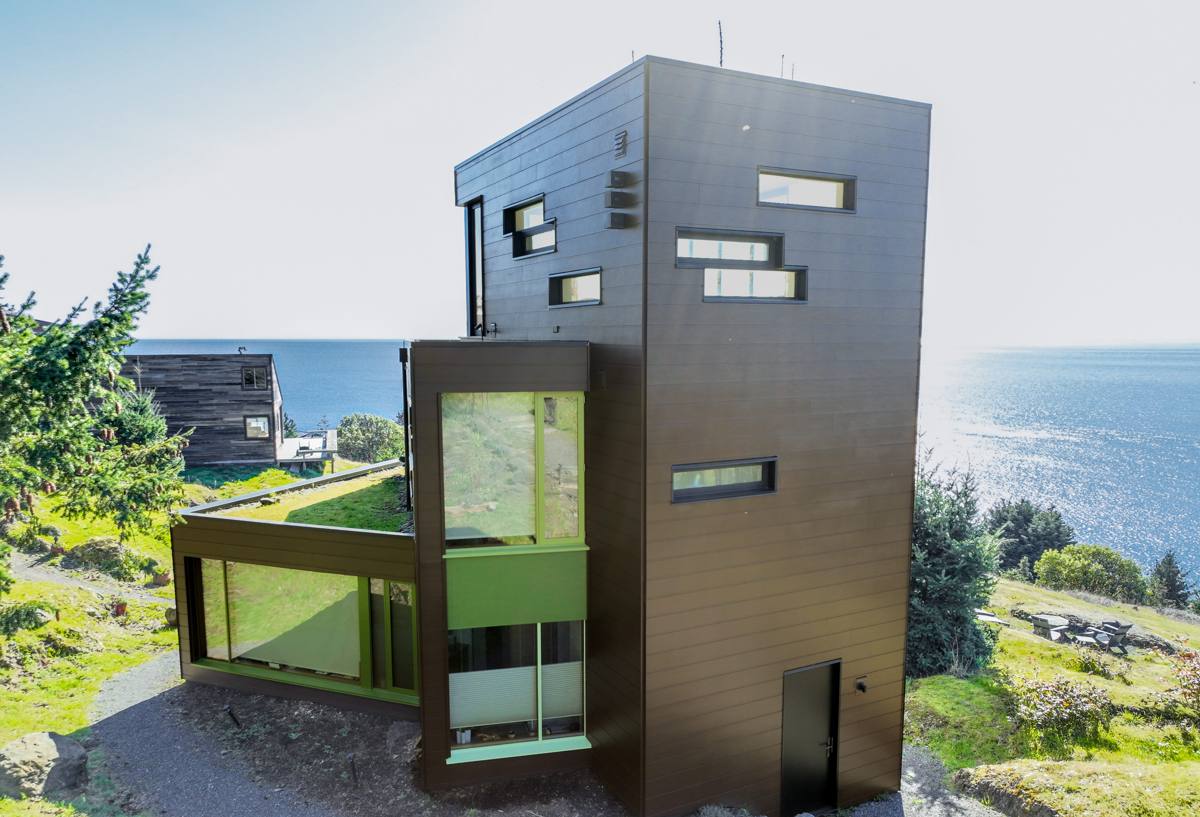
What Birch Bay's Climate Actually Does to Siding
Salt Air and Corrosion
Direct waterfront exposure means Birch Bay homes deal with more salt content in the air than most inland Whatcom County properties. Salt accelerates corrosion in fasteners, flashing, and any metal trim on the exterior, and it breaks down lower-grade finishes faster than a drier setting would. It also means the color and finish on the siding itself has to hold up to more than just UV — it has to resist a steady, low-grade mineral load in the air that slowly works on anything not built to shed it.
Wind-Driven Rain
Being on open water means more wind, and wind-driven rain doesn't behave like a normal rainstorm. It gets pushed sideways into siding laps, window flashing, and roof-to-wall transitions with real force, which is a heavier and more directional moisture load than a simple annual rainfall total suggests. Siding and flashing details that perform fine on a calm, sheltered lot a few miles inland can fail on a Birch Bay water-facing wall for exactly this reason — the water isn't falling on the house, it's being driven into it.
A Long Moss and Mildew Season
Mild temperatures, shade from trees on many lots, and near-constant moisture add up to a moss and mildew season that barely lets up most of the year in this part of Whatcom County. Shaded and north-facing siding runs are usually the first place it shows, and any siding material that's even slightly porous, or that holds moisture at the surface instead of shedding it, gives moss and mildew more time to establish before the next dry stretch arrives.
Why We Install Only James Hardie Fiber Cement Here
We used to install a wider range of siding products. We stopped after seeing, repeatedly, which materials held up on waterfront and marine-exposed homes like the ones in Birch Bay — and which ones developed problems within a handful of years despite looking fine at installation.
- Non-combustible core: Fiber cement doesn't feed a fire the way wood-based siding products can, which matters for safety and often for insurance.
- Factory-applied ColorPlus finish: Color is baked on under controlled factory conditions rather than applied in the field, so it holds up better against salt-tinged air and repeated wet-dry cycling than site-applied paint or stain.
- Climate-engineered HZ product lines: Hardie's HZ5 formulation is built for regions with heavy moisture exposure and freeze-thaw cycling — a close match for waterfront Whatcom County.
- Dimensional stability: Fiber cement doesn't swell, cup, or warp the way engineered wood products can after repeated wetting near open water.
- Strong transferable warranty: Hardie backs correctly installed product with one of the more substantial warranty structures in the siding industry.
We don't install LP SmartSide, vinyl siding, Cemplank, Allura, primed spruce, or cedar. Each has a place in the broader market, and plenty of homeowners elsewhere are satisfied with them. On a direct waterfront exposure like Birch Bay, though, we've made a professional call to stand fully behind one system rather than offer a cheaper alternative that shifts long-term maintenance and moisture risk back onto the homeowner.
What a Correct Installation Involves
Fastener Type and Spacing
Hardie's published installation specs call for specific fastener types, materials, and spacing, and that spec isn't a suggestion — it's what keeps panels secure through wind loading and lets the material expand and contract normally with temperature and moisture changes. On a wind-exposed water-facing wall, correct fastening matters more than it would on a sheltered inland elevation, because the wall is taking more direct load more often.
Clearance and Drainage Detailing
Proper clearance from grade, decking, and roof lines keeps the bottom edge of the siding from sitting in standing moisture, and rain-screen or drainage detailing behind the panels gives any water that does get past the surface a way out instead of a place to sit. On a Birch Bay lot where the water-facing side of the house may take rain the other three sides never see, that detailing needs to be built for the wettest wall on the house, not an average across all four.
Joints, Caulking, and Flashing
Every seam, joint, and transition — around windows, at corners, at the base of the wall — is a potential entry point for wind-driven moisture if it isn't sealed and flashed correctly. Factory-mitered corners, properly lapped joints, and flashing that ties correctly into the siding plane are what keep a wall system dry through a winter of sideways rain rather than a calm, still one.
How the Job Runs
- On-site walk: We look at the house wall by wall, noting which elevations face open water directly, which are shaded or set back, and where existing moisture or moss problems are already showing.
- Written scope and timeline: Before anything is removed, you get a clear scope of work covering material, drainage detailing, and schedule — no verbal-only agreements.
- Tear-off and inspection: Removing the old siding lets us check the sheathing and framing underneath for any existing moisture damage before new material goes on, rather than covering a problem back up.
- Weather barrier and drainage plane: A correctly lapped weather-resistive barrier and, where called for, a rain-screen gap go on before any siding, since this layer does as much work as the siding itself.
- Hardie installation to spec: Fastening, clearance, joint treatment, and flashing are installed to Hardie's published specifications, adjusted per wall for actual exposure.
- Trim, caulking, and cleanup: Final trim work and sealing are finished, and the site is cleaned up before we walk it with you.
Cost Factors for Fiber Cement Siding in Birch Bay
Every home is different, so we don't quote a number until we've walked the actual house, but these are the variables that typically move the price on a Birch Bay project specifically:
| Factor | Why It Affects Cost Here |
|---|---|
| Existing wall condition | Moisture damage found during tear-off on a water-facing wall may require sheathing or framing repair before new siding goes on |
| Wind exposure by elevation | Direct water-facing walls often need more thorough drainage and flashing detailing than sheltered sides of the same house |
| Siding profile and trim complexity | Lap width, trim detail, and corner treatment all affect labor time independent of the base material cost |
| Access and site conditions | Waterfront lots with limited access, slopes, or tight setbacks can add time to material staging and scaffolding |
| ColorPlus finish selection | Factory-finished color eliminates a field-painting step but is priced as part of the material |
Signs Existing Siding Is Struggling in This Climate
- Visible moss or dark streaking on shaded or north-facing walls that returns quickly after cleaning
- Soft spots, bubbling, or a chalky, faded finish, especially on the water-facing elevation
- Caulking that's cracked, shrunk, or pulled away from joints and trim
- Rust staining below fasteners or metal trim pieces
- Visible warping, cupping, or gaps opening up at panel seams
- Interior wall or ceiling staining near an exterior wall after a windy storm
Why a Bellingham Crew That Already Works Birch Bay Matters
Two houses a short distance apart in Birch Bay can have genuinely different exposure — one with a full water-facing wall taking direct wind-driven rain, another set back or shaded by trees with a much easier time of it. A crew that works this stretch of Whatcom County regularly already knows that variation exists and plans drainage detailing, fastener choices, and flashing wall by wall instead of applying one generic approach to the whole house. That local judgment, built from repeated work in this specific climate rather than a single job, is a large part of what separates a siding job that looks good for a season from one that's still performing decades out.
Questions Worth Asking Before You Hire
- What siding material do they install, and why — and does it come with a written, transferable warranty?
- Are they currently licensed to do contracting work in Washington, with active liability insurance?
- How do they handle a direct water-facing wall differently than a sheltered one on the same house?
- Do they inspect sheathing and framing during tear-off, or just install over what's there?
- Will you get a written scope of work and timeline before any work begins?
Get an Honest Read on Your Birch Bay Home
If you're weighing options for siding on a Birch Bay property, we're glad to walk the exterior with you, look at how exposure varies wall by wall, and give you a straightforward, no-pressure estimate — no obligation either way.