 Bellingham Siding
 Birch Bay Roofs Work Harder Than Most
Birch Bay sits right on the water, and that changes what a roof has to deal with compared to a home a few miles inland in Bellingham. Wind coming off the Strait of Georgia hits these roofs at higher, steadier speeds during winter storm systems. Salt-laden air corrodes exposed metal faster. Driving rain gets pushed sideways into laps, flashing, and vents instead of just falling straight down. And the long, wet Whatcom County shoulder seasons keep roofs damp enough, long enough, for moss and algae to take hold almost every year. None of this means a Birch Bay roof is doomed — it means storm damage shows up differently here, and repairs done without that in mind tend to fail again at the next blow.
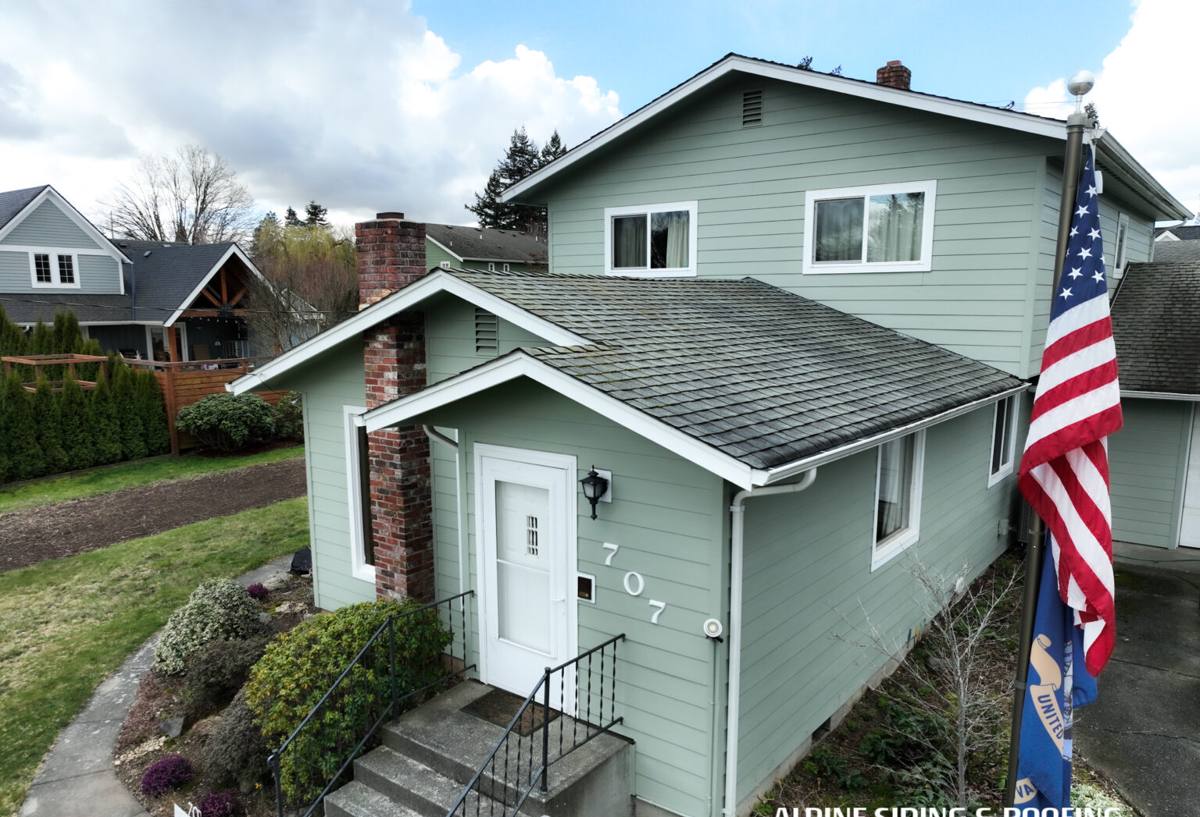
What Actually Counts as Storm Damage
Homeowners often picture storm damage as a hole in the roof or a tree branch through the ceiling. Most of what we get called out for in Birch Bay is quieter than that. Wind doesn't need to tear a roof apart to compromise it — it just needs to lift an edge.
Common Wind and Rain Damage We See
- Shingles lifted or creased along ridge lines and rake edges, where wind uplift is strongest
- Flashing pulled loose or bent around chimneys, skylights, and wall-to-roof transitions
- Granule loss on asphalt shingles from wind-driven rain and hail, thinning their protective layer
- Gutters torn from fascia boards, which redirects water back up under the roof edge
- Small punctures or bruising from wind-thrown debris — branches, cones, loose siding from a neighboring structure
- Wind-driven rain forced sideways under laps that would never leak in a straight-down rain
Any one of these can be small on its own. Combined with an already-aging roof or a spot where moss has been holding moisture against the shingles, they turn into interior leaks fast.
Why Visible Damage Isn't the Whole Story
The damage you can see from the ground — a missing shingle, a bent gutter — is rarely the full extent of what a storm did. The damage that causes real problems later is usually underneath.
| Visible Signs | What's Often Happening Underneath |
|---|---|
| A few shingles missing or curled | Adjacent shingles have loosened nails and reduced wind resistance, even if they look intact |
| Dented or bent gutter section | Fascia board and roof edge sheathing may have taken the same impact |
| Small water stain on a ceiling | Water has likely been tracking along rafters or decking for some time before surfacing |
| Moss buildup on the north-facing slope | Moisture is being held against the shingle mat, degrading it from underneath |
| No visible damage at all after a windstorm | Seals on nail heads and shingle tabs can be broken without any shingle actually moving |
This is the main reason we recommend a professional look after any significant wind event, even when nothing looks obviously wrong from the driveway.
What a Correct Storm Repair Actually Involves
A storm repair done right isn't just swapping out the shingles that are obviously gone. It's a sequence, and skipping steps is how the same leak comes back after the next storm.
The Steps We Don't Skip
- Stop further water entry. If there's an active leak or exposed decking, that gets tarped or covered the same visit — this isn't billed as the final repair, it's triage.
- Inspect past the obvious damage. We check the full slope, not just the spot that's failing, including flashing, vent boots, and adjacent courses of shingles.
- Check the decking. Water intrusion can soften plywood or OSB sheathing. Repairs go over solid decking, not over wood that's already spongy.
- Match materials correctly. Shingle color and profile matching, and using flashing metal and fasteners rated for coastal exposure, not just whatever's on the truck.
- Re-seal and re-secure properly. Correct nail placement and count matter more in a wind zone like this than in most inland neighborhoods.
- Confirm ventilation wasn't disrupted. Storm repairs sometimes get patched over ridge or soffit vents by accident, which causes moisture problems later.
How We Handle a Storm Repair Call in Birch Bay
Our process is the same whether it's a single lifted ridge cap or damage across an entire slope — we just scale the work to match.
From Call to Finished Repair
- Fast initial contact. After a storm, we prioritize active leaks and exposed roofs first.
- On-site inspection. We walk the roof (or use a lift/drone when pitch or access makes that unsafe) and document what we find with photos.
- Clear written scope. You get a plain-English explanation of what's damaged, what needs repair versus what's just cosmetic, and what it will cost — no pressure to upgrade beyond what the storm actually did.
- Insurance documentation, if needed. We provide the photos and written findings your adjuster will ask for; we don't handle your claim for you, but we make sure the roofing side of it is accurate.
- The repair itself. Scheduled around Whatcom County weather windows — we're not going to shingle a roof in the middle of a driving rain event.
- Cleanup and check. Magnetic sweep for nails, debris hauled off, and a final look to confirm the repair is watertight.
Why a Crew That Already Works Birch Bay Matters
General roofing knowledge gets you most of the way to a decent repair. It doesn't fully cover what a crew learns from working the same stretch of coastline season after season.
A crew familiar with Birch Bay knows which slopes take the worst of the wind off the water and tend to need reinforcement, not just patching. They know how fast salt air can chew through unprotected fasteners and flashing, and choose materials accordingly. They know which properties sit in enough shade or tree cover that moss comes back within a year unless it's actually addressed, not just power-washed off. And they're not learning the access, staging, or seasonal timing constraints of the area for the first time on your roof.
What Storm Repairs Typically Cost, and Why
We don't quote a flat number for storm repair because the range is genuinely wide — a single blown-off ridge cap and a wind-torn slope after an atmospheric river event are not the same job. What we can do is walk through what actually drives the price up or down.
| Factor | Why It Moves the Price |
|---|---|
| Extent of damage | A few shingles versus a full slope changes labor and material quantity directly |
| Decking condition | Rotted or soft sheathing has to be replaced before any new roofing goes down, adding material and labor |
| Roof pitch and access | Steep slopes or roofs surrounded by trees and tight lot lines take longer and may need extra equipment |
| Material match | Matching an older shingle line exactly can cost more, or may not be possible, pushing toward a broader repair |
| Flashing and metal work | Coastal-grade materials and proper detail work around chimneys and valleys add time but prevent repeat leaks |
| Insurance involvement | Claims add documentation steps but don't inherently raise the repair cost itself |
Most single-slope storm repairs on an average Birch Bay home land in the low-to-mid four figures; damage spanning multiple slopes or involving decking replacement runs higher. We'll always give you the real number in writing before work starts.
Simple Checks Between Storms
You don't need to get on the roof yourself to catch problems early. A few habits go a long way in a climate that stays wet as much of the year as this one does.
- Walk the property after any significant windstorm and look up for missing or lifted shingles
- Check gutters and downspouts are still firmly attached and draining, not overflowing onto fascia
- Look for moss buildup, especially on north-facing or shaded slopes, before it spreads
- Watch for water stains on interior ceilings near exterior walls or chimneys after heavy rain
- Have the roof looked at professionally if a storm produced sustained high winds, even without visible damage
- Keep tree limbs trimmed back from the roofline where wind could drive them into the surface
When to Call Right Away Versus When It Can Wait
Not every issue is an emergency, but some genuinely are. Active water coming through a ceiling, exposed decking after a shingle blow-off, or a large section of roofing visibly lifted all warrant a same-window call so we can get protection on the roof before the next rain moves through. Minor granule loss, a single displaced ridge cap with no interior signs of leaking, or light moss growth can typically wait for a scheduled inspection rather than an emergency visit. If you're not sure which category your situation falls into, describe what you're seeing and we'll tell you honestly whether it needs immediate attention.
If a recent storm has left you with damage — or you just want a roof that's already showing wear checked out before winter weather rolls back in — we're glad to come take a look. The estimate is free, there's no pressure to move forward, and you'll get a straight answer about what your roof actually needs.