 Bellingham Siding
 Why Metal Roofing Makes Sense for Cordata Homes
Cordata sits on the north side of Bellingham, close enough to Bellingham Bay and the Salish Sea that salt-laden air is a real factor in how roofing materials age, and far enough into the Pacific Northwest weather pattern that driving rain and a long, damp moss season are just part of owning a home here. A roof in this neighborhood isn't just shedding water a few months a year — it's dealing with wind-driven rain off the water, months of overcast humidity that keeps surfaces wet, and shaded, tree-lined lots that never fully dry out between storms. Metal roofing, installed correctly, handles that combination better than most alternatives. It sheds water fast, doesn't hold moisture against its surface the way organic shingle mat does, and with the right metal and finish, resists the salt-air corrosion that shortens the life of lesser materials. Done wrong, though, a metal roof in this climate can fail early at the flashings, fasteners, or panel seams — which is exactly where the details of installation matter most.
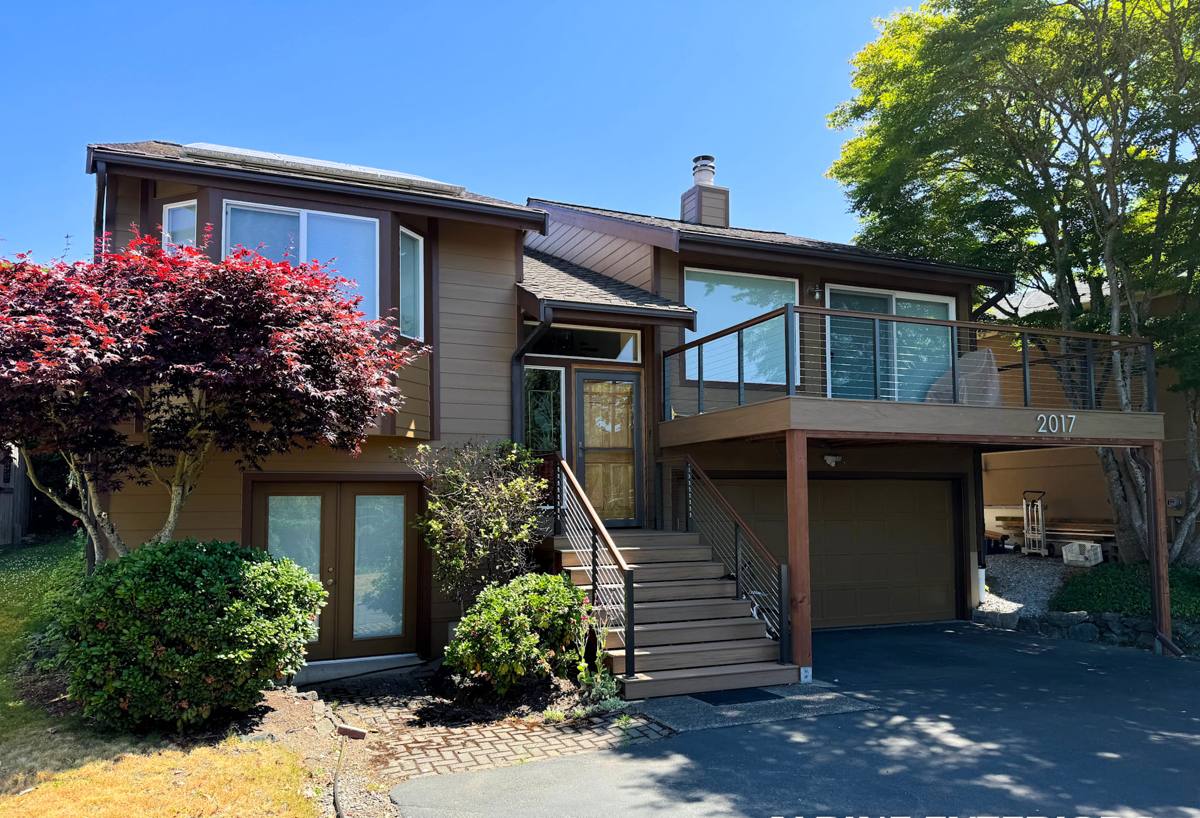
What Bellingham's Climate Actually Puts a Roof Through
Three regional factors shape every roofing decision in Cordata, and they compound each other rather than acting alone.
Salt Air
Proximity to Bellingham Bay means airborne salt is present even well inland, especially during winter storms with onshore wind. Salt accelerates corrosion on any exposed metal — fasteners, flashing, trim — and it doesn't discriminate between cheap and expensive materials if the wrong alloy or coating is used.
Driving Rain
Whatcom County gets weather systems that don't just fall straight down — wind pushes rain sideways into laps, seams, valleys, and wall-to-roof transitions. A roof that only sheds water well in calm conditions will leak here. Every seam, fastener, and flashing detail has to assume rain is moving horizontally at some point during the year.
A Long Moss Season
Cool temperatures, high humidity, and shaded lots from mature Pacific Northwest trees give moss and algae a wide window to establish themselves — often eight or nine months of the year. Moss holds moisture against roofing surfaces, works into laps and fastener penetrations, and accelerates decay on anything organic. It's less of a foothold problem on metal than on shingles, but valleys, gutters, and debris pockets still need attention.
Metal Panel Options for Cordata Homes
Not all metal roofing is the same product wearing different colors. The panel system you choose affects cost, maintenance, appearance, and how well it stands up to this specific climate.
| System | Fastening | Typical Lifespan | Maintenance | Best Fit |
|---|---|---|---|---|
| Standing seam | Concealed clips, no exposed screws on the field | 40-60+ years | Low — no exposed fasteners to fail | Homes prioritizing longevity and clean lines |
| Exposed-fastener panel | Screws through the panel face into decking or purlins | 25-40 years | Moderate — fastener washers age and need periodic checking | Budget-conscious projects, outbuildings, some homes |
| Stone-coated steel | Concealed or partially concealed, interlocking panels | 40-50 years | Low to moderate | Homes wanting a shingle or tile look with metal durability |
In a climate with this much wind-driven rain, the fastening method matters as much as the metal itself. Every exposed fastener is a future maintenance point and a potential leak path once its rubber washer hardens and cracks — which happens faster under UV and salt exposure than most homeowners expect. That's a real factor when weighing upfront cost against decades of ownership.
What a Correct Installation Actually Involves
Metal roofing fails almost never because of the metal itself — it fails because of shortcuts underneath it. A correct installation includes:
- Deck inspection and repair before anything goes down — soft or delaminated sheathing gets replaced, not covered over
- A self-adhered waterproof membrane at eaves, valleys, and any low-slope transition, where wind-driven rain and ice concentrate
- A high-temperature synthetic underlayment across the rest of the field, rated for the heat that can build up under metal
- Panel layout planned to minimize field cuts and keep seams running with, not against, prevailing wind and water flow
- Proper expansion allowance at panel ends and clips, since metal moves with temperature swings and rigid fastening cracks panels or tears loose over time
- Custom-formed flashing at every valley, wall transition, chimney, vent, and skylight — not generic stock pieces caulked into place
- Ridge and hip venting that keeps the attic dry without creating a path for wind-driven rain to enter
Caulk and sealant have a role in metal roofing, but they're a backup, not the primary waterproofing strategy. If a roof depends on sealant staying intact to stay dry, it's a matter of when, not if, that roof leaks — sealant degrades under UV and salt exposure faster than the metal or flashing around it.
Salt Air: Choosing the Right Metal and Finish
Not every metal roofing product is suited to a coastal-influenced climate like Cordata's. The base metal and its coating are what determine how the roof ages over the next few decades, not just its color at installation.
Steel panels need a corrosion-resistant metallic coating underneath the paint system — this is standard on quality panels and is what actually stops rust from starting at scratches or cut edges. On top of that, a baked-on paint finish rated for coastal exposure holds its color and chalk resistance far longer than a basic finish. Aluminum is inherently more corrosion-resistant than steel and is worth discussing for homes closest to the water or with a lot of exposed, uncoated trim. Fasteners and trim pieces matter just as much as the field panels — mismatched metals in contact with each other can set up galvanic corrosion, which shows up first at the smallest, cheapest parts of the roof.
We spec materials and finishes based on the specific exposure of a lot, not a one-size answer for every Bellingham address. A home in a sheltered, tree-covered part of Cordata doesn't need the same spec as one with a clear line to the water.
Moss, Algae, and Keeping Water Moving
Metal's smooth, hard surface gives moss far less to grip than the granular surface of asphalt shingles, and that's a genuine advantage in a climate with this long a growing season for it. That doesn't mean a metal roof is maintenance-free. Valleys, gutters, and any spot where leaves and needles collect will still hold moisture and give moss and algae a foothold if they're never cleared. Some lighter-colored finishes can show algae streaking over time in a shaded, damp climate, which is a cosmetic issue worth discussing honestly when choosing color, not something we'll pretend doesn't happen.
Gutters and downspouts sized correctly for the volume of wind-driven rain this area gets are part of a correct roofing job, not an afterthought. Undersized or clogged gutters back water up under drip edges and into fascia, regardless of how good the roofing above them is.
Our Process for Cordata Metal Roofing Projects
- On-site assessment — we look at the existing roof, deck condition, ventilation, and the specific wind and shade exposure of the lot
- Material selection — panel system, metal type, and finish chosen for that home's exposure and the homeowner's budget and style
- Measurement and ordering — panels are ordered to the home's actual dimensions to minimize field cuts and seams
- Tear-off and deck prep — old roofing removed, deck inspected and repaired where needed
- Underlayment and flashing — waterproof membrane at vulnerable areas, custom flashing formed for every penetration and transition
- Panel installation — panels set with correct fastening and expansion allowance for the system chosen
- Trim, ridge, and ventilation — finished out and checked for proper airflow
- Site cleanup and walkthrough — magnetic sweep for stray fasteners, full walkthrough with the homeowner before we call it done
Keeping a Metal Roof Performing Over the Years
A well-installed metal roof needs far less upkeep than shingles, but "less" isn't "none." A short annual routine catches problems while they're still cheap to fix:
- Clear gutters and valleys of leaves, needles, and moss buildup, especially heading into the wet season
- Check for any branches or debris resting against panels that could scratch the finish
- Look at flashing around chimneys, vents, and skylights for any lifting or sealant that's cracked
- Watch for any panel fasteners (on exposed-fastener systems) that look loose or have a failing washer
- After major windstorms, a quick visual check for shifted trim or debris impact is worth the five minutes
Why a Crew That Already Works in Cordata Matters
Roofing specs that work in a drier inland climate don't automatically hold up here. A crew that regularly works Cordata and the surrounding Bellingham area already knows the wind exposure patterns specific to this part of Whatcom County, understands local permitting through the City of Bellingham, and has relationships with suppliers who stock the coatings and panel profiles that actually perform in this climate rather than a generic national spec. That local familiarity also means fewer surprises mid-project — knowing which details a house of a certain age and construction type typically needs before the tear-off even starts, and being able to match new work to what's already common on neighboring roofs so the finished job looks like it belongs on the street.
If you're weighing a metal roof for your Cordata home, we're happy to walk the roof with you, talk through panel and finish options honestly, and put together a straightforward, no-pressure estimate using the form below.