 Bellingham Siding
 Why Window Replacement in Birch Bay Is Different
Birch Bay sits right on the water, and that changes what a window replacement job actually needs to accomplish. Homes here take a steadier beating from salt-laden air, wind-driven rain coming off the strait, and the long gray stretch of moss season that settles over Whatcom County for much of the year. Windows that would hold up fine ten miles inland can start showing seal failure, corroded hardware, or soft framing years earlier out here. A window replacement in Birch Bay isn't just a cosmetic upgrade — it's a chance to correct whatever let moisture in the first time and to spec materials that are actually suited to a marine microclimate.
We treat every Birch Bay job with that context built in from the first walkthrough. That means paying close attention to exposure — which walls face the water and prevailing wind, which elevations get the most driving rain — and adjusting flashing, sealants, and even window selection accordingly.
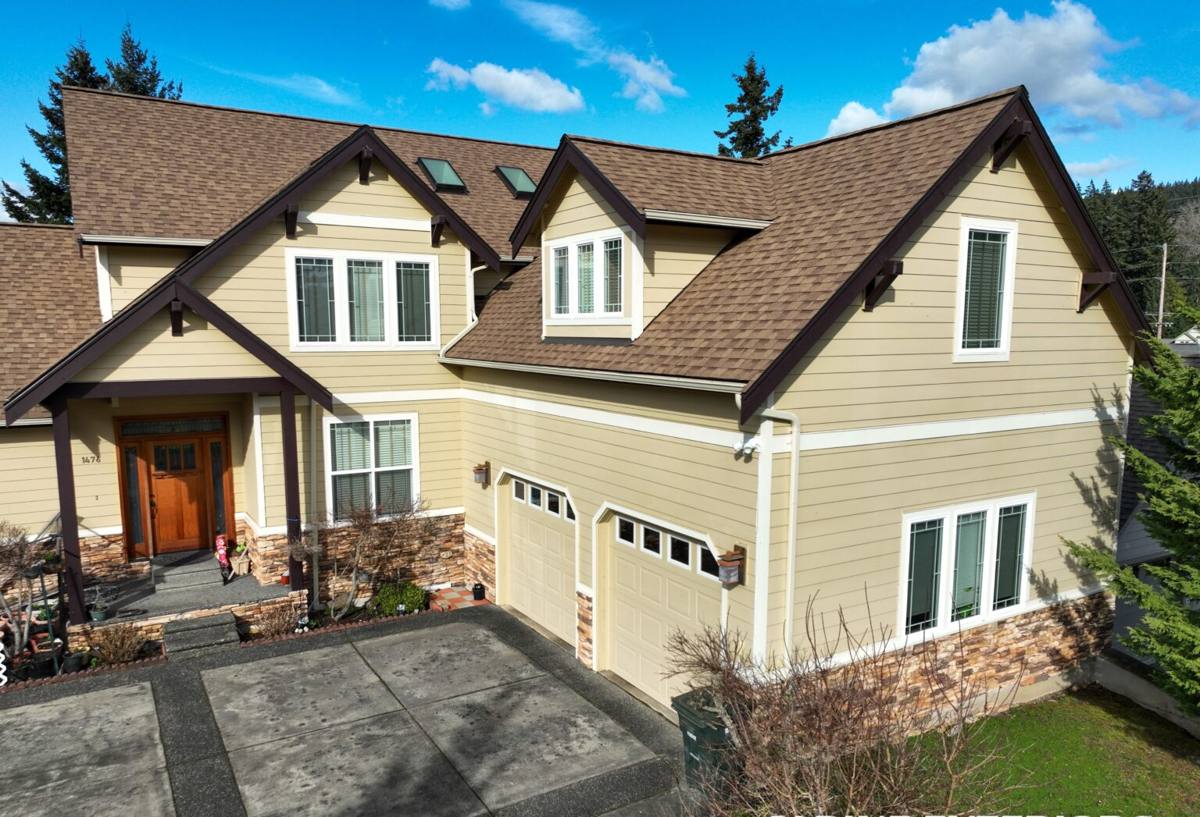
Signs Your Windows Have Had Enough
Coastal exposure tends to show up in specific, recognizable ways. Most Birch Bay homeowners who call us are dealing with one or more of the following:
- Fogging or a permanent haze between panes — the seal has failed and the gas fill or insulating airspace is gone
- Hardware (locks, cranks, hinges) that's stiff, corroded, or has visible rust bleed on the sill
- Soft or spongy wood at the sill or lower frame corners, often hidden under paint until it's pressed
- Drafts or a cold radiating feel near the glass even with the window fully latched
- Visible moss or algae staining on the exterior trim around the window opening
- Difficulty opening, closing, or latching — frames swelling and shrinking with seasonal moisture
- Condensation forming on the interior glass or sill during cold, wet stretches
Any one of these on its own might just need attention. Several at once, especially paired with soft framing, usually means the window and the water management around it both need to be redone properly rather than patched.
What a Correct Window Replacement Actually Involves
It Starts Below the Surface
The window unit itself is often the easy part. What determines whether a replacement lasts is what happens at the rough opening before the new window ever goes in: removing the old unit cleanly, inspecting the framing and sheathing for rot or hidden water damage, and correcting anything compromised before it gets sealed back up. In a place that gets as much wind-driven rain as Birch Bay, skipping this step is how a brand-new window ends up with the same rot problem in five years.
Flashing and Water Management
Proper flashing — head flashing above the window, sill pan flashing below, and correctly lapped weather-resistive barrier at the sides — is what actually keeps water out over the long run, not the caulk bead around the trim. We install a sill pan on every replacement so that any water that does get past the window has somewhere to drain instead of sitting on bare wood. This is the single most important step for a coastal install and the one most likely to be shortcut by crews who don't work this area regularly.
Sealing and Insulation
Once the window is set, plumb, level, and properly shimmed, the gap between the frame and rough opening gets insulated (not just caulked over) and sealed on both the interior and exterior sides. A window can be well-flashed on the outside and still perform poorly if the interior air seal is sloppy — that's usually where the drafts and condensation come from in an otherwise sound install.
Choosing Windows for a Marine Climate
Frame material and glass package both matter more here than in a drier, inland setting. There's no single right answer for every home, but the trade-offs are worth understanding before you pick.
| Frame Material | How It Handles Salt Air & Moisture | Maintenance |
|---|---|---|
| Vinyl | Won't corrode or rot; performs well in coastal conditions; quality varies a lot by manufacturer | Low — occasional cleaning |
| Fiberglass | Very stable dimensionally, resists moisture and salt exposure well, holds paint if you want a custom color | Low |
| Aluminum | Durable but conducts cold and can corrode over time near saltwater unless it's a marine-grade finish | Moderate |
| Wood / Wood-clad | Best insulating and traditional look, but bare or poorly maintained wood is the most vulnerable to this climate | High — requires regular upkeep |
For most Birch Bay homes we recommend vinyl or fiberglass for the moisture resistance alone, reserving wood or wood-clad for homes where the look is a priority and the owner understands the added upkeep. Whatever frame material you land on, we'll walk you through why — this isn't about pushing one product, it's about matching the window to your home's actual exposure.
Glass Packages Worth Discussing
Double-pane windows with a low-E coating and argon gas fill are the practical baseline for this climate — they cut down on both heat loss and the condensation that shows up on cold, humid mornings. Homes on the more exposed, water-facing side of the neighborhood sometimes benefit from upgraded glass packages for added durability and noise reduction, which we can price out during your estimate.
How Our Process Works
1. On-Site Assessment
We look at every window being considered, note which elevations take the worst weather, and check for any existing moisture or rot damage before we ever talk products.
2. Honest, Itemized Estimate
You get a written estimate that breaks out materials, labor, and any framing repair we can identify up front — no vague lump-sum numbers.
3. Correct Installation
Old windows out, framing inspected and repaired as needed, sill pan and flashing installed, new window set and shimmed, sealed inside and out.
4. Final Walkthrough
We test every operable window with you before we consider the job done — smooth operation, tight seal, clean sightlines, and a tidy site when we leave.
What Affects the Cost
Every home is different, but the same handful of factors drive most of the variation in price from one Birch Bay project to the next:
| Factor | Why It Matters |
|---|---|
| Number and size of windows | Larger openings and specialty shapes (bay, arched, oversized) cost more in both materials and labor |
| Frame material chosen | Vinyl is typically the most budget-friendly; fiberglass and wood-clad run higher |
| Condition of existing framing | Rot repair at the rough opening adds time and material beyond the window itself |
| Access and elevation | Second-story or hard-to-reach windows take more setup time and equipment |
| Glass package | Upgraded low-E coatings or added panes increase per-unit cost but improve performance |
Broadly, a straightforward vinyl window replacement runs less per unit than a wood-clad or fiberglass upgrade, and full-house projects typically bring a lower per-window cost than replacing just one or two. We'll give you real numbers once we've seen the home — we don't quote sight unseen.
Why Local Experience in Birch Bay Matters
A crew that mostly works drier, inland neighborhoods can still do a technically fine window install and have it underperform out here simply because they weren't thinking about salt exposure, wind direction, or how long moss season actually runs in this part of Whatcom County. Working Birch Bay regularly means we already know which elevations tend to take the brunt of the weather, what kind of hidden rot to expect when we open up an older sill, and which materials hold up versus which ones just look good on install day. That's not a marketing point — it's the difference between a window replacement that's still tight and dry in fifteen years and one that needs attention again in five.
Caring for Your New Windows in a Coastal Climate
A correctly installed window still benefits from a little seasonal attention in a place like this:
- Rinse salt residue off exterior glass and frames periodically, especially after storms
- Check and clear weep holes on vinyl and aluminum frames so water can drain properly
- Wipe down tracks and hardware to keep moss and algae from taking hold
- Inspect exterior caulking annually and touch up before gaps form
- Keep an eye on nearby vegetation or gutters that funnel extra water toward window openings
None of this is heavy maintenance — it's the kind of upkeep that, done once or twice a year, keeps a well-installed window performing the way it's supposed to for the long haul.
If your Birch Bay home has windows showing any of the signs above, or you're simply ready to stop fighting drafts and fogged glass, we're happy to take a look and put together a straightforward, no-pressure estimate. Use the form below to get started.