 Bellingham Siding
 Decks in Birchwood Face a Different Climate Than a Catalog Design Assumes
Most deck plans, whether they come from a big-box store or a generic online design tool, are drawn up without any particular climate in mind. That's a problem in Birchwood. Homes here sit close enough to Bellingham Bay to catch salt-laden air, and Whatcom County's marine weather means long stretches of steady, driving rain rather than short, heavy downpours. Add a moss season that can run from early fall through late spring, and a deck that would hold up fine in a drier inland climate can start showing problems here within a couple of years.
Building a custom deck for a Birchwood home means designing and installing it for these exact conditions from the start, not adapting a standard build after the fact. That affects material choice, fastener selection, framing details, and even how the deck is oriented and drained.
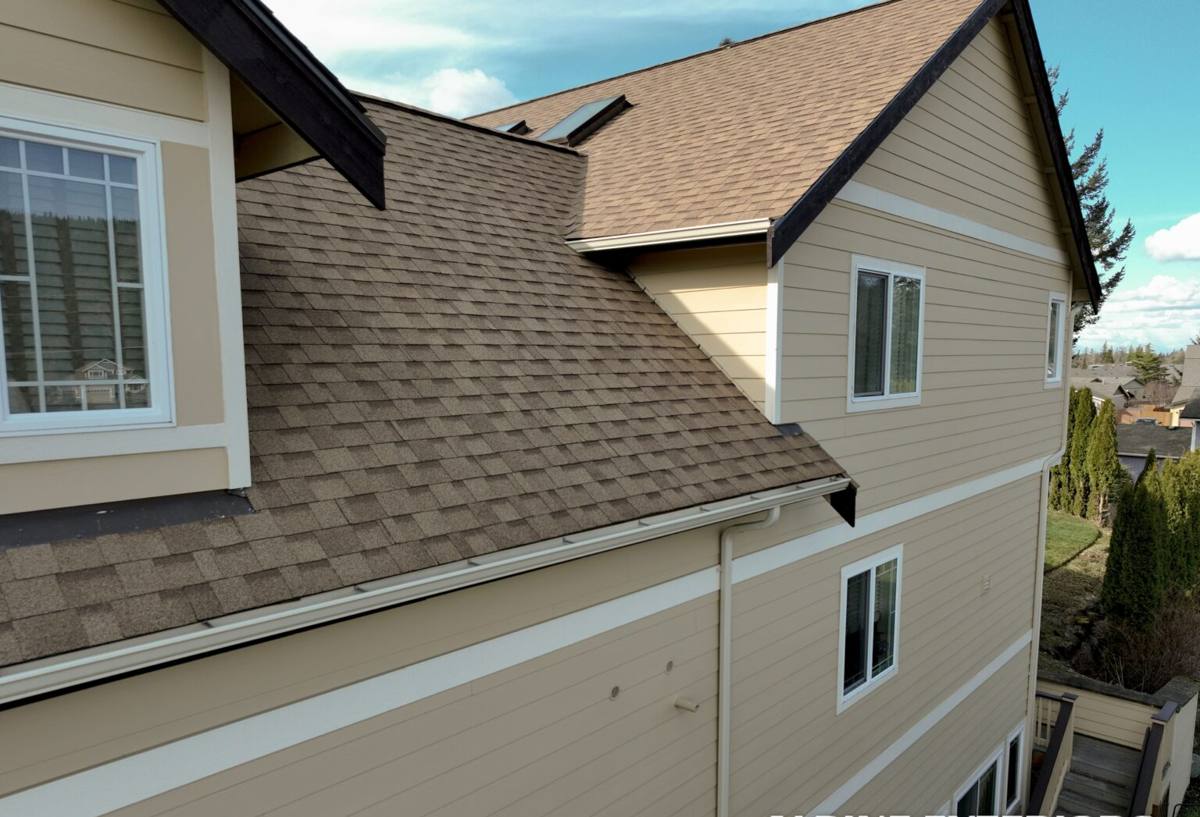
What Bellingham Bay's Marine Air Does to a Deck
Salt Air and Metal Corrosion
Salt-laden air accelerates corrosion on any exposed metal — nails, screws, joist hangers, post bases, and railing hardware. Standard coated fasteners that work inland can start rusting and staining decking boards within a season or two near the water. In a coastal-influenced area like Birchwood, hardware needs to be rated for that exposure, not just for contact with treated lumber.
Driving Rain and Water Intrusion
Whatcom County rain tends to come in at an angle during winter storms, which means water gets pushed into places a vertical rain would never reach — under railing caps, behind ledger boards, into end-grain cuts that weren't sealed. A deck that isn't detailed for wind-driven rain will eventually take on moisture in exactly those hidden spots, long before any rot is visible from the surface.
The Long Moss Season
Shaded, damp decks in this area can grow moss and algae for most of the year, not just in deep winter. Moss holds moisture against the wood or composite surface, keeps boards from drying out between rains, and turns the deck surface slippery. Left unaddressed, it accelerates surface wear on wood decking and can stain lighter-colored composite boards.
What a Correctly Built Deck Needs in This Climate
A deck that's going to hold up in Birchwood needs a handful of details done right — most of which aren't visible once the project is finished, but all of which determine how the deck ages.
Framing and Ventilation
Joists and beams need enough clearance under the deck for air to move, so the framing can dry out between rain events instead of staying damp for weeks at a time. Low-clearance decks built tight to the ground are one of the most common causes of premature rot we see in this region.
Fasteners and Connectors
We use stainless steel or coastal-rated, hot-dip galvanized fasteners and structural connectors on decks in areas with salt air exposure, matched to the type of treated lumber being used. Mixing the wrong metal with certain treated lumber chemicals speeds up corrosion, so fastener choice isn't just about strength — it's about chemical compatibility, too.
Ledger Attachment and Flashing
The ledger board — where the deck attaches to the house — is the single most common failure point on any deck, and it's almost always a water problem, not a structural one. Proper flashing at the ledger, with the right lap order between the flashing and the house's existing water-resistive barrier, keeps rain from tracking behind the siding and into the wall framing. This detail matters everywhere, but it matters more here given how much rain this area sees over a typical winter.
Choosing Decking Material for a Birchwood Home
There's no single "best" decking material — the right choice depends on how much maintenance you want to take on, your budget, and how exposed the deck is to sun, shade, and moisture. Here's how the common options compare for this specific climate.
| Material | Upfront Cost | Moss/Moisture Resistance | Maintenance | Notes for This Climate |
|---|---|---|---|---|
| Pressure-treated lumber | Lowest | Fair — needs sealing | Annual cleaning and resealing | Budget-friendly, but requires the most upkeep to fight moss and graying |
| Cedar | Moderate | Good natural resistance | Periodic oiling or staining | Naturally resists rot and insects, but still needs cleaning to prevent moss buildup in shaded areas |
| Composite decking | Higher | Very good | Occasional washing | Won't rot, but can still grow surface algae/moss in low-sun spots if not cleaned |
| PVC decking | Highest | Excellent | Minimal | Fully synthetic, most resistant to moisture damage, best fit for heavily shaded or ground-level decks |
For decks in shaded or low-clearance spots — common on wooded Birchwood lots — we often steer homeowners toward composite or PVC decking specifically because of the moss issue, not just for looks. For sunnier, well-drained spots, real wood is still a solid, more affordable choice as long as the maintenance schedule is kept up.
Designing Around Your Lot, Not a Generic Layout
Grade and Drainage
Where your lot slopes, how close the deck sits to grade, and where water naturally runs all affect the design. A deck built over an area with poor drainage will trap moisture underneath it regardless of what decking material sits on top, which is why we look at drainage before we finalize a layout.
Sun Exposure and Tree Cover
Wooded and partially shaded lots are common in this area, and shade is the single biggest factor in how fast moss takes hold. We take note of which parts of a proposed deck will stay damp longest and plan board spacing, gap width, and material accordingly.
Sizing for How You'll Actually Use It
A custom deck should match how the space will be used — outdoor dining, a hot tub pad, a simple sitting area — rather than just filling the available footprint. Getting the size and shape right the first time avoids costly changes later and keeps the structural design efficient.
Our Deck-Building Process
- On-site consultation: we walk the property, assess grade, drainage, sun exposure, and how the deck will tie into the house.
- Design and material selection: we go over decking, railing, and framing options with honest trade-offs for cost and maintenance.
- Permitting: we handle the permit application and inspection scheduling required for the project.
- Framing and structural work: built with corrosion-rated hardware and proper ventilation clearance for this climate.
- Decking, railing, and finish work: installed with attention to fastener placement, gapping, and flashing details.
- Final walkthrough: we go over the finished deck and a maintenance plan suited to its exposure.
Permits and Local Requirements
Most attached decks, and many freestanding ones above a certain height, require a building permit from the local jurisdiction before work starts. Requirements can vary depending on the deck's size, height off grade, and proximity to property lines, so we confirm what applies to your specific project rather than assuming. Handling the permit paperwork and inspections is part of our process — it's one less thing for you to manage, and it protects you if you ever sell the home and need to show the work was done to code.
Keeping a Deck Ahead of Moss and Salt Air
Even a well-built deck needs some seasonal attention in this climate. A short, consistent maintenance routine goes a long way toward preventing the moisture and moss problems that shorten a deck's life.
- Sweep debris out of board gaps regularly, especially in fall, so water and organic matter don't sit and hold moisture
- Wash off moss and algae as soon as it appears rather than waiting until it's established
- Check exposed fasteners and hardware yearly for early signs of rust or staining
- Keep gutters and downspouts near the deck clear so runoff isn't draining directly onto or under it
- Reseal or stain wood decking on a regular schedule — don't wait for it to look gray and worn
- Trim back overhanging branches and nearby vegetation to improve airflow and sun exposure on shaded sections
- Inspect the ledger board area periodically for any signs of water staining on the siding above the deck
Why a Crew That Already Works in Birchwood Makes a Difference
A contractor who builds decks across a wide range of climates has to guess at what a given area needs. A crew that regularly works in Birchwood and the surrounding Bellingham neighborhoods already knows how the local mix of rain, shade, and salt air behaves on a deck over time — which fasteners hold up, which layouts trap moisture, and which decking materials are worth the extra upfront cost for a given lot. That local experience shows up in fewer callbacks and a deck that still looks and performs well years after it's built, not just on installation day.
If you're planning a new deck or replacing one that hasn't held up to Whatcom County weather, we're happy to take a look at your property and talk through honest options. Use the form below to request a free, no-pressure estimate.