 Bellingham Siding
 Deck Building for Birchwood Homes, Built for Bellingham's Climate
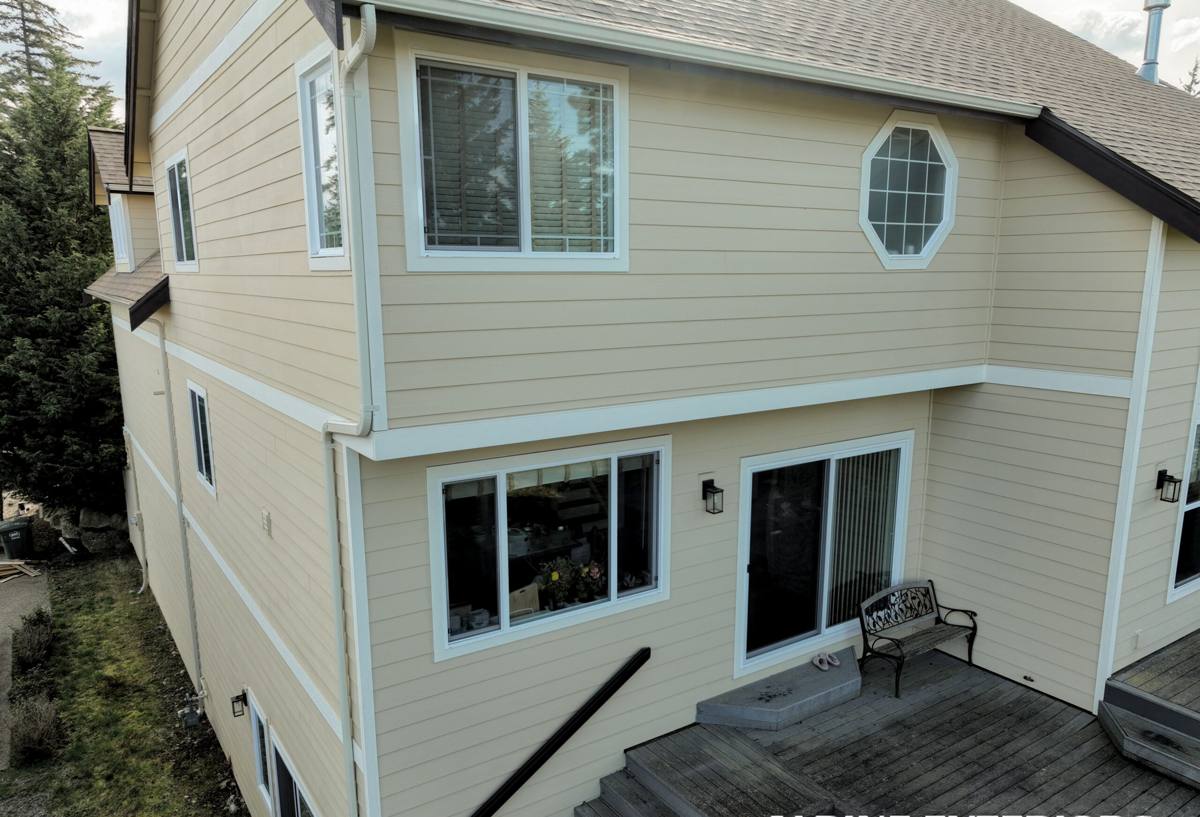
Birchwood is one of the more established residential pockets of Bellingham, with mature trees, older lot layouts, and homes that have been through a lot of Pacific Northwest weather. A deck built here has to deal with more than the average backyard project: months of steady rain, salt-laden air moving in off Bellingham Bay, and a moss and algae season that can run from fall through spring. A deck that would hold up fine in a drier climate can start showing rot, corrosion, and slip hazards within a few years if it wasn't built with this specific environment in mind. Our approach to deck building in Birchwood starts with the assumption that the deck will be wet, shaded, and exposed to salt air for most of the year — and we build accordingly.
What Bellingham's Weather Actually Does to a Deck
It helps to understand the specific failure modes we're designing against, because they're different from what you'd worry about in a drier or landlocked region.
Moss, Algae, and Standing Moisture
Whatcom County's long wet season means any deck surface that doesn't shed water quickly becomes a growing surface for moss and algae. On a wood deck, that moisture gets trapped against the board and works its way into the grain, accelerating rot from the inside out. On composite decking, moss and algae mostly stay on the surface, but a poorly ventilated deck can still hold moisture underneath long enough to cause problems with framing below.
Ledger Board and Framing Moisture
The single most common deck failure we see isn't the decking boards themselves — it's the ledger board and the framing hidden underneath. Driving rain pushed sideways by wind gets behind poorly flashed ledger boards and sits against house framing for months at a time. By the time it's visible from outside, there's often already structural rot behind the siding.
Salt Air Corrosion
Bellingham's proximity to the water means salt-laden air reaches inland neighborhoods, including Birchwood, more than most homeowners expect. Standard zinc-coated fasteners and hardware corrode faster here than their ratings suggest, especially at joist hangers and ledger bolts where a failure isn't cosmetic — it's structural.
Choosing the Right Decking Material for This Neighborhood
There's no single "best" decking material — the right choice depends on how much maintenance you want to do, your budget, and how much shade and moisture your specific lot gets. Here's how the common options compare for a climate like ours.
| Material | Moisture & Moss Behavior | Maintenance | Typical Lifespan Here |
|---|---|---|---|
| Pressure-treated wood | Absorbs moisture; needs sealing to resist moss and rot | Annual cleaning and re-sealing | 10-15 years with upkeep |
| Cedar | Naturally rot-resistant but still absorbs surface moisture | Periodic staining/sealing | 15-20 years with upkeep |
| Capped composite | Sheds water well; moss stays on surface, easy to clean | Occasional washing, no sealing | 25-30+ years |
| PVC decking | Fully moisture-resistant surface; best moss resistance | Occasional washing | 25-30+ years |
Wood costs less up front and can look great, but it asks the most of the homeowner in ongoing maintenance — and in a neighborhood with as much tree cover and moisture as Birchwood, that maintenance schedule matters more than it would in a drier climate. Composite and PVC cost more initially but hold up with far less intervention, which is why we see more homeowners here shifting toward them for anything that isn't a small, easily-resealed accent deck.
Being Honest About Trade-Offs
We don't push one material as universally "better." Wood has a warmth and repairability composite can't match — a damaged board is a simple swap. Composite and PVC cost more and, if a board is ever damaged, matching an older run's color can be harder. What we do insist on is matching the material to how much upkeep you're realistically going to do, because a wood deck that never gets resealed will fail faster here than almost anywhere else in the country.
Framing and Structural Decisions That Matter Here
The visible decking boards get all the attention, but the framing underneath is what determines whether a deck lasts 10 years or 30 in this climate.
- Ledger board flashing that directs water away from the house rather than trapping it against the siding
- Joist tape or a moisture barrier on top of every joist to stop water from soaking into end grain and fastener holes
- Proper footing depth and concrete work sized for Whatcom County soil and frost conditions, not a generic minimum
- Ventilation gaps and skirting details that let air move underneath the deck instead of trapping damp, shaded air
- Slope built into the substructure so water actually runs off rather than pooling under low spots
None of this is visible once the deck is finished, which is exactly why it's the part most likely to get shortcut on a rushed job. It's also the part that determines whether you're dealing with a soft, spongy deck frame in eight years or a solid one in twenty-five.
Hardware and Fasteners: Where Salt Air Does the Most Damage
Because Birchwood sits close enough to Bellingham Bay to get real salt exposure, we treat fastener selection as a structural decision, not a cosmetic one. That means stainless steel or heavy hot-dip galvanized hardware at every structural connection — joist hangers, ledger bolts, post bases — rather than the standard-grade coated fasteners that are fine in drier inland climates but corrode faster here. The cost difference on hardware is small relative to the total project; the difference in how the deck holds up over 15-20 years is not.
Our Deck Building Process
Every Birchwood deck project follows the same sequence, adjusted for the specific lot, tree cover, and drainage of the property.
- On-site assessment — we look at drainage, sun/shade exposure, existing structure (for replacements), and how the deck ties into the house
- Design and material selection — sizing, layout, and an honest conversation about which decking material fits your maintenance preferences and budget
- Permitting — we handle the permit application and inspection scheduling required for the project
- Demolition (if replacing an existing deck) — including a check of the ledger and framing behind it for hidden moisture damage
- Framing and structural work — footings, ledger flashing, joists, and moisture barriers installed to hold up under our wet season, not just pass inspection
- Decking, railings, and stairs — installed to manufacturer spec, with attention to fastening patterns that account for board movement in our wet-dry cycles
- Final walkthrough — we go over maintenance expectations specific to the material you chose before we consider the job done
Permits and Code in Bellingham and Whatcom County
Most new decks and many deck replacements in Bellingham require a building permit, and the requirements can differ depending on deck height, size, and whether it's attached to the house. Rather than guess at your specific situation, we pull the appropriate permit and coordinate inspections as part of the project — it's one less thing for you to track down, and it protects you if the deck is ever scrutinized during a future home sale or insurance claim.
Maintaining Your Deck After It's Built
A well-built deck still needs some seasonal attention in this climate, though how much depends heavily on the material you chose.
- Clear leaves and debris from the deck surface and gaps between boards before the wet season sets in
- Rinse off moss and algae growth on a schedule that fits your shade level — heavily shaded decks need this more often
- Check and reseal wood decking on the manufacturer's recommended interval, don't wait until it looks dry
- Inspect ledger board flashing and fastener heads once a year for early signs of corrosion or water staining
- Keep gutters and downspouts near the deck clear so runoff isn't dumping extra water onto or under the structure
Why Hire a Crew That Already Works in Birchwood
Deck building isn't complicated in theory, but building one that's still solid after fifteen wet Bellingham winters takes judgment calls that only come from doing it in this exact climate: how much slope to build into the frame given a specific lot's drainage, which fastener grade is worth the upcharge for a shaded, tree-covered yard, where moss is going to be a real problem versus a minor one. A crew that mainly builds in drier climates can still put together a deck that looks right on day one — the difference shows up years later, in the ledger board, the framing, and the hardware nobody sees until something fails.
If you're planning a new deck or need to replace one that's showing its age, we're happy to take a look and put together a straightforward, no-pressure estimate — just fill out the form below.