 Bellingham Siding
 Sehome's Roofs Take a Different Kind of Beating
Sehome sits close enough to Bellingham Bay to pick up salt-laden air, and close enough to Sehome Hill Arboretum and the neighborhood's mature tree canopy to stay shaded and damp for long stretches of the year. That combination is tougher on a roof than most homeowners realize. Salt air accelerates corrosion on exposed metal fasteners, flashing, and vent stacks. Shade from surrounding trees keeps roof decks from drying out fully between storms, which is exactly the condition moss and algae need to take hold. Add Whatcom County's driving rain — often blown sideways off the water during fall and winter systems — and you have a climate that finds every weak seam, every under-lapped shingle, and every soft spot in the decking underneath.
None of this means Sehome homes need exotic materials or gimmicks. It means the basics — tear-off, deck inspection, underlayment, flashing, and ventilation — have to be done correctly, with materials chosen for wet, shaded, coastal-adjacent conditions rather than a generic spec sheet.
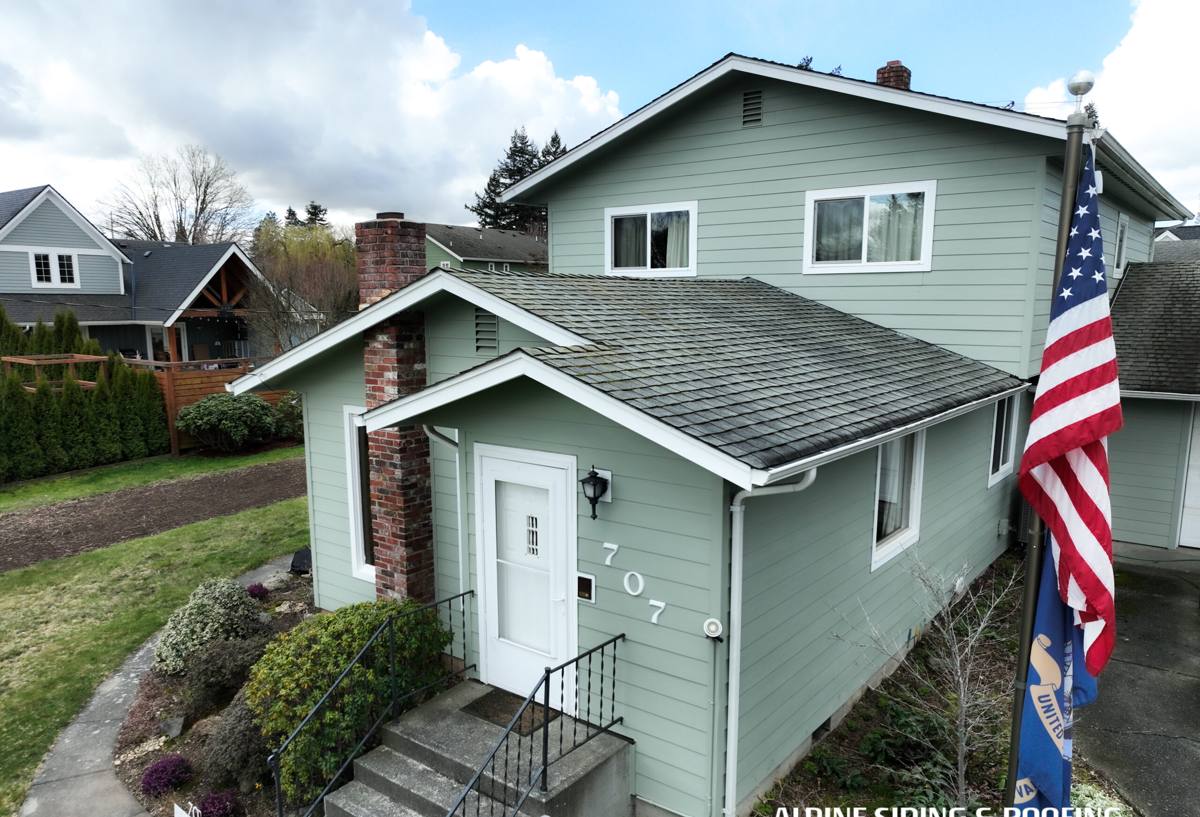
Signs a Sehome Roof Has Reached Replacement Age
Roofs in this part of Whatcom County often show wear earlier than the same product would in a drier climate, simply because they spend more days wet. A few signs we look for before recommending replacement over repair:
- Granule loss showing up in gutters or at downspout outlets, especially after a windy rain event
- Shingles that are cupping, curling at the edges, or visibly thinner than surrounding sections
- Moss mats thick enough to hold water against the shingle surface rather than just staining it
- Soft or spongy spots when walking the roof, which usually points to decking damage underneath
- Daylight or water staining visible in the attic, particularly around chimneys, skylights, and valleys
- Repeated flashing repairs in the same spot instead of the leak actually going away
One or two of these on their own might mean a targeted repair is enough. Several together, or a roof that's already at the tail end of its expected service life, usually means it's more cost-effective to replace than to keep patching.
What a Correct Roof Replacement Involves Here
Full Tear-Off, Not a Layover
We remove the existing roofing down to the deck rather than layering new shingles over old. That's the only way to actually inspect the plywood or plank decking underneath, and in a shaded, damp neighborhood like Sehome, hidden deck rot is common enough that skipping this step is a false economy.
Deck Repair Before Anything Goes Back Down
Any soft, delaminated, or water-damaged decking gets cut out and replaced before a single course of underlayment goes down. Roofing over bad decking just guarantees a shorter lifespan for the new roof, no matter how good the shingle is.
Underlayment Built for Wind-Driven Rain
Bellingham's storms rarely come straight down — wind pushes rain sideways under shingle tabs and up under starter courses. We use synthetic underlayment across the full roof and self-adhered ice-and-water shield at eaves, valleys, and any roof-to-wall transitions, which are the spots where wind-driven rain finds its way in first.
Flashing That Won't Corrode Prematurely
Given the salt air coming off the bay, flashing and fastener quality matters more here than it would further inland. We use corrosion-resistant flashing at chimneys, skylights, sidewalls, and valleys, and we don't reuse old flashing just to save a step — it's one of the most common points of failure on an otherwise sound roof.
Ventilation That Matches the Attic
A shaded, damp climate makes proper intake and exhaust ventilation more important, not less. Poor attic ventilation traps moisture, which shortens shingle life from underneath and can contribute to the same moss and algae growth we're trying to prevent on the surface.
Choosing a Roofing Material for This Climate
There's no single "best" roofing material for every Sehome home — pitch, tree cover, budget, and the look of the house all factor in. Here's how the common options actually compare for this specific climate, based on how they hold up in practice rather than marketing claims:
| Material | Moss & algae resistance | Wind-driven rain performance | Typical lifespan here | Maintenance needs |
|---|---|---|---|---|
| Standard architectural asphalt shingle | Moderate — algae-resistant granules help but don't eliminate growth in heavy shade | Good with proper underlayment and nailing | 20–25 years | Periodic moss removal, gutter checks |
| Algae-resistant (copper-granule) asphalt shingle | Better — copper granules actively inhibit algae growth | Good with proper underlayment and nailing | 25–30 years | Lower moss upkeep than standard shingle |
| Metal roofing (standing seam) | Very good — smooth surface sheds moss more easily | Excellent when properly flashed and fastened | 40–50+ years | Low, but fastener/coating quality matters near salt air |
| Synthetic/composite shingle | Good, varies by product | Good with proper installation | 30–40 years | Moderate |
For heavily shaded lots — common in Sehome given the tree canopy near the arboretum — we lean toward algae-resistant shingles or metal over standard asphalt, simply because the payoff in reduced moss maintenance tends to outweigh the modest upfront cost difference. We'll walk your specific roof, note the shade and pitch, and give you an honest recommendation rather than pushing whatever has the best margin.
A Note on Product Choices We Steer Away From
We're selective about certain low-end shingle lines and roll roofing products in this climate — not because they're inherently unusable everywhere, but because their moisture and algae performance in a shaded, high-rainfall setting like this doesn't hold up as well as mid- and upper-tier products over a 20-plus year timeframe. We'd rather explain that trade-off upfront than sell a cheaper product and have it underperform on your roof specifically.
How Our Replacement Process Works
- On-site inspection and estimate. We walk the roof (or use a lift/drone where pitch or access requires it), check the attic for ventilation and moisture signs, and measure for an accurate material quantity — not a rough guess.
- Written scope and material selection. You get a clear breakdown of tear-off, decking allowance, underlayment type, flashing detail, and the shingle or metal option we're recommending and why.
- Scheduling around the weather window. We plan tear-off days to minimize how long your deck is exposed, and we dry-in vulnerable areas the same day whenever possible.
- Tear-off and deck inspection. Old roofing comes off, decking is inspected and repaired as needed, and any surprises are shown to you before we cover them up.
- Underlayment, flashing, and installation. Ice-and-water shield at eaves and valleys, synthetic underlayment across the field, new flashing at every penetration and transition, then the roofing material itself.
- Ventilation check and final details. Ridge and soffit ventilation confirmed, boots and vents replaced rather than reused, and ridge caps finished.
- Cleanup and magnetic sweep. Full site cleanup including a magnetic nail sweep of the yard and driveway.
- Walkthrough. We walk the finished roof and the details with you before calling the job done.
Permits, Access, and Sehome's Housing Mix
Sehome has a mix of home vintages and some hillside lots with steeper pitches and tighter access than a flat, newer-build neighborhood. Roof replacement in the City of Bellingham typically requires a building permit, and we handle that process as part of the job rather than leaving it to the homeowner. Steeper or higher roofs also affect staging, fall protection, and how we sequence tear-off — details that matter more for safety and quality than they might seem from the ground, and details a crew unfamiliar with the neighborhood's housing stock might not plan for correctly.
Living With Your New Roof: Moss and Algae Prevention
A new roof still lives under the same trees and the same weather, so a bit of ongoing care goes a long way toward protecting the investment:
- Keep overhanging branches trimmed back where practical to reduce shade and debris on the roof surface
- Clear gutters and valleys each fall before the heavy rain season sets in
- Have moss physically removed rather than pressure-washed, which can strip granules and shorten shingle life
- Watch for zinc or copper strips at the ridge as an option to slow moss regrowth on shaded sections
- Schedule a quick visual check every year or two, especially after a big windstorm
None of this is intensive maintenance — it's the same kind of upkeep that keeps any roof in this climate performing for its full expected lifespan instead of falling short of it.
Why Local Experience on This Job Matters
A roof replacement is one of those projects where the difference between "installed" and "installed correctly for this climate" doesn't show up for a few years — and then it shows up all at once, as a leak, premature moss buildup, or corroded flashing. A crew that already works in Bellingham and Whatcom County knows to plan for wind-driven rain at eaves and valleys, to choose flashing and fasteners that hold up near the bay's salt air, and to account for shade and tree cover when recommending a shingle line. That's not something you can fully verify from a proposal on paper — it comes from having done the work on similar homes in similar conditions.
Get a Free, No-Pressure Estimate
If your Sehome home is showing signs of an aging roof, or you just want a straight answer on whether repair or replacement makes more sense right now, we're happy to take a look. The estimate is free, there's no pressure, and you'll get a clear explanation of what we see and what we'd recommend — use the form below to get started.