 Bellingham Siding
 Birch Bay Roofs Work Harder Than Most
Birch Bay sits right on the water, and that changes what a roof has to put up with compared to a home a few miles inland in Whatcom County. Salt-laden air off the Salish Sea accelerates corrosion on fasteners, flashing, and vent caps. Wind off the water drives rain sideways instead of straight down, which finds gaps that a calmer climate would never expose. And the tree cover and marine moisture that make Birch Bay a nice place to live also make it a very good place for moss to grow, for most of the year, on any roof that doesn't get much direct sun.
None of that means a Birch Bay roof needs exotic materials or constant babying. It means the repair work has to account for the actual causes of failure here, not the generic causes you'd address on a dry inland roof. A patch that would hold for a decade in a low-wind, low-salt neighborhood can fail in two or three years on a bluff-front or tree-shaded Birch Bay lot if it wasn't built for this exposure.
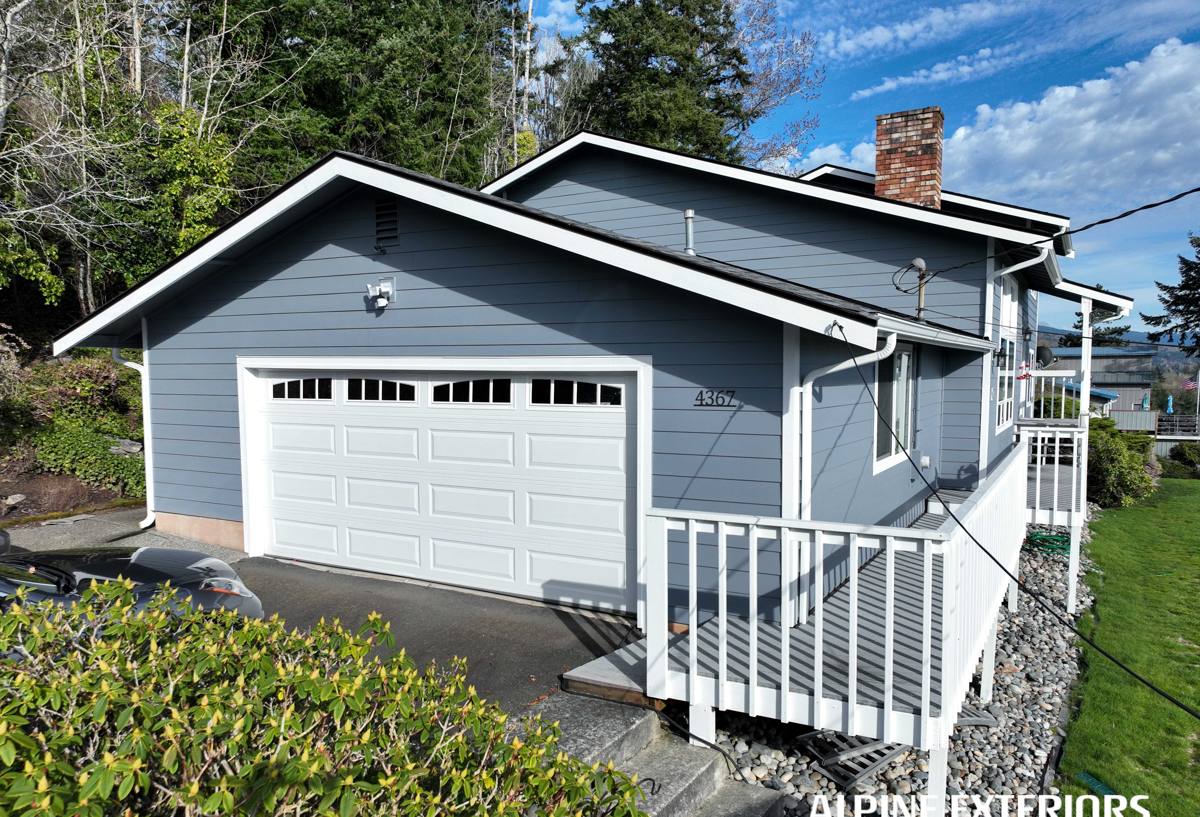
What We're Usually Called Out to Fix
After years of working roofs in this specific stretch of Whatcom County, the same handful of failure patterns show up again and again. Knowing them ahead of time is what lets a crew diagnose the real problem fast instead of guessing.
- Moss-lifted shingles: moss colonies grow under shingle tabs and lift edges, breaking the seal and letting wind-driven rain track underneath.
- Flashing failures at penetrations: vent boots, chimney flashing, and skylight curbs corrode or crack faster near saltwater, and that's where most active leaks start.
- Wind-driven rain intrusion: storms coming straight off the water push rain up and under shingle courses and ridge caps that would stay dry in a typical rain event.
- Corroded fasteners and metal edges: exposed nail heads, drip edge, and gutter metal pit and rust noticeably faster this close to salt air.
- Gutter and valley backups: needle and leaf debris from the tree cover common around Birch Bay clogs valleys and gutters, backing water up under the roofing.
Why a Real Repair Is More Than a Patch
Finding the actual source
The leak you see inside is almost never directly above the stain. Water travels along the underlayment or the roof deck before it finds a gap to drip through, so a repair that only addresses the visible spot often leaves the real entry point untouched. A correct repair starts with tracing the path: checking the flashing details, the shingle courses upslope, and any penetrations nearby before opening anything up.
Matching materials and technique, not just color
Shingle color match matters for appearance, but the more important match is the underlying technique — proper nail placement, correct headlap, and flashing that's integrated with the surrounding courses rather than caulked over the top. Surface-level sealant fixes are common shortcuts, and they tend to fail within a season or two, especially with the wind exposure Birch Bay gets.
Checking what caused the damage in the first place
If moss caused the lift, a repair that doesn't also address moss growth and drainage is a repair that will need redoing. If corrosion caused a flashing failure, replacing that flashing with the same unprotected metal in the same salt-air exposure just resets the clock. Part of doing this job right in Birch Bay is treating the cause, not only the symptom.
How Our Repair Process Works
- On-site inspection. We walk the roof (or use a ladder and binoculars/drone where walking isn't safe) and check attic space from inside when accessible, looking for moisture staining, deck softness, and the condition of flashing and vents.
- Honest diagnosis. We tell you what's actually failing and why, including whether it's an isolated repair or a sign of broader wear that's approaching the end of its service life.
- Written estimate. You get a scope of work and a price before anything is touched — no verbal-only quotes, no surprise add-ons once we're on the roof.
- The repair itself. This typically means removing and replacing damaged shingles or panels, correcting flashing details, resetting or replacing corroded fasteners, and clearing the debris or moss that contributed to the failure.
- Cleanup and check. We clear debris from gutters and valleys in the repair area and do a water test on active leaks when conditions allow, so you're not left wondering if it actually worked.
Repair or Replace? How We Help You Decide
Not every roof problem calls for a full repair, and not every roof problem means you need a new roof. The honest answer depends on the roof's age, how widespread the damage is, and whether the underlying materials are still sound.
| Factor | Repair usually makes sense | Replacement usually makes sense |
|---|---|---|
| Roof age | Under roughly two-thirds of expected shingle lifespan | At or beyond expected lifespan for the material |
| Extent of damage | Isolated to one slope, flashing point, or penetration | Spread across multiple slopes or the whole roof |
| Deck condition | Deck is solid where checked | Deck is soft, spongy, or showing rot |
| Moss/algae history | First occurrence or recently cleaned | Long-term staining with granule loss underneath |
| Prior repairs | This is the first or second repair call | Multiple repairs in recent years on different sections |
We'll tell you plainly which side of that table your roof falls on. If a repair is the honest answer, that's what we'll quote — a roof repair job doesn't need to turn into a replacement sales pitch.
Materials We Use and Why
For coastal Whatcom County repair work, we lean toward materials that hold up specifically against salt air and driving rain rather than whatever is cheapest to source. That usually means corrosion-resistant flashing and fasteners instead of standard galvanized where budget allows, and underlayment and sealants rated for the temperature swings and moisture exposure this area sees. We also try to match existing shingle profiles closely enough that a repair doesn't stand out as an obvious patch, though on older roofs a small color or texture difference is sometimes unavoidable since manufacturers change product lines over time — we'll tell you upfront if that's the case rather than pretending we can guarantee an invisible match.
We don't push premium upgrades on a repair call just because they exist. If a standard, well-installed flashing detail will do the job for the roof's remaining service life, that's what we'll recommend. Where we do suggest a step up in materials, it's because the standard option has a specific, explainable weak point in this exposure — not because it pads the invoice.
The Moss Season Problem, and What Actually Helps
Moss isn't just a cosmetic issue here — it's one of the leading causes of the shingle lift and granule loss we get called out for. Shaded roof sections, the moisture off the water, and mild winters combine to give moss a long growing window, longer than most inland Whatcom County neighborhoods see. A repair on a moss-damaged section without a plan for the moss itself is a short-term fix.
What actually helps, in rough order of what we typically recommend:
- Manual removal of moss during the repair, done carefully so shingle granules aren't stripped along with it.
- Keeping gutters and valleys clear so water doesn't sit and feed regrowth right at the edges.
- Trimming back overhanging branches where practical, to cut down on the shade and debris that feed moss growth.
- Zinc or copper strips at the ridge on shaded slopes, which release trace metals in rainwater that slow moss regrowth over time — not an instant fix, but a low-maintenance long-term one.
- Routine soft washing on a schedule that fits how shaded and exposed the specific roof is, rather than a one-size-fits-all yearly rule.
Signs It's Time to Call for a Repair
Most roof damage doesn't announce itself with a dramatic leak right away. It shows up as smaller signs first, and catching those early is what keeps a repair a repair instead of letting it turn into deck damage or a full re-roof.
- Dark streaking or visible moss patches, especially on shaded or north-facing slopes
- Shingle tabs that look lifted, curled, or out of line with the surrounding courses
- Granules collecting in gutters or at downspout outlets
- Rust staining running down from flashing, vents, or gutter seams
- Any ceiling stain, even a faint one, after a windy rainstorm
- Daylight visible through the roof deck from inside the attic
- Gutters or valleys that back up and overflow during heavy rain
If you're seeing any of these, it's worth a look before the next storm system comes through rather than after.
Why It Matters That We Already Work This Area
A crew that works Birch Bay regularly already knows which slope orientations grow moss fastest, which roof types in this exposure tend to show corrosion first, and how storms off the water actually move rain into a roof compared to a typical inland downpour. That's the difference between a repair that guesses at the cause and one that's built around it from the start.
Being based out of Bellingham also means we're not driving in from out of the area to look at a leak — if a storm damages a roof, we can get eyes on it and get a temporary fix in place quickly, which matters more here than in a drier climate where a delayed tarp job is less consequential. We're not the only contractor who can find your street; we just don't have to relearn Birch Bay's climate and roof stock every time we take a call here.
What a Fair Estimate Looks Like
A repair estimate should tell you exactly what failed, why, what we're doing about it, and what it costs — in writing, before work starts. It should distinguish clearly between what's needed now and what's worth keeping an eye on for later, rather than bundling everything into one large number. And it should be free to get, with no pressure to sign on the spot. If you're seeing signs of trouble on a Birch Bay roof, or just want a second opinion on a quote you already have, reach out for a free, no-pressure estimate using the form below.