 Bellingham Siding
 Metal Roofing Built for Birchwood's Weather
Birchwood sits close enough to the water and the marine weather patterns that move through Whatcom County that roofing decisions here can't be made the same way they'd be made somewhere inland and dry. Homes in this part of Bellingham deal with a specific combination of stressors: salt-laden air moving off the Sound, long stretches of driving rain that comes in sideways as much as it falls straight down, and a moss season that can run most of the year in shaded, north-facing sections of a roof. A roofing system that isn't specified for that combination will show it early — premature rust at fastener heads, soft spots where moss has held moisture against the deck, or streaking and staining that no amount of pressure washing fully removes.
Metal roofing, installed correctly, handles that combination better than most alternatives. It sheds water fast, gives moss very little to hold onto, and — when the coating and fastener system are chosen right for a marine environment — resists the corrosion that salt air accelerates. The qualifier matters: metal roofing done wrong in a coastal climate can fail in ways that are just as frustrating as any other material done wrong. This page is about what "done right" actually means for a Birchwood roof.
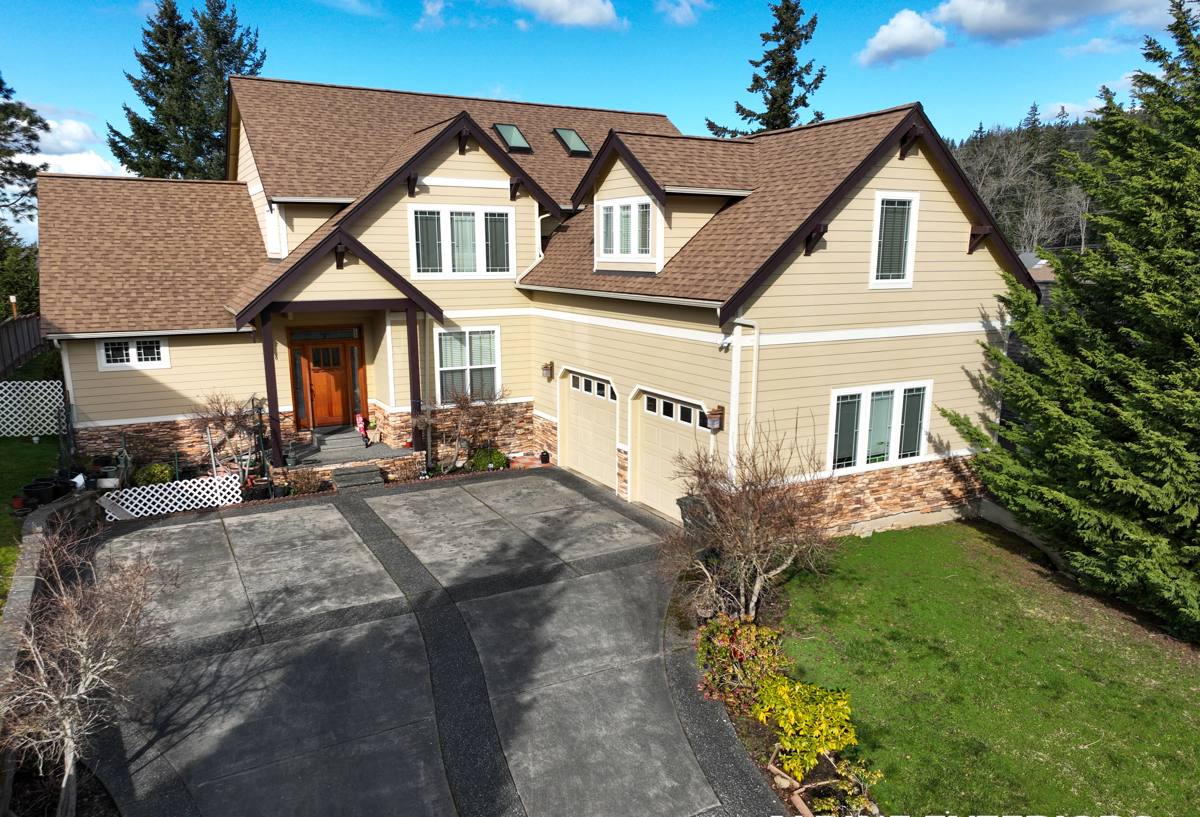
What Local Homes Actually Need From a Metal Roof
Salt Air and Corrosion
Proximity to salt water changes what "durable" means for exposed metal. Bare or poorly coated steel fasteners, flashing, and panel edges will corrode faster here than they would twenty miles inland. That doesn't rule out steel roofing — it means the coating system, fastener grade, and even the choice between steel and aluminum need to reflect how close the home sits to salt air exposure and how much shelter surrounding terrain and structures provide.
Driving Rain
Whatcom County storms don't always drop rain straight down. Wind-driven rain finds every weak seam, lap, and penetration on a roof, and it can travel uphill under shingles or through undersized laps if a system isn't detailed for it. Metal roofing's continuous panels and mechanically locked seams are a real advantage here, but only if the underlayment, flashing details, and panel overlaps are installed to handle wind-driven water, not just water falling vertically.
Moss and Shade
North-facing slopes, roofs under mature trees, and areas that stay damp longest are where moss establishes first. On a metal roof, moss has a much harder time getting a foothold on the panel field itself, but it can still take hold in valleys, around penetrations, or anywhere debris collects and holds moisture. A correctly installed metal roof reduces the moss problem significantly — it doesn't eliminate the need to keep an eye on debris accumulation.
Choosing the Right Metal Roofing System
"Metal roofing" covers several different products, and they're not interchangeable for every home or budget. The table below covers the systems we most often discuss with Birchwood homeowners.
| System | Best For | Coastal Durability | Relative Cost |
|---|---|---|---|
| Standing seam (steel or aluminum) | Homes wanting the longest service life and cleanest look | Excellent — concealed fasteners, fewer penetration points | Higher |
| Exposed-fastener metal panels | Budget-conscious projects, outbuildings, some residential roofs | Good, if fasteners and washers are correctly specified and maintained | Moderate |
| Stone-coated steel or metal shingles | Homeowners wanting a traditional shingle or shake look with metal's durability | Good — coating protects the panel field, but check fastener detailing | Moderate to higher |
| Aluminum panel systems | Homes closest to open water or heaviest salt exposure | Excellent — aluminum doesn't rust the way steel can | Higher |
For most Birchwood homes, standing seam steel with a quality coating is the workhorse choice — it balances cost, appearance, and long-term corrosion resistance well. Homes with more direct salt exposure, or owners who want the lowest possible long-term maintenance, sometimes step up to aluminum. We'll walk through which makes sense for your specific site during the estimate rather than defaulting to one answer for every home.
What a Correct Metal Roof Installation Involves
The panels themselves get the attention, but they're not what determines whether a metal roof performs for decades or develops problems in a few years. The details underneath and around them do.
Deck and Underlayment
The roof deck needs to be sound before anything goes on top of it — soft, water-damaged sheathing gets replaced, not covered. Over that, a synthetic or self-adhered underlayment rated for the panel system goes down as a secondary water barrier. In wind-driven rain conditions, this layer is what protects the deck if wind ever forces water past a seam or lap.
Fastening and Sealants
Fastener type and spacing are engineered for wind uplift, not just holding the panel down. In a marine climate, fastener coating matters as much as fastener grade — mismatched metals between the fastener and the panel can accelerate galvanic corrosion right where you least want a failure point. Sealants at laps and penetrations need to be compatible with the panel finish and rated for long-term UV and moisture exposure, not general-purpose caulk.
Flashing and Penetrations
Valleys, chimneys, vent stacks, and wall transitions are where most roof leaks actually originate, metal or otherwise. Correct flashing detail — proper laps, counterflashing, and sealed penetrations — is what keeps driving rain from finding its way in at these transition points.
Ventilation
Metal roofs perform best with balanced intake and exhaust ventilation in the attic space. Proper ventilation controls condensation on the underside of the panels and helps manage the moisture load that a damp Whatcom County climate puts on any attic.
Our Process for a Birchwood Metal Roof
- On-site assessment. We look at the existing roof, deck condition, ventilation, and how the home's exposure to wind, shade, and salt air should factor into the system we recommend.
- System selection. We walk through panel type, gauge, and coating options that fit the home, the budget, and the site — not a one-size answer.
- Tear-off and deck prep. Old roofing comes off, the deck is inspected, and any damaged sheathing is replaced before anything new goes down.
- Underlayment and flashing. Secondary water barrier, valley protection, and flashing details go in first, since these are what protect the home if the panel layer is ever compromised.
- Panel installation. Panels are installed to manufacturer spec for fastening pattern, seam engagement, and expansion allowance — metal roofing needs room to move with temperature changes.
- Final walkthrough. We review the completed roof with you, cover care basics, and make sure debris and materials are cleared from the site.
What Drives the Cost of a Metal Roof
| Factor | Why It Matters |
|---|---|
| Panel material and gauge | Aluminum and heavier-gauge steel cost more but hold up longer in salt air exposure |
| Roof complexity | Valleys, dormers, and multiple penetrations add labor and flashing work |
| Existing roof condition | Deck repair or full tear-off adds cost versus a straightforward re-cover |
| Coating and finish | Premium coatings cost more upfront but extend the interval before recoating or corrosion concerns arise |
| Access and pitch | Steep or hard-to-access roofs require more safety setup and labor time |
Because of these variables, an honest number only comes from actually looking at your roof. We're glad to give you a straightforward range once we've seen the site — we won't quote sight unseen, and we won't pad a number to leave room for "surprises" we should have caught during the assessment.
Keeping a Birchwood Metal Roof Performing Long-Term
Metal roofing is low-maintenance compared to most alternatives, but "low-maintenance" isn't "no-maintenance" in this climate. A little attention goes a long way toward getting the full service life out of the system.
- Clear debris from valleys and around penetrations, especially after fall storms and under overhanging trees
- Check that gutters and downspouts are running freely so water isn't backing up against roof edges
- Watch for any moss or algae establishing in shaded valleys or low-airflow areas, and remove it before it spreads
- Have fastener heads and sealant at flashing points visually checked periodically, particularly on exposed-fastener systems
- Address any scratches or coating damage promptly — exposed bare metal is where corrosion gets started
Why a Crew That Already Works Birchwood Matters
Metal roofing specs written for a dry inland climate don't automatically translate to a coastal Whatcom County home. A crew that regularly works in Birchwood and the surrounding Bellingham area already knows which fastener and coating combinations hold up against salt air locally, how local wind and rain patterns stress flashing details, and where moss tends to establish on roofs in shaded, damp microclimates like this one. That local pattern recognition is the difference between a roof that's simply installed correctly on paper and one that's actually built for the conditions it has to survive here, year after year.
If you're weighing metal roofing for a home in Birchwood, we're happy to take a look and give you a straightforward, no-pressure estimate — just fill out the form below and we'll get in touch.