 Bellingham Siding
 Building Decks for Blaine's Coastal Conditions
Blaine sits right on the water at the northern edge of Whatcom County, and that location shapes everything about how a deck should be built here. Homes near Semiahmoo Bay and Drayton Harbor deal with salt-laden air moving in off the water, near-constant winter rain, and a moss and algae season that can run eight months out of the year in shaded spots. A deck built to a generic spec sheet will show its age fast in this environment. A deck built for Blaine specifically holds up.
We've worked on homes throughout Whatcom County, from inland Bellingham lots to waterfront properties exposed to the open water and wind coming off the Strait of Georgia. The difference in what a deck needs is real, and it starts with the fasteners and ends with the finish.
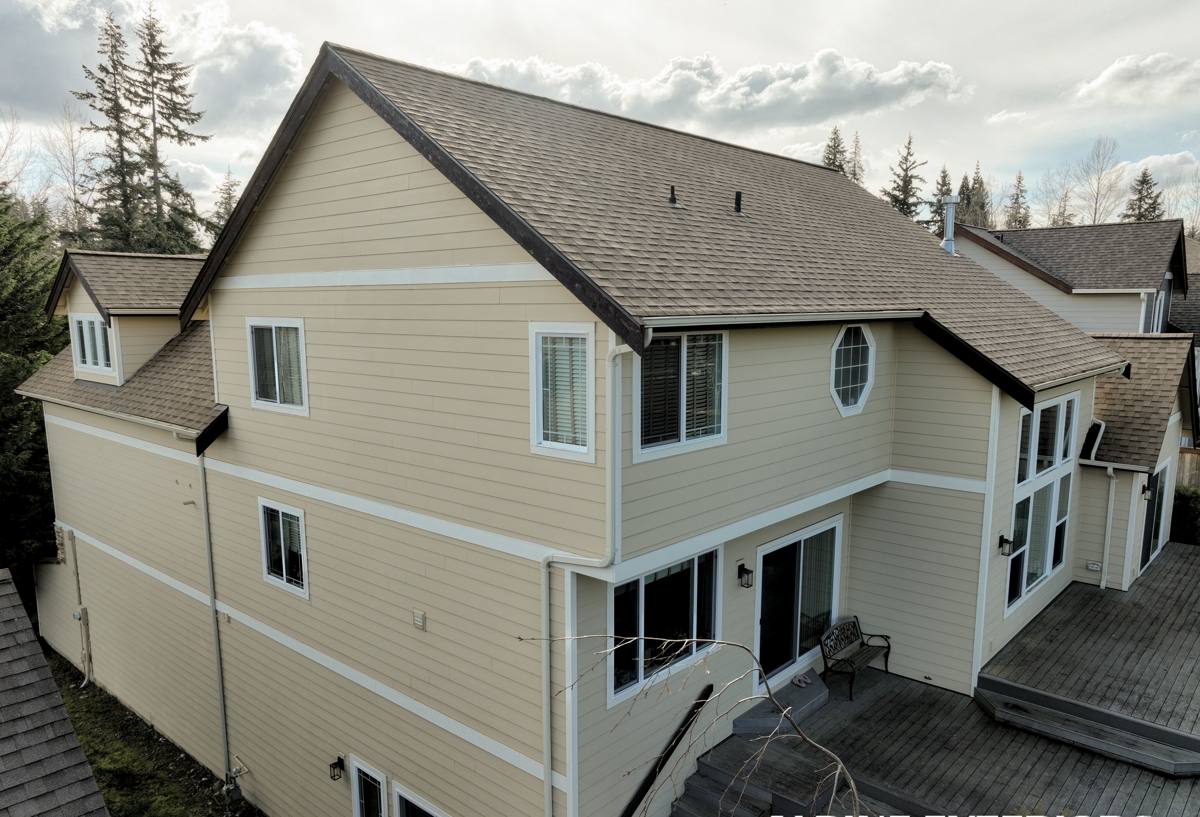
What Salt Air Actually Does to a Deck
Salt air is corrosive to metal, full stop. Standard hot-dip galvanized fasteners and hardware that would be fine forty miles inland can start showing rust streaks and pitting within a couple of seasons on a property with regular onshore wind. That corrosion isn't just cosmetic — it weakens the connection points that hold your deck together, particularly joist hangers, ledger bolts, and structural screws.
For Blaine builds, we use stainless steel or marine-grade coated fasteners and hardware at every structural connection, not just the visible ones. It costs more up front than standard galvanized hardware, but replacing corroded structural connections on a deck that's already built and decked over is a much bigger job than doing it right the first time.
Where Corrosion Shows Up First
- Joist hanger nails and screws, especially on the underside where moisture collects
- Ledger board lag bolts against the house rim joist
- Any exposed fastener heads on railing posts and stair stringers
- Deck screws in end-grain, where wood fibers wick moisture fastest
Driving Rain and Drainage Design
Whatcom County's rain doesn't always fall straight down — wind off the bay pushes it sideways, which means water gets driven into places a dry-climate deck design never has to account for: under railing base plates, into post-to-beam connections, behind ledger flashing. Getting water management right at the design stage matters more here than almost anything else.
A few things we build into every Blaine deck regardless of size or budget:
- Proper ledger flashing that directs water away from the house rim joist, not just a bead of caulk
- Gapped decking boards sized for the specific board material, so water sheds instead of pooling
- Post bases set above grade on approved connectors, never buried or set directly in concrete
- Beam and joist framing pitched slightly away from the house for positive drainage
- Stair stringers and any framing near grade treated or capped to limit ground moisture contact
None of this is exotic. It's standard good building practice — but it's the kind of detail that gets skipped when a crew is used to building in drier conditions and doesn't adjust for a coastal site.
Moss, Algae, and Surface Maintenance
Anyone who's owned a deck in Whatcom County for more than one winter knows the moss problem. Shaded north-facing decks, or decks under tree cover, can grow a slick green film by late fall that stays until the drier months return. Beyond being unsightly, moss and algae hold moisture against the decking surface and make stairs and walking surfaces genuinely dangerous.
Decking material choice matters a lot here, and it's worth being honest about the trade-offs rather than pushing one product as a cure-all.
Decking Material Comparison for Blaine's Climate
| Material | Moss/Moisture Resistance | Maintenance | Notes for Coastal Sites |
|---|---|---|---|
| Composite decking | Good — non-porous surface resists staining and moss root-in | Occasional wash-down, no sealing | Still needs periodic cleaning in shaded, salt-exposed areas |
| Cedar | Fair — natural oils resist rot but surface still hosts moss | Annual cleaning, periodic oil/seal | Ages to gray naturally; needs upkeep to avoid slick surfaces |
| Pressure-treated fir/pine | Fair — treated for rot but porous surface holds moisture | Regular sealing recommended | Budget-friendly, but shortest maintenance interval near the water |
| PVC/capped composite | Very good — fully sealed surface | Low — wash-down only | Higher upfront cost, best long-term performer in wet shade |
We'll walk through these trade-offs honestly based on your specific site — how much sun the deck gets, whether it's under trees, and how close it sits to the water. There's no single right answer for every Blaine property.
What a Correct Deck Build Involves
A deck is a structural project before it's a finish project. Framing, footings, and connections determine how the deck performs over the next twenty years far more than the decking boards on top. For Blaine specifically, that means:
Footings and Foundation
Footings sized and set to Whatcom County frost depth and soil conditions, with post bases that keep wood off wet ground. Waterfront and near-waterfront lots sometimes have sandier or less stable soil than inland properties, which we account for during design rather than assuming a standard footing spec will work everywhere.
Framing
Joists and beams sized for your actual load — furniture, hot tubs, and gathering space all change the engineering, not just the square footage. We use corrosion-resistant hardware throughout, as covered above, and space joists tighter than minimum code where boards or usage call for it.
Railings and Guards
Code-compliant height and baluster spacing, with hardware and post connections built to handle wind load off the water — Blaine gets more sustained wind than sites further inland, and railings take that load directly.
Permits and Local Code
Whatcom County and City of Blaine permitting requirements apply based on deck height, size, and attachment to the home. We handle the permit process as part of the job so you're not left figuring out inspection requirements on your own.
Our Process for Blaine Deck Projects
- Site visit and assessment — we look at sun exposure, wind exposure, existing drainage, and how close the site is to the water, since that changes material and hardware recommendations.
- Design and material selection — we walk through decking options, framing plan, and layout, with honest trade-offs for your budget and how much upkeep you want to take on.
- Permitting — we pull the required permits and coordinate inspections through the build.
- Framing and structural work — footings, posts, beams, and joists built with corrosion-resistant hardware and proper drainage detailing throughout.
- Decking, railing, and finish work — installed to the manufacturer's spec for your chosen material, with attention to fastener placement and board gapping for this climate.
- Final walkthrough — we go over basic maintenance for your specific decking material so you know what to expect in year one, five, and ten.
Why a Crew That Works Blaine Already Matters
There's a real difference between a contractor who builds decks generally and one who's built decks on Semiahmoo Bay, in Birch Bay, and elsewhere along Whatcom County's coastline. It shows up in the fastener spec written into the bid, in the flashing detail at the ledger, in knowing which corners of a lot get shaded long enough to grow moss even in July, and in not being surprised by how wind off the water loads a railing.
It also shows up in permitting — knowing what the City of Blaine and Whatcom County actually require for setback, height, and structural review saves time and avoids delays mid-project. A crew building here regularly has already worked through those requirements more than once.
Maintenance Checklist for a Blaine Deck
Whatever material you choose, a few habits go a long way toward getting the full lifespan out of a coastal deck:
- Rinse salt residue and debris off the surface a few times a year, more often if the deck is close to the water
- Keep gutters and downspouts near the deck clear so runoff isn't draining directly onto it
- Check railing post connections annually for movement or corrosion staining
- Clear moss and organic buildup promptly, especially on stairs, rather than letting it establish
- Trim back overhanging branches to reduce shade and speed drying after rain
- Reseal wood decking on the schedule appropriate to the product — don't wait until it's visibly gray and dry
Get a Straight Answer for Your Property
Every lot in Blaine handles sun, wind, and moisture a little differently, and the right deck build reflects that rather than a one-size-fits-all spec. If you're planning a new deck or replacing one that hasn't held up to the coastal conditions here, we're happy to take a look and give you a straightforward, no-pressure estimate — just fill out the form below.