 Bellingham Siding
 Blaine's Climate Is Harder on Siding Than Most Homeowners Realize
Blaine sits right where the Salish Sea meets the U.S.-Canada border, with Semiahmoo Bay and Drayton Harbor on its doorstep. That waterfront position is part of what makes the area beautiful, but it also puts every home's exterior under near-constant pressure. Salt-laden air moves inland off the water and settles on siding, trim, and fasteners year-round. Add Whatcom County's long, wet winters and the driving, wind-pushed rain that comes with fall and winter storms, and you have an environment that will find every weakness in a siding system within a few years, not a few decades.
Then there's moss. Blaine's shaded lots, mild temperatures, and extended damp season create ideal conditions for moss and algae growth on north-facing walls, under eaves, and anywhere siding stays wet longer than it should. Moss isn't just cosmetic — it holds moisture against the wall surface, and sustained moisture is the single biggest enemy of any siding material, wood-based or otherwise.
None of this means siding is doomed in Blaine. It means the material and the installation both have to be chosen and executed with this specific climate in mind, not a generic national spec sheet.
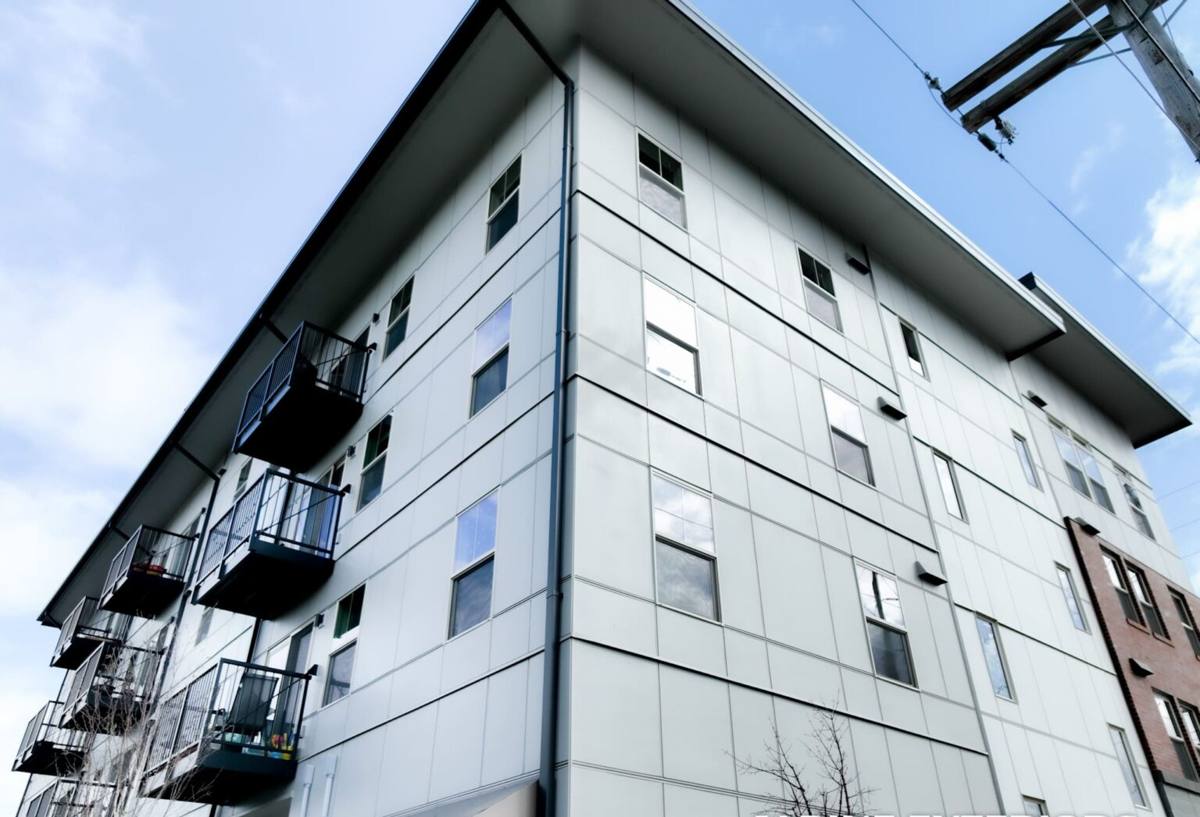
Why We Install Only James Hardie in Blaine
We made the decision to install James Hardie fiber cement exclusively, and we don't deviate from that on Blaine homes even when a cheaper product would close the sale faster. Fiber cement is not just wood-look siding with a different name — it's a cement, sand, and cellulose composite that doesn't absorb and hold moisture the way wood-based products do, and it doesn't degrade under UV and salt exposure the way vinyl does over time. For a coastal Whatcom County property, that difference in how the material handles water is the whole ballgame.
The HZ5 Climate Formulation
James Hardie engineers its siding in different formulations for different climate zones, and the Pacific Northwest falls under the HZ5 category — built to perform in regions with sustained moisture exposure and freeze-thaw cycling. That's a meaningfully different product than the versions sold in dry, warm climates. Using the correct zone-engineered product isn't a marketing detail; it affects how the board handles moisture cycling over its service life.
ColorPlus Factory Finish
Most of our Blaine installs use James Hardie's ColorPlus finish, which is baked onto the board at the factory under controlled conditions rather than sprayed or brushed on site. In a salt-air environment, a factory finish holds its color and its bond to the substrate far longer than field-applied paint, which tends to fail first at cut edges and fastener heads — exactly the spots most exposed to blown rain and salt.
What a Correct James Hardie Installation Actually Involves
The material is only half the equation. Fiber cement siding installed without proper moisture management will fail early no matter how good the boards are, and that's especially true on a Blaine home taking direct weather off the water.
Drainage and Clearance
Every wall needs a drainage plane behind the siding — a water-resistive barrier with a rainscreen gap that lets any moisture that gets past the siding drain and dry out instead of sitting against the sheathing. We also hold to manufacturer-specified clearances: siding kept off roof lines, decks, and grade, with proper flashing at every window, door, and penetration. Skipping these details is the single most common reason siding fails early in wet coastal climates, regardless of brand.
Fastening and Joint Treatment
James Hardie specifies fastener type, placement, and spacing for a reason — done wrong, boards can crack, cup, or work loose under the wind loads a waterfront property regularly sees. Butt joints and seams get treated per manufacturer detail so they don't become entry points for wind-driven rain. We follow the installation manual to the letter because it's written for exactly the conditions Blaine sees, not in spite of them.
How James Hardie Compares for a Blaine Home
| Factor | James Hardie Fiber Cement | Vinyl | Cedar / Untreated Wood |
|---|---|---|---|
| Salt air resistance | Strong — non-organic, factory-finished | Fair — can chalk, warp, and fade faster near salt spray | Weak — absorbs moisture, accelerates decay |
| Moss and moisture behavior | Resists moisture absorption when installed with a drainage plane | Sheds water but traps moisture behind panels if not vented | Highly susceptible to moss-driven rot |
| Fire resistance | Non-combustible | Melts and can deform under heat | Combustible |
| Typical maintenance | Periodic washing, caulk checks | Low, but cracks/fades are not repairable | Regular staining/sealing required |
| Finish longevity | ColorPlus factory finish holds color long-term | Color molded in but fades and chalks over time | Finish fails fastest of the three, needs reapplication |
We get asked regularly why we won't install vinyl or LP SmartSide as a lower-cost alternative. Vinyl expands and contracts with temperature swings and can become brittle over time in a coastal climate, and while it doesn't rot, it also isn't repairable when it cracks or fades unevenly. LP SmartSide is an engineered wood product — better than raw cedar in many ways, but it's still wood-based at its core, which means it depends heavily on caulking, paint maintenance, and cut-edge sealing to keep moisture out over the long run. In an environment like Blaine's, where wet weather is the rule rather than the exception, we'd rather stand behind a non-combustible cement-based product that doesn't rely on an unbroken paint film to keep water out.
Our Process for Blaine Siding Projects
Every home is different, but our approach doesn't change from job to job:
- On-site assessment of existing siding, sheathing condition, and moisture history — including checking for signs of past moss or water intrusion
- Removal of failing siding and inspection of the wall assembly underneath before anything new goes up
- Repair of any damaged sheathing or framing found during removal, documented and discussed with the homeowner before proceeding
- Installation of a proper water-resistive barrier and rainscreen drainage gap
- James Hardie HZ5 siding installed to manufacturer clearance, fastening, and flashing specifications
- Final walkthrough covering caulking, trim details, and what routine maintenance looks like going forward
We don't skip the tear-off inspection step, even when it slows the job down. On a coastal property, what's happening behind the old siding often matters more than what the new siding looks like.
Living With Fiber Cement Siding in a Moss-Prone, Salt-Air Climate
James Hardie siding is low-maintenance compared to wood, but "low-maintenance" doesn't mean "no maintenance," especially in Blaine. A periodic soft wash — plain water and a soft brush or low-pressure rinse, not a pressure washer aimed point-blank — keeps salt residue and early moss growth from building up on north- and west-facing walls. It's worth checking caulking at trim and window edges every year or two, since caulk is the one component that wears out faster than the siding itself in this climate. Keeping gutters clear and grading water away from the foundation also protects the bottom courses of siding, which take the brunt of splash-back during heavy rain.
Why Local Installation Experience Matters in Blaine
Manufacturer specs are the same on paper everywhere, but knowing how to apply them to a specific property takes local judgment. A crew that regularly works Blaine and the surrounding Whatcom County coastline knows which elevations take the worst of the wind-driven rain, where moss tends to establish first on a given roofline, and how much clearance really matters on a lot that sits low relative to the water. That's the kind of detail that doesn't show up in a general installation manual but shows up in how well the siding holds up ten years later.
What Drives Cost on a Blaine Siding Project
| Cost Factor | Why It Matters |
|---|---|
| Condition of existing sheathing | Hidden moisture damage found at tear-off adds repair scope before new siding goes on |
| Home size and wall complexity | More corners, gables, and trim details mean more labor and material cuts |
| Siding profile and finish selection | Lap width, texture, and ColorPlus color choice affect material pricing |
| Site access | Waterfront lots and tight setbacks can affect staging and equipment access |
| Trim and accessory scope | Fascia, soffit, and trim replacement alongside siding changes overall project cost |
We don't quote a job without seeing the home first — every one of these factors varies enough between properties that a number given sight unseen isn't a real estimate.
If you're planning a siding project on a Blaine home and want a straight assessment of what your walls actually need, we're happy to take a look. Reach out for a free, no-pressure estimate using the form below.