 Bellingham Siding
 Why Blaine Roofs Wear Out Faster Than the Manufacturer's Numbers Suggest
Blaine sits right on the water, tucked against Semiahmoo Bay and Drayton Harbor at the northern edge of Whatcom County, and that location shapes everything about how a roof ages here. Salt-laden air blows in off the bay almost daily, and it doesn't just make things smell like the ocean — it accelerates corrosion on metal flashing, fasteners, vent caps, and any exposed hardware. Combine that with long stretches of driving rain off the Strait of Georgia and a moss season that can run from fall through spring, and you have a climate that's genuinely tougher on a roof than most manufacturer warranty charts assume.
A shingle rated for a 25 or 30 year lifespan in a dry inland climate is not automatically going to hit that number on a Blaine roof facing the water. That doesn't mean the product is bad — it means the installation details (fastening, flashing metal choice, ventilation, underlayment) have to be dialed in for this specific environment, not just installed by the book for an average American house.
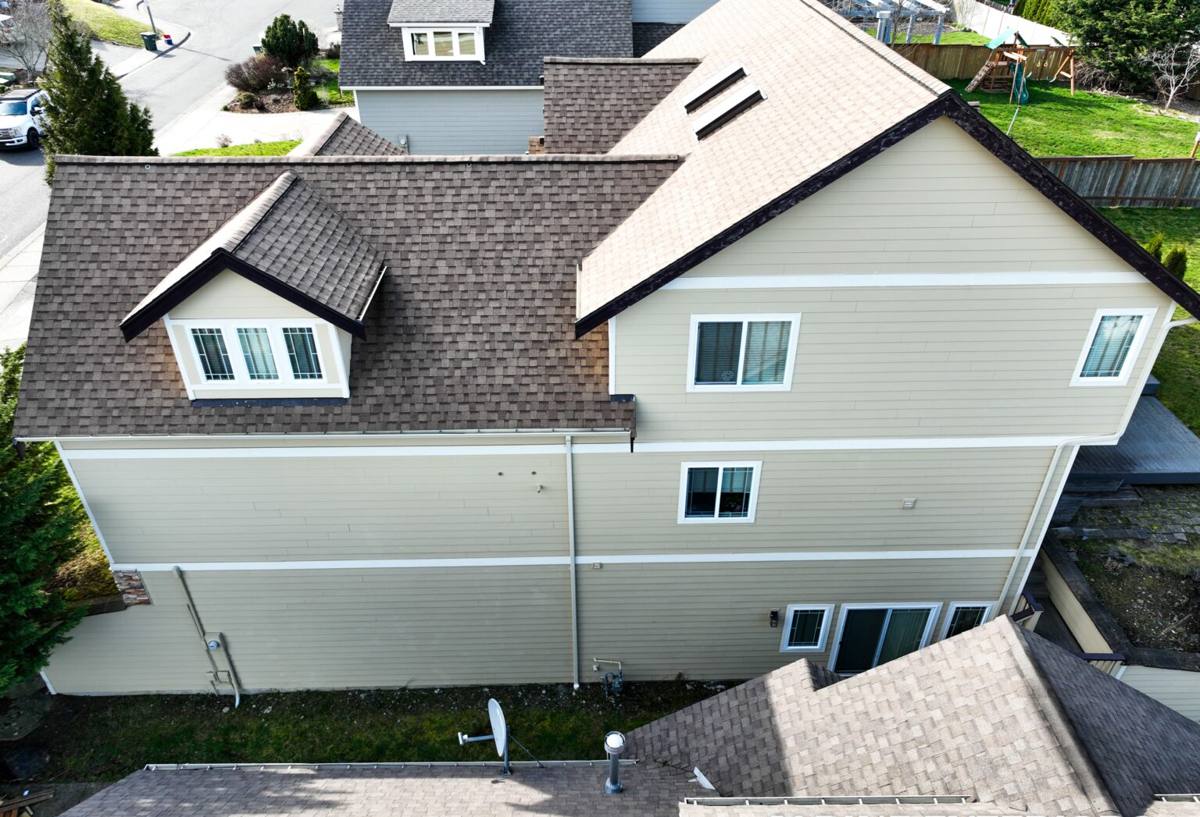
The Warning Signs Worth Taking Seriously
Most Blaine homeowners don't call about a roof because of one dramatic problem — it's a combination of smaller signs that add up. Knowing which ones mean "get it looked at soon" versus "you need a new roof" saves money either way.
Repair-Level Signs
- A handful of cracked, curled, or missing shingles in one localized area
- A single flashing leak around a chimney or vent pipe with no other visible damage
- Light moss growth on the shaded north-facing slope only
Replacement-Level Signs
- Granule loss heavy enough that you can see it collecting in gutters every season
- Moss or algae established across multiple slopes, not just the shaded side
- Soft spots in the decking when walked, or visible sagging between rafters
- Daylight visible through the roof deck from the attic, or damp insulation
- Roof age past 20-25 years combined with any of the above
If you're only seeing the repair-level signs, an honest contractor will tell you that and fix what's actually wrong. Replacement makes sense when the underlying materials — decking, underlayment, flashing system — are compromised enough that patching one area just shifts the problem to the next.
What a Correct Roof Replacement Actually Involves
A roof replacement done right in a coastal climate like Blaine's is not just "strip and re-shingle." Several layers work together, and skipping or shortcutting any one of them is where most premature failures start.
Tear-Off and Deck Inspection
Full removal of the old roofing down to the deck, with every section of sheathing checked for rot, delamination, or soft spots — especially around valleys, chimneys, and skylights, where moisture tends to concentrate first. Any compromised decking gets replaced before anything new goes down; covering over bad sheathing is how a new roof fails in five years instead of twenty-five.
Underlayment
Synthetic underlayment or a self-adhered membrane in high-risk zones (eaves, valleys, around penetrations) gives a second line of defense against wind-driven rain, which matters a great deal this close to open water. In a dry climate this layer is almost a formality; on the Blaine coastline it's doing real work most winters.
Flashing
Flashing quality and material choice matter more here than almost anywhere else in Whatcom County because of salt exposure. We favor corrosion-resistant metals and proper lapping technique at every roof-to-wall transition, chimney, and vent — this is one of the most common places we find prior installations cutting corners.
Ventilation
Balanced intake and exhaust ventilation keeps the attic space at close to outdoor temperature and moisture level. Without it, trapped moisture condenses on the underside of the deck, which rots sheathing from below and also feeds moss and moisture problems on the surface above.
Final Roofing Material
The visible layer — shingles, metal panels, or another system — installed to the manufacturer's exact fastening pattern, not a faster shortcut pattern. Nail placement and pattern affect wind rating and warranty validity, and it's the single most common thing a rushed crew gets wrong.
Choosing a Roofing Material for Salt Air and Moss
There's no single "best" roofing material for Blaine — the right choice depends on budget, how long you plan to stay in the home, and how much maintenance you're willing to do. Here's how the common options actually compare in this climate.
| Material | Salt Air Resistance | Moss Resistance | Maintenance |
|---|---|---|---|
| Architectural asphalt shingle | Good, with quality flashing | Moderate — benefits from moss-inhibiting granules or strips | Periodic moss/debris cleaning |
| Standing seam metal | Very good with proper coating and fastener choice | Excellent — moss struggles to hold on smooth metal | Low; occasional fastener/sealant check |
| Cedar shake/shingle | Fair; needs regular treatment near salt air | Poor without diligent upkeep | High — regular treatment and moss removal |
| Synthetic composite shake | Good | Moderate to good depending on product | Low to moderate |
We don't push cedar shake on coastal Blaine properties as a default recommendation — not because it's a bad-looking product, but because the combination of salt air and near-constant moisture means it demands a maintenance schedule most homeowners don't realize they're signing up for. If a client wants that look and understands the upkeep, we'll install it correctly. For most Blaine homes, a quality architectural shingle or standing seam metal roof gets a better balance of appearance, cost, and real-world durability against this specific coastline.
A Note on Moss-Resistant Shingles
Many shingle lines now come with built-in copper or zinc granule strips designed to inhibit moss and algae growth as rainwater washes over them. On a roof with a long moss season like Blaine's, this is worth the modest upgrade in material cost — it won't eliminate moss entirely on a heavily shaded slope, but it meaningfully slows regrowth compared to a standard shingle.
Our Roof Replacement Process
Homeowners want to know what actually happens once they say yes, so here's the sequence we follow on a typical Blaine replacement.
- On-site inspection and measurement, including attic ventilation check and a look at current flashing condition
- Written estimate with material options and a clear breakdown of what's included — tear-off, disposal, decking allowance, underlayment, flashing, and final material
- Scheduling built around the weather window, since wind-driven rain off the water can shut down a tear-off day with no warning
- Tear-off and deck inspection, with any rot or soft decking flagged and priced before covering it
- Underlayment, flashing, and ventilation components installed
- Final roofing material installed to manufacturer fastening specifications
- Site cleanup, including a magnetic nail sweep of the yard and driveway
- Final walkthrough with the homeowner before we consider the job done
We keep the homeowner in the loop if we find something during tear-off that changes the scope — nobody likes a surprise invoice, and nobody likes surprises about their own roof either.
Ventilation and Moisture Control During Moss Season
Blaine's moss season is long enough that it's less a season and more a baseline condition for shaded roof slopes much of the year. Moss itself isn't just cosmetic — as it establishes, it holds moisture against the shingle surface, which shortens the life of the roofing material underneath it and can work its way under shingle edges over time.
Good ventilation reduces the underlying moisture that helps moss take hold in the first place, but it won't stop moss on its own — sun exposure, slope, and tree cover matter too. Combining a properly ventilated attic with the right shingle choice and a realistic cleaning schedule is the most effective long-term approach, rather than relying on any single fix.
What Affects the Cost of a Blaine Roof Replacement
We're not going to quote a number here, since roof size, pitch, material choice, and what we find once tear-off starts all move the price. But these are the main factors that determine where a project lands within a normal range:
- Roof size and number of planes — more valleys, hips, and penetrations mean more labor and flashing
- Pitch and access — steep roofs or difficult access (tight lot lines, limited driveway space) add time and equipment needs
- Decking condition — rot discovered during tear-off is priced separately since it can't be known until the old roofing is off
- Material selection — standard architectural shingle, moss-resistant shingle, or metal all sit at different price points
- Ventilation upgrades — adding proper intake/exhaust venting where none existed before
- Disposal and permitting — tear-off debris volume and any local permit requirements
An honest estimate walks through each of these line by line rather than handing over a single lump number with no explanation of what's driving it.
Why It Matters That We Already Work in Blaine
A crew that's replaced roofs elsewhere in Washington but hasn't spent real time on Whatcom County's coastline can still do competent work — but they're learning the salt-air and moss-season lessons on your roof instead of already knowing them. Working this specific stretch of coast regularly means we already know which flashing metals hold up against the salt exposure here, which shingle lines actually perform against sustained moss pressure rather than just marketing claims, and how to schedule tear-off days around weather patterns coming off the water.
It also means we're not disappearing after the invoice clears. Being a local presence in the Bellingham and Blaine area means we're reachable if a question comes up two winters from now, not just during the installation.
Keeping a New Roof Performing Long-Term
A correctly installed roof still benefits from basic upkeep, especially in this climate. A short annual routine goes a long way:
- Clear gutters and downspouts before the fall rains start in earnest
- Have moss growth removed gently (never pressure-washed directly on shingles) before it spreads across a full slope
- Check attic ventilation isn't blocked by insulation that's shifted or been added over time
- Have flashing points — chimneys, vents, skylights — visually checked after any major windstorm
- Address small leaks immediately rather than waiting for a convenient time
None of this replaces a professional inspection every few years, but it catches the small issues before they become tear-off-level problems.
If your roof is showing any of the signs above, or you'd just like an honest read on how much life is left in it, we're happy to take a look. Fill out the form below for a free, no-pressure estimate on your Blaine roof replacement — we'll tell you straight whether you need a full replacement, a repair, or just a few more years of watching it.