 Bellingham Siding
 Siding Built for Blaine's Coastal Climate
Blaine sits right up against the water at the top of Whatcom County, which means homes here take on a different kind of weather than houses even a few miles inland. Salt-laden air off the water works on exposed fasteners, trim edges, and any paint film that isn't holding up its end of the bargain. Add in driving rain that comes sideways during winter storms, and a moss season that can stretch from late fall through spring, and you've got a siding system that's tested constantly, not just during the occasional big storm.
A lot of siding failures we see in this area aren't dramatic — they're slow. Caulk lines shrink and crack, paint chalks and peels a few years early, moss gets a foothold in a shaded north-facing wall, and moisture starts working its way behind the cladding before anyone notices from the street. By the time it shows up as a soft spot or a stain, the damage has usually been building for a while. Siding installation in Blaine has to account for that from day one — the product choice, the water management details, and the workmanship all matter more here than they would in a drier, calmer climate.
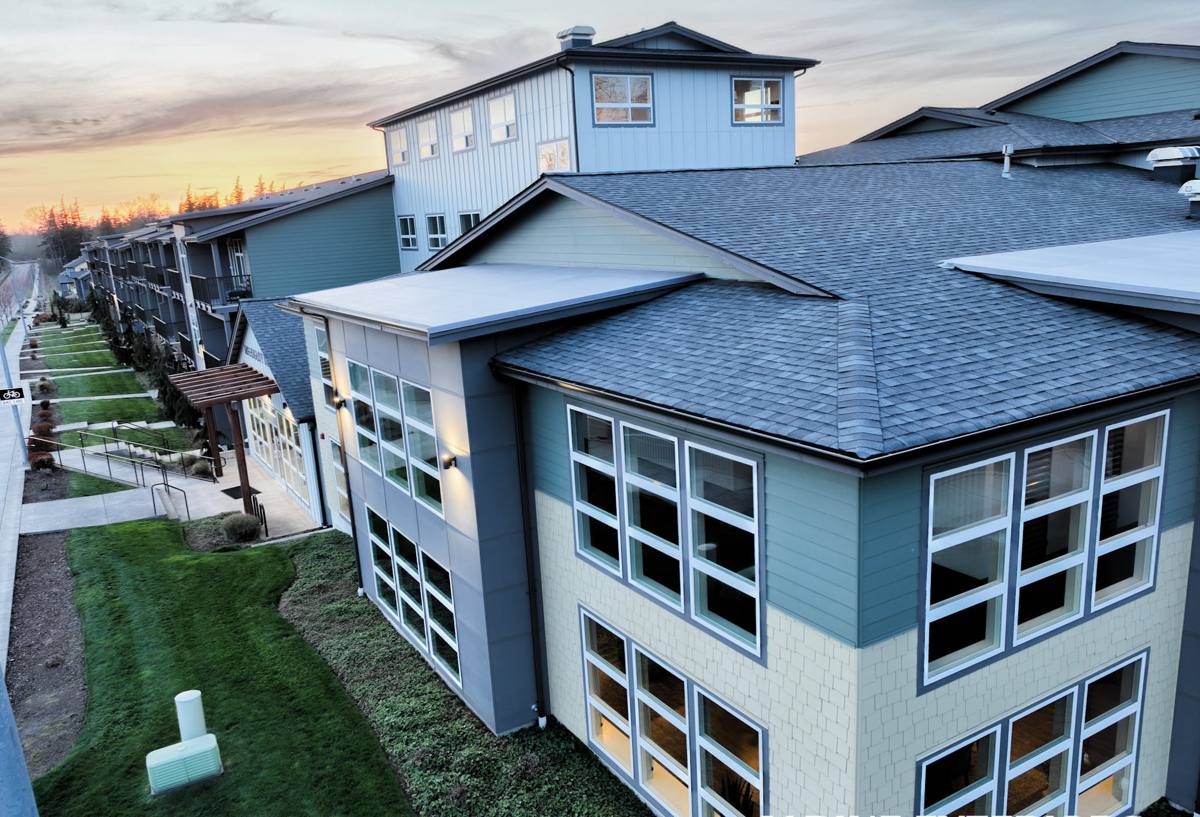
What a Correct Siding Installation Actually Involves
Siding isn't just a decorative skin — it's part of a water management system. Installed correctly, it works with a weather-resistant barrier, properly lapped and taped house wrap, correctly flashed windows and doors, and rainscreen or drainage detailing where the wall assembly calls for it. Installed incorrectly, siding can trap moisture against the sheathing and actually make a wall wetter than if it had no cladding at all.
The pieces that matter most on a correct install:
- Weather-resistant barrier installed and lapped shingle-style so water sheds outward, not into the wall
- Flashing at every window, door, and penetration — installed before the siding goes on, not caulked in after
- Proper fastener placement and spacing per manufacturer specs, not just "close enough"
- Correct clearances at grade, roofline, and decks so siding isn't sitting in standing water or snow
- Factory-finished panels and trim so field-cut edges get sealed, not left to absorb moisture
- Ventilation behind the cladding where the wall assembly needs it, especially on shaded or north-facing walls
Skip any one of these steps and the siding might look fine for a season or two — the problems that show up are usually moisture-related, and moisture problems compound over time rather than announcing themselves early.
Why We Install Only James Hardie Fiber Cement
We made a decision as a company to install one siding system: James Hardie fiber cement. Not vinyl, not LP SmartSide, not cedar or primed spruce, not other fiber cement brands. That's not a marketing angle — it's because we've seen how each of those alternatives performs under real Pacific Northwest conditions over years, not just on install day, and we don't want to warranty or stand behind work we're not confident will hold up.
Fiber cement is non-combustible, which matters given the wildfire smoke and fire-season concerns the region has seen in recent years. It doesn't feed insects the way some wood-based products can. And James Hardie's ColorPlus factory finish is baked on under controlled conditions, which gives it more consistent color retention and better adhesion than a field-applied paint job — especially important in a climate where UV exposure is uneven (bright reflected light off the water in summer, then months of damp gray) and where paint failure is one of the most common reasons homeowners end up repainting siding every five to seven years instead of every fifteen or more.
James Hardie also builds climate-specific HZ product lines engineered for different exposure conditions, and backs installations with a strong transferable warranty when installed by a certified applicator to spec. We're not going to tell you every other product on the market is bad — vinyl is affordable, cedar has real character, LP SmartSide has its place. What we will say honestly is that after weighing moisture behavior, maintenance burden, and long-term performance against what Whatcom County's climate demands, fiber cement from James Hardie is the one system we're willing to put our name behind.
Our Installation Process for Blaine Homes
Assessment and Estimate
We start with a walk-around of the home, looking at existing siding condition, trim and flashing details, moisture staining, and any areas showing early moss or algae growth. We talk through what we're seeing, what it means, and what a correct fix looks like — no pressure, no scare tactics.
Prep and Water Management
Before a single piece of new siding goes up, we address what's underneath it. That means correcting or replacing damaged sheathing, installing or repairing the weather-resistant barrier, and getting flashing details right at every window, door, and penetration. This is the step that determines whether the new siding actually performs — it's also the step that's easiest to shortcut and hardest to verify once the wall is closed up.
Installation to Manufacturer Spec
We install James Hardie panels, plank, or trim according to the manufacturer's fastening, clearance, and joint-treatment specifications. That includes proper gapping at butt joints, correct nail placement, and sealed field cuts. This is also what keeps the manufacturer's warranty intact — installations that don't follow spec can void coverage even if the product itself is fine.
Final Walkthrough
We finish with a walkthrough so you know what was done, what maintenance (if any) to expect, and what the warranty covers going forward.
Moss, Moisture, and Maintenance in Blaine's Climate
Whatcom County's long wet season means moss and algae aren't a maybe — they're an expectation, especially on north- and west-facing walls that don't get much direct sun or wind to dry them out. On some siding materials, that growth sits on the surface and can be washed off. On others, particularly wood-based or improperly sealed products, sustained moisture and moss contact can start breaking down the material itself over time.
Correctly installed fiber cement siding with a factory finish handles this better because the surface itself isn't feeding organic growth the way untreated or lightly primed wood products can, and it doesn't swell or soften with repeated wetting the way some engineered wood products can if a seam or cut edge is exposed. That doesn't mean zero maintenance — periodic gentle washing to keep moss from establishing, and normal caulk inspection at trim joints, are still worth doing on any home in this climate. But it does mean the baseline maintenance burden is lower, and the consequences of a missed year of upkeep are less severe.
Cost Factors for Blaine Siding Installation
Every home is different, so we don't publish flat per-square-foot pricing — the honest answer depends on what we find during the assessment. But these are the factors that typically move the number up or down:
| Factor | Why It Affects Cost |
|---|---|
| Condition of existing sheathing and framing | Water damage found during tear-off often requires repair before new siding can go on |
| Home size and wall complexity | More corners, dormers, and trim details mean more labor and material cuts |
| Siding profile (lap, panel, shingle-style) | Some profiles require more layout time and material than others |
| Trim and accent scope | Window trim, corner boards, and fascia detailing add material and labor |
| Access and site conditions | Steep lots, tight setbacks, or multi-story walls affect staging and time |
| Full replacement vs. partial repair | Partial work can cost less upfront but may not address the full moisture picture |
Signs a Blaine Home Needs New Siding
Not every issue means a full replacement, but these are worth having looked at:
- Paint that's peeling, bubbling, or chalking noticeably earlier than expected
- Soft spots or visible warping when you press on the siding
- Persistent moss or algae that returns quickly after cleaning
- Staining or discoloration that tracks with window and door trim
- Gaps opening up at seams, corners, or trim joints
- Musty smells or visible moisture inside near exterior walls
- Siding that's original to a home 20+ years old and hasn't been reassessed
Why a Crew That Already Works Blaine Matters
Blaine's proximity to the water and the border shapes how homes here are built and exposed — wind direction, salt exposure, and moss patterns aren't identical to what you'd see further inland in Bellingham or in drier parts of the county. A crew that regularly works this specific area has already seen how James Hardie siding performs on homes facing these exact conditions, and knows where the wall assembly typically needs extra attention.
That local pattern recognition matters more than it might seem. It's the difference between a crew that follows a generic checklist and one that knows to double-check flashing on a shaded north wall or pay closer attention to grade clearance on a lot that holds water longer than most. It also means a shorter distance if something needs a warranty follow-up down the road.
Get a Free, No-Pressure Estimate
If your Blaine home's siding is showing its age, or you're planning ahead for a replacement, we're happy to take a look and give you an honest assessment — no pressure, no obligation. Use the form below to request a free estimate.