 Bellingham Siding
 Why Storms Hit Blaine Roofs Harder Than You'd Expect
Blaine sits at the far northwest corner of Washington, right on the water and right at the Canadian border, which means it takes weather that inland Whatcom County homes never see. Wind off the open water arrives with almost nothing to slow it down, and it usually brings driving rain sideways instead of straight down. That combination — sustained wind plus rain that gets pushed up under roof edges and around flashing instead of just falling on them — is what actually causes most of the storm damage we get called out for. It's rarely one dramatic event. It's more often a hard blow in November, another in January, and by February a homeowner notices a stain on a ceiling and has no idea which storm caused it.
On top of the wind and rain, Blaine's roofs deal with a moss and algae season that runs most of the year. Constant moisture plus mild temperatures is exactly what moss wants, and a roof that's already carrying a moss mat is more vulnerable the next time a storm rolls through — moss holds water against the roofing material, lifts shingle edges, and gives wind something to grab onto. None of this means Blaine roofs are poorly built. It means they're doing a harder job than roofs twenty miles inland, and storm damage repair here has to account for that.
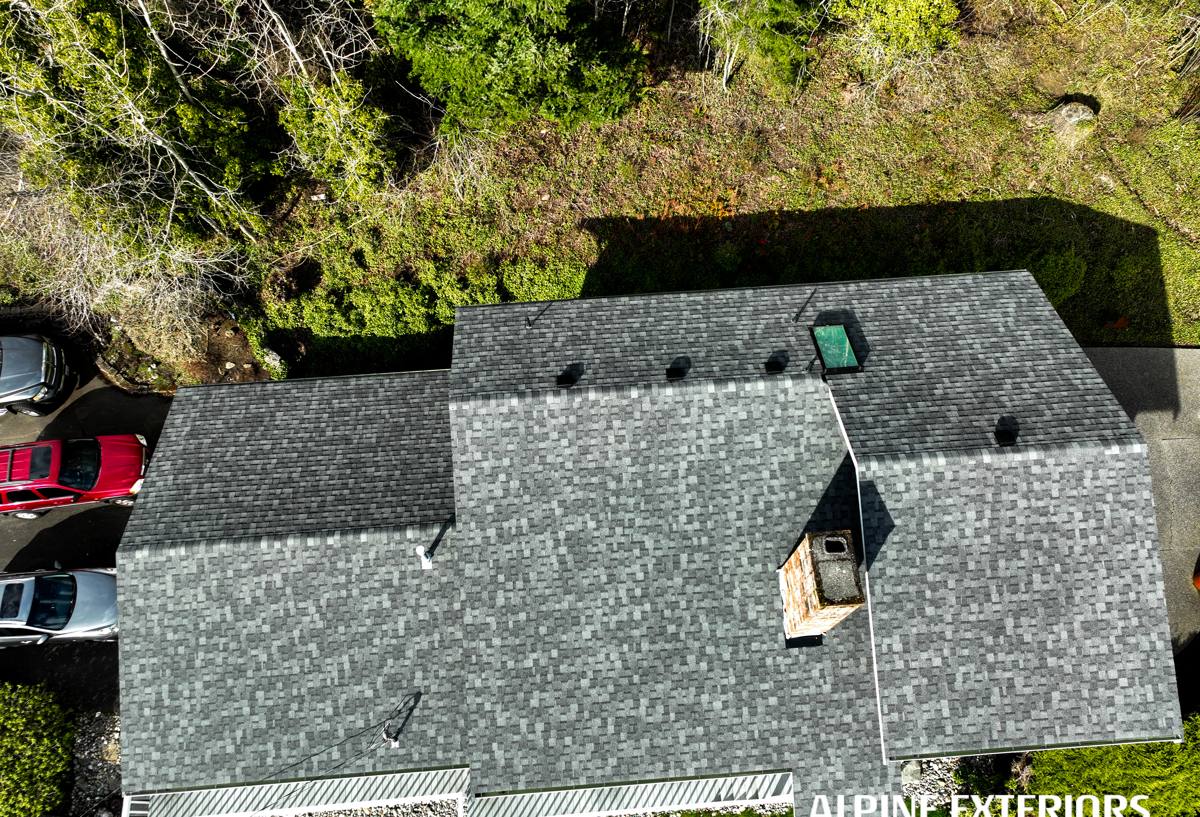
What Actually Counts as Storm Damage
Homeowners often picture storm damage as a tree through the roof. That happens, but it's the exception. Most of what we repair after weather events in Blaine falls into a few categories.
Wind Damage
Wind doesn't need to be a named storm to do damage. Sustained gusts can lift shingle edges, crease them, or tear them off outright, especially along ridges, hips, and rake edges where wind pressure concentrates. Older shingles that have already lost some of their seal strip are far more likely to go first.
Impact Damage
Branches, blown debris, and the occasional hail event can crack shingles, dent metal flashing, or knock granules loose in a way that isn't always visible from the ground. Impact damage tends to be localized, which is good news — it's usually a repair, not a full re-roof — but it needs to be found before it becomes a leak.
Water Intrusion
This is the one that costs homeowners the most if it's missed. Wind-driven rain finds any gap in flashing, any lifted shingle tab, any place where a roof penetration (vent, chimney, skylight) wasn't sealed quite right, and pushes water in under pressure rather than letting gravity do the work. This is why a roof can look fine from the driveway and still be actively leaking into the attic.
The Damage You Can't See From the Ground
A lot of storm damage doesn't announce itself right away. Water can travel along the underlayment or a rafter for several feet before it drips somewhere visible, so the stain on your ceiling often isn't directly under the actual entry point. Underlayment that's been wet repeatedly can also lose its ability to shed water even after the surface shingles are repaired, which is why a good storm repair looks past the shingle to what's underneath it. Left alone, a small wind-lifted section can lead to saturated sheathing, sagging, or mold in the attic — problems that cost far more to fix than the original repair would have.
How We Assess Storm Damage on a Blaine Roof
We don't guess at storm damage, and we don't try to sell a full roof off a quick look. Our process is the same whether the call comes right after a windstorm or weeks later when a homeowner finally notices a stain.
- Full exterior inspection of the roof surface, looking for lifted, cracked, creased, or missing shingles, along with the condition of ridge caps, flashing, and any moss buildup that may be contributing to the problem.
- Close check of every penetration — chimneys, vents, skylights — since these are the most common failure points in wind-driven rain.
- Interior and attic inspection for staining, damp insulation, or daylight showing through the roof deck, which tells us where water is actually getting in versus where it just looks bad.
- Photo documentation of everything we find, which matters both for you and for any insurance claim you may file.
- A written explanation of what's damaged, what's causing it, and what it will take to fix it correctly — not just patch it.
We walk the roof itself rather than relying on drone photos or a look from the ladder, because granule loss, lifted seals, and hairline cracks in flashing are easy to miss from a distance.
What a Correct Storm Repair Involves
Storm damage repair done right isn't just replacing the shingles that are obviously gone. It's about restoring the roof's ability to shed wind-driven rain the way it was designed to, which in Blaine's climate is the whole point.
Matching Materials the Right Way
We match shingle type, color, and where possible age-appropriate wear so a repair doesn't stand out as an obvious patch — and more importantly, so the repaired section has the same wind rating and sealing characteristics as the surrounding roof. Mixing incompatible shingle profiles or using leftover material with a different adhesive strip is a common shortcut that fails in the next windstorm.
Flashing and Underlayment Details
Most repeat leaks come from flashing that was reused when it should have been replaced, or underlayment that was patched instead of properly lapped. When we open up a damaged section, we replace compromised underlayment, install new step and counter-flashing where needed, and pay close attention to how water will move across that section in the next storm — not just whether it looks sealed today. On exposed, wind-heavy sections we also make sure fastening meets the pattern needed for higher wind exposure, not just the minimum nail count.
Repair or Replace? How We Help You Decide
Not every storm-damaged roof needs to come off. But a roof that's been repaired three or four times in a few years, or one that was already near the end of its service life when the storm hit, is a different conversation. We'll always tell you honestly which situation you're in.
| Factor | Usually Points to Repair | Usually Points to Replacement |
|---|---|---|
| Extent of damage | Isolated section, single slope, or one flashing detail | Multiple slopes or widespread granule loss |
| Roof age | Under roughly 12-15 years, otherwise sound | Nearing or past expected service life for the material |
| Repair history | First or second repair on this roof | Repeated repairs to the same areas over a few years |
| Underlayment condition | Dry and intact outside the damaged area | Widespread moisture found under multiple sections |
| Moss/algae condition | Manageable, no shingle lifting elsewhere | Heavy moss mat affecting large areas of the roof |
If replacement is genuinely the better long-term value, we'll explain why in plain terms. If a repair will hold up, we won't push a bigger job than the roof needs.
Working With Your Insurance Company
Many storm repairs in Blaine are at least partially covered by homeowner's insurance, particularly when wind or a specific storm event caused the damage. We're not adjusters and we don't promise a claim outcome, but we can provide the same photo documentation and written scope of damage we use for our own estimate, which is usually what an adjuster needs to evaluate the claim. If you're not sure whether your damage is claim-worthy, it's worth having us take a look before you decide whether to file — that inspection costs you nothing and gives you real information either way.
Moss, Algae, and the Long Whatcom County Wet Season
Storm damage repair and moss control aren't separate topics in this climate — they're connected. A roof carrying a moss mat holds moisture longer after every rain, which softens shingles and shortens their lifespan, and moss growing under a lifted shingle edge acts like a wedge that keeps that edge from ever resealing properly. When we repair storm damage, we also clear moss and debris from the affected area and check nearby sections for early growth, because leaving it in place next to a fresh repair just sets up the same failure again. We do this by hand, without pressure-washing the shingle surface, since aggressive pressure washing strips the protective granules that shingles need to survive Blaine's wind and rain in the first place.
Why It Matters That We Already Work Blaine
A roofing crew that mostly works drier, more sheltered parts of Whatcom County can still do competent work, but they're troubleshooting a climate they don't see every week. We're regularly on roofs dealing with the same wind exposure, the same driving rain angle, and the same year-round moss pressure that your roof is dealing with, so we're not guessing at what's causing the damage — we've usually seen the same failure pattern on a roof a few streets over. That local familiarity also means faster response after a storm, when a lot of homeowners are calling around at once and a tarped roof needs attention within days, not weeks.
Signs Your Roof Needs a Storm Damage Inspection
- A ceiling stain that appeared or grew after a windy, rainy stretch
- Shingle pieces or granules found in gutters or on the ground after a storm
- Visibly lifted, curled, or missing shingles, especially along ridges and edges
- A musty smell in the attic or upper floor that wasn't there before
- Daylight visible through the roof deck from inside the attic
- Flashing around a chimney, vent, or skylight that looks bent, separated, or rusted
- Heavy moss growth on one section of roof that isn't present elsewhere
If any of these sound familiar, it's worth getting a look before the next storm turns a small problem into a bigger one.
If you're dealing with storm damage on your Blaine roof, or you just want a professional opinion after a rough stretch of weather, we're happy to take a look. Reach out for a free, no-pressure estimate using the form below.