 Bellingham Siding
 Composite Decking Built for Columbia's Waterfront Climate
The Columbia neighborhood sits close to Bellingham Bay, on the edge of Whatcom County's saltwater shoreline, and that location shapes what an outdoor deck has to deal with here more than most homeowners realize until their wood deck starts showing it. Salt-laden air off the bay, rain that blows sideways as often as it falls straight down, and a moss season that can run most of the year all work against a traditional wood deck's finish, fasteners, and framing. Composite decking was built to handle exactly this combination of moisture and organic growth, which is why it's become the material we recommend most often for outdoor living spaces in this part of Bellingham.
This page focuses specifically on composite deck installation for Columbia properties — what the local climate does to a deck, what a correct composite build actually involves, and why it holds up better here than the materials it replaced.
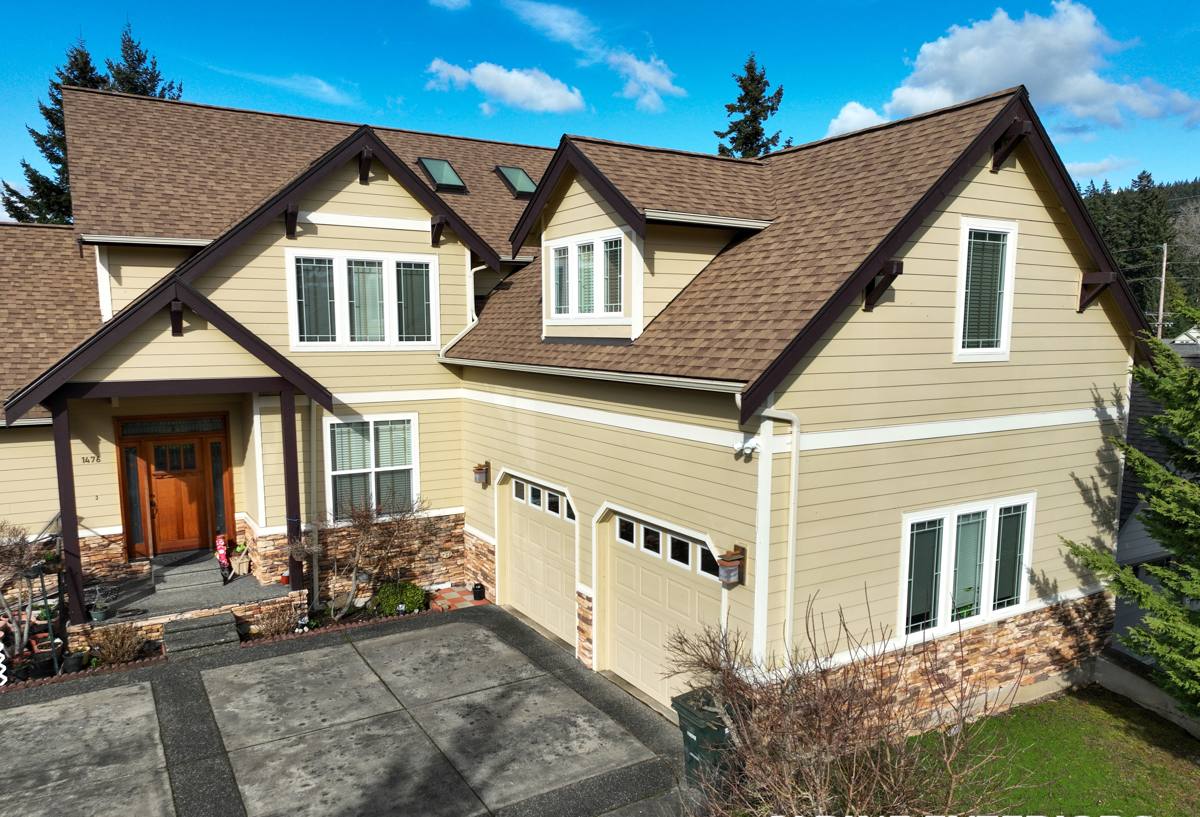
What Salt Air, Rain, and Moss Do to a Deck in Columbia
Salt Air and Metal Corrosion
Proximity to Bellingham Bay means a fine amount of salt is present in the air even on days that feel perfectly dry, and that salt settles on every exposed surface of a deck — boards, railings, and especially fasteners. Standard hardware that would be fine twenty miles inland can start showing rust and corrosion noticeably faster this close to the water. It's one of the most overlooked factors in deck longevity here, because homeowners tend to focus on the boards themselves and forget that the screws and brackets holding everything together are just as exposed.
Driving Rain and Trapped Moisture
Storms coming off the Salish Sea regularly push rain in at an angle rather than letting it fall straight down, which means water gets driven into gaps, seams, and any spot where a deck board meets a rail post, fascia board, or the house itself. On a wood deck, that wind-driven moisture works into end grain and fastener holes and stays there longer than it would in a drier climate, which is exactly the setup for rot to start from the inside out, often before it's visible from above.
A Long Moss and Algae Season
Damp air, mild temperatures, and a lot of shaded exterior surface add up to a moss and algae season that stretches across much of the year in this part of the county. On a deck, that growth doesn't just look bad — it holds moisture directly against the board surface and creates a genuinely slick, unsafe walking surface in wet weather, which is a bigger practical concern on a deck than it is on a roof or a wall.
Freeze-Thaw Swings
Bellingham doesn't see extreme winters, but Columbia still gets enough hard frosts each year that moisture trapped in a porous or already-damaged board will freeze, expand, and accelerate whatever cracking or splitting had already started. A deck that's dealing with wind-driven rain and salt air for most of the year, then gets that moisture frozen into it a handful of times each winter, tends to fail faster than the same deck would in a milder or drier setting.
Why Composite Decking Holds Up Better Here
Composite decking is made from a blend of wood fiber and polymer, and most boards sold today are "capped" — wrapped in a polymer shell that seals the wood fiber core away from direct moisture contact. That construction addresses the exact failure points wood decking runs into in a coastal, wet climate: there's no bare wood grain for water to soak into, no surface that needs staining or sealing to stay protected, and no organic wood surface for moss and algae to root into as easily as they do on raw or weathered wood.
| Factor | Traditional Wood Decking | Composite Decking (Capped) |
|---|---|---|
| Moisture absorption | Absorbs water through end grain and surface checking | Sealed polymer shell resists water absorption |
| Maintenance | Needs sanding, staining, or sealing every 1-2 years | Periodic washing only — no refinishing |
| Moss and algae resistance | Rougher grain gives growth something to root into | Smoother capped surface is harder for growth to hold onto |
| Splintering and cracking | Common as wood ages and dries out unevenly | Doesn't splinter; resists surface cracking |
| Color consistency | Fades and grays unevenly, especially in shaded areas | Color is manufactured through the board, resists fading |
| Upfront material cost | Lower | Higher, but lower lifetime maintenance cost |
Composite isn't maintenance-free — no exterior product truly is in this climate — but the maintenance it needs is periodic cleaning rather than the sanding, staining, and sealing cycle that wood decking demands. For a property dealing with salt air and a long wet season, that difference adds up over the life of the deck.
What a Correct Composite Deck Installation Involves
Framing and Substructure
Composite boards are only as good as what's underneath them. We check joist spacing against the manufacturer's span requirements for the specific board profile being installed — composite boards generally need tighter joist spacing than solid wood to avoid flexing over time — and we evaluate the condition of any existing substructure being reused rather than assuming it's sound just because it's holding weight today.
Fasteners and Hardware Rated for Coastal Air
Given the corrosion issue described above, hardware selection matters more for a Columbia deck than it would further inland. We use fasteners and structural connectors rated for coastal or high-moisture exposure rather than standard-grade hardware, because the cost difference on fasteners is small relative to the cost of a corroded connection failing years down the road.
Board Spacing and Ventilation
Proper gapping between boards lets water drain through rather than pool on the surface, and adequate airflow underneath the deck keeps the substructure from staying damp longer than it needs to. Both details matter more in a climate where the deck rarely gets a long stretch of dry weather to fully dry out on its own.
Ledger Flashing Where the Deck Meets the House
The ledger board — where the deck attaches to the house — is one of the most common places for hidden water damage to start, because it's a joint between two different structures that has to be flashed correctly to shed water away from the house framing. We flash this connection to spec every time, since a poorly flashed ledger can drive moisture into the house's wall framing long before any problem shows up on the deck surface itself.
Cost Factors for a Composite Deck in Columbia
| Factor | How It Affects the Project |
|---|---|
| Deck size and shape | More square footage and more corners, angles, or level changes increase labor and material |
| Substructure condition | A sound existing frame can sometimes be reused; a deteriorated one needs full replacement |
| Board tier | Entry-level capped composite vs. premium composite or PVC-capped boards affects material cost per square foot |
| Railing and fascia choices | Composite or aluminum railing systems cost more than basic wood rail but require less upkeep |
| Site access | Sloped lots, limited access, or waterfront setback considerations can add labor time |
| Permitting | Most deck rebuilds and new builds in the City of Bellingham require a permit, which adds a fixed cost and timeline |
We won't quote a number without seeing the site — the honest range depends heavily on the factors above — but we'll walk through each of them with you so you understand what's driving the estimate rather than just seeing a total.
Our Process for a Columbia Deck Project
- On-site assessment: We look at the existing deck or build site, note lot conditions specific to a Columbia property (proximity to the water, drainage, shade, existing structure condition), and talk through what you actually want to use the space for.
- Structural check: If there's an existing deck being replaced, we inspect the ledger connection, framing, and any signs of the moisture or rot issues described above before quoting a rebuild versus a repair.
- Product and layout selection: We go over board tiers, colors, and railing options, and help you match the choice to your budget and how much upkeep you actually want to deal with long-term.
- Permitting: We handle the permit process with the City of Bellingham where required, so you're not the one tracking down paperwork.
- Build: Framing, fastening, board installation, and railing go in to spec, with the coastal-rated hardware and flashing details covered above.
- Final walkthrough: We go over the finished deck with you, including what maintenance it actually needs going forward.
Living With a Composite Deck in This Climate
A composite deck in Columbia still needs some seasonal attention — it just needs far less than a wood deck would. A short, honest maintenance routine keeps it looking and performing the way it should:
- Rinse or sweep debris off the surface regularly, especially fallen leaves and needles that trap moisture against the boards
- Clean visible moss or algae growth with a soft brush and a cleaner made for composite decking — avoid high-pressure washing, which can damage the capped surface
- Check railing posts, stair connections, and visible fasteners once a year for early signs of corrosion or looseness
- Keep gaps between boards clear of debris so water and airflow can pass through as designed
- Inspect the area where the deck meets the house for any signs of water staining, which can indicate a flashing issue worth addressing early
- Trim back vegetation that keeps sections of the deck shaded and damp for extended periods
Why a Crew That Already Works Columbia Matters
A deck built without accounting for salt air, wind-driven rain, and this area's moss season can look fine for the first year or two and still develop problems well before it should. Working with a crew that already builds decks in this specific neighborhood means the hardware selection, framing details, and flashing approach account for those conditions from the start, instead of applying a generic build spec that happens to work fine somewhere drier or further from the water. It also means faster response if you ever need a warranty item or a maintenance question answered, since we're not driving in from across the region to take a look.
If you're considering a new composite deck or replacing an aging wood one in Columbia, we're happy to come take a look and walk you through what we'd recommend — no pressure, no obligation. Use the form below to request a free estimate.