 Bellingham Siding
 Roofing Built for Columbia's Spot on Bellingham Bay
Columbia sits close enough to the water that its roofs deal with a different combination of stresses than homes further inland in Whatcom County. Salt-laden air off Bellingham Bay accelerates corrosion on exposed metal. Driving rain off the water finds every weak seam, lap, and fastener. And the long wet season — often eight or nine months of the year with real moisture in the air — gives moss and algae plenty of time to take hold on north-facing slopes and shaded roof sections. None of this makes a Columbia roof exotic or unusually difficult to build correctly. It just means the installation details matter more here than they would in a dry climate, and cutting corners shows up faster.
A new roof installation in this neighborhood needs to be evaluated against three things specifically: how it handles sustained moisture, how its fasteners and flashings hold up to salt exposure over years, and how easily moss and organic growth can be discouraged before they start lifting shingles or trapping water against the deck.
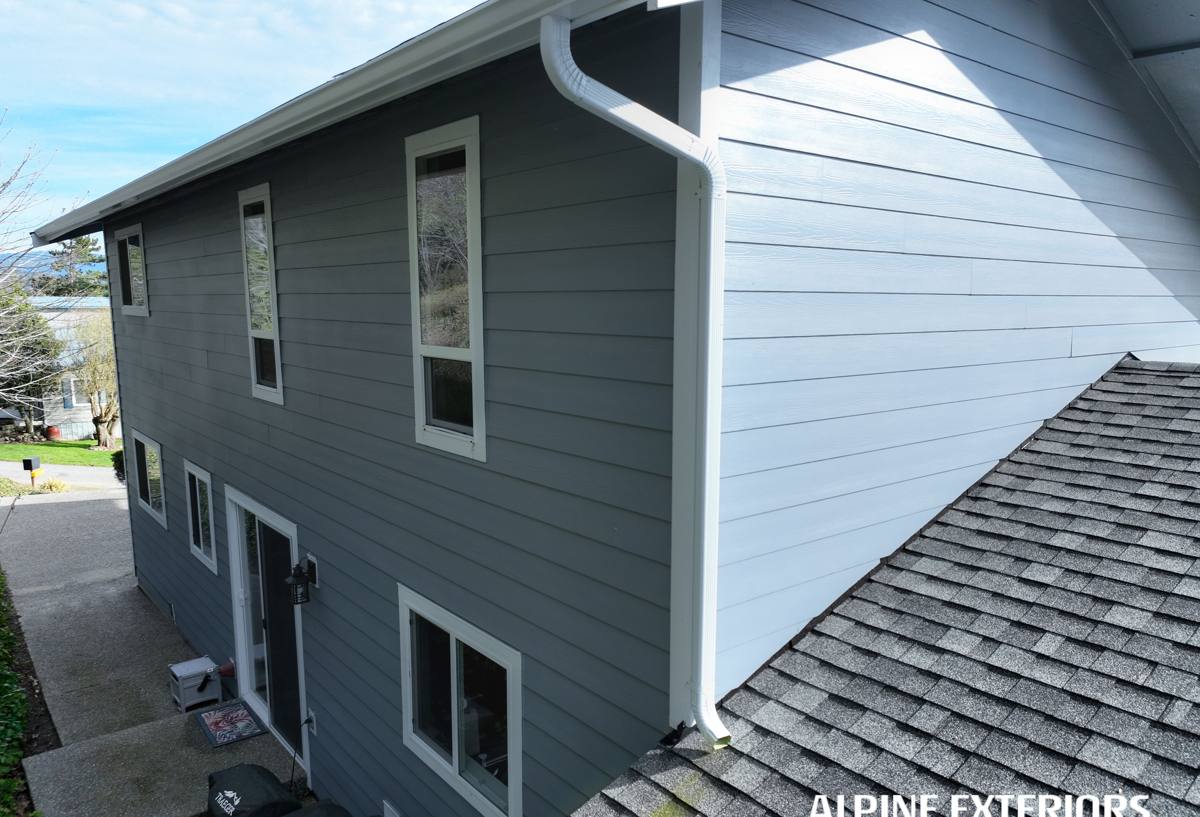
What a Correct Roof Installation Actually Involves
"New roof" sounds like one job, but it's really a stack of individual systems that all have to work together — the deck, the underlayment, the flashing, the field material, and the ventilation. Skipping or rushing any one of them is where most premature roof failures start, especially in a climate that gives water so many chances to find a way in.
Deck Inspection and Repair
Before anything new goes down, the roof deck (the plywood or OSB sheathing) needs to be inspected once the old roofing is off. Soft spots, delamination, or rot from long-term moisture intrusion get replaced — not covered over. This is one of the reasons a full tear-off matters: you can't properly evaluate the deck through an old layer of shingles.
Underlayment and Ice-and-Water Protection
In a climate with sustained driving rain, the underlayment is doing more work than people expect. Self-adhering ice-and-water shield belongs at eaves, valleys, and around every penetration — chimneys, vents, skylights — where wind-driven rain is most likely to work its way backward under the field material. Synthetic underlayment across the rest of the field gives a second line of defense if any water gets past the top layer.
Flashing and Transitions
Flashing is where most leaks actually originate, not in the open field of the roof. Step flashing at wall intersections, counter-flashing at chimneys, and properly lapped valley metal all need to be installed correctly — not just caulked and hoped for. In salt-air environments, we pay attention to flashing metal compatibility so dissimilar metals don't set up galvanic corrosion against each other over time.
Ventilation
A roof that traps moisture in the attic will fail from underneath, regardless of how good the shingles are. Balanced intake (soffit) and exhaust (ridge or box vents) ventilation keeps the deck dry and helps prevent condensation-driven rot — a slower but very real threat in a climate this damp.
Choosing a Roofing Material for Columbia's Conditions
There isn't one "correct" material for every home — it depends on budget, roof pitch, architectural style, and how much long-term maintenance a homeowner wants to take on. Here's how the common options compare specifically for a salt-air, high-moisture, moss-prone location like Columbia.
| Material | Moss/Algae Resistance | Salt Air Performance | Typical Lifespan |
|---|---|---|---|
| Architectural asphalt shingle (algae-resistant) | Good, with copper/zinc strips added | Good — non-metallic field material | 25–30 years |
| Standard 3-tab asphalt shingle | Fair — more prone to staining over time | Good | 15–20 years |
| Standing seam metal | Excellent — sheds moss naturally | Requires marine-grade coatings/fasteners | 40–50+ years |
| Cedar shake | Poor without regular treatment | Fair — needs consistent maintenance | 20–25 years with upkeep |
We steer most Columbia homeowners toward algae-resistant architectural asphalt shingle as the balance of cost, appearance, and low maintenance, with metal as the upgrade path for homeowners who want the longest service life and don't mind the higher upfront cost. We don't typically recommend cedar shake in this specific microclimate — not because it's a bad product, but because the maintenance schedule needed to keep it performing well near the water is more than most homeowners want to take on.
Moss, Algae, and the Long Wet Season
Moss doesn't just look bad — it holds moisture against the shingle surface and can work its way under tabs and lift them, which is where leaks start. On shaded, north-facing sections of a Columbia roof, moss growth is close to inevitable over time without some prevention built into the installation.
During a new install, we run zinc or copper strips near the ridge on roof sections prone to shade and moisture. Rainwater washing over these strips releases trace metal ions that inhibit moss and algae growth down the slope, without chemical treatment. It's a passive system — no maintenance required after installation — and it's one of the most cost-effective additions for this climate.
Beyond that, we recommend homeowners keep gutters clear and overhanging branches trimmed back, since standing debris and shade are what let moss get a foothold in the first place.
Our New Roof Installation Process
- On-site inspection and estimate. We walk the roof, check the attic for ventilation and moisture signs, and give you a written scope and price — no pressure, no inflated "today only" pricing tactics.
- Material selection. We go over the tradeoffs for your specific roof pitch, sun/shade exposure, and budget so you're choosing with full information.
- Permitting. We handle the City of Bellingham or Whatcom County permit as required for the scope of work.
- Tear-off and deck inspection. Old roofing comes off, the deck is inspected, and any damaged sheathing is replaced before anything new goes down.
- Underlayment, flashing, and field installation. Installed in the order and detail described above, with attention to every valley, penetration, and wall transition.
- Ventilation check. We confirm intake and exhaust venting are balanced for the finished roof system.
- Cleanup and final walkthrough. Magnetic sweep for nails, full site cleanup, and a walkthrough so you know exactly what was done.
What to Expect During the Job
A typical residential re-roof in the Columbia area runs from a few days to about a week depending on roof size, complexity, and weather windows — Bellingham's wet season means we plan tear-off days around forecast breaks rather than exposing an open deck to rain. Expect noise, some debris in the yard during the work (contained and cleaned daily), and vehicles or a dumpster in the driveway or street for the duration.
Weather is the biggest variable in scheduling. We won't tear off more roof than we can dry-in the same day, which sometimes means adjusting the pace around incoming rain rather than rushing to hit an arbitrary deadline.
Signs Your Columbia Home May Need a New Roof
- Shingles that are cupping, curling, or losing significant granules
- Visible moss or algae streaking, especially on shaded north-facing slopes
- Daylight visible through the attic roof deck, or damp insulation
- Soft spots when walking the roof, or sagging along the ridge or eaves
- Recurring leaks around chimneys, skylights, or valleys despite past patch repairs
- A roof approaching or past 20–25 years old with no major work done
- Granules collecting in gutters or at downspout outlets
Any one of these on its own doesn't necessarily mean a full replacement — but a few together, especially on an older roof, usually means repair costs will start exceeding what makes sense versus a new installation.
Why Hire a Crew That Already Works in Columbia
Roofing crews who work Bellingham's waterfront-adjacent neighborhoods regularly know which details actually matter here versus which are overkill — where moss prevention is worth the extra cost, which flashing metals hold up against salt air, and how to sequence a tear-off around Whatcom County's wet-season weather without leaving a deck exposed. That's knowledge that comes from doing the work in this specific area repeatedly, not from a general roofing playbook applied everywhere the same way.
It also means being familiar with the permitting process for this jurisdiction and understanding the older housing stock common in Columbia — some homes have deck or framing quirks from their original construction era that a crew unfamiliar with the neighborhood might not anticipate.
If your Columbia home's roof is showing its age or you're planning ahead rather than waiting for a leak, we're happy to take a look and walk you through your options honestly. Fill out the form below for a free, no-pressure estimate — we'll give you a straight assessment of what your roof actually needs, not an upsell.