 Bellingham Siding
 Roof Replacement Built for Columbia's Weather, Not a Catalog Climate
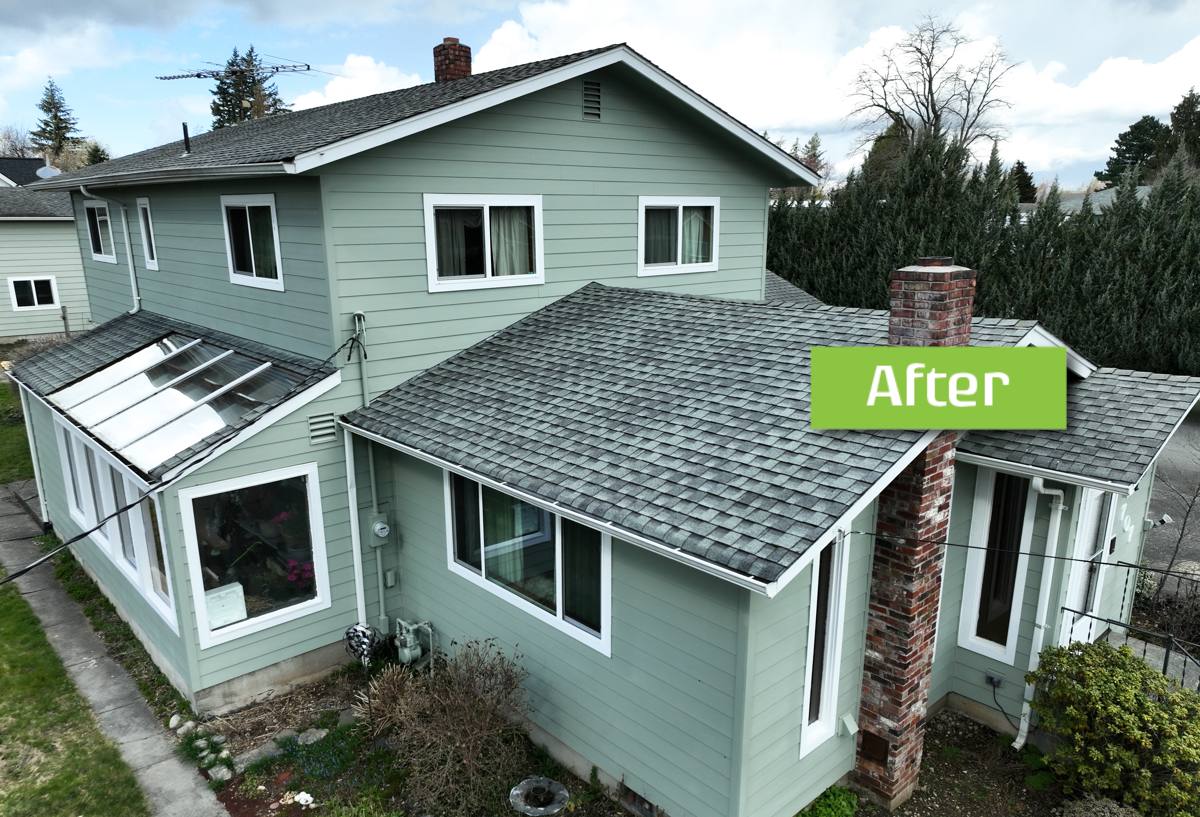
Columbia sits close enough to Bellingham Bay that salt-laden air is a real factor in how roofing materials age here, and the neighborhood's mature tree cover means shade, needle drop, and moisture linger on roof surfaces long after a storm passes through. Add in the driving rain that comes sideways off Puget Sound weather systems and a moss season that can stretch from October well into spring, and you have a roofing environment that's noticeably harder on a roof than the marketing materials for most shingles were written for. A roof replacement in Columbia isn't just about swapping old material for new — it's about choosing and installing a system that's actually matched to Whatcom County conditions.
We've worked on enough roofs in this part of Bellingham to know the failure patterns are consistent: moss working under shingle tabs, valleys that were never flashed deep enough for the rain volume we actually get, and ventilation that was adequate for a drier climate but not for one where the attic space stays damp for months at a stretch. Fixing those problems permanently, rather than papering over them, is what a correct replacement looks like here.
Signs a Columbia Roof Needs Replacement, Not Another Repair
Roof repair has its place, but there's a point where patching a roof costs more over time than replacing it outright. Homeowners in this neighborhood typically start asking about full replacement when they notice:
- Granule loss heavy enough to show bald patches on south- and west-facing slopes
- Moss that regrows within a season or two of being cleaned off, especially on north-facing or shaded sections near tree cover
- Shingles that have curled, cupped, or lost their seal, letting wind-driven rain work underneath
- Soft spots in the decking felt underfoot, usually near valleys, chimneys, or old skylight flashing
- Water stains on interior ceilings that reappear after every heavy rain, even after previous patch repairs
- A roof that's simply reached the end of its material's realistic service life for this climate, regardless of how it looks from the ground
Any one of these can sometimes be handled with a targeted repair. Several of them together, or a roof already past 20-25 years of age in this environment, usually means repair is just delaying an expense that's going to come due anyway — often with interior damage attached by the time it does.
What a Correct Roof Replacement Actually Involves
Tear-Off and Deck Inspection
We remove the existing roofing down to bare decking rather than layering new material over old. That's the only way to actually see the plywood or plank sheathing underneath, which is where the real damage in wet climates tends to hide. Any section that's soft, delaminated, or stained from long-term moisture gets replaced before anything new goes down — skipping this step is the single most common shortcut that leads to problems five years later.
Underlayment and Ice-and-Water Protection
Given how much driving rain this area sees, we don't treat underlayment as an afterthought. Self-adhering ice-and-water membrane goes in the valleys, around penetrations, and along eaves — the places where wind-driven rain is most likely to find a way in even under intact shingles. Synthetic underlayment covers the rest of the deck as a second line of defense.
Flashing Details
Chimneys, skylights, sidewalls, and valleys fail more often at the flashing than at the field of the roof itself. We rebuild flashing rather than reusing old pieces wherever there's any doubt about their condition, since flashing is cheap compared to the cost of a leak finding its way into wall framing.
Ventilation
A roof that can't breathe traps moisture in the attic, which accelerates deck rot from underneath and feeds the conditions moss and moisture-loving growth need to take hold. We check intake and exhaust balance as part of every replacement, not as an upsell — in a climate this wet, it's part of doing the job right.
Material Options and Trade-Offs for This Climate
There's no single "best" roofing material for every home — it depends on the roof's exposure, the home's structure, and the homeowner's budget and maintenance appetite. Here's how the common options actually compare for a Columbia-area roof:
| Material | Typical Lifespan Here | Moss/Moisture Behavior | Trade-Offs |
|---|---|---|---|
| Standard 3-tab asphalt | 15-20 years | More prone to moss retention; lower profile holds less debris but ages faster in salt air | Lowest upfront cost, shortest service life |
| Architectural/composition shingle | 25-30 years | Better algae-resistant granule options available; still needs periodic moss treatment on shaded slopes | Best balance of cost and durability for most homes |
| Metal (standing seam or panel) | 40-50+ years | Sheds moss and debris far better; minimal organic growth | Higher upfront cost; requires a crew experienced with metal detailing |
| Cedar shake | 20-30 years with maintenance | Attractive but moisture-sensitive; needs regular treatment and airflow to avoid rot | Highest maintenance burden in a wet climate; not something we recommend without a clear maintenance plan |
For most Columbia homes, we steer people toward architectural shingles with algae-resistant granules or, where the budget and roofline suit it, metal. We're honest that cedar shake requires a level of ongoing upkeep — cleaning, treating, and inspecting — that many homeowners underestimate when they see it on a showroom sample, and we'd rather set that expectation up front than let a client discover it the hard way.
How We Handle a Roof Replacement, Step by Step
- On-site inspection of the current roof, attic, and ventilation, with photos of anything that affects the estimate
- A written estimate that itemizes material, labor, and any deck repair contingencies, so there are no surprise change orders
- Material selection walk-through, including honest guidance on what fits the home's exposure and the homeowner's maintenance preferences
- Scheduling that accounts for the wet-season realities of working in Whatcom County — we don't tear off more roof than we can dry-in the same day
- Full tear-off, deck inspection and repair, underlayment, flashing, and installation
- Site cleanup, including a magnetic sweep for nails and debris
- Final walk-through so the homeowner sees the completed work and understands what was done and why
What Drives the Cost of a Roof Replacement
Every roof is different, so a real number only comes from an on-site look. But the factors that most often move the price are consistent:
| Factor | Why It Matters |
|---|---|
| Roof size and number of facets | More squares and more valleys, hips, and dormers mean more material and labor |
| Pitch and access | Steep roofs and homes with limited ground access near mature trees take longer and require more safety setup |
| Deck condition | Rotted or soft sheathing discovered during tear-off adds material and labor not visible from the ground |
| Material choice | Asphalt, metal, and cedar carry very different material and installation costs, as shown above |
| Ventilation and flashing upgrades | Bringing older ventilation or flashing up to a standard suited for this climate adds modest cost but prevents recurring problems |
Why Local Experience in Columbia Matters
A roofing crew that's already worked in this neighborhood knows things a roofing outfit from outside the area has to learn on your dime: which slopes tend to hold moisture longest given the tree canopy, how City of Bellingham permitting and inspection typically runs for a residential re-roof, and what flashing and ventilation details hold up against this specific mix of salt air, rain, and shade. That familiarity shows up in fewer surprises during tear-off and a roof that's built to actually perform here, not just pass a general specification.
It also matters for something less technical but just as real: being reachable. If a question comes up mid-project, or a concern surfaces after a heavy rain a few months later, a local crew is a phone call away rather than a call center.
What to Ask Before You Hire Anyone for a Roof Replacement
- Are you licensed and insured in Washington, and can you provide proof of both?
- Will the estimate be in writing, itemized, and clear about what happens if deck repair is needed?
- What underlayment and flashing approach do you use in valleys and around penetrations?
- How do you handle ventilation as part of a replacement, not as a separate add-on?
- Who pulls the permit, and who is present for any required inspection?
- What's the warranty on labor, separate from the manufacturer's material warranty?
- Can you walk me through how you'd handle this specific roof's moss and moisture history?
Any contractor who can't answer these plainly and specifically is worth a second look before you sign anything.
If your roof in Columbia is showing its age — or you just want an honest read on how many years it has left — we're glad to walk it with you. The estimate is free, there's no pressure, and you'll get straight answers about what your roof actually needs. Use the form below to get started.