 Bellingham Siding
 Siding Replacement Built for How Columbia Actually Weathers
The Columbia neighborhood sits inside one of the wetter, mossier corners of Whatcom County, and its housing stock reflects it — a mix of older homes with decades of siding history and newer infill that's only a few winters in. Whichever category your home falls into, the siding on it is fighting the same three things every year: salt-tinged air drifting in off Bellingham Bay, driving rain that comes in sideways more often than straight down, and a moss season that can run half the calendar. Siding replacement here isn't a cosmetic upgrade. It's a chance to put a wall assembly on the house that's actually built for this climate instead of one that's just tolerating it.
We work throughout Bellingham, but we're specifically talking about Columbia here because a "siding replacement" page that could apply to Phoenix or Tampa just as easily isn't useful to you. What follows is how we think about this job for homes in this part of town, what we look for before we ever quote a price, and why we install one product system rather than offering you a menu of five.
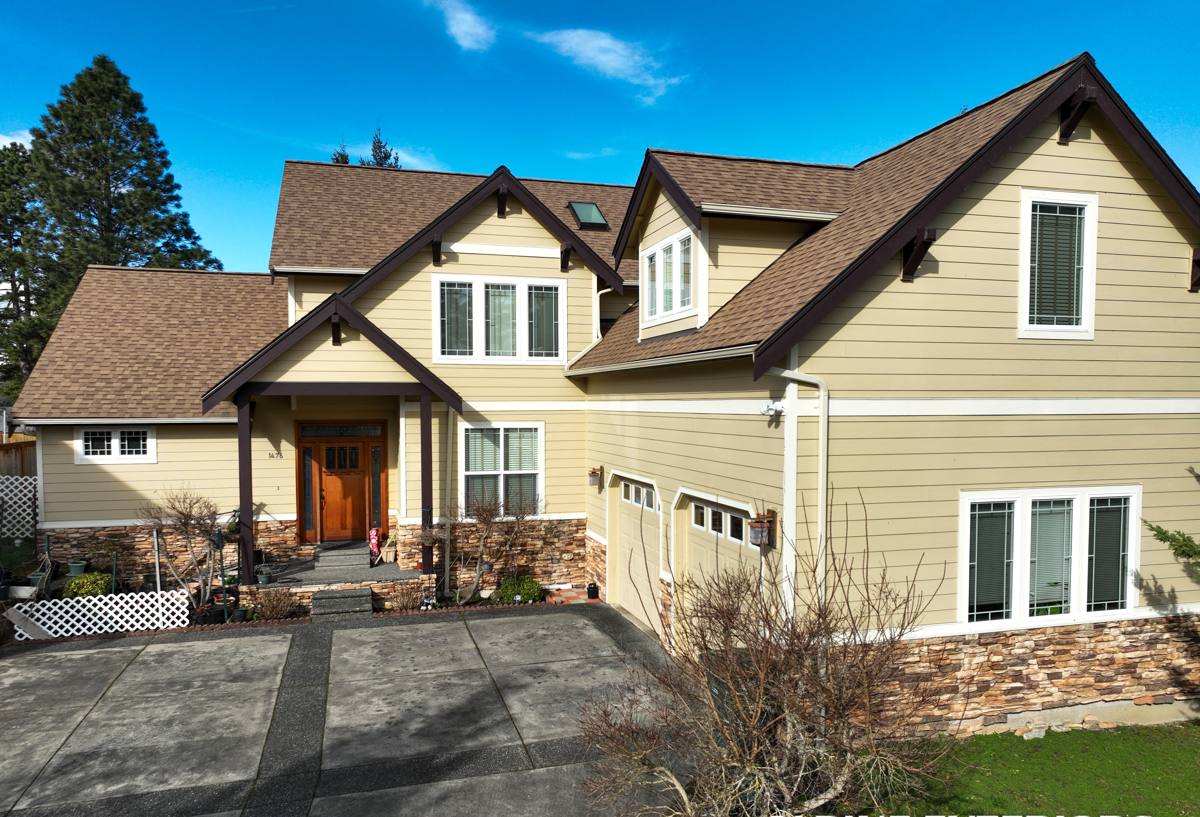
What Bellingham's Climate Does to Siding Over Time
Three things drive most of the siding failures we see on service calls in this area:
Moisture load
Whatcom County doesn't get the heaviest rainfall in the state, but it gets a lot of low-intensity, long-duration wet weather, and wind-driven rain finds gaps that a garden-hose test never would. Siding that isn't installed with proper clearances, flashing, and drainage behind it stays damp longer than it should, and damp siding is where rot, delamination, and paint failure start.
Moss and organic growth
Shade, moisture, and mild temperatures are exactly what moss and algae need, and Columbia has plenty of mature tree cover creating shaded, slow-drying wall sections. Moss holds water against a surface and, on wood-based products, gives rot a head start. It's less a structural threat to fiber cement than it is a maintenance and appearance issue — but it's one every home in this neighborhood deals with to some degree.
Salt air
Proximity to Bellingham Bay means airborne salt is a real factor, particularly for fasteners, flashing, and any exposed metal trim. It doesn't damage the siding panel itself the way it can damage untreated metal, but it's one more reason installation details — corrosion-resistant fasteners, proper flashing metals — matter more here than they would inland.
None of this means Columbia homes need anything exotic. It means the install has to actually account for these conditions instead of assuming a dry-climate installation manual is good enough.
Signs Your Home Is Due for Siding Replacement
Not every siding problem means a full replacement — but these are the signs that usually mean patching or repainting won't solve the underlying issue:
- Soft, spongy, or crumbling spots when you press on the siding, especially near the bottom courses or under windows
- Paint that keeps failing within a couple years of repainting, even after prep work
- Visible gaps, warping, or boards pulling away from the wall
- Persistent moss or dark staining that comes back within a season of cleaning
- Rising heating bills alongside visibly gapped or thin siding, suggesting the wall assembly behind it has lost integrity
- Siding that's original to a home built decades ago and has never been fully replaced, only patched
- Visible daylight or moisture at seams, corners, or trim boards during a hard rain
If you're seeing two or more of these, it's worth having someone look at what's underneath the siding, not just the surface layer.
What a Correct Siding Replacement Actually Involves
A siding replacement that holds up in this climate is not just "remove old siding, nail up new siding." The parts nobody sees are what determine whether the job lasts fifteen years or forty.
Tear-off and inspection
Once the old siding is off, the sheathing and framing underneath get inspected for rot, soft spots, or prior moisture damage — particularly around window and door openings, which is where we most often find problems on older Columbia homes. This is the point where hidden issues get caught and fixed before they're sealed behind a new wall.
Weather-resistive barrier and flashing
A house wrap or weather-resistive barrier goes on correctly lapped, and flashing gets installed at every window, door, and horizontal trim transition so water is directed out and down rather than in. In a wind-driven-rain climate, this layer matters as much as the siding itself.
Proper clearances and fastening
Siding needs the right ground clearance, the right gap at butt joints, and fasteners driven to manufacturer spec — not just close. Manufacturer installation instructions exist for a reason, and skipping them is the single most common cause of premature siding failure we see, regardless of which product was installed.
Trim, caulking, and finish details
Corner boards, trim, and caulking at penetrations are finished last, using materials rated for the product and the exposure. This is also where a factory-finished product has a real advantage over a field-painted one, which we'll get into below.
Why We Install Only James Hardie Fiber Cement
We get asked fairly often why we don't offer vinyl, LP SmartSide, or cedar as options alongside Hardie. It's a fair question, and the honest answer is that we standardized on one product because we'd rather be excellent at installing one system correctly than mediocre across five.
Vinyl
Vinyl is inexpensive and low-maintenance in a general sense, but it moves with temperature swings, can crack in impacts, and in a moss-prone, shaded climate it doesn't hold up visually the way a factory-finished fiber cement does. It's also not something we can stand behind as a long-term investment on a Whatcom County home.
LP SmartSide and other wood-strand products
Engineered wood siding has improved a lot over the years, but it's still a wood-based product, and wood-based products are inherently more moisture-sensitive than fiber cement. In a climate with Bellingham's rain totals and moss pressure, that's a real trade-off, not a hypothetical one.
Cedar and primed spruce
Real wood siding can look excellent, but it demands an ongoing maintenance commitment — repainting, resealing, checking for rot — that most homeowners underestimate when they choose it. In a climate this wet, that maintenance cycle comes faster than it would somewhere drier.
James Hardie fiber cement
Hardie's HardieZone product lines are engineered specifically for different climate exposures, the ColorPlus factory finish is baked on rather than field-applied (so it holds color and resists the fading and chalking that field paint jobs are prone to), and the material itself is non-combustible and doesn't provide the same food source for moss and organic growth that wood-based products do. It's not maintenance-free, but the maintenance burden is meaningfully lower.
| Factor | Vinyl | Wood-Strand (LP SmartSide) | Cedar / Primed Wood | James Hardie Fiber Cement |
|---|---|---|---|---|
| Moisture sensitivity | Low, but can trap moisture behind it | Moderate to high | High | Low |
| Moss/algae resistance | Moderate | Moderate | Low | Moderate to high |
| Finish durability | Fades over time, can't be repainted easily | Field-painted, needs recoating | Field-painted or stained, frequent upkeep | Factory ColorPlus finish, long color retention |
| Impact resistance | Can crack in cold | Good | Moderate | Good |
| Fire resistance | Melts/deforms | Combustible | Combustible | Non-combustible |
Our Process, Start to Finish
The process is the same whether you're near the water or further inland in Columbia, but the details we pay attention to shift with each home:
- Walkthrough and assessment — we look at current siding condition, trim, window flashing, and any visible moisture or moss issues before quoting anything.
- Written estimate — scope, product line, color, and timeline laid out clearly, with no pressure to sign on the spot.
- Tear-off and sheathing check — old siding comes off, and we inspect and repair anything underneath before closing it back up.
- Weather barrier and flashing installation — the layer that actually keeps water out, done to spec at every penetration.
- Hardie installation — panels, trim, and fasteners installed to manufacturer clearances and fastening schedule.
- Final detailing and walkthrough — caulking, touch-up, and a final look together before we call it done.
What Drives the Cost of a Siding Replacement
Every home is different, so we won't put a fabricated price on this page — but these are the factors that most affect the scope and cost of a Columbia-area project:
| Factor | Why It Matters |
|---|---|
| Home size and number of stories | More square footage and height means more material, labor, and access equipment |
| Condition of the sheathing underneath | Rot repair found during tear-off adds scope that's hard to know until the old siding is off |
| Trim and architectural detail | Homes with more corners, gables, and trim work take longer to finish correctly |
| Siding profile and color | Lap width and ColorPlus color selection affect material cost slightly |
| Site access | Tight side yards, fences, or landscaping near the walls can slow tear-off and staging |
We walk every property before quoting so the number you get reflects your home, not a generic per-square-foot average.
Why Hiring a Crew That Already Works in Columbia Matters
Siding installation quality depends heavily on whether the crew understands the conditions they're building for. A crew that's worked other homes in this part of Bellingham already knows what Whatcom County's rain patterns do to under-flashed windows, what moss buildup looks like on a wall that's been neglected for a decade, and how to sequence a tear-off around this region's wetter stretches of the year. That's not something a crew based two states away, or one installing five different siding brands, builds the same familiarity with. Local experience shows up in the small decisions — where to add extra flashing, how to handle a shaded north wall, which trim details tend to fail first here — that a generic installation manual doesn't cover.
Caring for Your New Siding
James Hardie siding is low-maintenance, not no-maintenance. A yearly rinse to knock off moss and pollen buildup, prompt caulk touch-ups if you notice a gap open up, and keeping gutters clear so water isn't running down the wall will keep it looking and performing the way it's supposed to for a long time. None of that requires repainting or resealing on the schedule that wood or field-painted siding does — it's just basic upkeep for a coastal, moss-prone climate.
If your Columbia-area home is showing signs of siding wear, or you just want an honest look at what's underneath before deciding whether to repair or replace, we're happy to walk the property with you. Reach out below for a free, no-pressure estimate.