 Bellingham Siding
 Composite Decking Built for Sehome's Weather, Not Against It
Sehome sits close enough to Bellingham Bay that salt-laden air, wind-driven rain, and long stretches of overcast, damp weather are just part of owning a home here. A deck in this neighborhood doesn't fail because the material was bad — it usually fails because it was built for a drier climate and installed without accounting for what Whatcom County actually throws at it. Composite decking, done right, holds up to that environment far better than wood, but "composite" is not a single product or a guarantee of longevity. How it's framed, fastened, and ventilated underneath matters as much as the boards themselves.
This page covers what a correct composite deck build looks like specifically for a Sehome property: the moisture and moss pressures the site creates, the decisions that separate a deck that lasts twenty-plus years from one that starts showing problems in five, and what our process looks like from first look to final walkthrough.
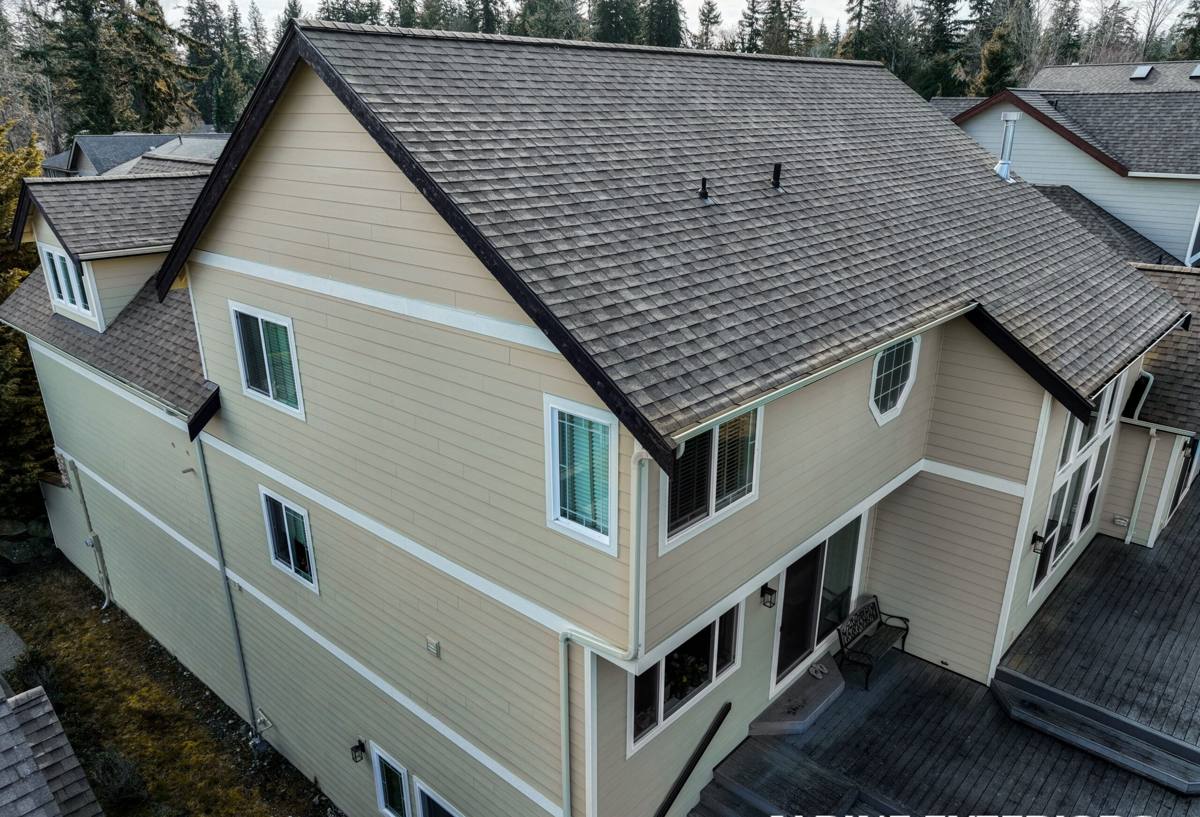
What Sehome's Climate Actually Does to a Deck
Bellingham's marine climate means Sehome homes deal with a combination of moisture sources most inland decks never see:
- Salt air corrosion — proximity to the bay accelerates rust on unprotected fasteners, brackets, and hardware, even under a deck surface that looks fine.
- Driving rain — wind off the water pushes water sideways under railings, against ledger boards, and into end-grain cuts that aren't sealed.
- Long moss season — shaded, north-facing, or tree-covered decks in Sehome can stay damp for months at a time, which is exactly the condition moss and algae need to take hold on any decking surface, composite included.
- Limited winter sun — slower drying times mean trapped moisture under the deck (in the substructure, not just the boards) has more time to do damage.
None of this makes composite decking a bad choice for Sehome — it makes it the right choice, provided the installation respects these conditions rather than ignoring them.
Why Composite Makes Sense Here
What It Solves
Quality composite decking doesn't absorb water the way wood does, so it won't cup, splinter, or rot from the surface down. It doesn't need annual staining or sealing, which matters in a climate where you get a narrow window of dry weather each summer to do that kind of maintenance. And it resists the freeze-thaw cycling Whatcom County gets in winter better than most softwoods.
Where It Still Needs Respect
Composite boards are moisture-resistant, not moisture-proof, and they are not immune to moss or mildew growth on the surface — organic growth needs a damp surface to land on, and it doesn't care whether that surface is wood fiber or composite shell. The difference is that a correctly installed composite deck sheds water fast and dries fast, which starves moss of the standing moisture it needs. A poorly ventilated or poorly sloped composite deck can still grow a green film in a shaded Sehome yard by year two.
What a Correct Installation Involves
Substructure First
The framing underneath is where most long-term deck failures actually start, composite or not. For our region, that means:
- Pressure-treated or naturally durable framing lumber, rated for ground contact where it's close to grade
- Joist tape or a flashing membrane on top of every joist, so fasteners don't create a path for water into the wood
- Proper flashing at the ledger board where the deck meets the house — this is the single most common source of hidden rot on older Bellingham-area decks
- Stainless steel or coated fasteners and hardware throughout, given the corrosive effect of salt air this close to the bay
Airflow Underneath
A deck that can't breathe underneath stays damp longer after every rain. We build in ventilation gaps and, where the deck is low to the ground or enclosed on the sides, make sure there's a path for air to move through the substructure rather than trapping humidity against the joists.
Board Layout and Drainage
Composite boards should be laid with a slight slope away from the house and with consistent gapping to let water pass through rather than pool on the surface. On shaded Sehome lots, we pay particular attention to spots where fences, trees, or the house itself block sun and slow drying — those areas get tighter attention to slope and gapping since they're the first places moss will try to establish.
Fastening and Trim
Hidden fastener systems keep the surface clean and reduce the number of penetration points where water could otherwise sit. Edge and stair trim gets fully sealed and fastened per manufacturer spec — cut ends of composite board are more vulnerable to moisture intrusion than the factory-finished face, so every field cut gets treated accordingly.
Choosing Materials: What Actually Matters
| Factor | Why It Matters in Sehome |
|---|---|
| Capped composite vs. uncapped | A full polymer cap sheds moisture and resists staining/moss better in a persistently damp climate than uncapped composite |
| Board density | Denser boards resist moisture wicking at cut ends and hold up better to freeze-thaw cycling |
| Color | Darker boards show less green/black staining from moss and mildew than very light colors, though all colors need the same drainage and airflow care |
| Manufacturer warranty structure | Warranties vary on what's covered (fading, staining, structural) — worth reading before assuming full replacement coverage |
| Fastener/hardware compatibility | Not all clip systems are rated for coastal/salt-air corrosion resistance — this is a real difference between product lines |
Our Process for a Sehome Deck Project
- On-site assessment — we look at sun exposure, drainage slope, proximity to the house, existing structure condition, and any moss or moisture patterns already visible on the property.
- Design and material selection — board style, color, and railing system chosen with your home and the site's shade/moisture profile in mind, not just aesthetics.
- Substructure build or repair — framing, flashing, and fastener work done to hold up to Whatcom County's rain and salt air, whether we're building new or replacing an existing frame.
- Deck installation — boards, hidden fasteners, and trim installed to manufacturer spec, with attention to slope and gapping for drainage.
- Final walkthrough — we go over basic care, what to expect in year one, and simple moss-prevention habits suited to your specific yard.
Maintenance: What Sehome Homeowners Actually Need to Do
One of the appeals of composite is that maintenance is lighter than wood, but "lighter" isn't "none," especially in a climate with a long moss season.
- Rinse or sweep the deck surface periodically during wet months, especially in shaded areas, to keep organic debris from sitting long enough to feed moss growth
- Keep gutters and downspouts near the deck clear so runoff isn't dumping extra water onto or under the deck surface
- Trim back overhanging branches or shrubs that keep sections of the deck shaded and slow to dry
- Check railing posts and stair connections annually for any looseness, which can be an early sign of moisture reaching fasteners
- Address any moss with a composite-safe cleaner rather than a wire brush or harsh pressure washing, which can damage the board's cap surface
Why Hire a Crew That Already Works in Sehome
A lot of deck problems in this area trace back to a build that would have been fine somewhere drier — a ledger board flashed the way it's done in a low-humidity climate, or a substructure with no real ventilation plan. A crew that regularly works Sehome and the surrounding Bellingham neighborhoods has already seen how local moisture patterns play out over a few winters, not just on paper. That shows up in decisions like where to add extra flashing, how tight to gap boards on a shaded lot, and which hardware is worth the upgrade given how close you are to the bay.
It also means we're not guessing at permitting or typical setback requirements for Whatcom County jurisdictions — we've been through that process on similar properties nearby.
Signs an Existing Deck Needs Attention
| What You Notice | What It Often Means |
|---|---|
| Green or black film returning quickly after cleaning | Poor drainage or airflow underneath, not a defect in the board itself |
| Soft or spongy feel near the house | Possible ledger flashing failure allowing water into the framing |
| Rust staining around fasteners | Hardware not rated for coastal/salt-air exposure |
| Standing water after rain | Insufficient slope or clogged gapping between boards |
Get a Straightforward Look at Your Project
If you're weighing a new composite deck or replacing one that hasn't held up in Sehome's climate, we're happy to take a look and give you an honest read on what your site needs — no pressure, no inflated scope. Use the form below to request a free estimate.