 Bellingham Siding
 Board & Batten in Cordata: A Look That Fits North Bellingham
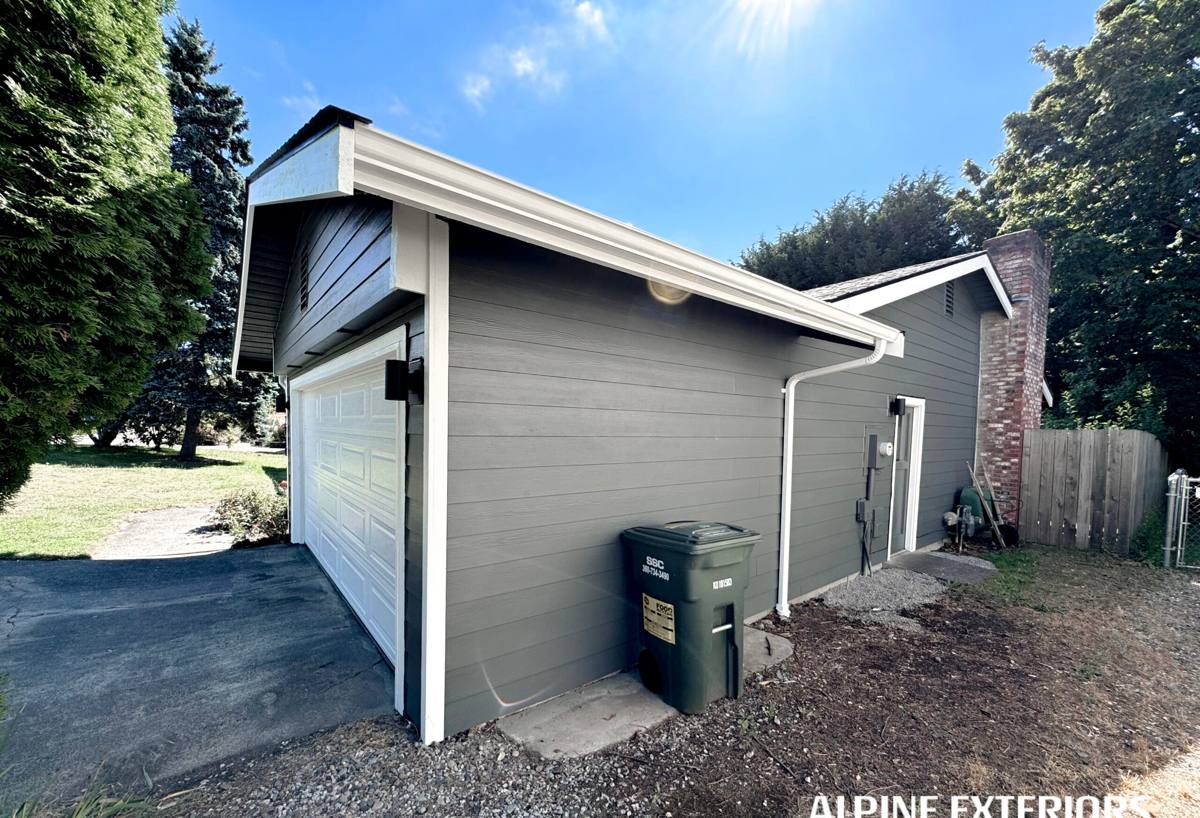
Cordata is one of Bellingham's newer, faster-growing neighborhoods, and it shows in the mix of home styles you'll find there — craftsman-influenced builds, modern farmhouse designs, and newer construction sitting alongside older homes that have been added onto over the years. Board and batten siding shows up a lot in these styles because the strong vertical lines read as clean and intentional, whether it's covering a whole home, a gable end, or a porch accent next to horizontal lap siding.
But board and batten isn't just a look. It's a siding system with its own set of installation rules, and in a marine climate like Whatcom County's, getting those rules right matters more than the style choice itself. A board and batten wall that's cut corners on drainage or fastening will show problems years before a properly built one, no matter how good it looks the day it goes up.
Why Bellingham's Climate Puts Extra Demands on Board & Batten
Salt Air and Marine Moisture
Bellingham sits on Bellingham Bay, and the salt-laden, moisture-heavy air that comes off the Salish Sea reaches homes well inland, including neighborhoods like Cordata. Salt air accelerates corrosion on exposed fasteners and metal trim, and it keeps humidity levels higher than a homeowner moving from a drier climate might expect. Siding materials and fasteners that aren't rated for this kind of exposure age faster here than they would somewhere landlocked.
Driving Rain and Wind-Driven Water
Whatcom County gets a lot of rain, and a fair amount of it doesn't fall straight down — wind off the water pushes it sideways into walls, especially on exposed elevations. Board and batten has more vertical seams per square foot than lap siding, and every one of those seams is a potential path for wind-driven water if it isn't detailed correctly.
A Long Moss and Algae Season
The same damp, mild conditions that make Bellingham green make it hospitable to moss and algae for a large part of the year. Any siding surface that stays wet longer than it should — because of poor drainage, tight clearances, or shaded northern exposures common on tree-lined Cordata lots — will grow moss and algae faster and need more frequent cleaning.
What a Correct Board & Batten Installation Actually Requires
A Drainage Gap Behind the Siding
Board and batten siding should never be nailed flush against the weather-resistive barrier with no way for incidental moisture to escape. A drainage gap — created with vertical furring strips or a purpose-built rainscreen mat — lets water that gets behind the siding drain and lets the wall assembly dry out. In a climate that stays wet as long as Bellingham's does, skipping this gap is one of the most common shortcuts that leads to trapped moisture, wood rot, and premature paint or finish failure.
Weather-Resistive Barrier and Flashing Details
Every seam, corner, window, and door opening needs to be flashed so water is directed out and down, never inward. Batten strips over vertical panel joints have to be installed over a properly lapped weather-resistive barrier, not used as a substitute for one. Kickout flashing where a roofline meets a wall, and proper head flashing above openings, are small details that make the difference between a wall that sheds water and one that slowly absorbs it.
Fastening and Batten Spacing
Fastener type, spacing, and depth all follow manufacturer specifications for a reason — get them wrong and you either split the material, create a loose panel that flexes in wind, or leave a fastener head exposed to corrode. Batten spacing should also be even and planned around window and door openings before the first piece goes up, not adjusted on the fly.
Clearance From Grade, Roofs, and Hardscape
Board and batten siding needs consistent clearance from soil, decks, patios, and roof lines. Cordata's mix of newer landscaped lots and mature, established yards means clearance issues show up in different ways — sometimes it's fresh sod graded too high against the foundation, sometimes it's years of soil and mulch build-up against an older home. Either way, tight clearances trap moisture against the bottom of the siding and are one of the first places rot starts.
Why We Install Only James Hardie Board & Batten
We standardized on James Hardie fiber cement siding, including its vertical board and batten profiles, and we don't install vinyl, LP SmartSide, cedar, or other fiber cement brands. That's a deliberate professional standard, not a marketing line, and it's worth explaining honestly.
Cedar board and batten looks great new, and real wood has genuine appeal — but it needs consistent refinishing to hold up against Bellingham's rain and moss, and it's a combustible material. Vinyl board and batten is low-maintenance and inexpensive, but it's a thinner product that can warp with temperature swings and doesn't hold paint if a homeowner ever wants to change the color. LP SmartSide is an engineered wood product with real strengths, but wood-based siding depends heavily on caulking and paint maintenance staying ahead of moisture in a climate this consistently damp — fall behind on maintenance here and a wood-based product loses ground faster than in a drier region.
James Hardie's fiber cement is non-combustible, dimensionally stable, and factory-finished with ColorPlus technology, so the color is baked on rather than field-painted and holds up better against UV and salt air. Hardie also engineers products by climate zone — the HZ10 line is built for wetter regions like ours — and backs the material with a strong, transferable limited warranty. It's a product built to be installed once, correctly, and left alone for decades.
Board & Batten Material Comparison
| Material | Moisture Behavior in Our Climate | Maintenance | Combustibility |
|---|---|---|---|
| James Hardie fiber cement | Engineered for wet climates; dimensionally stable | Occasional washing; factory finish holds color | Non-combustible |
| Cedar | Absorbs and releases moisture; needs airflow behind it | Refinishing every few years | Combustible |
| Vinyl | Sheds water but can trap it behind panels; can warp | Low, but limited repair options if damaged | Combustible; can soften/warp near heat |
| LP SmartSide (engineered wood) | Treated against moisture but still wood-based | Caulk and paint upkeep is important | Combustible |
Our Process for Cordata Board & Batten Projects
The process doesn't change dramatically from neighborhood to neighborhood, but every step is done with Bellingham's climate and Cordata's specific site conditions — mature trees, drainage patterns, lot grading — in mind.
- On-site assessment: we look at existing siding, sheathing condition, drainage paths, roofline intersections, and clearance issues before quoting anything.
- Removal and inspection: old siding comes off and we check the sheathing and framing underneath for hidden moisture damage before covering it back up.
- Weather-resistive barrier and flashing: a new barrier is installed and lapped correctly, with flashing at every seam, opening, and roof intersection.
- Rainscreen or furring installation: vertical strips or a drainage mat go up to create the gap that lets the wall breathe and drain.
- Board and batten installation: Hardie panels and battens go up to manufacturer fastening specs, with batten layout planned around openings for an even, intentional look.
- Trim, caulking, and touch-up: factory-finished ColorPlus material means minimal field painting, but seams and cut edges are sealed and finished properly.
- Final walkthrough and cleanup: we walk the job with the homeowner before calling it done.
What to Look For — and Ask — Before You Hire
Board and batten hides a lot of what matters behind the finished wall, so the questions you ask before work starts matter as much as the finished appearance.
- Ask specifically whether a drainage gap or rainscreen will be installed behind the siding — not just whether a weather-resistive barrier will be used.
- Ask how batten spacing will be laid out around your windows and doors before installation starts, not decided on site.
- Ask what fastener type and flashing details will be used at seams, corners, and roof intersections.
- Ask for the manufacturer's installation instructions the crew is actually following, not just a verbal assurance.
- Ask how the crew handles grade and hardscape clearance if your lot has landscaping close to the house.
Cost Factors for Board & Batten in Cordata
Every home is different, but a few factors consistently move the price of a board and batten project up or down. We give exact numbers after an on-site look, but this is what tends to drive the range.
| Factor | Why It Affects Cost |
|---|---|
| Sheathing/framing condition | Hidden moisture damage found during removal adds repair work before new siding goes on |
| Wall height and roofline complexity | More gables, dormers, and roof intersections mean more flashing and cutting |
| Existing siding type | Some materials come off faster and cleaner than others |
| Batten layout complexity | Custom spacing around windows, doors, and trim takes more planning and labor |
| Site access | Tight side yards, fencing, or landscaping close to the house slow the work down |
Why a Crew That Already Works in Cordata Matters
A crew that's already worked in and around Cordata knows what to expect on a job before the first panel comes off the truck — how Whatcom County permitting works for a residential re-side, how local grading and drainage patterns tend to sit on these lots, and how the marine climate here treats different materials and fastener choices over time. That familiarity shows up as fewer surprises mid-project and a finished wall that's built for the conditions it actually has to survive, not generic conditions from a manufacturer's spec sheet written for a different climate.
If you're considering board and batten siding for a home in Cordata, we're happy to take a look and talk through what your specific home needs. Reach out below for a free, no-pressure estimate — there's no obligation, just an honest assessment of your siding and what it would take to do the job right.