 Bellingham Siding
 Building Decks for Sudden Valley's Particular Conditions
Sudden Valley sits in a wooded, lake-adjacent pocket of Whatcom County, and that setting changes what a deck actually needs to hold up over time. Heavy tree cover keeps large sections of many lots shaded most of the day, lake-adjacent humidity keeps the air damp longer after a storm passes, and Bellingham's broader marine climate adds driving rain and a long moss season into the mix. A deck built to a generic spec sheet can look fine at handoff and still start showing soft spots, black streaking, or squeaking joints within a couple of wet seasons if it wasn't built with this specific combination of shade, moisture, and slope in mind.
This page is about one job, in one place: custom deck construction for homes in and around Sudden Valley. Not a general rundown of deck styles, but what actually holds up here, what a correct build looks like, and why local build experience changes the outcome.
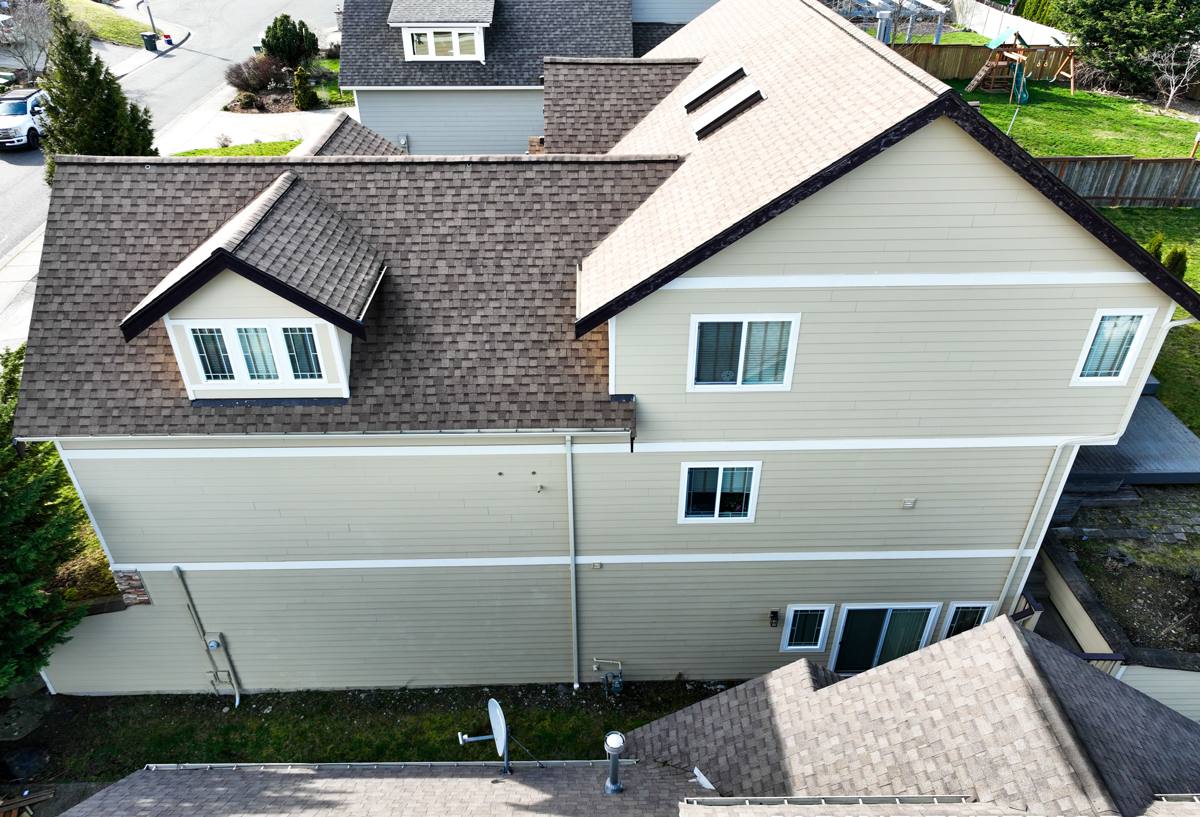
What Bellingham's Climate Actually Does to a Deck
Whatcom County doesn't get extreme weather so much as it gets persistent weather. That's the part that catches homeowners off guard — no single storm damages a deck, but the cumulative effect of many wet, shaded months does.
Moisture that doesn't dry out
On open, sun-exposed lots, decks get a chance to dry between rain events. On wooded lots like many in Sudden Valley, tree canopy blocks direct sun and airflow across large parts of the deck surface, so boards, joists, and ledger connections can stay damp far longer after each rain. That extended dampness is exactly the condition that drives rot, fungal growth, and fastener corrosion.
Moss and algae growth
Moss doesn't just grow on roofs. Shaded deck boards, especially on the north or lake-facing side of a house, develop the same green and black film over a season or two if the surface can't shed water and dry properly. Beyond looking bad, that buildup holds moisture against the board and turns the surface slick and genuinely unsafe underfoot in wet weather.
Driving rain and wind-blown wetting
Rain in this region rarely falls straight down. Wind-driven rain gets pushed under railings, into ledger board connections, and along the underside of decking — areas that a lot of standard construction details don't fully account for. That's where undetected rot tends to start, well behind whatever's visible from the top of the deck.
Choosing Decking Material for a Wooded, Wet Lot
There's no single "best" decking material — there's a best fit for the site conditions and how the deck will be used. On shaded, damp lots, some materials simply perform better than others over the long run.
| Material | Behavior in Shade & Moisture | Maintenance | Typical Lifespan |
|---|---|---|---|
| Pressure-treated wood | Absorbs moisture readily; prone to moss and mildew in shade without regular treatment | Annual cleaning and periodic sealing/staining | 10–15 years with upkeep |
| Cedar or other natural wood | Naturally more rot-resistant but still needs airflow to shed moisture in shaded spots | Regular cleaning, occasional oiling or staining | 15–20 years with upkeep |
| Capped composite decking | Sheds surface moisture well; capped shell resists moss staining better than wood, though shaded areas still need occasional cleaning | Periodic washing, no sealing or staining | 25–30 years |
| PVC decking | Fully synthetic, essentially unaffected by moisture absorption; best option for consistently shaded, damp areas | Occasional washing | 25+ years |
We don't push one material on every job. A sun-exposed section of deck facing away from the tree line can perform well in a quality wood, while a shaded section closer to mature trees is usually money better spent on a composite or PVC board that won't need annual attention to stay moss-free. Mixing materials by zone, when it makes sense structurally, is often the more honest answer than a one-size answer for the whole deck.
Structural Details That Matter More Here Than Elsewhere
The framing underneath a deck does more work in this climate than in a dry one, and it's also the part a homeowner never sees after the build is done — which is exactly why it's worth getting right the first time.
Ledger flashing
Where the deck attaches to the house, proper flashing keeps wind-driven rain from tracking behind the ledger board and into the house's wall framing. This is one of the most common failure points we find when repairing or rebuilding older decks in wet climates, and it's invisible until there's already damage.
Joist protection
Untreated cut ends and joist tops are where rot typically starts first, even on pressure-treated lumber. Joist tape or a comparable protective barrier on top of the joists, plus sealing any field cuts, meaningfully extends the life of the frame underneath a deck that stays damp longer than average.
Footings on sloped or wooded ground
Sudden Valley's terrain includes plenty of sloped, wooded lots. Footings need to go below frost depth and rest on stable, undisturbed soil — tree roots, loose fill, and uneven grade all complicate that on a hillside lot in a way they don't on a flat, open one. Getting footing depth and placement right up front avoids a deck that settles unevenly a few years in.
Airflow underneath
Low decks with poor under-deck ventilation trap the exact damp, shaded conditions that grow moss and encourage rot. Where deck height and grade allow it, we build in enough clearance and skirting gaps to let air move underneath.
Site Considerations Specific to Sudden Valley Lots
Beyond the climate, the physical layout of many Sudden Valley properties shapes how a deck should be designed.
Slope and drainage
Sloped lots common in this area mean water needs a clear path away from the house and away from the deck's footings. A deck that ignores existing site drainage can end up funneling runoff exactly where you don't want it — against the foundation or pooling under the deck itself.
Tree proximity
Building near mature trees means accounting for root zones when placing footings, and thinking ahead about how canopy growth will affect shade and debris (needles, leaves) accumulating on the deck surface over time. A design that plans for seasonal cleanup is more realistic than one that assumes a clear, dry deck year-round.
Permits and any community requirements
Deck construction in Whatcom County generally requires a building permit, and lots near Lake Whatcom can carry additional shoreline or setback considerations depending on proximity to the water. Some planned communities also have their own design review processes for exterior construction. We handle the permit process as part of the job and will flag anything project-specific that needs a call to the county or the local association before work starts — better to confirm than assume.
How Our Process Works
- On-site visit. We walk the actual lot — grade, tree cover, sun exposure, and how the space will be used — before recommending a design or material.
- Design and material selection. We lay out size, layout, and material zone-by-zone based on what each part of the deck will actually be exposed to.
- Written estimate. A clear scope and price range, with material options broken out so you can see the trade-offs rather than a single take-it-or-leave-it number.
- Permitting. We prepare and submit what the county requires and keep you informed of the timeline.
- Construction. Footings, framing, ledger flashing, decking, and railings, built in the order that lets each stage be inspected properly before the next covers it up.
- Final walkthrough. We go over the finished deck together, including basic care guidance suited to your specific site conditions.
Maintenance That Actually Matters for This Climate
A well-built deck in Sudden Valley still needs some seasonal attention — the climate here just makes a few tasks more important than they'd be elsewhere.
- Sweep leaves and needles off the deck surface regularly, especially in shaded areas — trapped debris holds moisture against the boards.
- Clean composite or PVC decking with a mild detergent and soft brush once or twice a year to prevent moss and algae film from taking hold.
- Re-seal or re-stain wood decking on the schedule recommended for the product — skipping a cycle in a wet climate shows up faster than it would in a drier one.
- Check railings and stair connections annually for movement, since freeze-thaw cycling and constant dampness can loosen fasteners over time.
- Keep gutters and downspouts near the deck clear so roof runoff isn't adding extra water onto or under the deck structure.
- Trim back overhanging branches where practical to improve airflow and sun exposure across shaded sections.
Cost Factors on a Sudden Valley Deck Build
Every deck is priced around its own specifics, but a few factors consistently move the number more than homeowners expect.
| Factor | Why It Matters Here |
|---|---|
| Site slope and footing depth | Sloped, wooded lots often need deeper or additional footings, which adds labor and material cost |
| Deck height | Taller decks on sloped lots need more substantial railing and support structure |
| Material selection | Wood costs less up front; composite and PVC cost more initially but reduce long-term maintenance |
| Access for equipment and materials | Wooded lots with limited access can add time for material staging and demolition removal |
| Permit and inspection requirements | Any shoreline-adjacent or community review requirements can extend the timeline, which affects overall cost |
Why Local Build Experience Matters Here
A deck built by a crew unfamiliar with this specific mix of shade, slope, and moisture tends to look correct on the day it's finished and reveal its shortcuts two or three wet seasons later — in soft ledger boards, moss-slicked surfaces, or squeaking joists that trace back to under-protected framing. A crew that already builds regularly in and around Sudden Valley has already worked through the site conditions that are common here: where flashing details actually get tested by wind-driven rain, which materials hold up under heavy tree cover, and what the county and any local review processes expect before a permit gets approved. That familiarity shows up less in the sales pitch and more in the parts of the deck you'll never see again once it's built.
If you're planning a new deck or replacing one that's showing its age, we're happy to come take a look and talk through what makes sense for your specific lot. The estimate is free, there's no pressure, and you can use the form below to get in touch.