 Bellingham Siding
 Deck Building for Columbia: A Bellingham Neighborhood Built on Sloped, Shaded Lots
Columbia is one of Bellingham's older residential neighborhoods, sitting east of downtown with a mix of established homes, mature tree cover, and lots that often slope toward Whatcom Creek and the surrounding ravine terrain. That combination, shade, slope, and tree canopy, shapes what a deck actually has to hold up against here. A deck in Columbia isn't just furniture for the backyard; it's an exterior structure sitting directly in the path of Whatcom County's marine climate, and it needs to be built like one.
We build and repair decks for homes throughout Bellingham, including Columbia, and we treat deck work with the same seriousness we bring to siding and roofing. That means real attention to framing, fasteners, drainage, and board selection, not just a layout that looks good on install day. Salt air, driving rain, and a moss season that can run most of the year on shaded surfaces all take a toll on decking, and Columbia's tree-heavy, sloped lots tend to hold onto that moisture longer than more open properties elsewhere in the city.
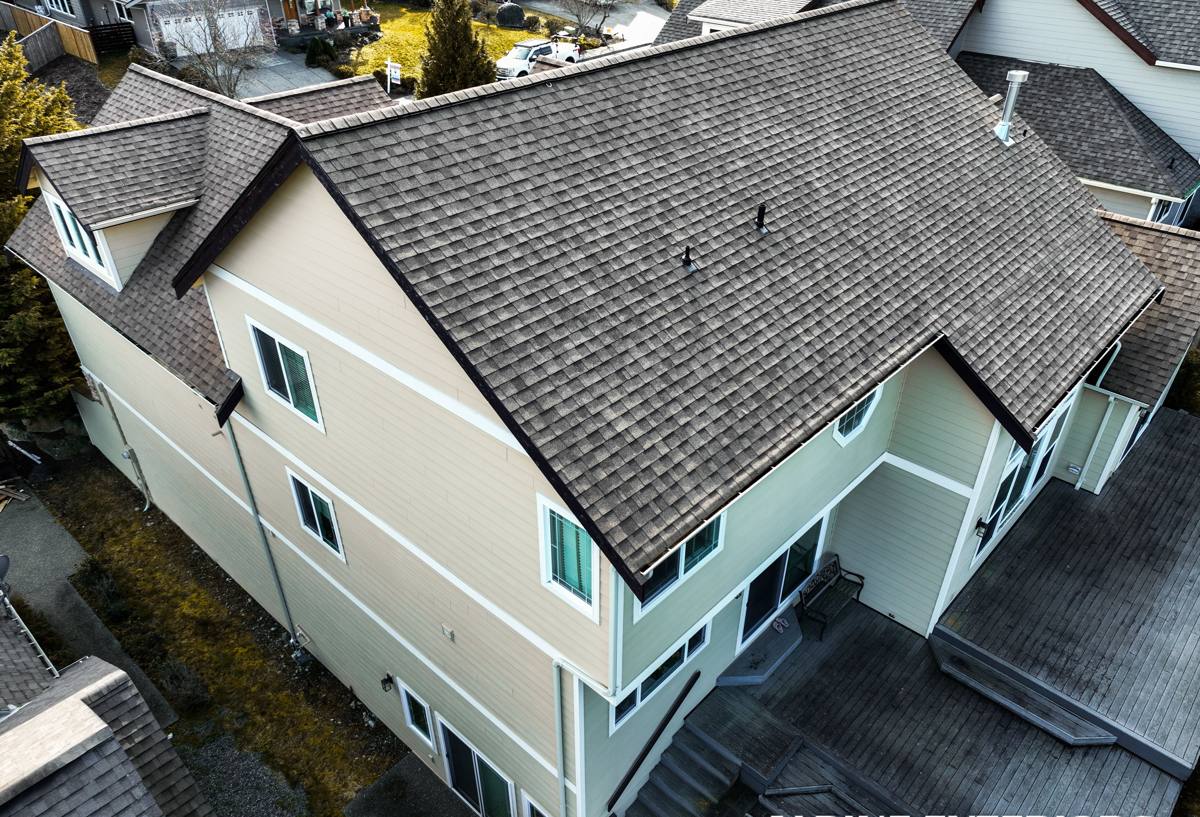
What Columbia's Climate and Terrain Do to a Deck
Shade and Moisture That Doesn't Let Up
Columbia's mature trees are part of what makes the neighborhood attractive, but they also mean a lot of decks here sit under partial or heavy canopy for much of the year. Shaded decking dries out slower after every rain, and in a climate where rain is frequent for months at a stretch, that slower drying cycle is exactly what moss, algae, and rot need to get established. A deck built without that in mind, tight board spacing, the wrong fastener grade, or a low-airflow substructure, tends to show problems years before it should.
Sloped Lots and Drainage
A number of properties in Columbia sit on ground that slopes toward the creek and ravine areas nearby, which changes how water moves under and around a deck. Framing that doesn't account for that slope can trap water against posts, footings, or ledger boards instead of letting it drain away, and that trapped moisture is often where rot starts, out of sight, at the structural connections that matter most.
Salt Air and Driving Rain
Like the rest of Bellingham, Columbia sits within reach of the salt-tinged marine air moving off the Salish Sea, and storms here regularly push rain sideways rather than straight down. That combination accelerates corrosion on fasteners and hardware, and it means railing posts, stair stringers, and any horizontal surface get hit with more sustained wet exposure than a purely inland, drier climate would produce.
What a Correct Deck Build Actually Requires
A deck that holds up in this climate is built correctly from the ground up, not decorated on top of a shortcut structure. That starts with footings sized and set below frost depth and on solid bearing soil, a ledger board properly flashed and fastened where the deck attaches to the house, and framing lumber and fasteners rated for the actual moisture exposure the deck will see, not just what's cheapest at the yard.
- Proper footings and post bases: Set on solid bearing soil, sized to local frost and load requirements, with post bases that keep wood off standing water.
- Correctly flashed ledger connection: The ledger board is one of the most common failure points on older decks; flashing has to shed water away from the house, not funnel it behind the siding.
- Corrosion-resistant fasteners and hardware: Salt air and sustained moisture eat through lower-grade fasteners faster than homeowners expect, so hardware needs to match the actual exposure.
- Adequate airflow underneath: Framing height and spacing that let air move under the deck so the structure can actually dry out between storms instead of staying damp.
- Board spacing and drainage on the decking surface itself: Gaps sized to shed water and debris rather than trap it, especially important on shaded Columbia lots where leaf litter builds up fast.
Permits and Code
Most new deck construction and many substantial repairs in Bellingham require a building permit, and inspections exist for a reason, they catch framing and connection issues before they're buried under decking boards. We pull the permits our projects require and build to code as a baseline, not an extra step, because a deck that skips inspection is a deck where nobody but the builder ever checked the footings and ledger connection.
Choosing Decking Material for a Shaded, Wet Lot
Material choice matters more on a shaded Columbia lot than it would on an open, sun-exposed property, because whatever you choose is going to stay wet longer between storms. We walk homeowners through the real trade-offs rather than pushing one product as the only answer.
| Material | Performance in Shade and Moisture | Maintenance |
|---|---|---|
| Pressure-treated wood | Affordable and structurally reliable when properly maintained, but more prone to moss growth and surface checking in persistent shade | Regular cleaning, periodic sealing or staining |
| Cedar | Naturally moisture-resistant heartwood and attractive appearance, but softer surface wears faster under constant damp shade | Sealing or staining on a recurring schedule to hold its resistance |
| Composite decking | Resists rot and doesn't need staining, though lower-quality composites can still support surface moss growth in deep shade if not cleaned | Periodic washing; no sealing or staining required |
None of these materials are maintenance-free on a shaded, sloped Columbia lot. The honest answer is that every decking material needs some upkeep in this climate, and the real differences are in how much, how often, and what happens if that upkeep gets skipped for a season or two.
New Build, Replacement, or Repair
Not every deck problem in Columbia calls for a full rebuild. A soft board, a loose railing post, or surface moss can often be addressed without touching the structure underneath. But when the ledger connection has been compromised, footings have shifted or settled, or framing has been wet long enough to soften, patching the visible symptoms just delays a bigger job and can leave a safety issue in place. We'll tell you plainly which situation you're actually looking at before we recommend a scope of work.
- Deck is more than 15-20 years old and hasn't had structural connections inspected recently
- Boards feel soft, spongy, or spring underfoot in specific spots
- Railings wobble or posts feel loose when pushed
- Moss or algae returns quickly after cleaning, especially on shaded sections
- Visible gaps, rust staining, or corrosion at fastener heads and connectors
- Standing water or slow drainage underneath the deck after rain
Deck Cost Factors in Columbia
| Factor | What It Affects | Why It Matters Here |
|---|---|---|
| Lot slope and access | Footing depth, framing complexity, equipment access | Columbia's sloped, tree-lined lots often need custom footing layouts and more careful staging |
| Decking material | Material cost and long-term maintenance | Shaded lots make drying speed and moss resistance a bigger factor than in open, sunny yards |
| Size and layout | Total material, labor, and railing linear footage | Multi-level decks following a sloped lot add framing and stair complexity |
| Ledger connection and house tie-in | Flashing detail and structural attachment work | A poorly flashed ledger is one of the most common sources of hidden water damage on older Bellingham homes |
| Permitting and inspection | Project timeline and required documentation | Bellingham permitting adds a step but confirms footings and structural connections before decking goes down |
Real numbers depend on the specific lot and scope, which is why we walk the property before quoting rather than pricing off square footage alone.
Why a Local Crew Matters in Columbia
A crew that works across Bellingham regularly, including neighborhoods like Columbia with their sloped, shaded, tree-covered lots, sees how salt air, driving rain, and a long moss season actually behave on real decks through a full year, not just how a product performs on a spec sheet. That shows up in practical choices on a Columbia job: how much airflow a substructure needs given the shade, where drainage planning matters most on a sloped yard, and which fastener and flashing details are worth the extra time so a homeowner isn't dealing with soft boards or a loose railing a few winters later. We also handle siding, roofing, and windows, so if a deck issue turns out to be connected to something happening at the house itself, a leaking ledger flashing tracking into the wall, for example, we can trace it back to the actual source instead of treating the deck as an isolated project.
If you're planning a new deck, need repair work, or just want an honest look at what shape your current deck is really in, we're glad to take a look. Reach out using the form below to schedule a free, no-pressure estimate.