 Bellingham Siding
 Building Decks That Hold Up in Happy Valley
Happy Valley sits close enough to the water and the tree canopy that a deck here lives a different life than one built inland or in a drier climate. Salt-tinged air off Bellingham Bay, long stretches of driving rain through fall and winter, and a moss season that can run half the year all work on wood, fasteners, and finishes in ways that catch a lot of homeowners off guard. A deck built without those specifics in mind might look fine for a season or two, then start showing soft spots, green film, or loose railings well before it should.
We build decks for this neighborhood the way the climate demands: correct drainage, the right fastener and flashing choices, and material selections that actually make sense for Whatcom County weather rather than a catalog photo. This page covers what that looks like in practice, from the ground up.
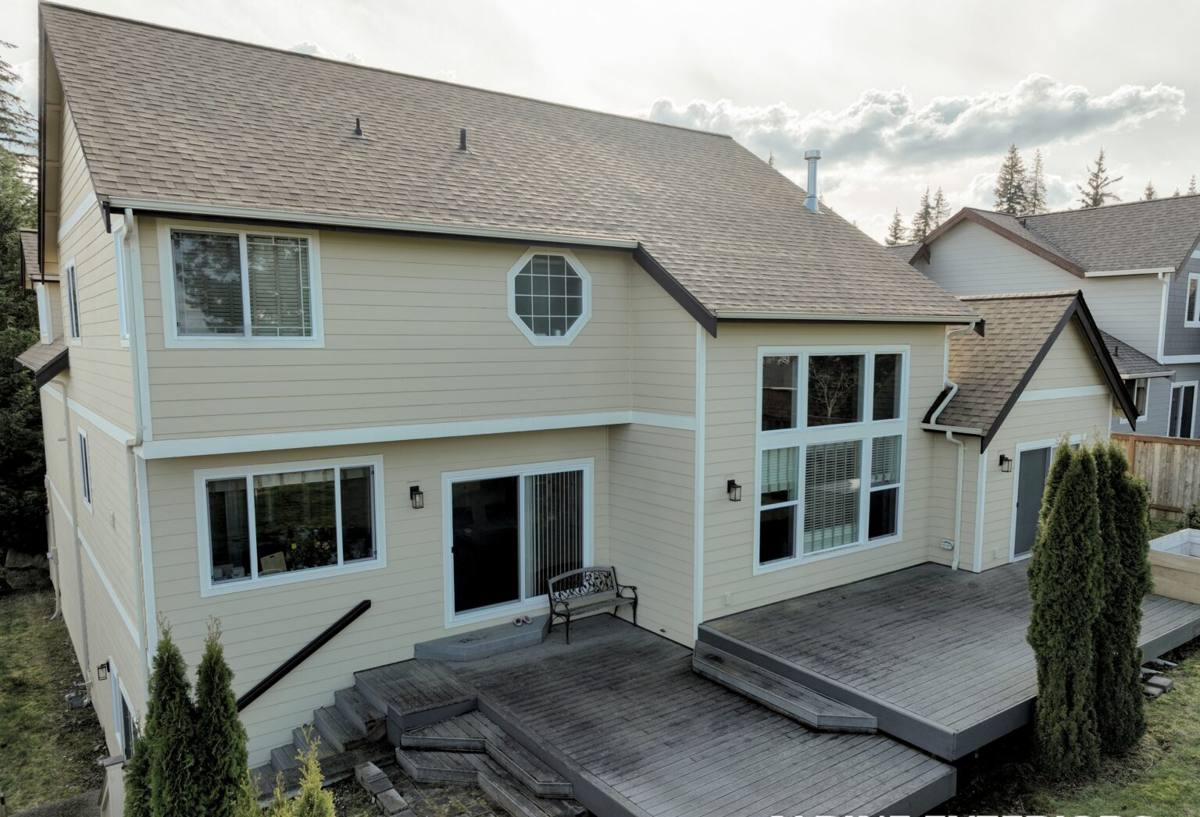
What Bellingham's Climate Actually Does to a Deck
It helps to understand the specific stresses at play before talking about solutions.
Moisture, Not Sun, Is the Main Enemy
In a lot of the country, deck failures trace back to UV breakdown. Here, the bigger issue is sustained moisture. Bellingham gets long, gray, wet stretches where a deck surface may not fully dry out for days at a time. That constant damp cycle is what drives rot in end grain, corrosion in fasteners, and the slow breakdown of finishes that were never rated for this much standing moisture.
Salt Air Accelerates Corrosion
Happy Valley's proximity to the bay means a light but steady dose of salt in the air. Salt exposure speeds up corrosion on lower-grade screws, nails, and structural connectors. A fastener that would last two decades in a dry inland climate can start showing rust streaks and weakening within a few years here if it wasn't rated for coastal exposure.
Moss Season Runs Long
Shade from mature trees, combined with months of damp weather, gives moss and algae a long runway to establish on deck boards, especially in north-facing or heavily shaded sections of a yard. Beyond the slip hazard, moss holds moisture against the wood surface, which speeds up the very rot it's sitting on top of.
Choosing Decking Material for This Neighborhood
There's no single right answer for every yard — it depends on budget, sun exposure, and how much upkeep a homeowner actually wants to do. Here's how the common options compare under Happy Valley conditions specifically.
| Material | How It Handles Our Climate | Maintenance Burden | Typical Lifespan Here |
|---|---|---|---|
| Pressure-treated wood | Good rot resistance when properly sealed; needs re-sealing to shed constant rain | Annual cleaning and re-sealing | 15-20 years with upkeep |
| Cedar | Naturally moisture and insect resistant, but softer surface can hold moss if not cleaned | Periodic cleaning, occasional oil/stain | 15-20 years with upkeep |
| Composite decking | Doesn't absorb water like wood, resists rot, but capped boards can still grow surface algae in shaded, damp spots | Occasional washing, no sealing or staining | 25-30+ years, manufacturer-dependent |
| PVC decking | Fully synthetic, essentially immune to rot; performs well in constant damp | Occasional washing | 25-30+ years, manufacturer-dependent |
Composite and PVC cost more up front but shift the long-term maintenance burden away from the homeowner, which matters in a climate where "just reseal it every year" is a real, recurring chore rather than an occasional one. Wood costs less initially and can look great, but only if the sealing schedule actually gets kept up with through wet Bellingham winters — the wood itself isn't the weak point, deferred maintenance is.
Why We're Selective About Certain Composite Products
Not every composite board is built the same. Some early-generation and budget composite products use a capping process or core material that's more prone to moisture wicking at cut ends and fastener holes — exactly the failure points that show up fastest in a wet climate like ours. We standardize on products with full encapsulation and manufacturer warranties that specifically cover moisture performance, because that's the trade-off that actually matters here, not appearance or color options.
Framing and Substructure: Where Decks Actually Fail
Almost every deck problem we get called out to inspect in this area traces back to the substructure, not the visible decking. The boards on top get all the attention, but the frame underneath is what determines whether a deck lasts ten years or thirty.
Ledger Board Flashing
Where a deck attaches to the house, water intrusion at the ledger board is one of the most common — and most serious — failure points we see. Proper flashing, correctly lapped with the house's existing water-resistive barrier, is what keeps rain from working its way behind the siding and into the framing. This is not a place to cut corners, and it's often invisible once the deck is finished, which is exactly why it needs to be done right the first time.
Joist Protection and Fasteners
Untreated cut ends, joist tops without protective tape or flashing, and standard exterior-grade fasteners are all common shortcuts that don't hold up to our rain-and-salt combination. We use corrosion-resistant, coastal-rated hardware and protect joist tops so water sheds off the frame instead of soaking into it.
Footings and Post Bases
Footings need to be set below frost depth and sized correctly for the soil conditions on the lot, with post bases that hold the post above grade so it's never sitting in standing water. Whatcom County's building department reviews footing depth and post-base details as part of permitting for good reason — it's the difference between a deck that stays solid and one that develops movement over time.
Drainage and Airflow: The Details That Prevent Moss and Rot
A deck that drains well and breathes underneath will outlast one that traps water, even if the materials on top are identical. This is where design decisions matter as much as material choice.
- Board spacing — correct gapping lets water pass through instead of pooling on the surface
- Deck slope — a slight pitch away from the house keeps water moving instead of sitting
- Under-deck ventilation — open or properly vented skirting keeps air moving under the structure so the frame can dry out between rain events
- Grading beneath the deck — soil that slopes away from the house prevents water from collecting under low decks
- Sun exposure planning — where possible, we factor in existing shade patterns so the moss-prone sections get design attention, like smoother-surfaced boards that are easier to clean
None of these are visible once the deck is finished, but they're the difference between a deck that needs a pressure wash once a year and one that's fighting moss and soft spots within a few seasons.
Our Deck Building Process
- On-site assessment — we look at sun exposure, grade, drainage patterns, and how the deck will tie into the house before recommending materials or layout
- Design and material selection — honest conversation about budget, maintenance tolerance, and what actually performs well on this specific lot
- Permitting — we handle the permit application and coordinate required inspections with the local building department
- Footings and framing — footings set to proper depth, frame built with coastal-rated hardware and correct ledger flashing
- Decking, railing, and stairs — installed to code, including guardrail height and baluster spacing requirements
- Final walkthrough — we go over care and maintenance specific to the material installed, so the deck actually gets the upkeep it needs to hit its expected lifespan
Permits and Code Requirements
Most new decks and many deck replacements in Whatcom County require a building permit, particularly when the deck is attached to the house, elevated above a certain height, or involves structural changes. Permitted work means an inspector checks footing depth, ledger attachment, and guardrail compliance along the way — an extra layer of verification that protects the homeowner, not just a bureaucratic step. We manage this process as part of the job rather than leaving it for the homeowner to sort out separately.
Maintaining a Deck Through Bellingham Winters
Whatever material a deck is built from, a little seasonal attention goes a long way in this climate. Here's what we recommend to homeowners after a build:
- Sweep leaves and debris off the deck regularly in fall — trapped organic matter holds moisture and feeds moss growth
- Wash the surface at least once a year, more often in shaded areas, to keep moss and algae from establishing
- Check and re-seal wood decking on the manufacturer's recommended schedule — don't let it lapse through a wet winter
- Inspect railings and stair connections annually for looseness, especially after a hard freeze-thaw stretch
- Keep gutters and downspouts near the deck clear so runoff isn't draining directly onto or under the structure
- Watch for soft spots near the ledger board or stair stringers — early detection is far cheaper than a structural repair
Why It Matters That We Already Work in Happy Valley
A deck contractor who's built and repaired decks throughout this neighborhood already knows which yards fight drainage problems, which sun exposures grow moss fastest, and which framing shortcuts show up as callbacks two winters later. That local pattern recognition shapes real decisions — where we add extra flashing, which material we steer a shaded, damp lot toward, how we detail a ledger board on an older Happy Valley home. It's the difference between a deck built to a generic spec sheet and one built for the actual conditions it's going to sit in for the next few decades.
If you're planning a new deck or replacing one that's showing its age, we're glad to come take a look and talk through what makes sense for your yard. The estimate is free, there's no pressure, and you'll get straight answers about materials, cost ranges, and what your specific lot needs — just fill out the form below to get started.