 Bellingham Siding
 Deck Building for Silver Beach's Lake-and-Timber Setting
Silver Beach sits among the wooded, sloped lots that surround Lake Whatcom on Bellingham's east side, and that setting shapes almost every decision that goes into a deck here. Mature tree cover, hillside grades, and the lake's moisture hanging in the air all mean a deck built the same way you'd build one on a flat, open lot in a drier part of the country won't hold up. We've framed and finished decks for homes in this kind of terrain long enough to know where the shortcuts show up five years later — soft ledger boards, slick moss-covered treads, rusted-out hardware — and we build to avoid them from the start.
This page focuses on one service in one place: what a deck in Silver Beach actually needs, what a correct build looks like, and how we run the job from first visit to final walkthrough.
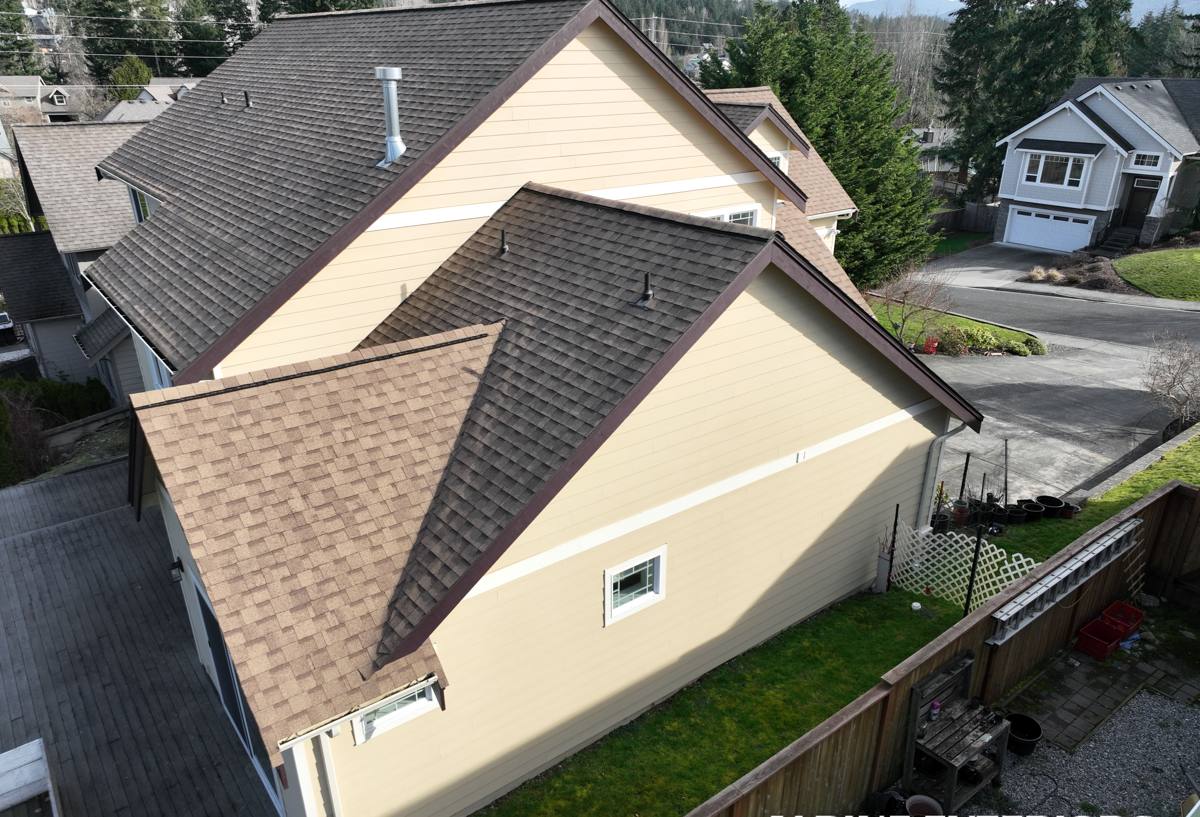
What Silver Beach Asks of a Deck
Sloped, Wooded Lots Change the Engineering
Many lots in this part of Bellingham drop toward the lake or sit on a hillside with limited flat ground. That changes the framing plan before a single board goes down. Post heights vary across the same deck, footings may need to be set at different depths to reach undisturbed soil, and beam spans have to account for taller, less-braced posts on the downhill side. Tree roots near the building line can also affect where footings can go, which sometimes means adjusting the layout rather than forcing a footing into a spot that won't hold.
Shade and Moisture Keep Everything Wet Longer
Whatcom County's marine climate already means driving rain and a long stretch of damp weather most of the year. Add heavy tree canopy — common on lots near the lake — and a deck can stay wet for days after a storm because sunlight and wind never fully reach it. That combination is exactly what moss and algae need to take hold, and it's why deck surfaces in shaded Silver Beach yards need more thought put into drainage, board spacing, and material choice than a deck out in the open.
Decking Material Options for This Climate
There isn't one "best" decking material — there's a best fit for a given lot's sun exposure, your maintenance appetite, and your budget. Here's how the common options compare for a shaded, damp lake-area lot:
| Material | Moss/Algae Resistance | Maintenance | Upfront Cost | Typical Lifespan |
|---|---|---|---|---|
| Pressure-treated wood | Low in shade — needs regular cleaning and sealing | Annual cleaning, periodic sealing/staining | Lowest | 15-20 years with upkeep |
| Cedar | Moderate — naturally rot-resistant but still grows moss in deep shade | Regular sealing to hold color and resist moisture | Mid-range | 20-25 years with upkeep |
| Capped composite | Good — dense surface resists moss better, though shaded spots still need cleaning | Occasional washing, no sealing or staining | Higher | 25-30+ years, manufacturer-warrantied |
| PVC decking | Best — fully synthetic surface, least hospitable to organic growth | Lowest — periodic washing only | Highest | 25-30+ years, manufacturer-warrantied |
For heavily shaded lots close to the lake, we usually steer homeowners toward capped composite or PVC — not because wood is a bad product, but because a wood deck in deep, damp shade demands a maintenance schedule most people don't keep up with, and the moss that results isn't just unsightly, it's a slip hazard. If you love the look and feel of real wood and are willing to stay on top of cleaning and sealing, we'll build it right and tell you honestly what that upkeep involves.
Framing and Footings Done Right
The framing is what nobody sees and what everything else depends on. On Silver Beach's sloped, wooded lots, that means:
- Footings sized and set to reach stable soil, adjusted for the grade rather than a one-depth-fits-all approach
- Ledger board attachment flashed properly against the house so rain can't work its way behind it — this is the single most common source of hidden rot in this climate
- Joist tape or equivalent moisture barrier on top of framing lumber before decking goes down
- Beam and joist spans engineered for the actual post heights on a sloped lot, not just a standard span table
- Corrosion-resistant fasteners and hardware matched to the lumber's chemical treatment
Skipping any one of these doesn't show up on day one. It shows up in year four or five as a soft spot near the house, a squeak that wasn't there before, or streaks of rust bleeding down a post.
Railings, Fasteners, and Hardware for a Damp, Marine Climate
Whatcom County's air carries enough moisture and salt influence off the Sound that ordinary fasteners corrode faster here than they would inland. We use fasteners and structural hardware rated for the specific lumber treatment on the job — mixing the wrong metal with modern treated lumber accelerates corrosion instead of preventing it, which is a mistake we see on older decks we're asked to repair or replace.
Railings matter just as much on sloped lots, especially where a deck sits several feet above grade on the downhill side. Guardrail height, baluster spacing, and post attachment all need to meet code — not as a formality, but because a deck built on a slope often has more open air beneath it than the same deck would on flat ground, and that's exactly where a weak rail becomes dangerous.
Permits and Building Near the Lake
Most decks above a certain height off the ground require a building permit in Bellingham and unincorporated Whatcom County, and lots near Lake Whatcom can carry additional shoreline or critical-area considerations since the lake is both a drinking water source and a sensitive habitat area. The exact requirements depend on your specific lot, its distance from the shoreline, and its zoning, so we don't guess at that from a phone call — we look at the site and, where needed, help you understand what the local jurisdiction will ask for before we pull a permit. We handle that process as part of the job rather than leaving it for the homeowner to sort out.
How We Build a Deck in Silver Beach
- Site visit and assessment — we walk the lot, note the slope, tree cover, sun exposure, and drainage patterns, and take real measurements rather than working off a satellite photo
- Design and material conversation — we talk through decking material, railing style, and layout in light of what your specific lot's shade and grade will demand over time
- Permitting — we prepare and submit what the local jurisdiction requires for your lot
- Framing and footings — built to the grade, flashed at the ledger, and fastened with hardware matched to the lumber
- Decking, railings, and finish work — installed to the spacing and fastening pattern the material manufacturer specifies, which matters for both appearance and warranty
- Final walkthrough — we go over the finished deck with you, including what maintenance it will need and when
Living With Your Deck Through Moss Season
A well-built deck in Silver Beach still needs some seasonal attention — the difference between a good build and a poor one is how much attention it needs, not whether it needs any at all. A simple yearly routine keeps most decks looking good and, more importantly, keeps the surface from getting dangerously slick:
- Sweep leaves, needles, and debris off the deck regularly through fall — trapped organic matter is what feeds moss and algae
- Wash the deck surface at least once a year with a deck-safe cleaner, more often in deeply shaded spots
- Check that gaps between boards haven't filled with debris, which traps moisture against the wood
- Inspect railings and stair connections annually for loose fasteners or early rust
- For wood decks, reseal or restain on the schedule the product calls for — don't wait until it's visibly gray or weathered
- Confirm gutters and downspouts near the deck are directing water away from footings and ledger areas
Why a Crew That Already Works Silver Beach Matters
A lot of what makes a deck perform well here isn't in a manual — it's knowing that a particular stretch of lots near the lake holds moisture longer than the rest of Bellingham, or that a hillside footing plan needs a different approach than a flat-lot one, or which permitting questions come up for shoreline-adjacent properties. A crew that's already done this work in the neighborhood brings that knowledge to your job instead of learning it at your expense. We'd rather spend our time solving your lot's specific problems than rediscovering ones we've already solved elsewhere in the same part of town.
If you're planning a new deck or replacing one that's showing its age, we're happy to come out, walk the site, and give you a straightforward, no-pressure estimate — just fill out the form below.