 Bellingham Siding
 Why Edgemoor Decks Wear Out Faster Than the Average Bellingham Backyard
Edgemoor sits close enough to Bellingham Bay that salt-laden air is a daily fact of life, not an occasional nuisance. That air carries moisture and fine salt particles that settle on wood fibers, metal fasteners, and any exposed end grain. Combine that with Whatcom County's long, wet shoulder seasons and the tree canopy common in this neighborhood, and you get a deck environment that ages structures faster than a drier, more open lot across town.
Three things do most of the damage here: driving rain that gets pushed sideways into ledger boards and joist ends by wind off the water, salt air that accelerates corrosion in fasteners and connectors, and a moss season that can run from October through April. Moss holds moisture against wood surfaces long after a storm has passed, which is exactly the condition rot needs to take hold. A deck that would last two decades in a dry inland climate can start showing structural problems in half that time here if it wasn't built with these specific conditions in mind.
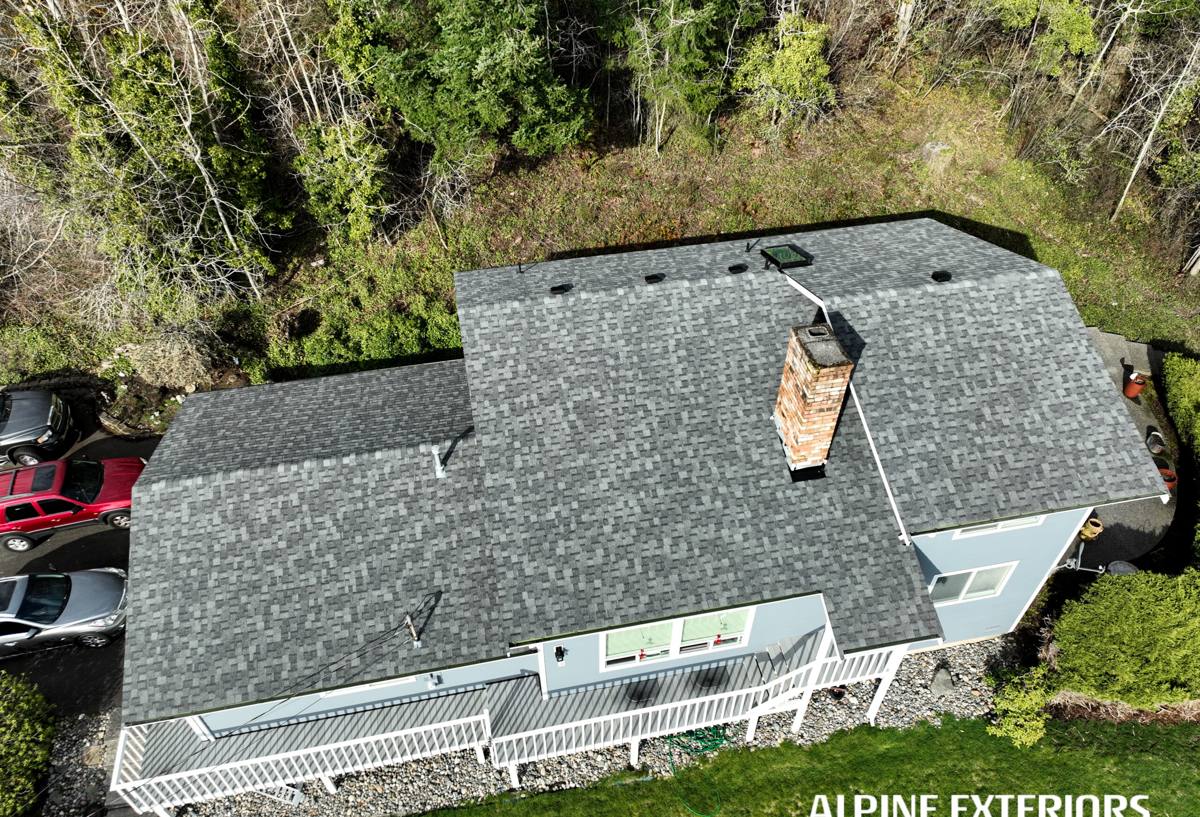
Signs an Edgemoor Deck Needs Replacement, Not Just Repair
Not every tired-looking deck needs to be torn out. But there's a point where patching boards is throwing money at a structure that's already compromised underneath. Here's what tells us a full replacement is the honest recommendation rather than another round of repairs:
- Soft or spongy decking boards in multiple areas, not just one or two spots
- Rust streaking or visibly corroded fasteners and joist hangers
- Rot at the ledger board where the deck attaches to the house — the single most common failure point in this climate
- Persistent moss or algae growth that returns within weeks of cleaning
- Visible gaps, sagging, or bounce in the deck surface underfoot
- Posts or footings that have shifted, cracked, or show signs of moisture wicking
- A deck older than 15-20 years that has never had the substructure inspected
If what you're seeing is limited to a few worn boards on an otherwise sound frame, repair is the right call and we'll say so. Replacement is for decks where the framing, connections, or ledger attachment are no longer trustworthy.
What a Correct Deck Replacement Actually Involves
Full Removal and Structural Inspection
We don't build a new deck surface on top of an old, unverified frame. Replacement starts with removing the decking and railing down to the substructure so we can actually see the condition of the ledger, joists, beams, and footings. This is where a lot of hidden rot and fastener corrosion gets found — problems that never would have shown up from the top.
Ledger Board and Flashing
The ledger board — where the deck bolts into the house — is the highest-risk connection point in any deck, and it's especially vulnerable in a climate with this much driving rain. A correct replacement includes proper flashing that directs water away from the house band board, not just a bolted-on ledger with no water management behind it. This single detail is responsible for more deck failures and hidden home water damage than almost anything else in the build.
Footings and Framing
Depending on the age and condition of the original deck, footings may need to be replaced or supplemented to meet current code depth and bearing requirements. We use corrosion-resistant hardware throughout — hangers, screws, and structural connectors rated for the moisture and salt exposure this location sees, not standard interior-grade fasteners that will start rusting within a few seasons.
Decking, Railing, and Finish Details
Once the frame is sound, we install the decking surface, railing system, and any stairs, with attention to drainage gaps between boards and airflow underneath the deck. Standing water and trapped moisture are what turn a good material choice into a maintenance headache, so how a deck is built matters as much as what it's built from.
Choosing the Right Decking Material for Edgemoor's Climate
There's no single "best" decking material — there's a best material for your budget, your maintenance appetite, and how much shade and moisture your specific lot deals with. Here's an honest comparison of the main options we install:
| Material | Moisture & Moss Resistance | Maintenance | Typical Lifespan |
|---|---|---|---|
| Pressure-treated wood | Good if sealed regularly; end grain and fastener holes are vulnerable points | Annual cleaning and resealing recommended | 10-15 years with upkeep |
| Cedar | Naturally rot-resistant but still needs sealing in this climate | Sealing every 1-2 years, regular moss cleaning | 15-20 years with upkeep |
| Composite decking | Excellent — doesn't absorb moisture the way wood does | Occasional washing, no sealing or staining | 25-30 years |
| PVC decking | Excellent, fully non-organic surface resists moss growth | Lowest — mostly just periodic rinsing | 25-30+ years |
For a lot with heavy tree cover and consistent shade — common in parts of Edgemoor — we lean toward recommending composite or PVC decking for the surface, simply because moss and algae get a foothold on wood far faster in shaded, damp conditions. That said, plenty of homeowners prefer the look and feel of real wood and are willing to keep up with sealing. We'll walk the site with you and give a straight opinion based on your specific sun exposure and tree coverage, not a one-size answer.
Our Deck Replacement Process
- On-site assessment — we inspect the existing deck, check the ledger and framing where accessible, and talk through what you want from the new deck
- Written estimate — a clear scope of work and pricing, no vague allowances
- Permitting — we handle the permit application through the City of Bellingham or Whatcom County as applicable, based on your deck's size and height
- Demolition and disposal — full removal of the old structure, hauled off site
- Framing and flashing — ledger, joists, footings, and structural connections built or verified to current code
- Decking, railing, and finish work — installation of your chosen material with proper drainage and fastening
- Final walkthrough — we go over the finished deck with you before calling the job done
Permits and Local Considerations
Deck replacement projects in Bellingham and unincorporated Whatcom County generally require a building permit once the deck exceeds a certain height or size threshold, and setback rules apply depending on your property line and, in some cases, proximity to critical areas like slopes or shoreline buffers. Edgemoor's location near the water means some lots may fall under additional shoreline or environmentally sensitive area review. We check this during the assessment so there are no surprises mid-project, and we pull the permit as part of the job rather than leaving it on you to sort out.
Maintenance That Actually Matters After Replacement
A new deck built correctly for this climate still needs some seasonal attention, especially through moss season:
- Sweep leaves and debris off the deck surface regularly through fall — trapped organic matter is what feeds moss growth
- Rinse the surface periodically in winter and early spring to keep moss spores from establishing
- For wood or cedar decks, reseal on the schedule recommended for that product — don't wait until it's visibly weathered
- Keep gutters and downspouts near the deck clear so runoff isn't dumping extra water onto the structure
- Check railing and stair connections once a year for any loosening
Composite and PVC decks cut this list down significantly, which is part of why they've become the practical choice for a lot of homeowners in this area.
Why Hiring a Crew That Already Works in Edgemoor Matters
A deck built to a generic spec sheet, without accounting for salt exposure, driving rain direction, and moss pressure specific to this part of Bellingham, tends to show problems early — usually starting at the ledger board or in corroded fasteners within the first few years. A crew that regularly works this neighborhood already knows which details can't be skipped here: the flashing behind the ledger, the fastener grade, the drainage gaps, and realistic material recommendations based on how much shade and tree cover a given lot actually gets. That local knowledge is the difference between a deck that needs attention again in five years and one that holds up through Whatcom County winters for decades.
If your deck is showing its age or you're planning ahead before it becomes a safety issue, we're happy to take a look and give you a straightforward assessment. Reach out for a free, no-pressure estimate using the form below.