 Bellingham Siding
 Board & Batten in Edgemoor: A Look That Fits the Setting
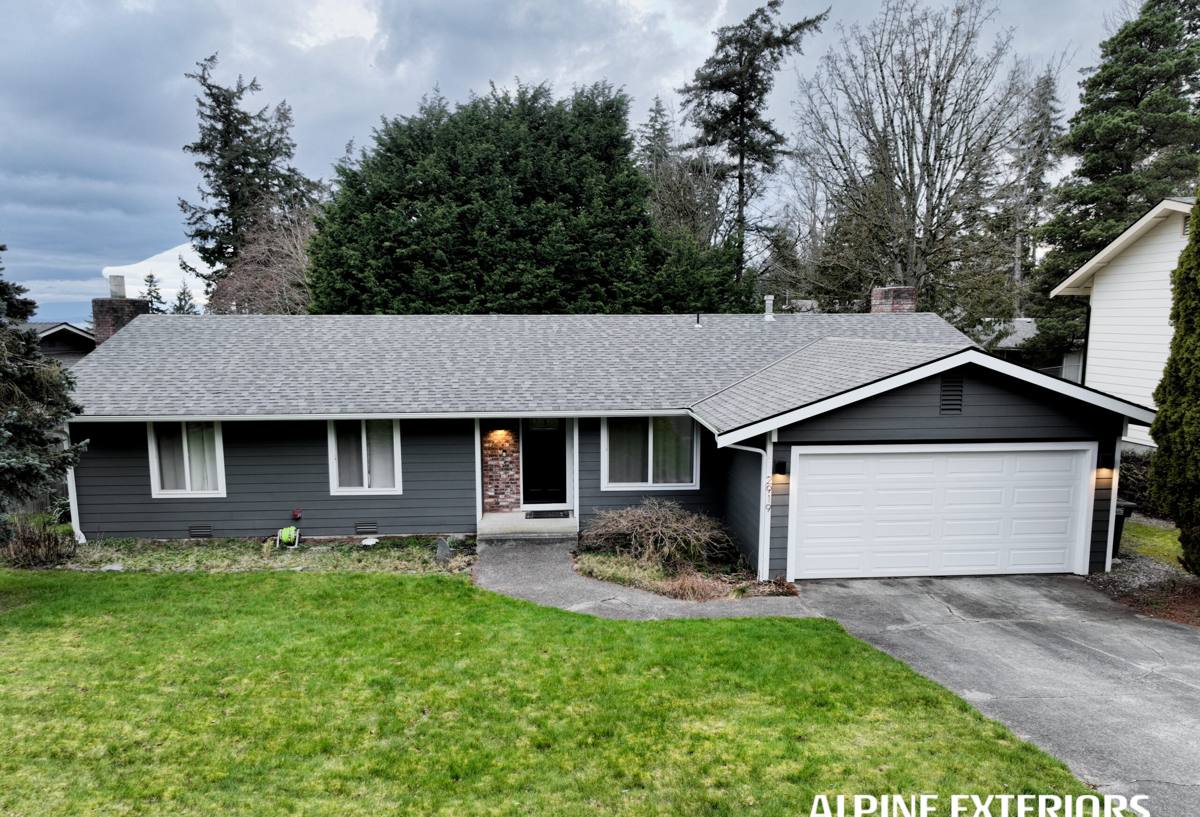
Edgemoor sits along the water on the south side of Bellingham, with wooded lots, mature tree cover, and homes that lean toward a clean, vertical architectural style rather than the classic horizontal lap look you see in a lot of subdivisions further inland. Board and batten siding — wide flat boards with narrow battens covering the seams — fits that setting well. It reads as modern or classic depending on trim detail, and it holds up visually against a backdrop of evergreens and open water in a way that busier siding profiles don't.
But board and batten is not just a style choice. On a waterfront, tree-shaded lot in Whatcom County, the material and the installation method behind that look matter more than they do almost anywhere else in Bellingham. We install board and batten in Edgemoor regularly enough to know exactly where it succeeds and exactly where cut corners show up first.
What Bellingham's Salt Air, Rain, and Moss Do to Vertical Siding
Three things work against exterior siding in Edgemoor at the same time, and board and batten is more exposed to all three than standard lap siding.
- Salt air: proximity to Bellingham Bay means airborne salt reaches exterior walls, especially on sides facing the water. Salt accelerates corrosion on fasteners and metal flashing, and it can degrade paint and finish coatings faster than an inland home would experience.
- Driving rain: wind off the water pushes rain sideways into wall assemblies, not just straight down. Vertical board and batten has more seams running the full height of the wall than horizontal lap siding, and every one of those seams is a potential path for wind-driven water if it isn't detailed correctly.
- Moss season: tree canopy and a long wet season in Whatcom County mean extended periods of shade and moisture on north- and east-facing walls. Moss and algae need sustained dampness to establish, and vertical board joints, if not ventilated, hold moisture longer than they should.
None of this means board and batten is a bad choice for Edgemoor. It means the product and the installation both have to be built for these specific conditions, not generic ones.
Why Material Choice Matters More on Board & Batten Than Lap Siding
With lap siding, water is shed by gravity and overlap alone does most of the work. Board and batten relies more heavily on the battens themselves, the fastening pattern, and the gap behind the boards to manage moisture — so the material's dimensional stability and moisture behavior carry more of the load.
Wood and engineered wood board and batten products can look excellent on day one, but they are more sensitive to the swelling, shrinking, and edge-checking that come from repeated wetting and drying — exactly the cycle Bellingham's climate produces. Vinyl board and batten avoids rot but expands and contracts with temperature swings, and on a waterfront lot with direct sun exposure on some elevations and shade on others, that movement is uneven across the same house.
This is why we standardized on James Hardie fiber cement for every board and batten project we take on, including in Edgemoor. It is non-combustible, it does not absorb and swell the way wood-based products do, and its factory-applied finish is engineered to hold up under UV and moisture cycling without the homeowner having to repaint every few years.
James Hardie Board & Batten: How It's Built for This Climate
James Hardie's vertical siding options — used to build a board and batten look — are fiber cement, meaning they're made from a mix of cement, sand, and cellulose fiber rather than wood or vinyl. That composition is what gives them the moisture stability and fire resistance that wood-based and vinyl alternatives can't match.
For this region specifically, Hardie's HZ10 formulation is engineered for cold, wet climates with freeze-thaw cycling — which describes a typical Bellingham winter well. The ColorPlus factory finish is baked on under controlled conditions and backed by its own finish warranty, which matters on a house facing salt air, since a factory-cured finish resists the fading and chalking that field-applied paint is more prone to over time near the water.
What a Correct Installation Involves
The look of board and batten is simple. The installation that makes it perform for 30+ years in a coastal, wooded microclimate is not. Here's what we treat as non-negotiable.
Rainscreen & Drainage Gap
Vertical siding should be installed over a drainage plane with a gap — not fastened flat against the weather-resistive barrier. That gap lets any water that gets past the boards drain and lets the wall assembly dry out between rain events, which matters directly for moss and mildew resistance on shaded elevations.
Fastening & Spacing
Board and batten panels expand and contract with temperature and moisture, even fiber cement, just far less than wood or vinyl. Fasteners need to be corrosion-resistant — especially important this close to salt air — and spaced according to manufacturer specification, not "close enough." Boards need consistent gaps at butt joints to allow for that movement without buckling or cracking the finish.
Flashing & Trim Details
Every seam, corner, and penetration (vents, hose bibs, light fixtures) is a place water can find its way in. Z-flashing above trim boards, properly lapped house wrap, and sealed penetrations matter more on a vertical profile with more seams running up the wall than they do on horizontal lap siding.
Finish Integrity
Field-cut edges need to be sealed with touch-up product matched to the ColorPlus finish, not left exposed. An exposed cut edge is a weak point for moisture intrusion, and on a house near the water, that's the first spot where problems tend to start.
Board & Batten Material Comparison for Edgemoor Conditions
| Material | Salt Air / Corrosion Resistance | Moisture & Moss Resistance | Maintenance Burden | Typical Finish Life |
|---|---|---|---|---|
| James Hardie Fiber Cement | High — non-combustible, stable composition | High — does not swell or rot; resists sustained dampness | Low — occasional wash, no repainting for years | Long — factory ColorPlus finish, warranty-backed |
| Cedar / Primed Wood | Moderate — fasteners and finish vulnerable over time | Lower — prone to swelling, checking, rot at joints | High — regular refinishing and joint monitoring | Shorter — field finish degrades faster near salt air |
| Engineered Wood (e.g. LP-type) | Moderate | Moderate — better than raw wood, still moisture-sensitive at cut edges | Moderate — edge sealing and inspection matter | Moderate |
| Vinyl Board & Batten | Low corrosion risk, but brittles with age | Fair — doesn't rot, but expands/contracts unevenly by elevation | Low, but limited repair options if damaged | Shorter — color and rigidity degrade with UV over time |
Our Process for an Edgemoor Board & Batten Project
We walk the property first and look at it the way the climate will: which elevations face the water and take wind-driven rain, which sides sit in shade under tree cover and hold moisture longer, and where the existing wall assembly needs attention before new siding goes up. Board and batten only performs as well as what's behind it, so we address the water-resistive barrier and drainage plane before panels go on, not after.
From there we plan batten spacing and board layout around the home's actual elevations, order Hardie product in the ColorPlus finish selected, and install to manufacturer fastening and flashing specification — the details covered above, not shortcuts. We walk the finished job with the homeowner before calling it done.
Maintenance Checklist After Installation
- Rinse siding annually, focusing on shaded, moss-prone elevations under tree canopy
- Keep gutters and downspouts clear so runoff doesn't sheet directly down wall sections
- Trim back vegetation that holds moisture against siding or blocks airflow
- Inspect caulking at trim joints and penetrations every year or two, resealing as needed
- Address any impact damage promptly — a chipped edge left exposed is where moisture problems start
Why an Edgemoor-Experienced Crew Matters
A crew that only knows inland, sun-exposed jobs will detail a wall the same way regardless of whether it faces open water or sits under fir trees a quarter mile from the bay. Working in Edgemoor and similar Bellingham neighborhoods regularly means knowing which elevations need extra attention to drainage and fastener corrosion resistance before the first board goes up, not discovering it after a callback. That local pattern recognition, paired with installing one product system to one specification, is what keeps a board and batten job looking right for decades instead of five years.
If you're considering board and batten siding for a home in Edgemoor, we're happy to walk the property, look at your specific exposures, and give you a straightforward, no-pressure estimate — just fill out the form below.