 Bellingham Siding
 Roofing in Edgemoor Is Its Own Kind of Job
Edgemoor sits close enough to Bellingham Bay to catch salt-laden air off the water, and under enough tree canopy that shade, needle debris, and moisture linger on the roof long after a storm has passed. That combination — salt air, driving rain, and a moss season that can run most of the year in Whatcom County — asks more of a roof than a typical inland home ever sees. A roof replacement here isn't just swapping old shingles for new ones. It's about choosing materials and details that hold up to this specific microclimate, not just the general Pacific Northwest average.
We've replaced roofs on wooded, bluff-adjacent, and waterview lots throughout the Edgemoor area, and the pattern is consistent: the roofs that fail early usually weren't wrong on the day they were installed — they were installed without accounting for shade, slope, and salt exposure over the following fifteen or twenty years. This page covers what that means in practice, what a correct replacement involves, and how we approach the work.
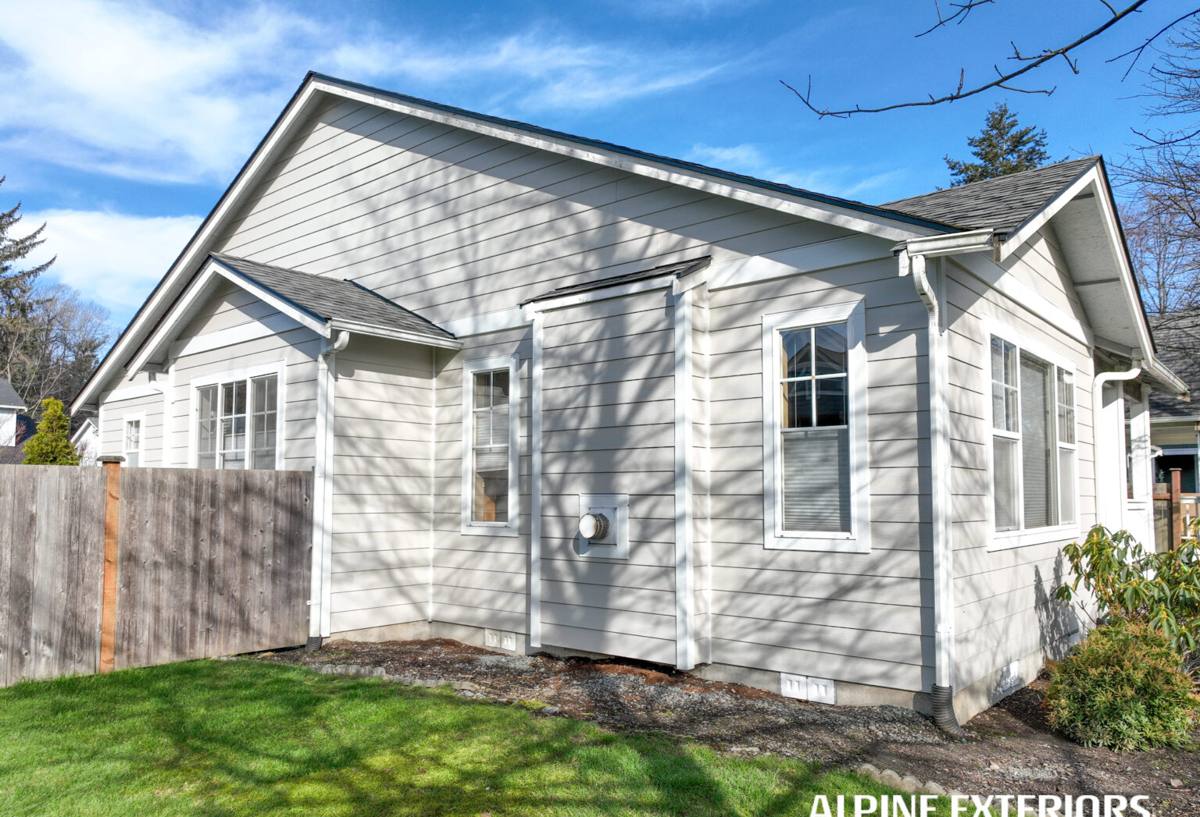
What Salt Air, Rain, and Moss Actually Do to a Roof
Each of these three factors wears a roof down differently, and understanding the mechanism helps explain why certain materials and details matter more here than elsewhere in Whatcom County.
Salt Air
Airborne salt from Bellingham Bay accelerates corrosion on exposed metal — nail heads, flashing, gutter fasteners, and any hardware that isn't rated for coastal exposure. On a standard asphalt roof this shows up first at the flashing around chimneys, skylights, and valleys, where thin or mismatched metal can start rusting years before the shingles themselves are due.
Driving Rain
Storms moving in off the water tend to drive rain sideways, not straight down. That matters at every horizontal seam and penetration on a roof — ridge caps, valleys, and pipe boots — where wind-driven rain can work its way under materials that would shed a straight-down rain just fine. Underlayment quality and lap direction matter more here than in drier, calmer inland areas.
Moss and Shade
Mature fir and cedar canopy common to Edgemoor lots keeps north-facing and shaded roof sections damp for days after a rain. That moisture, combined with organic debris from the trees, is exactly what moss needs to establish. Once moss takes hold, it lifts shingle edges, holds water against the roof deck, and accelerates granule loss — turning what should be a fifteen-year problem into a five-year one if it's never addressed.
Signs Your Edgemoor Roof Needs Replacing, Not Just Repairing
Not every roof problem calls for full replacement — but ignoring the wrong signs can turn a manageable repair into water damage inside the home. Here's what we look for during an inspection to make that call honestly:
- Granules collecting in gutters or at downspout outlets, especially on shaded slopes
- Moss or algae streaking that keeps returning within a season of cleaning
- Curling, cracking, or cupping shingles, particularly on south and west-facing slopes exposed to sun and wind
- Rust staining below metal flashing or visibly corroded fasteners
- Soft spots or sagging when walked, which usually means the decking underneath has taken on moisture
- Daylight visible through the roof deck from inside the attic
- A roof already at or past 20-25 years old, regardless of how it looks from the ground
- Recurring interior water stains near valleys, chimneys, or skylights after heavy rain
If a roof shows one or two of these signs isolated to a small area, a targeted repair can often buy years of extra life. When several show up together, or the decking has already taken on water, replacement is usually the more honest recommendation — patching a roof that's structurally compromised just delays a bigger repair bill.
Choosing a Roofing System for This Climate
There's no single "best" roofing material — the right choice depends on the home's slope, tree exposure, and how the owner wants to balance upfront cost against long-term maintenance. Here's how the common options compare for a shaded, salt-air-exposed property like most in Edgemoor:
| Material | Moss & Moisture Resistance | Salt Air Durability | Typical Lifespan | Maintenance Burden |
|---|---|---|---|---|
| Standard 3-tab asphalt | Low — moss establishes easily in shaded areas | Fair, if fasteners and flashing are corrosion-rated | 15-20 years | Moderate — needs regular moss treatment |
| Architectural (laminate) asphalt | Moderate; algae-resistant granule options help | Fair to good with proper flashing | 25-30 years | Moderate |
| Standing seam metal | High — smooth surface sheds moss and debris | Good with coastal-rated coatings and stainless fasteners | 40-50+ years | Low |
| Synthetic composite shingle | Moderate to high, product-dependent | Good — resists corrosion by design | 30-50 years | Low to moderate |
For heavily shaded, tree-covered sections of a roof, we often recommend algae- and moss-resistant shingle products or, on the right roof profile, metal — the smooth surface simply gives moss less to grab onto. For sun-exposed slopes with less canopy overhead, a quality architectural asphalt shingle is usually the most cost-effective long-term choice. We'll walk the specific roof with you and explain the trade-offs rather than push one product across every home.
What a Correct Roof Replacement Involves Here
The visible shingles are only part of the job. In a climate like this, the details underneath and around them are what determine whether the roof lasts its full rated life or starts leaking in year eight.
Full Tear-Off and Deck Inspection
We remove old roofing down to the deck rather than layering over it. That's the only way to actually see the plywood or plank decking underneath — soft, delaminated, or water-stained sections need to be replaced before anything new goes down, and skipping this step is the single most common cause of early roof failure we see on older Edgemoor homes.
Ice and Water Shield at Vulnerable Points
Valleys, eaves, and roof penetrations get a self-adhering waterproof membrane underneath the primary underlayment. Given how much wind-driven rain this area sees, this isn't an optional upgrade — it's the backup layer that keeps water out even if wind pushes rain past the shingles themselves.
Corrosion-Rated Flashing and Fasteners
Around chimneys, skylights, and roof-to-wall junctions, we use flashing and fasteners rated for coastal or high-moisture exposure rather than standard-grade hardware. This is a small material cost difference that prevents the rust staining and flashing failures that are so common on homes this close to the Bay.
Proper Attic Ventilation
A roof that can't breathe traps moisture underneath the decking, which shortens its life from the inside regardless of what's on top. We check and correct ridge and soffit ventilation as part of every replacement, since this is frequently undersized or blocked on older homes.
Moss-Resistant Detailing on Shaded Slopes
Where tree cover is heaviest, we'll discuss zinc or copper strips near the ridge, algae-resistant shingle products, or a switch to a smoother-surfaced material — whatever fits the specific roof and the owner's maintenance preferences.
Our Process for an Edgemoor Roof Replacement
- On-site inspection — we walk the roof and attic, check the decking, flashing, and ventilation, and note tree exposure and shading patterns specific to the lot
- Written estimate — a clear breakdown of material options, scope, and cost, with the trade-offs explained rather than a single locked-in recommendation
- Scheduling around weather — we plan tear-off for a dry window and stage materials to keep the home protected if conditions shift mid-project
- Tear-off and deck repair — full removal of the old roofing, with any compromised decking replaced before underlayment goes down
- Underlayment, flashing, and installation — ice and water shield at vulnerable points, corrosion-rated flashing, and the chosen roofing material installed to manufacturer and code specification
- Ventilation check — ridge and soffit airflow confirmed or corrected as part of the install, not as a separate add-on
- Cleanup and walkthrough — site cleared of debris and old materials, with a final walkthrough covering warranty coverage and basic maintenance for the roof's specific exposure
Why a Crew That Already Works Edgemoor Matters
Edgemoor's lots are often wooded, sloped, and tighter to access than a typical suburban roof job — steep driveways, mature trees close to the roofline, and limited staging space are common. A crew that hasn't worked lots like this before will underestimate setup time, tree protection, and debris management, which shows up later as rushed corners or unplanned change orders.
There's also a permitting and code side to this. Whatcom County and City of Bellingham requirements around roofing permits, tree protection near critical areas, and disposal of old roofing materials are things a local crew already knows going in, rather than learning mid-project. And because we've replaced roofs on homes with the same tree canopy and salt exposure up and down this part of Bellingham, we already know which slopes on a given lot are going to need extra moss protection before we ever climb the ladder.
What Affects the Cost of a Roof Replacement
Every roof is priced on its own specifics, but the same handful of factors drive most of the variation we see on Edgemoor homes:
| Factor | Why It Matters |
|---|---|
| Roof size and number of slopes | More material and more labor hours; complex rooflines take longer to flash correctly |
| Decking condition | Rot or delamination found during tear-off adds material and labor to replace it before roofing can proceed |
| Material choice | Standard asphalt, architectural asphalt, metal, and composite products carry different upfront costs and lifespans |
| Access and tree cover | Steep or heavily wooded lots take longer to stage safely and may require extra debris and branch management |
| Ventilation and flashing upgrades | Correcting undersized ventilation or replacing outdated flashing adds scope but prevents early failure |
| Layers of existing roofing | Removing multiple old layers takes more labor than a single-layer tear-off |
We walk through each of these on-site so the estimate reflects the actual roof in front of us, not a generic per-square average that doesn't hold up once tear-off starts.
Keeping a New Roof Healthy Through Moss Season
A correctly installed roof still benefits from basic seasonal attention in a climate like this:
- Clear gutters and valleys of needles and leaf debris at least twice a year, more often under heavy tree cover
- Keep overhanging branches trimmed back to reduce shade and debris buildup on the roof surface
- Have moss growth treated early, before it lifts shingle edges or spreads across a slope
- Check attic ventilation isn't blocked by insulation or debris after any other home improvement work
- Schedule a periodic visual inspection, especially after major windstorms off the Bay
None of this is complicated, but it's the difference between a roof that reaches its full rated lifespan and one that needs early intervention because moss or trapped moisture went unaddressed for a few seasons.
Get a Free Estimate for Your Edgemoor Roof
If your roof is showing granule loss, recurring moss, rust staining, or is simply old enough that you're wondering whether repair still makes sense, we're happy to take a look. There's no pressure and no hard sell — just an honest read on the roof's condition and what it would take to replace it correctly for a home in this part of Bellingham. Fill out the form below to request a free estimate.