 Bellingham Siding
 Happy Valley is one of Bellingham's established residential neighborhoods, up on the hill south of downtown, with a housing stock that spans decades — early- and mid-century bungalows and cottages mixed in with newer infill, most of it under the mature tree cover typical of this part of town. Windows here rarely fail for one dramatic reason. More often, an original single-pane sash gets swapped for a builder-grade double-pane unit that was never installed with real attention to air sealing, and twenty years later the homeowner still has cold spots by the glass and condensation on cold mornings. Getting an energy-efficient window right means treating the window, the frame, and the installation as one system — not picking a product off a spec sheet and assuming that solves it.
Bellingham's location on the water shapes that system more than people expect. Salt-laden air off Bellingham Bay works on hardware and lower-grade frame components over time. Storms push rain sideways into wall assemblies and window openings instead of letting gravity carry it straight down, testing flashing and sealant details that a calmer climate would never stress. And the shade, dampness, and mild temperatures that make Whatcom County green also support a moss and mildew season that runs long on north-facing walls and trim — right where window seals and sills live. That's the backdrop every window decision in this neighborhood has to account for.
Why Windows Lose Energy in a Neighborhood Like This
A few patterns show up again and again on Happy Valley homes. Original wood windows are often single-pane, sometimes with a poorly fitted storm window added later, and by now the sash cords, weatherstripping, or glazing putty have degraded enough that air moves through the frame as freely as through the glass. Past replacements, especially anything installed as a quick fix before a sale, frequently used builder-grade vinyl units set with minimal flashing and gap insulation — fine on paper, but leaky at the frame. And even a genuinely good window loses most of its efficiency if the installation skipped proper air sealing between the frame and the rough opening, which is where a surprising amount of heat loss actually happens.
None of this is a reason to assume the worst about a given house. It's a reason to have someone look at the window and the opening around it, rather than quoting a replacement off a phone description.
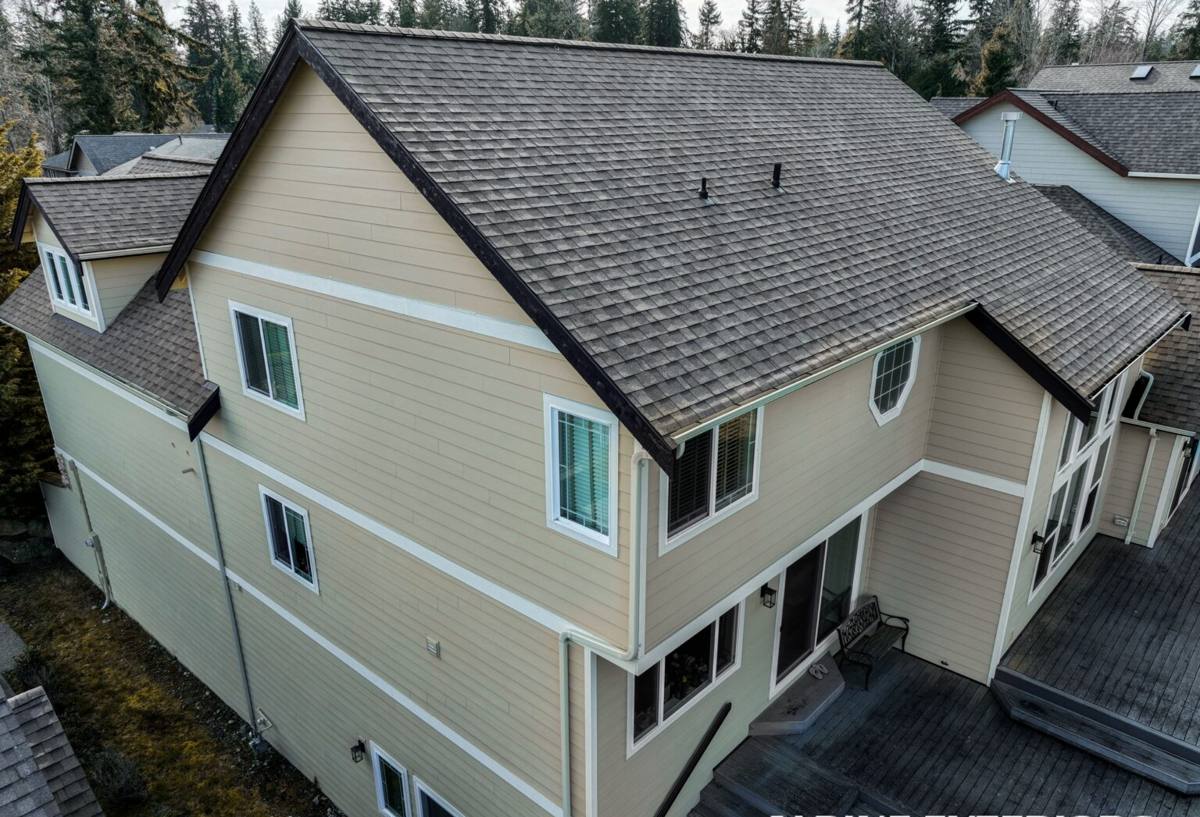
How Local Climate Conditions Work Against Window Performance
An energy-efficient window is only efficient as long as its seals, hardware, and frame stay intact, and this climate is harder on all three than a drier, calmer region would be. Salt air accelerates corrosion on hinges, locks, and lower-quality hardware, which is how a window starts to bind or develop small gaps at the sash over a handful of years. Wind-driven rain finds any weak point in the flashing or sealant, and once moisture gets behind the trim, it doesn't just risk rot — it can fog double-pane glass from the inside if it reaches the seal between the panes, permanently killing that unit's insulating value. And a long moss and mildew season keeps trim and sills damp for extended stretches, shortening the life of anything not built or finished to handle sustained moisture.
Where the Energy Actually Leaks Out
On most window failures we see, the glass itself is rarely the weak point. It's the transition zones — the gap between the frame and the rough opening, the sill where water should shed outward instead of pooling, the corners where flashing has to overlap correctly. Those are also the spots a rushed installation is most likely to shortcut, since doing them right takes real time and they're invisible once the trim goes back on.
What "Energy-Efficient" Actually Means
Every legitimate replacement window carries an NFRC label with two numbers that matter more than any marketing claim: U-factor, which measures how well the window resists heat transfer, and solar heat gain coefficient (SHGC), which measures how much solar heat passes through the glass. In a marine climate like Bellingham's, where the priority is usually keeping conditioned air in rather than blocking intense summer sun, a lower U-factor generally matters more day to day than an aggressively low SHGC — though a west-facing window that bakes in afternoon sun benefits from more solar control than a shaded north wall does.
Beyond the frame, the glass package does most of the real work. Double-pane is standard and reasonable for most homes here; triple-pane adds another layer of insulation and sound dampening at a real cost premium. Low-E coatings reduce heat transfer without noticeably darkening the glass, and argon gas fill between panes adds a meaningful insulating boost over a plain air gap. None of these are exotic upgrades at this point — they're standard on most quality replacement windows — but the right combination for a given wall depends on orientation, exposure, and budget.
| Feature | What It Does | Why It Matters Here |
|---|---|---|
| Low U-factor glass | Reduces heat transfer through the window | Keeps homes warmer through Bellingham's long, mild, wet heating season |
| Low-E coating | Reflects heat while letting visible light through | Cuts heat loss without darkening rooms during limited winter daylight |
| Argon gas fill | Adds insulating value between panes | A low-cost upgrade that improves performance on most double-pane units |
| Corrosion-resistant hardware | Locks, hinges, and balances hold up longer | Salt air off the bay works on lower-grade hardware faster than inland |
| Frame-to-opening air sealing | Closes the gap between the window unit and rough opening | Where most real-world heat loss happens, regardless of glass package |
What a Correct Installation Involves
Buying an efficient window and installing it correctly are two different projects, and the second is where most of the long-term performance is actually decided.
Assessment and Opening Prep
We start by looking at the existing opening, not just the window being replaced — checking for square, level, and any hidden rot or moisture damage in the framing, common enough in older Happy Valley homes that we plan for the possibility rather than being surprised mid-project. The old unit comes out carefully so we can see the true condition of the sill and jambs, and any soft wood or compromised flashing gets addressed before a new window ever goes in.
Air Sealing, Flashing, and Finish
The gap between the new frame and the rough opening gets properly insulated and air-sealed, not just stuffed with whatever's on hand — this step is invisible once trim goes back on, and it's the single biggest factor in whether the finished window performs anywhere close to its rated U-factor. Flashing gets sequenced so water is always directed outward and downward, lapped correctly at every seam, with the sill sloped to shed rather than pool. Exterior trim is then sealed and finished to match the surrounding siding, with extra attention at the joints most exposed to weather.
Checklist Before You Sign a Window Contract
- Ask for the NFRC-rated U-factor and SHGC for the specific window being quoted, not a generic brand claim
- Confirm the plan for air-sealing the frame-to-opening gap, not just caulking the exterior trim
- Ask how they handle rot or moisture damage found once the old window comes out
- Get the flashing sequence explained in plain terms for your specific wall orientation
- Confirm what's covered under warranty for the window unit versus the installation labor
- Ask about lead time if you're ordering anything outside a standard stock size
Frame Material Trade-Offs for This Climate
Frame material affects both energy performance and how well a window holds up to salt air and sustained moisture over time. Vinyl frames are a common, cost-effective choice that insulates well and needs little upkeep, though color and stiffness options are more limited. Fiberglass frames cost more but expand and contract less with temperature swings, which can mean tighter long-term seals and less stress on caulking joints. Wood frames offer a traditional look that fits some of the older homes here, but bare wood exteriors need real, ongoing maintenance to hold up to this much sustained moisture — which is why we generally recommend a clad exterior (vinyl or aluminum over a wood interior) when a homeowner wants the wood look without the upkeep. There's no universally "best" frame material — it's a trade-off between upfront cost, maintenance tolerance, and how the finished window needs to look against the rest of the house.
Our Process, Start to Finish
- On-site assessment — we look at the existing windows, openings, and any visible signs of past moisture issues before quoting anything
- Honest recommendation — glass package, frame material, and manufacturer explained in plain terms, matched to your budget and the wall's exposure
- Written scope and timeline — what's included, what isn't, and a realistic schedule before any work starts
- Removal and opening inspection — old units come out carefully so we can check the framing underneath
- Installation, air sealing, and flashing — new units are set, insulated at the frame gap, and flashed to shed water outward
- Trim, finish, and walkthrough — exterior trim is matched to the house, and we walk the finished work with you before calling it done
What Actually Drives Cost
| Factor | Lower Cost | Higher Cost |
|---|---|---|
| Frame material | Vinyl | Fiberglass or clad wood |
| Glass package | Double-pane, standard Low-E | Triple-pane, upgraded coatings |
| Opening condition | Standard size, no hidden damage | Rot repair, reframing, or custom sizing needed |
| Number of units | Whole-house projects often price better per unit | Single or small-batch replacements carry more overhead each |
| Access | Ground-floor, standard installation | Second-story, tight access, or unusual shapes |
We won't quote a firm number without seeing the actual windows and openings — a phone estimate on a project like this almost always misses something, whether it's hidden rot, an odd-sized opening, or a wall orientation that changes what glass package makes sense.
Why a Local Happy Valley Crew Matters
Manufacturer installation guidance is written for average conditions, and Happy Valley's exposure to salt air, wind-driven rain, and a long moss season doesn't quite fit that average. A crew that works this stretch of Bellingham regularly knows which corners of a standard installation are worth extra time here — how much a sill needs to slope, how flashing should overlap on a wall that catches driving rain, when hardware needs a corrosion-resistant upgrade because of how close a property sits to the bay. Those decisions rarely come up in a sales pitch, but they're what separates a window that performs well for two decades from one that starts drafting or fogging within five years — including knowing what to expect opening up an older Happy Valley home, where past repairs or additions are likely to be.
If your windows are drafty, fogged, or just old enough that you're wondering whether it's time, it's worth having someone look at the actual openings before you start comparing prices. We offer free, no-pressure estimates for window projects in Happy Valley and the surrounding Bellingham area — use the form below to get a time on the schedule.