 Bellingham Siding
 Fairhaven Asks More of a Roof Than Most of Bellingham
Fairhaven sits right where Bellingham Bay meets the hillside, and that position comes with a climate all its own. Homes here catch salt-laden air off the water, take driving rain straight off the Sound during winter storms, and sit under enough tree canopy that moss has every advantage it needs. An asphalt shingle roof that would hold up fine a few miles inland can wear out faster here if it wasn't built for these specific conditions. That's not a knock on asphalt shingles — they're still one of the most practical, cost-effective roofing choices for Whatcom County homes. It just means the details of the installation matter more in Fairhaven than in a drier, more sheltered neighborhood.
This page is about that one job, done right, for this one neighborhood: what the local climate does to a shingle roof over time, what a correct installation actually looks like, and how we approach the work when we're on a Fairhaven roof.
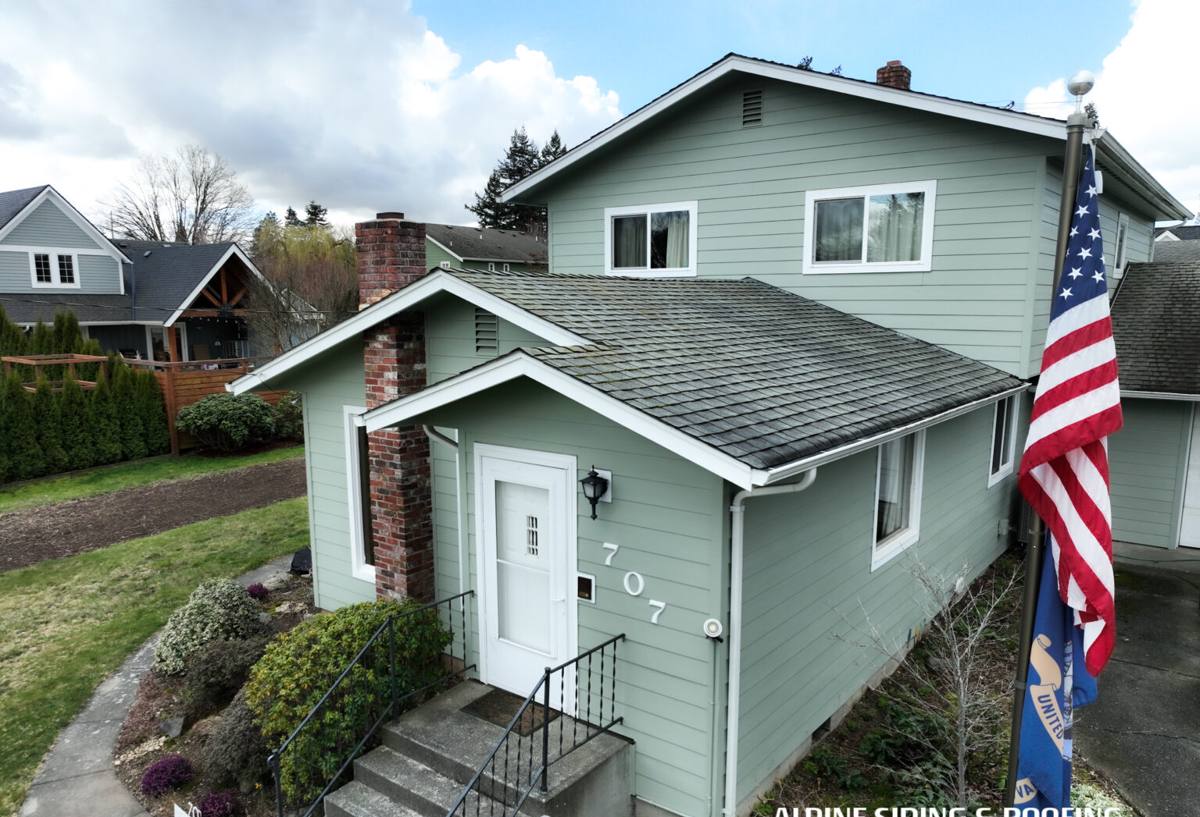
What Salt Air, Rain, and Moss Actually Do to a Shingle Roof
Salt air and metal components
The bay air doesn't damage the shingles themselves much, but it's hard on the metal parts of a roofing system — flashing, fasteners, vents, and gutters. Lower-grade or poorly coated metal corrodes faster near the water, and once flashing starts to degrade, water finds its way underneath the shingles rather than off the roof. This is why the metal we specify and how it's protected matters as much as the shingle brand on a Fairhaven job.
Driving rain and wind-driven water
Storms moving in off the Sound don't just fall straight down; they push rain sideways into roof valleys, up under shingle tabs, and against anything with a horizontal seam. A roof that's only built to shed water moving straight down will eventually leak in these conditions. The underlayment, valley treatment, and shingle sealing all need to account for wind-driven rain, not just gravity.
Moss and shaded, damp roof sections
Tree cover and marine humidity together create ideal moss conditions, especially on north-facing slopes and shaded sections of a roof that stay damp longer after a storm. Moss isn't just cosmetic. As it establishes, it lifts shingle edges, holds moisture against the granule surface, and accelerates the exact kind of wear the shingles are designed to resist. Left alone long enough, moss growth shortens the usable life of an otherwise sound roof.
Choosing the Right Asphalt Shingle for a Fairhaven Home
Not every asphalt shingle is built to the same standard, and in a climate like this the differences show up faster than they would in a drier region. Here's how the common options compare for a home in this neighborhood:
| Shingle Type | Typical Lifespan Here | How It Handles Moss & Moisture | Best Fit |
|---|---|---|---|
| 3-tab (economy) | Shorter end of the range | Thinner profile, algae growth shows sooner without a treated cap | Budget-driven projects, secondary structures |
| Architectural / dimensional | Mid-to-long range | Thicker mat sheds water better, holds up to wind-driven rain | Most Fairhaven homes |
| Algae-resistant premium | Long end of the range | Copper or zinc granules actively resist algae and moss staining | Shaded lots, north-facing slopes, homes near heavy tree cover |
For most Fairhaven properties, especially anything with tree cover or a north-facing roof plane, the algae-resistant granule option earns its keep. It costs a bit more up front, but it directly targets the one climate problem — moss and algae staining — that this neighborhood struggles with more than most.
Cost factors worth understanding before you get quotes
Price on a re-roof isn't just about the shingle itself. What actually drives the number on a Fairhaven job is usually some combination of: how many layers of old roofing need to come off, how much of the decking underneath needs to be replaced once it's exposed, roof pitch and access, the number of valleys and penetrations (chimneys, skylights, vents), and whether the existing ventilation needs to be upgraded rather than just matched. A contractor who can't explain which of these apply to your specific roof before starting isn't giving you a real estimate.
What a Correct Asphalt Shingle Installation Actually Involves
A shingle roof is a system, not a single product. Skipping or shortcutting any layer undermines the whole thing, and in a wet, wind-exposed neighborhood like Fairhaven, shortcuts show up as leaks sooner rather than later.
- Deck inspection and repair: Once old shingles are off, the plywood or plank decking underneath gets checked for soft spots, rot, or delamination before anything new goes down.
- Ice and water shield at vulnerable points: Eaves, valleys, and areas around penetrations get a self-adhering waterproof membrane underneath the underlayment, not just felt paper.
- Synthetic underlayment across the full deck: A continuous water-resistant barrier under the shingles, which matters more here given how often wind pushes rain up under the shingle line.
- Drip edge at eaves and rakes: Directs water away from the fascia and roof edge instead of letting it wick back underneath.
- Corrosion-resistant flashing: Properly formed and sealed at chimneys, skylights, sidewalls, and any roof-to-wall transition, using metal rated for a marine environment.
- Correct nailing pattern and fastener count: Manufacturer-specified nail placement, not staples or an undercount, so shingles hold through the region's winter wind events.
- Ridge and intake ventilation: Balanced airflow from soffit to ridge so moisture doesn't get trapped in the attic space.
Ventilation: The Step Most Roofs Get Wrong
Ventilation doesn't get much attention because it isn't visible once the job is done, but it's one of the most common reasons a shingle roof underperforms in a wet climate. If intake vents at the soffits and exhaust at the ridge aren't balanced, moist air gets trapped in the attic. That trapped moisture condenses against the underside of the decking, which shortens the life of the deck itself and can encourage mold or rot from the inside, independent of anything happening on the shingle surface. In a neighborhood with this much ambient humidity and rainfall, we treat ventilation as part of the roofing job, not an optional add-on, and we check it on every re-roof rather than assuming the existing setup is adequate.
Our Process on a Fairhaven Roofing Job
The work follows the same order on every project, adjusted for what we find once the old roof comes off:
- On-site inspection: We look at the current roof, attic ventilation, visible moss or moisture damage, and roof plane exposure before quoting anything.
- Tear-off: Full removal of the existing roofing material so the deck can actually be inspected, not roofed over.
- Deck assessment and repair: Any soft, rotted, or delaminated sheathing gets replaced before underlayment goes down.
- Underlayment and waterproofing: Ice and water shield at eaves and valleys, synthetic underlayment across the field.
- Flashing and shingle installation: New flashing at all penetrations and transitions, shingles installed to manufacturer specification.
- Ventilation check and correction: Intake and exhaust balanced for the attic space, not just matched to what was there before.
- Cleanup and walkthrough: Site cleared of debris and nails, and we go over the finished roof with you before calling the job done.
Maintenance Fairhaven Homeowners Can Handle Between Inspections
A correctly installed shingle roof still benefits from basic upkeep, especially given how much moss and debris this area generates. None of this requires a contractor visit on its own:
- Keep gutters clear of needles and leaf debris so water doesn't back up under the eave line.
- Have visible moss growth treated or gently removed before it spreads across a full roof plane.
- Watch for granule buildup in gutters and downspouts, which can signal accelerated shingle wear.
- Trim back overhanging branches to reduce shade, debris, and physical abrasion on the roof surface.
- After major windstorms, do a visual check from the ground for lifted or missing shingles.
- Schedule a professional inspection every couple of years, or after any major storm event.
Why a Crew That Already Works in Fairhaven Matters
Fairhaven's mix of hillside lots, tree cover, and direct bay exposure means roofs here don't all behave the same way, sometimes even on the same street. A contractor who works this neighborhood regularly already knows which roof planes tend to hold moss, which orientations take the worst of the wind-driven rain, and which older homes are more likely to need deck repair once the tear-off starts. That local familiarity translates into a quote that's closer to accurate the first time, and an installation that accounts for Fairhaven's conditions instead of treating it like any other job in Whatcom County.
If you're weighing a repair against a full re-roof, or just want an honest read on how much life is left in your current shingles, we're happy to take a look. Reach out for a free, no-pressure estimate using the form below.