 Bellingham Siding
 Building a Deck That Actually Holds Up in Fairhaven
Fairhaven sits close enough to the water that its decks live a different life than a deck built ten miles inland. Salt-laden air off Bellingham Bay, long stretches of driving rain through the fall and winter, and a moss season that can run for months all put extra stress on wood, fasteners, and finishes. A deck built the same way you'd build one in a dry inland climate will show problems early here — soft boards, rusted hardware, slick surfaces, and railings that loosen faster than they should. Building correctly for Fairhaven means choosing materials and details that are made for marine exposure from the start, not patching problems after the fact.
This page covers what a custom deck project for a Fairhaven home actually involves: the climate stresses specific to this part of Whatcom County, the material and hardware choices that matter, how we structure the build, and what ongoing care looks like once the deck is in.
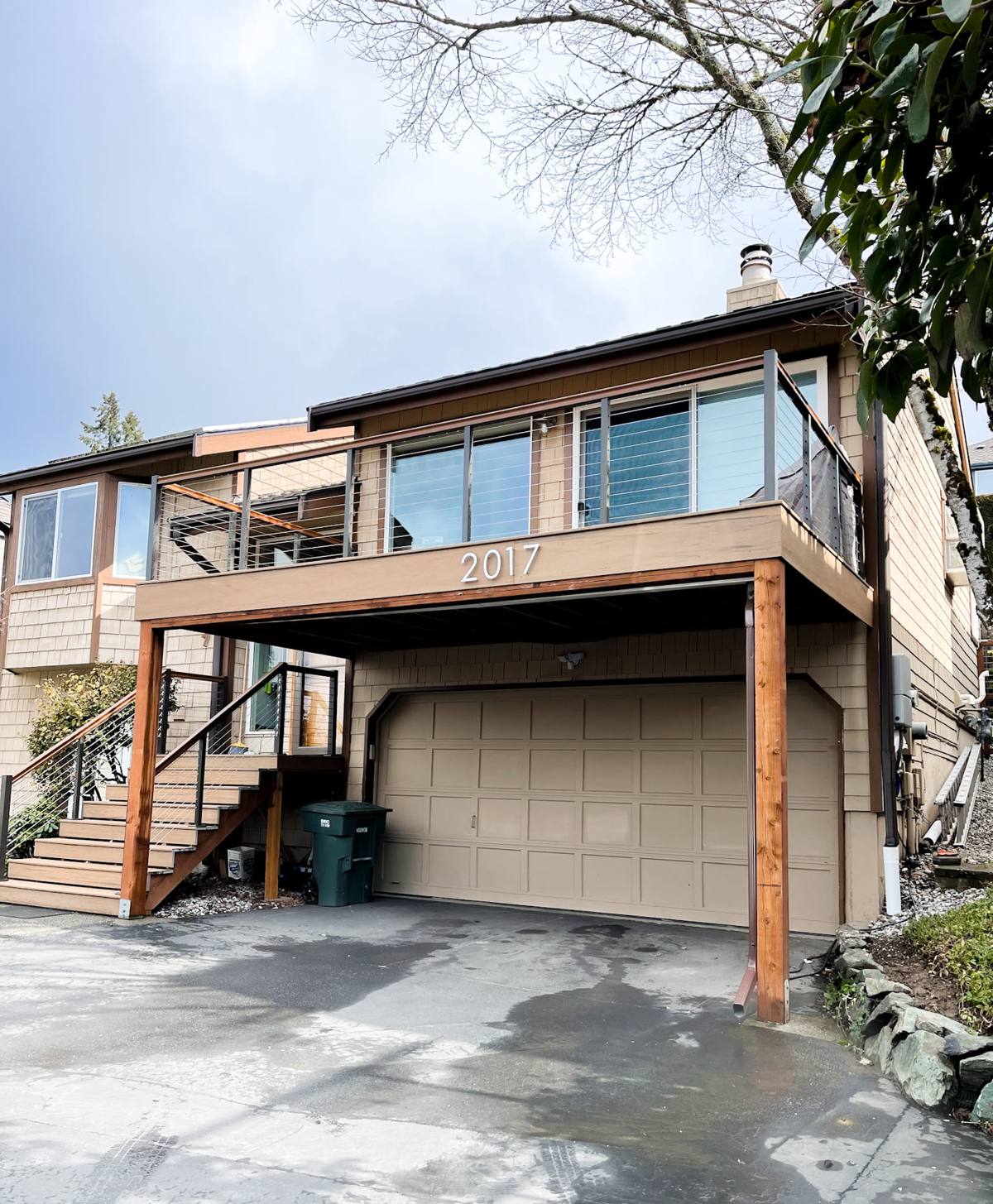
What Fairhaven's Climate Does to a Deck
Salt Air and Corrosion
Proximity to saltwater accelerates corrosion on anything metal — nails, screws, joist hangers, railing brackets, bolts. Hardware that would last decades in a dry climate can start rusting and staining within a few years this close to the bay, especially on decks with less overhang or wind protection. Rust stains bleeding down decking boards are one of the most common signs of a deck that was built with the wrong fastener grade for this area.
Driving Rain and Trapped Moisture
Bellingham gets a long wet season, and Fairhaven's exposure to weather coming off the water means rain often arrives at an angle, not straight down. That matters for ledger flashing, board spacing, and how water is directed off the structure. Decks that don't shed water cleanly end up with standing moisture in joints, around posts, and at the ledger board — which is where rot starts, usually out of sight until it's advanced.
Moss, Algae, and Slip Risk
Shaded, damp conditions for months at a time make moss and algae growth a real and recurring issue on decks in this area, especially on the north side of a house or under tree cover. Beyond the cosmetic issue, moss-covered boards get genuinely slippery, and moss holds moisture against the wood longer than bare boards would, which speeds up decay underneath the growth.
Choosing the Right Decking Material for This Neighborhood
There's no single "best" decking material for every home — it depends on budget, how much upkeep you want to do, and how exposed the deck is. Here's how the common options actually perform in Fairhaven's conditions.
| Material | Moisture & Rot Resistance | Moss/Algae Resistance | Maintenance | Notes for This Area |
|---|---|---|---|---|
| Pressure-treated fir/hem-fir | Good if properly sealed and maintained | Moderate — needs regular cleaning | Annual cleaning, periodic sealing | Budget-friendly; performance depends heavily on upkeep |
| Western red cedar | Naturally decay-resistant, but surface needs care | Moderate — moss grows on any wood left damp | Regular sealing/staining to prevent graying and cupping | Popular regional choice; matches the look of a lot of Fairhaven homes |
| Composite decking | Very good — doesn't rot | Can still grow surface algae/moss if shaded and damp | Occasional washing; no sealing/staining | Higher upfront cost, less ongoing labor over the deck's life |
| PVC decking | Excellent — fully synthetic | Low, but not immune in constant shade | Low — mostly rinsing | Highest upfront cost of the common options |
Whichever material a homeowner chooses, we treat the framing underneath the same way regardless — because the substructure is what actually determines how long the deck lasts, not just the surface boards.
Framing and Substructure — What's Underneath Matters Most
A deck's surface boards are the part everyone sees, but the framing is what actually fails first in a marine climate if it's not built right. For Fairhaven builds and rebuilds, we pay particular attention to:
- Ledger flashing — where the deck attaches to the house is the single most common source of hidden rot if flashing isn't installed correctly under the siding, not just caulked over top of it.
- Joist protection — capping or wrapping joists to keep standing water from sitting on top of the wood, which is where rot typically starts even on pressure-treated framing.
- Post and footing depth — footings sized and set to local frost and drainage conditions, not just poured to minimum code depth.
- Ventilation underneath — enough clearance and airflow below the deck so moisture doesn't get trapped against the framing, especially important on lower decks close to grade.
These details rarely show up in a quick visual inspection of a finished deck, which is exactly why they're worth asking about before hiring anyone.
Railings, Fasteners, and Hardware Built for Salt Air
Hardware choice matters more here than it does twenty miles inland. Standard zinc-coated fasteners can start showing surface rust within a few seasons this close to the water. For Fairhaven decks we spec hardware rated for coastal or marine exposure — typically stainless steel or heavier hot-dip galvanized fasteners and connectors, depending on the application — rather than the standard-grade hardware that's fine in drier parts of the county. The cost difference over the life of a deck is small compared to the cost of replacing rusted-out railing brackets or hangers a few years in.
Railings themselves also take more direct weather exposure than the deck surface, since they're vertical and catch wind-driven rain from more angles. We check post attachment and railing hardware as a specific step in every build, not an afterthought once the decking is down.
Drainage and Grading Around the Deck
Where a deck sits relative to grade affects how much moisture and organic debris — leaves, needles, moss spores — collect underneath and around it. On lower decks, we pay attention to grading so water drains away from posts and footings rather than pooling against them. On taller decks, keeping gutters and downspouts clear of the deck structure prevents concentrated runoff from hitting one section of framing over and over through a wet Bellingham winter.
Our Process for a Fairhaven Deck Project
Whether it's a new deck or replacing one that's failed, our process is the same:
- On-site assessment — for replacements, we check the existing framing, ledger, and footings to see what's salvageable versus what needs to come out. For new builds, we look at grade, drainage, and sun/shade exposure on the specific site.
- Material and layout discussion — walking through decking material options, railing style, and layout based on the home and budget, not a one-size-fits-all package.
- Permitting — pulling the required permits through the City of Bellingham (or the county, depending on the exact location) before work starts.
- Demolition and framing — removing old structure where needed and building the substructure with coastal-grade hardware and proper flashing details.
- Decking, railing, and finish work — installing the chosen decking material and railings, then finishing or sealing as the material requires.
- Final walkthrough — reviewing the finished deck with the homeowner and covering basic maintenance expectations for the material chosen.
Permits and Local Considerations
Deck projects in and around Bellingham typically require a building permit, and requirements can vary depending on the deck's height, size, and proximity to property lines — which matters in a neighborhood like Fairhaven where lots and setbacks vary block to block. We handle the permitting process as part of the job rather than leaving it to the homeowner, and we build to current code rather than to whatever the old deck happened to meet when it went in years ago.
Maintenance Checklist for a Coastal Deck
Even a well-built deck needs some seasonal attention in this climate. A realistic maintenance routine for a Fairhaven deck looks like this:
- Sweep leaves, needles, and debris off the deck regularly through fall — this is what feeds moss and algae growth over winter.
- Wash the surface at least once or twice a year with a deck-safe cleaner to remove moss, algae, and grime before it gets established.
- Check railings and stair connections annually for looseness — hardware is often the first thing to show wear in salt air.
- Inspect for soft spots, especially near the ledger board and around post bases, once a year.
- Reseal or re-stain wood decking on the schedule the product calls for — don't wait until it's visibly gray and worn.
- Keep gutters and downspouts near the deck clear so runoff isn't concentrated onto one area of framing.
A few hours of upkeep a year is far cheaper than dealing with rot or hardware failure down the line.
Why Local Experience Matters for This Job
A deck built by a crew that hasn't worked this close to the water often looks fine on day one and then reveals its shortcuts two or three winters in — rusting hardware, soft ledger boards, moss taking over a shaded corner. Building for Fairhaven's combination of salt air, driving rain, and a long moss season isn't about using fancier materials across the board; it's about knowing which details actually matter in this specific setting and not skipping them. That's the standard we build every deck to in this neighborhood.
If you're planning a new deck or need to replace one that's showing its age, we're glad to take a look and talk through honest options for your property. Reach out for a free, no-pressure estimate using the form below.