 Bellingham Siding
 Fairhaven's Waterfront Climate Is Hard on Siding
Fairhaven sits close to Bellingham Bay, and that proximity to the water shapes everything about how siding ages here. Salt-laden air moves in off the bay and settles on exterior surfaces, accelerating corrosion on fasteners, trim, and any siding material that isn't built to resist it. Add in the driving rain that comes sideways off the water during winter storms, and you get moisture finding its way into every seam, lap joint, and unsealed cut edge that wasn't detailed correctly the first time.
Then there's moss. Whatcom County's long, wet season means shaded and north-facing walls stay damp for months at a stretch, and moss doesn't need much encouragement to take hold on siding, trim, and the caulk lines between them. Moss holds moisture against the surface long after the rain stops, which is exactly the kind of slow, quiet damage that turns a small problem into a rot repair if it goes unnoticed for a couple of seasons.
None of this means Fairhaven homes are destined for siding trouble. It means the siding, the flashing, and the installation details all have to be matched to this specific climate — not to a generic weather assumption that works fine somewhere drier.
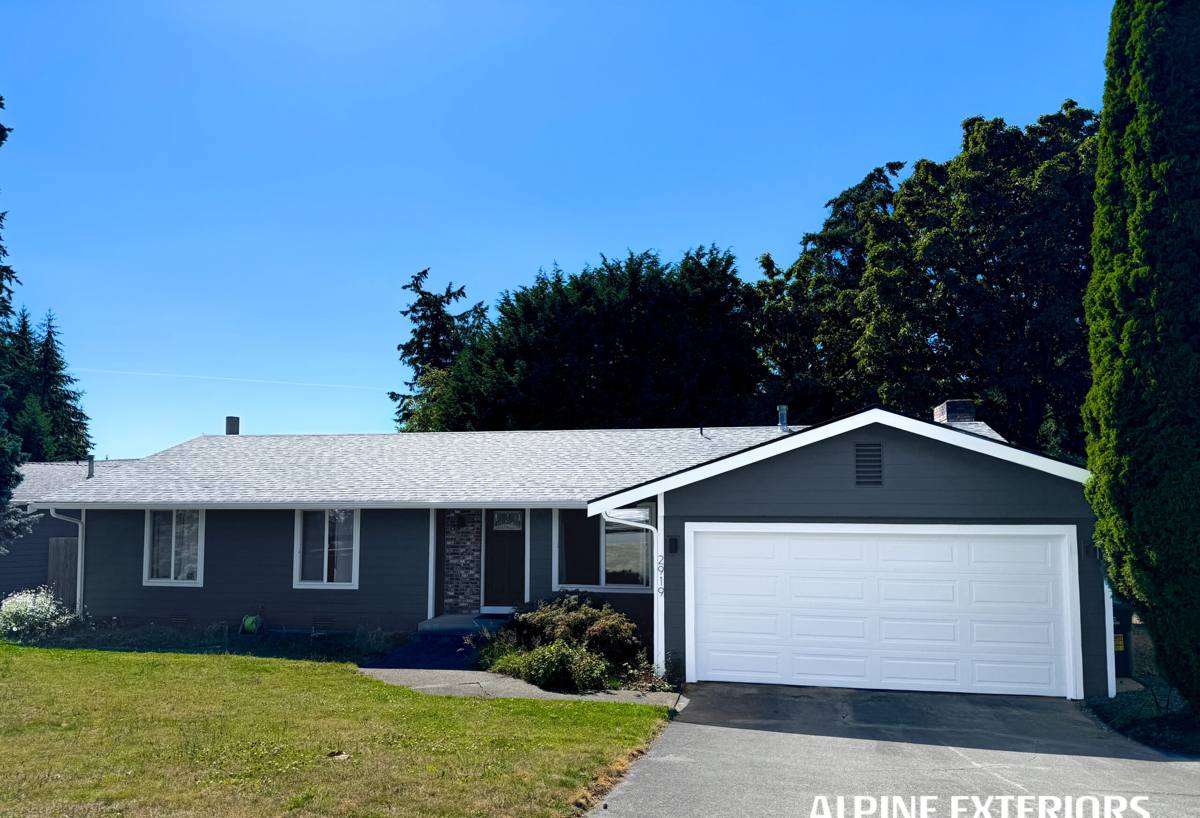
Signs Your Fairhaven Home Needs Siding Repair
Most siding problems start small and stay hidden until they're not. A quick seasonal walk-around can catch issues while they're still a repair instead of a full re-side. Look for:
- Soft or spongy spots when you press on siding near the bottom courses, around windows, or below rooflines
- Visible gaps, cracks, or separation at butt joints and corners
- Paint that's bubbling, peeling, or failing faster than the rest of the house
- Persistent moss or dark streaking on shaded walls that keeps coming back after cleaning
- Staining or discoloration below window sills, which usually points to failed flashing rather than the siding itself
- Warping, buckling, or boards that no longer sit flat against the wall
- Rust streaks running down from nail heads or trim fasteners
- A musty smell or visible moisture on interior walls that share an exterior wall with a suspect area
Any one of these can be a minor fix. Several of them together, especially near the same area, usually means water has been getting behind the siding for a while.
What Separates a Real Repair From a Patch Job
The visible siding is the last thing installed and the first thing people notice, but it's rarely the actual source of a leak. A repair that only replaces the damaged boards and leaves the underlying problem in place will fail again — often faster the second time, because the wall has already been wet once.
Water Management Comes First
Before we touch a single piece of siding, we check the water-resistive barrier, the flashing at windows and doors, and the way water is supposed to shed off the wall. In a climate that gets as much driving rain as Fairhaven does, a small gap in flashing tape or a missing kick-out flashing above a roofline is usually the real culprit. We fix that layer first. Replacing siding over a broken drainage plane just buys a few more years before the same repair comes back.
Matching Material, Profile, and Finish
Good siding repair should be close to invisible once it's painted and weathered in. That means matching the board width, exposure, and butt joint pattern of the surrounding wall, and using a factory finish system that will hold color the same way the existing siding does. Mismatched profiles or a different paint sheen are the easiest way to tell a repair was done cheaply.
Why We Repair and Rebuild With James Hardie Fiber Cement
We only install James Hardie fiber cement siding — not vinyl, not LP SmartSide, not primed spruce or cedar, and not other fiber cement brands. That's a deliberate standard, not a sales preference, and it matters most in a climate like this one.
Fiber cement is non-combustible and dimensionally stable, so it doesn't expand and contract with moisture the way wood-based products do, and it doesn't soften or deform in prolonged wet weather the way some engineered wood siding can if a seam fails. Hardie's ColorPlus factory finish is baked on and warranted against peeling and chipping, which matters directly here: a finish that holds up under UV and salt air means fewer repaint cycles and fewer chances for water to get behind failing paint. Hardie also engineers specific product lines (their HZ5 line, for example) for wetter, harsher climates, which is the right starting point for a bay-adjacent neighborhood that sees this much rain and moss pressure.
When we repair an existing wall, we use Hardie panels and trim to match, so the repaired section performs the same way — and ages the same way — as the rest of the siding. When a wall has failed in multiple places, converting it to Hardie during the repair is often the more honest long-term answer than patching a material that's already shown it can't handle this environment.
How Common Siding Materials Hold Up in Fairhaven's Climate
| Material | How it responds to salt air & driving rain | Moss & damp-season behavior |
|---|---|---|
| Vinyl | Can warp or become brittle with age and temperature swings; seams and J-channels are common water entry points | Traps moisture behind panels where it isn't visible until damage shows inside |
| Primed wood / cedar | Absorbs moisture readily; salt air accelerates fastener corrosion and paint failure | Prone to rot and moss growth if any coating gaps develop |
| LP SmartSide (engineered wood) | Performs well when installed and maintained precisely, but cut edges and seams need diligent sealing to resist wind-driven rain | Manufacturer maintenance requirements are strict in consistently wet climates |
| James Hardie fiber cement | Non-combustible, dimensionally stable, factory finish resists salt-air fading and chalking | Doesn't rot; moss can still grow on the surface but doesn't compromise the board itself |
Our Siding Repair Process
- Inspection. We walk the affected area and the rest of the exterior, checking siding, trim, flashing, and any interior signs of moisture intrusion.
- Diagnosis. We identify whether the damage is isolated or a symptom of a broader flashing or drainage issue, and explain what we find in plain terms.
- Scope and estimate. We outline exactly what needs to come off, what needs to be corrected underneath, and what gets rebuilt — with a written estimate before any work starts.
- Removal. Damaged siding and trim come off carefully so we can assess the sheathing and water-resistive barrier underneath.
- Correct the water management layer. Any compromised flashing, house wrap, or drainage detail gets repaired to current standards before new siding goes back on.
- Rebuild with matched materials. New James Hardie siding and trim go on, matched to the existing profile and finish, installed to manufacturer specification.
- Final check. We confirm caulking, flashing, and finish work are complete and the repaired section is weather-tight.
Repair or Replace? How We Help You Decide
Not every siding problem calls for a full re-side, and not every isolated repair is the right long-term call either. The honest answer depends on a few factors we walk through with you:
| Factor | Leans toward repair | Leans toward full replacement |
|---|---|---|
| Extent of damage | Isolated to one or two wall sections | Recurring problems across multiple elevations |
| Age & material of existing siding | Newer Hardie siding with a localized issue | Aging vinyl, wood, or other material nearing end of service life |
| Underlying water damage | Sheathing and framing intact once opened up | Rot or moisture damage found in framing during inspection |
| Cost over time | Repair cost is a small fraction of full replacement | Repeated repairs are starting to add up close to replacement cost |
Costs vary widely depending on how much needs to come off and what we find underneath — a straightforward patch might run a few hundred dollars, while a section with hidden rot or flashing failure costs more because the fix has to go deeper than the visible siding. We won't know which situation you're in until we look, and we'll always tell you honestly if repair isn't the right call.
Why Hiring a Crew That Already Works Fairhaven Matters
A siding repair that's engineered for a dry climate doesn't automatically hold up on a bay-facing wall in Whatcom County. Detailing flashing for driving rain, choosing fastener and trim materials that resist salt-air corrosion, and knowing which walls in this kind of neighborhood are most exposed to moss and prolonged dampness — that's knowledge built from working this specific area, not from a general specification sheet.
A crew that already repairs siding around Bellingham and Fairhaven has also seen how different original installations were done over the years, which makes diagnosis faster and more accurate. That translates directly into a repair that's scoped correctly the first time, instead of a series of return visits chasing the same leak.
If you're seeing early warning signs on your Fairhaven home, or you already know there's a problem area, we're happy to take a look. The estimate is free, there's no pressure to sign anything on the spot, and you'll get a straightforward explanation of what we find and what it would take to fix it right.