 Bellingham Siding
 Siding Built for Ferndale's Climate, Not Just the Pacific Northwest in General
Ferndale sits close enough to the water and to the open farmland around the Nooksack delta that its homes take a different kind of weather beating than houses further inland in Whatcom County. You get salt-laden air drifting in off Bellingham Bay and the Strait, wind-driven rain that hits siding sideways instead of straight down, and long stretches of gray, damp months where anything shaded or north-facing barely dries out before the next system rolls through. That combination is hard on siding materials that aren't built to shed water fast and resist ongoing moisture exposure. It's also exactly the environment James Hardie fiber cement siding was engineered to handle, which is why it's the only siding product we install on Ferndale homes.
This page is specifically about James Hardie siding installation for Ferndale properties — what the local climate demands, what a correct installation actually involves, and why working with a crew that already services this area matters more than homeowners often expect.
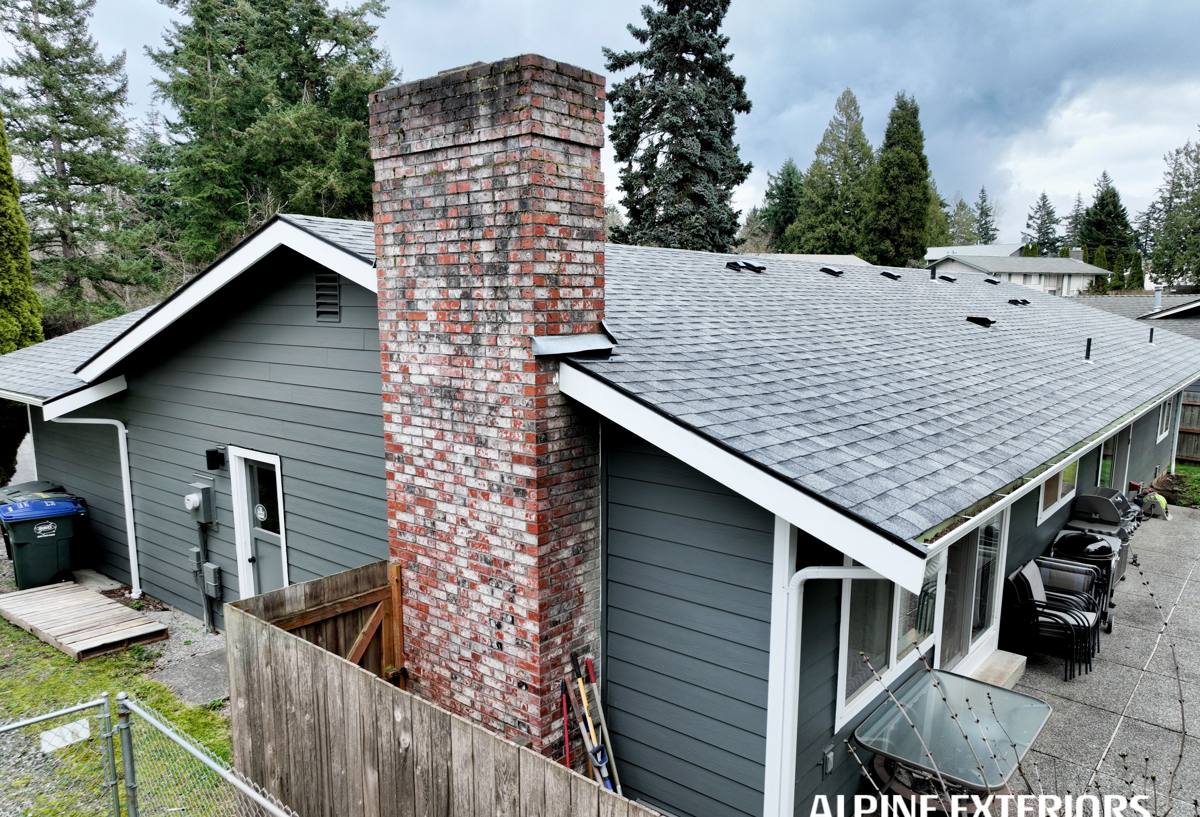
What Ferndale's Weather Actually Does to Siding
Salt Air and Moisture Cycling
Proximity to salt water doesn't just mean corrosion on metal fasteners and flashing — it also means the air carries more moisture, more consistently, than areas further from the coast. Siding materials that absorb water, even a little, go through repeated swell-and-shrink cycles. Over years, that cycling is what causes paint to fail early, seams to open up, and wood-based products to soften at the edges.
Driving Rain
Wind off the water and across open fields pushes rain into wall assemblies at an angle, not just straight down. That means the parts of a siding system homeowners rarely think about — butt joints, corner boards, window and door flashing, the bottom starter course — take on more water exposure than they would in a sheltered, tree-lined neighborhood. A siding system that isn't detailed correctly at those transition points will leak long before the field of the siding itself shows any wear.
Moss and Sustained Dampness
Whatcom County's moss season isn't a minor cosmetic issue. Moss and algae hold moisture directly against a wall surface for extended periods, especially on north- and east-facing elevations that don't get much direct sun. Siding materials that are vulnerable to moisture intrusion — softening, delaminating, or losing their paint bond — are put under real stress by months of moss growth sitting against them every year.
Why James Hardie Is the Right Answer for This
James Hardie fiber cement is a cement, sand, and cellulose fiber composite. It doesn't absorb and swell the way wood-based sidings do, and it's factory-engineered — not just marketed — for climates like ours. Two things matter specifically for Ferndale:
- HZ5 engineered product line: James Hardie makes region-specific formulations, and the HZ5 line is built for climates with more moisture exposure, which fits Whatcom County's marine-influenced weather better than a generic all-climate product.
- ColorPlus factory finish: The finish is baked on at the factory under controlled conditions, rather than field-applied paint that has to cure properly on-site in damp, cool weather — a real risk during much of our install season.
- Non-combustible core: Not a Ferndale-specific climate issue, but it's part of why we standardized on Hardie across every home we side, including here.
- Dimensional stability: Because it doesn't swell and shrink with moisture the way wood or wood-composite products do, paint and caulk lines hold up longer, which matters directly in a high-moisture-cycling environment.
We don't install LP SmartSide, vinyl, Cemplank, Allura, primed spruce, or cedar. Some of those products perform fine in drier climates or with aggressive maintenance schedules, but for the moisture load Ferndale sees every year, we standardized on James Hardie because it holds up with realistic, normal maintenance rather than an intensive one.
What a Correct James Hardie Installation Involves
The material only performs as well as the installation. Fiber cement siding, done wrong, will still cause problems — just different ones than a lower-grade product would. The details that matter most in a wind-driven-rain climate like Ferndale's:
Water Management Behind the Siding
A weather-resistant barrier and properly lapped flashing at every penetration — windows, doors, hose bibs, light fixtures — has to be right before a single piece of siding goes up. Fiber cement doesn't absorb bulk water the way wood does, but that only helps if water is actually being directed out and away from the wall assembly, not trapped behind it.
Fastening and Clearances
James Hardie publishes specific fastening patterns, nail placement, and minimum clearances from grade, roof lines, and decks. Skipping the clearance requirements is one of the most common corner-cutting mistakes we see on Whatcom County homes — it looks fine on installation day and creates a moisture problem years later, right when the siding is expected to be at its most durable.
Joint and Seam Treatment
Butt joints need to be caulked or flashed per manufacturer spec, not just butted tight and painted over. In a driving-rain environment, this is one of the first places water finds its way in if it's done casually.
Field Cutting and Sealing
Cut edges of fiber cement need to be sealed according to Hardie's specifications. An unsealed cut edge is a weak point for moisture intake, and it's an easy step to skip when a crew is moving fast.
Installation Checklist We Follow on Every Ferndale Job
- Weather-resistant barrier installed and lapped correctly before any siding starts
- Flashing at every window, door, and wall penetration, integrated with the barrier — not just caulked over the top
- Manufacturer-specified fastener type, spacing, and penetration depth
- Correct clearances maintained from grade, roofing, decks, and patios
- All field-cut edges sealed per James Hardie's application instructions
- Butt joints and seams treated to shed water, not just cosmetically closed
- Final walk-through checking caulk lines, trim transitions, and paint touch-up at cut edges
Why a Crew That Already Works Ferndale Matters
Siding installation quality depends a lot on judgment calls made on-site — how much overlap to give a joint facing the prevailing wind direction, which elevations need extra attention for moss and shade exposure, how to handle a transition where an addition meets an original wall. A crew that has already sided a number of homes in Ferndale and the surrounding Whatcom County area has already made those judgment calls under this specific weather pattern, not a generalized "Pacific Northwest" assumption.
There's also a practical scheduling reality: our install windows here have to work around a wet season that runs longer than it does in a lot of the country. A local crew plans around that instead of getting caught mid-project by a system rolling in off the water.
Cost Factors for Ferndale James Hardie Projects
Every home is different, and we don't quote sight-unseen, but the factors that actually move the price on a Ferndale Hardie project are consistent:
| Factor | Why It Matters Here |
|---|---|
| Home size and wall complexity | More corners, dormers, and roof intersections mean more flashing and cutting labor |
| Existing siding removal | Tear-off of old wood, vinyl, or damaged siding adds labor and disposal cost |
| Moisture or rot damage found underneath | Common on older Ferndale homes with wood siding that's been holding moisture for years; sheathing repair adds cost but is not optional to skip |
| Product line and profile | HZ5 lap siding, panel systems, and shingle-style profiles are priced differently |
| Trim and accessory scope | Corner boards, fascia, and trim package extend the project beyond just the field siding |
| Access and site conditions | Setbacks, landscaping, and multi-story sections affect staging and labor time |
Signs Your Ferndale Home's Current Siding Is Losing the Fight
- Paint that's peeling, bubbling, or chalking heavily on north- or west-facing walls
- Soft spots, especially near the bottom courses or around window sills
- Persistent moss or algae growth that comes back within weeks of cleaning
- Visible gaps opening at seams, corners, or trim joints
- Rising energy bills that track with drafts or cold spots along exterior walls
None of these are emergencies on their own, but together they're a pattern worth having looked at before a Whatcom County wet season makes the underlying damage worse.
What to Expect Working With Us
We start with an on-site look at your home's specific exposure — which elevations take the most wind-driven rain, where moss tends to hold on, what the current siding and sheathing condition actually is underneath. From there we walk through the right James Hardie product line and profile for your home, give you a straightforward scope and cost breakdown, and schedule the work around Whatcom County's weather rather than against it. We only install James Hardie, so you're not getting steered between competing product lines — just an honest read on what your Ferndale home needs and what correct installation looks like.
If your siding is showing wear, or you're planning ahead for a home in Ferndale, we're happy to come take a look and give you a straightforward, no-pressure estimate. Use the form below to get started.