 Bellingham Siding
 Fiber Cement Siding for Sehome Homes
Sehome is one of Bellingham's older, established central neighborhoods, rising up toward Sehome Hill with a mix of mid-century houses, older post-war homes, and newer infill construction packed in close together. A lot of that housing stock has already been through one round of siding, and some of it is showing the wear that tells you a second round isn't far off. Whatcom County's climate doesn't make that easy on a house: salt-laden air moving in off the Salish Sea, driving rain that hits walls sideways more often than it falls straight down, and a moss season that can run most of the year on shaded, tree-covered lots. Fiber cement siding, installed correctly, is one of the few materials that holds up to that combination without turning into a maintenance project a few years in.
This page is specifically about fiber cement siding work in Sehome. We install James Hardie fiber cement exclusively, and everything below explains what that means for a home in this neighborhood, what a correct installation actually involves, and how our process works from first walkthrough to finished job.
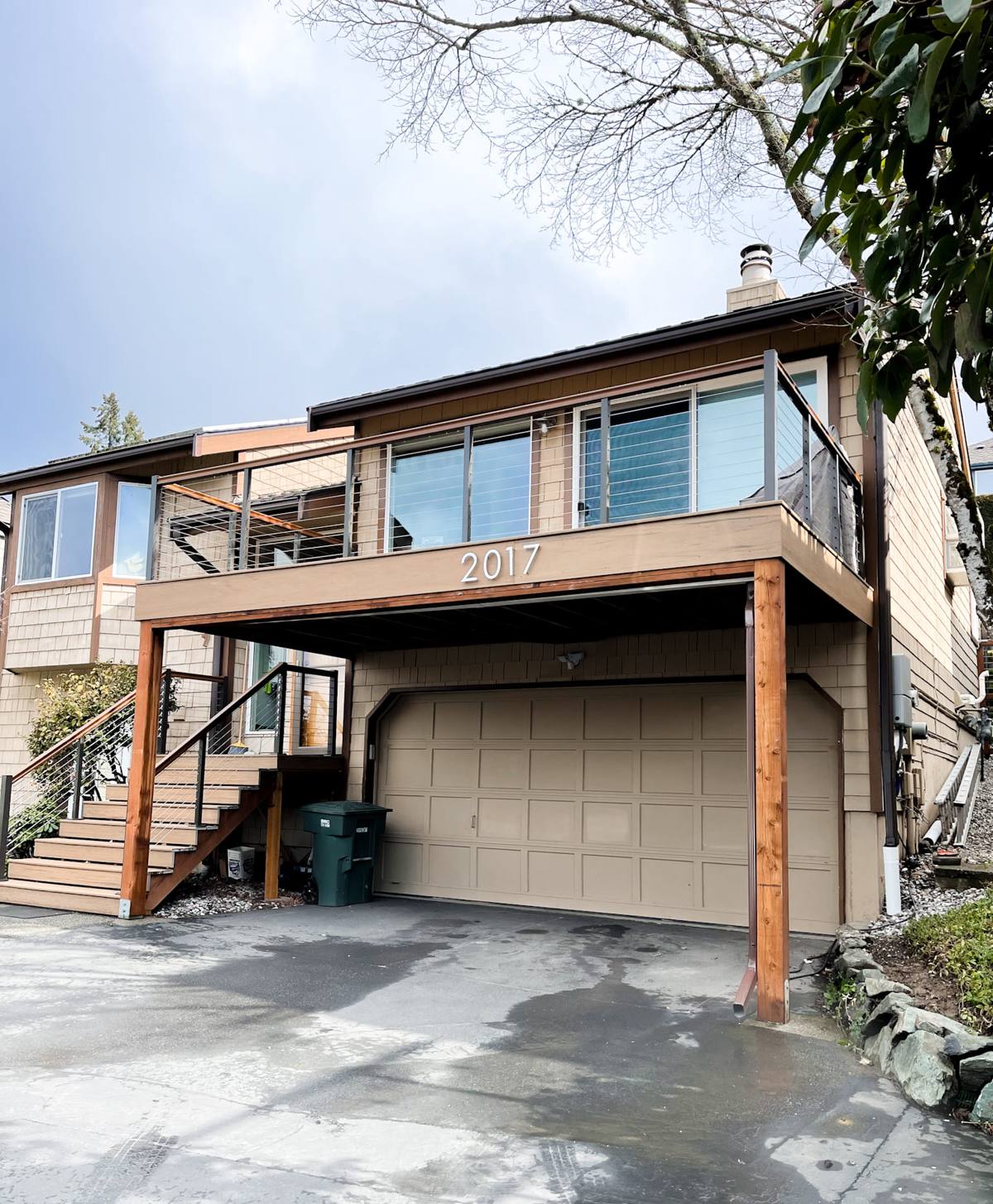
What Sehome's Climate Demands From Siding
Salt Air and Fastener Corrosion
Sehome sits back from the immediate waterfront, but it's still well within the reach of salt-carrying air that moves through Bellingham off the Sound. Salt exposure accelerates corrosion on fasteners, flashing, and any exposed metal trim faster than it would in a drier inland climate. Siding material matters here, but so does the hardware behind it, corrosion-resistant fasteners and properly detailed flashing aren't optional upgrades in this environment, they're baseline requirements for a job that's supposed to last decades.
Driving Rain Into Wall Assemblies
Rain in this part of Whatcom County usually arrives on a wind, pushing moisture sideways into siding laps, trim joints, and window flashing instead of just sheeting off a roof edge. A wall assembly that's only designed to handle straight-down rain will let water track behind the cladding here. That's why lap overlap, joint treatment, and the water-resistive barrier underneath the siding matter as much as the visible material itself.
Moss, Shade, and Sehome Hill's Terrain
Mature trees and the rise of land toward Sehome Hill mean a lot of Sehome homes have shaded walls and sloped lots where water and moss linger longer than they would on an open, flat site. North-facing walls and anywhere airflow is limited tend to grow moss and algae first, and materials that hold even a little moisture against the substrate become growth surfaces over time. On sloped lots, drainage and grading around the foundation also affect how much moisture ends up wicking into the lower courses of siding.
Why James Hardie Is the Only Siding We Install
We used to offer a wider range of siding products. We stopped, and that came out of years of service calls, tear-offs, and inspections on homes in this exact climate, not a supplier relationship.
- Non-combustible core: Fiber cement doesn't feed a fire the way wood-based siding products can, which matters for both homeowner safety and insurance underwriting.
- Factory-applied ColorPlus finish: Color is baked on in a controlled factory process rather than brushed on in the field, so it resists fading and moisture intrusion far longer than site-applied paint.
- Climate-engineered HZ5 formulation: Hardie builds different product formulations for different climate zones, and the HZ5 line is engineered for regions with heavy moisture exposure and freeze-thaw cycling, a good match for Whatcom County.
- Dimensional stability: Fiber cement doesn't swell, cup, or warp the way engineered wood siding can after repeated wet-season exposure.
- Strong transferable warranty: Hardie backs its products with one of the stronger warranty structures in the industry, provided installation follows spec.
We don't install LP SmartSide, vinyl siding, Cemplank, Allura, primed spruce, or cedar. Each has a place in the broader market, and plenty of homeowners elsewhere are satisfied with them. But we made a professional call that in a climate with this much sustained moisture and salt exposure, standing behind one system fully beats offering a cheaper option that quietly shifts maintenance risk onto the homeowner a few years down the road.
Choosing the Right Hardie Product for a Sehome Home
Sehome's mix of architectural styles, older post-war homes, mid-century houses, and newer infill, means the right Hardie product line isn't the same for every property. We spec based on the individual house rather than defaulting to whatever's fastest to install.
| Product Line | Best Fit | Why It Works in Sehome |
|---|---|---|
| HardiePlank lap siding | Most single-family homes, older and newer alike | Traditional lap profile sheds wind-driven rain cleanly when overlapped and flashed correctly |
| HardiePanel vertical siding | Accent walls, gables, modern infill designs | Clean lines that suit newer construction going up on smaller Sehome lots |
| HardieShingle siding | Craftsman and character homes, accent sections | Textured look without the moisture absorption of real wood shingle in a shaded, damp lot |
| HardieTrim boards | Corners, window and door casing, fascia | Factory-finished trim resists the same salt and moisture exposure as the field siding |
Color selection matters too. ColorPlus offers a range of factory finishes, and on shaded Sehome lots we often talk homeowners through how a given color will actually read under tree cover and cloud-heavy skies, not just how it looks on a sample chip in direct sun.
What a Correct Fiber Cement Installation Actually Involves
The material is only half the equation. Installation detail determines whether that material performs for thirty-plus years or starts causing problems in five.
Tear-Off vs. Reside Over Existing Siding
On some Sehome homes, especially older ones where we suspect moisture has already gotten behind the existing siding, a full tear-off is the right call so we can inspect and repair the sheathing underneath before anything new goes up. On homes with sound, dry substrate, siding over an existing layer with a proper furring or weather barrier system can be a legitimate option. We'll tell you honestly which situation your house is actually in once we've opened things up, not before.
The Install Sequence That Actually Matters
- Inspect and repair sheathing, addressing any rot or moisture damage found once old siding comes off
- Install a continuous water-resistive barrier, lapped correctly at every seam and penetration
- Flash all windows, doors, and penetrations before any siding goes up, integrated into the barrier, not caulked on as an afterthought
- Set starter strips and establish correct clearance from grade, decks, and roof lines
- Install lap or panel siding with proper overlap, fastener placement, and joint spacing per Hardie's published spec
- Install trim, corners, and any factory-finished accessories, sealing joints where Hardie's spec calls for sealant, not everywhere
- Touch up any field-cut edges with Hardie-matched touch-up product so exposed fiber cement isn't left unsealed
Skipping or rushing any one of these steps is where callbacks come from. A wall that looks finished from the sidewalk can still be failing behind the siding if the barrier and flashing underneath weren't done right, and on a lot with real driving rain and moss exposure, those shortcuts surface faster than they would in a milder climate.
Signs a Sehome Home's Siding Needs Attention
- Moss or dark staining that returns quickly after cleaning, especially on shaded, north-facing walls
- Soft or spongy siding, particularly low on the wall or around window trim
- Peeling paint or visible warping, a strong sign of non-fiber-cement siding reaching the end of its service life
- Cracking or separation at trim joints and corners
- Visible gaps or caulk failure around window and door flashing
- Rust staining running down from fasteners or exposed metal trim
- Higher-than-usual heating bills, sometimes a sign the wall assembly behind the siding is no longer sealing well
Cost Factors for Fiber Cement Siding in Sehome
| Factor | What Drives It | Sehome-Specific Consideration |
|---|---|---|
| Home size and shape | Total square footage of wall area, number of corners and transitions | Older homes with additions often have more transitions than original construction |
| Tear-off vs. reside | Whether existing siding and any damaged sheathing need full removal | Older housing stock more often needs tear-off due to accumulated moisture exposure |
| Trim and window complexity | Number of openings, custom trim details, architectural features | Character homes in the neighborhood often carry more trim detail than newer infill |
| Substrate repair | Extent of rot or moisture damage found once old siding is removed | More likely on shaded, north-facing walls with a long moss history |
| Site access and terrain | Lot slope, staging space, proximity to neighboring structures | Sloped lots near Sehome Hill can add setup time and scaffolding needs |
Exact numbers depend on the specific home and what we find once we're on site, which is why we walk each property before quoting rather than working off a flat per-square-foot number that ignores the condition underneath.
Our Process, From Estimate to Finished Job
1. Walkthrough and Inspection
We look at the whole exterior, not just the siding surface, checking trim, flashing, grade clearance, and any visible signs of moisture damage before we talk numbers.
2. Scope, Product, and Color Selection
We talk through which Hardie product line fits the home, walk through ColorPlus options, and set a scope that reflects tear-off versus reside, trim work, and any substrate repair we're already anticipating.
3. Written Estimate
You get a clear, itemized estimate before any work starts, no vague allowances that turn into surprise change orders once the crew is on site.
4. Installation
The crew follows the sequence above, sheathing repair, barrier, flashing, siding, trim, touch-up, with the same attention on a straightforward job as on one with more repair work involved.
5. Final Walkthrough
We walk the finished job with you before calling it done, checking that trim lines, caulking, and touch-up all meet the standard we'd want on our own house.
Why Hiring a Crew That Already Works Sehome Matters
A crew that works across Bellingham regularly sees how salt air, wind-driven rain, and moss actually behave on real houses over a full year, not just how a product performs on a spec sheet. That repeated exposure shapes real decisions on a Sehome job: how much extra flashing attention a shaded, north-facing wall needs, how a sloped lot near Sehome Hill changes drainage and staging, and which trim and joint details are worth the extra time so a homeowner isn't dealing with a callback two winters later. A contractor who only occasionally works this specific climate is more likely to apply generic details that don't quite match what this part of Bellingham puts a house through.
Get a Free, No-Pressure Estimate
If your Sehome home needs new siding, or you're not sure whether what you're seeing is a cosmetic issue or something more, we're glad to take a look and give you a straightforward assessment. Reach out using the form below to schedule a free estimate, no pressure, no upsell script.