 Bellingham Siding
 Sudden Valley's Setting Is Hard on Siding
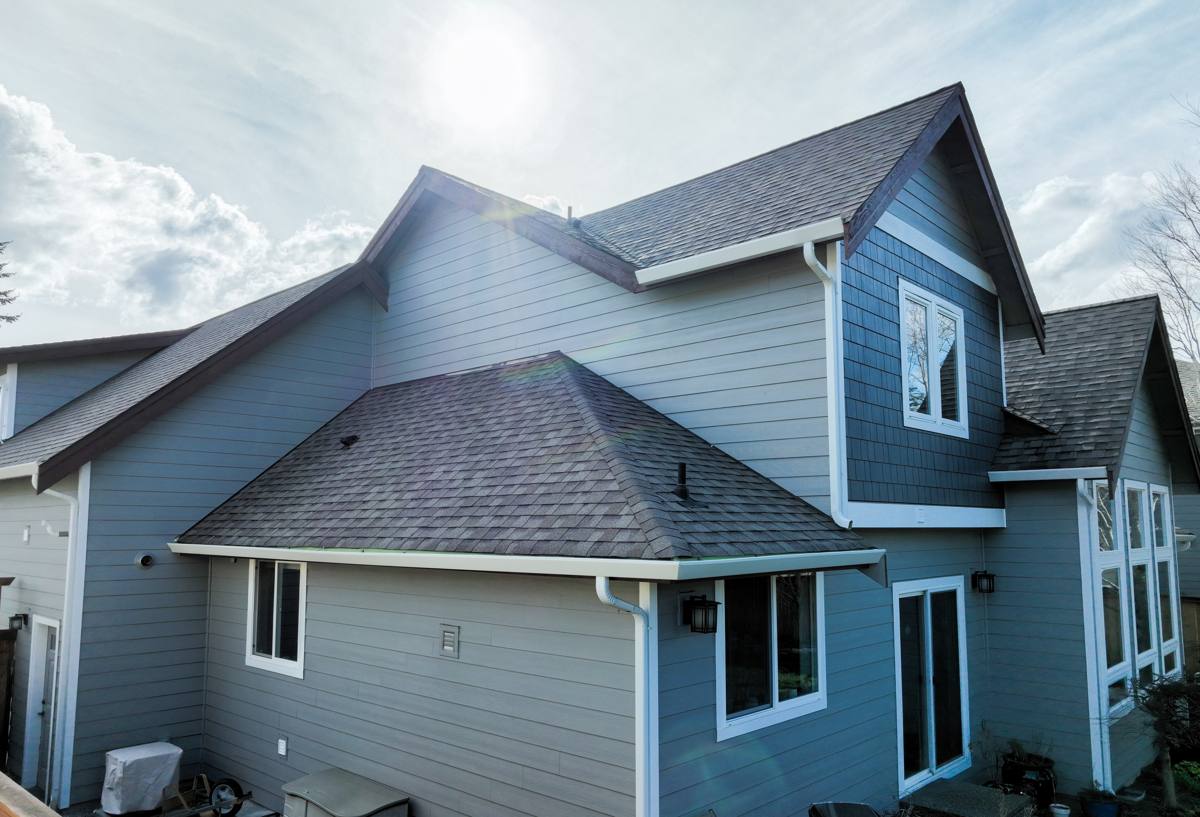
Homes around Sudden Valley sit under heavy tree canopy on the slopes above Lake Whatcom, and that setting is beautiful right up until you look closely at the siding. Mature conifers and big-leaf maples shade large stretches of most lots for much of the day, which means walls stay damp longer after a storm than they would on an open lot closer to downtown Bellingham. Add in Whatcom County's long, wet fall-through-spring stretch and the driving rain that comes with it, and you get siding that rarely gets a full dry-out cycle for months at a time. That combination — shade, standing humidity, and steady moisture — is exactly the environment where lower-grade siding materials start showing their weaknesses.
We're not describing a worst-case scenario here. This is a normal year for a shaded lot near the lake. Siding that's rated for "Pacific Northwest conditions" on a spec sheet still has to actually perform under a tree canopy that keeps walls wet, not just under generic marine air. That's the standard we install to.
What Moss, Shade, and Moisture Actually Do to a Wall
Moss and algae aren't just cosmetic
On shaded, north-facing, or tree-covered walls, moss and green algae growth isn't rare — it's close to guaranteed over time on any surface that holds moisture and organic debris. Beyond the look of it, moss holds water against the siding surface far longer than open air would, which accelerates whatever moisture-related failure mode a given material is prone to: swelling, rot, delamination, or paint breakdown.
Wood-based and engineered-wood products carry the most risk
Untreated wood siding and engineered wood products rely on factory or field-applied coatings to keep water out of the wood fiber core. In a low-sun, high-shade environment like much of Sudden Valley, those coatings are working overtime, and any gap in coverage — a cut edge, a fastener hole, a caulk joint that's failed — becomes a place where water gets in and doesn't leave quickly. Vinyl siding doesn't absorb water the same way, but it moves more with temperature swings, its seams and channels collect debris and moisture, and it isn't rated to stop wind-driven rain on its own — it depends on whatever weather barrier is behind it doing the real work.
Why We Install Only James Hardie Fiber Cement
We install one siding system on every job: James Hardie fiber cement, factory-finished with ColorPlus Technology. We made that call specifically because of jobs like the ones we do around Lake Whatcom. Fiber cement is made from cement, sand, and cellulose fiber — there's no wood core to rot and no vinyl skin to warp. It's also non-combustible, which matters more each year as wildfire smoke and dry-season risk become a bigger part of living in western Washington's wooded communities.
Built for this specific climate
Hardie engineers its HZ5 product line for the Pacific Northwest's wet, moderate climate zone specifically — it's a different formulation than what ships to the desert Southwest. That's a meaningful distinction: siding rated generically for "all climates" is a compromise product, while HZ5 is engineered around exactly the freeze-thaw and moisture cycle Whatcom County sees.
The factory finish matters under tree cover
ColorPlus finish is baked on in a controlled factory environment, not brushed or sprayed on site. On a shaded wall that stays damp longer, a factory-cured finish holds its color and its seal far more consistently than field-applied paint, which needs the right temperature and dry window to cure properly — a window that's in short supply under a tree canopy for half the year.
How Common Siding Materials Compare on a Shaded, Wet Lot
| Material | Moisture handling | Moss/algae resistance | Fire rating | Typical upkeep |
|---|---|---|---|---|
| James Hardie fiber cement | No wood core; won't rot or swell from moisture | Resistant surface; periodic rinse-off keeps it clean | Non-combustible | Low — factory finish, no repainting cycle |
| Engineered wood (e.g. LP SmartSide) | Wood-strand core depends on coating integrity | Vulnerable at damaged or unsealed edges | Combustible | Moderate — coating and edge inspection |
| Vinyl | Doesn't absorb water but moves with heat/cold | Collects debris in channels and seams | Combustible | Low, but limited repair options if damaged |
| Primed cedar/spruce | Natural wood; high moisture sensitivity | Prone to growth without regular treatment | Combustible | High — regular repainting and sealing |
What a Correct Fiber Cement Installation Involves
Fiber cement performs the way it's rated to perform only when it's installed to spec. A lot of siding problems people blame on the material are actually installation shortcuts. On a shaded, moisture-heavy lot, the margin for error is smaller, so we're strict about a few things:
- Proper clearance between siding and grade, decks, and roof lines so water has somewhere to go
- Correct flashing at every window, door, and penetration — this is where most real-world leaks start, not through the siding field itself
- Manufacturer-specified fastener type, spacing, and depth so panels aren't over- or under-driven
- Proper starter strip and panel overlap to shed water down and out, not behind the plane
- Rain screen or drainage gap detailing where the wall assembly calls for it, so trapped moisture behind the siding has a path out
- Factory-cut and field-cut edges sealed per Hardie's application instructions, since a raw cut edge is the one place the factory finish doesn't protect on its own
None of this is exotic — it's published in Hardie's installation manual. The issue is that skipping steps doesn't show up on install day. It shows up two or three wet seasons later, and by then it's a repair job instead of a five-minute fix during installation.
Our Process for a Sudden Valley Project
Assessment
We start by walking the property and looking at how much shade and tree cover each wall actually gets, where water runs off the roof and landscaping, and what condition the current siding and trim are in. Tree-heavy lots often need different flashing or drainage detailing on the shaded sides than they do on the sun-exposed sides of the same house.
Product and color selection
We go through Hardie's plank, shingle, and panel options and ColorPlus color line and talk through what holds up best given your specific sun and shade exposure. Darker colors and certain textures read differently under a forest canopy than they do in an open field, so we'd rather you see samples in your actual light before deciding.
Installation and cleanup
We install to Hardie's specification, not around it, including the flashing and drainage details above. We protect landscaping and hardscape during the work and do a full site cleanup, including magnetic sweep for stray fasteners, before we consider the job finished. If your community has architectural or design review guidelines, we're happy to work within whatever documentation that process requires.
Signs Your Current Siding Is Losing the Fight
If your home is on a shaded lot near the lake, here's what to look for before small problems turn into structural ones:
- Soft spots or visible swelling when you press on the siding, especially near the bottom courses
- Paint that's peeling, bubbling, or chalking heavily on shaded walls
- Persistent moss or dark streaking that comes right back after cleaning
- Cracked, missing, or gapped caulking at joints, windows, and corners
- Visible warping, cupping, or panel separation
- A musty smell or interior wall staining near exterior walls, which can point to moisture getting behind the siding
Any one of these on its own might be minor. Several together, especially on the shadiest side of the house, usually means the wall assembly has been dealing with trapped moisture for a while.
Why Local Experience on This Lake Matters
A crew that mostly works flatter, sunnier neighborhoods elsewhere in Bellingham doesn't necessarily plan for what a heavily wooded, sloped Lake Whatcom lot needs — steeper grading, more aggressive drainage detailing on shaded elevations, and awareness of how tree debris and extended damp periods affect a wall over time. Working this area regularly means we're not guessing at how a given wall will behave; we've seen how these lots hold moisture across a full wet season and detail accordingly.
Get an Honest Look at Your Siding
If you're not sure whether your current siding still has years left in it or is starting to lose ground to shade and moisture, we're glad to take a look. The estimate is free, there's no pressure, and you'll get a straight answer about what your home actually needs — use the form below to get started.