 Bellingham Siding
 Why Decks in Happy Valley Need a Different Approach
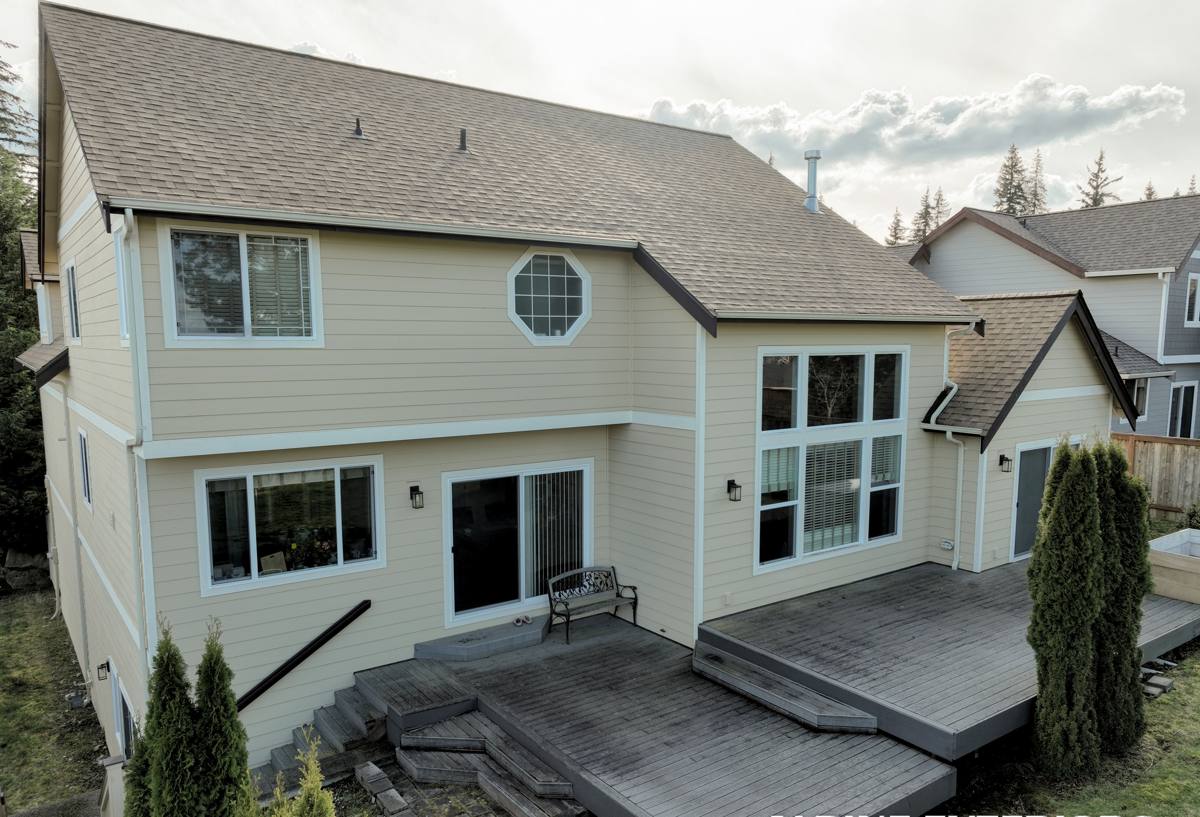
A deck built for a dry climate and dropped into Bellingham will not last the same way here. Whatcom County sits in a marine climate zone, which means salt-tinged air moving in off Bellingham Bay, long stretches of driving rain through the fall and winter, and a moss season that can run eight months or more depending on the year. Homes in Happy Valley feel all three of these year-round, and a deck is one of the first things on a property to show the wear if it wasn't built with that reality in mind.
None of this means a deck can't last decades in this neighborhood. It means the material choices, the fastener grade, the framing details, and the finish schedule all have to be picked for wet-and-salty conditions rather than a generic "deck kit" approach. That's the difference between a deck that needs major repair in year six and one that's still solid at year twenty-five.
What Salt Air, Rain, and Moss Actually Do to a Deck
Salt-laden moisture in the air accelerates corrosion on any exposed metal — screws, joist hangers, bolts, and structural connectors. Driving rain finds every gap in flashing and every unsealed end cut, and once water gets into end grain or a ledger connection, rot follows even in wood rated for outdoor use. Moss and algae need shade and standing moisture to establish, and a deck with poor airflow underneath or boards that hold water after a storm is exactly the environment moss thrives in. Beyond looking bad, moss on decking is a genuine slip hazard, especially on stairs.
Choosing the Right Decking Material for This Climate
There's no single "correct" material for every project — it depends on budget, how much upkeep you want to do, and the look you're after. What matters is understanding the trade-offs honestly before you commit.
Cedar and Other Natural Wood
Cedar remains a popular choice in this part of Washington because it's naturally rot-resistant, machines and finishes beautifully, and fits the look of most homes here. The trade-off is maintenance: in a climate this wet, cedar needs re-staining or sealing on a real schedule — skip a cycle or two and moisture will start working into the grain, especially on horizontal surfaces that don't shed water as fast as vertical siding does.
Composite and Capped Composite Decking
Composite boards trade a higher upfront cost for far less annual upkeep — no staining, and most modern capped composites resist moisture absorption and surface mold much better than early-generation composite products did. The trade-off here is heat retention in direct sun and a different repair path if a board is ever damaged (you're replacing a section, not sanding and refinishing it).
Pressure-Treated Framing, Regardless of Decking Choice
Whatever decking material you land on, the substructure underneath it is a separate decision, and in this climate we don't cut corners there. Treated framing lumber rated for ground contact where applicable, and stainless or heavy hot-dip galvanized hardware throughout, is standard on every deck we build here — not an upgrade option.
| Material | Upfront Cost | Maintenance | Moisture Behavior | Typical Lifespan |
|---|---|---|---|---|
| Cedar | Moderate | Re-seal/stain every 1-2 years | Naturally rot-resistant, but needs sealed end grain | 15-25 years with upkeep |
| Pressure-Treated Pine | Lowest | Sealing recommended annually | Prone to checking and warping if not maintained | 10-20 years |
| Composite (standard) | Higher | Periodic washing only | Good moisture resistance; older products more prone to surface mold in shade | 20-25 years |
| Capped Composite/PVC | Highest | Minimal | Best moisture and mold resistance of the group | 25-30+ years |
What a Correctly Built Deck Involves Here
Footings Built for Saturated Ground
Winter and spring rain keeps soil around here saturated for long stretches, and footings need to be set to the depth and bearing that local code requires so the deck doesn't shift as ground freezes, thaws, and re-saturates through the year. This is not a place to guess at footing size or skip a proper concrete pour.
Ledger Attachment and Flashing
The ledger board — where the deck attaches to the house — is the single most common failure point on decks in wet climates. Correct flashing (integrated with the house's existing water management, not just caulked over) keeps rain from tracking behind the siding and rotting the rim joist from the inside out. We treat this connection as the most important detail on the whole project, because it's also the hardest one to fix after the fact without tearing decking back up.
Board Spacing and Airflow
Consistent board gaps and open, well-ventilated space underneath the deck let water drain and air circulate, which is the single biggest factor in how fast — or whether — moss and mildew get a foothold on the decking surface. A deck built tight to the ground with poor drainage underneath will grow moss faster than the same deck built with proper clearance, regardless of decking material.
Our Process for Custom Deck Projects in Happy Valley
Every project starts with a site visit, not a phone quote. We look at drainage direction across the yard, how much sun versus shade the deck location actually gets through the seasons, the condition of the house wall where the ledger will attach, and what the property's grading is going to do with the rain that runs off the new structure.
From there we design to fit the site and the budget, walk through material options honestly (including what each one will cost you in upkeep over time, not just at purchase), and handle the permitting that Bellingham and Whatcom County require for most attached and elevated decks — that paperwork is on us, not something we hand back to the homeowner. Construction follows, with the framing, flashing, and fastener details covered above built in as standard practice rather than upsells. We finish with a walkthrough covering exactly how to care for the specific material you chose.
Keeping Moss and Moisture From Taking Over After the Build
A well-built deck still needs basic seasonal attention in this climate. None of it is complicated, but skipping it is how moss and rot get a head start.
- Sweep debris and standing leaves off the deck surface regularly through fall, when they trap moisture against the boards
- Rinse the deck surface (and stairs especially) at the start of moss season before it has a chance to establish
- Check that gutters and downspouts near the deck are directing water away from the structure, not onto it
- Re-seal or re-stain wood decking on the schedule recommended for the product, not just when it looks faded
- Trim back overhanging branches or vegetation that's keeping sections of the deck shaded and damp
- Do a quick annual check of visible fasteners and connectors for early rust or corrosion
Why Local Experience in This Neighborhood Matters
A crew that already works in Happy Valley and around Bellingham has already seen how the local drainage patterns, rainfall totals, and shade conditions play out on real decks over years, not just in a brochure. That shows up in small decisions — where to place footings relative to a slope, how much clearance to build in underneath for airflow, which fastener grade actually holds up here — that a crew working from a generic playbook might not think twice about.
It also means straight answers on permitting and timing. Building through this region's wet season is possible but requires sequencing the work differently than a dry-climate build, and knowing that ahead of time avoids delays and callbacks later.
Mistakes We Commonly See and Fix
Undersized or Shallow Footings
Decks built quickly, sometimes without a permit, often have footings that are too small or too shallow for this ground. The result is a deck that visibly shifts or settles unevenly within a few years.
Missing or Improper Flashing at the Ledger
This is the repair we see most often — caulk used in place of real flashing, or flashing installed over siding instead of properly integrated with it, leading to hidden rot at the house connection.
Standard Fasteners in a Salt-Air Environment
Basic zinc-coated screws and hangers corrode faster than most homeowners expect in this climate. We see rust staining and weakened connections on decks that are otherwise still structurally young.
No Airflow Built In Underneath
Decks built low to the ground or against solid skirting with no ventilation trap moisture underneath, which speeds up both rot in the framing and moss growth on the surface above it.
Let's Look at Your Property
If you're planning a new deck or replacing one that hasn't held up to Bellingham's weather, we're happy to walk your property, talk through material options honestly, and put together a clear estimate — no pressure, no obligation. Use the form below to get started.