 Bellingham Siding
 Fiber Cement Siding for Happy Valley Homes
Happy Valley is one of Bellingham's older, more established residential neighborhoods, and that shows up in the housing stock — a mix of mid-century homes, older farmhouses, and newer infill construction, many carrying original wood or aging siding that's well past the point of just needing a fresh coat of paint. Close to downtown but still tucked into its own quiet pocket, the neighborhood sees the same weather every part of Bellingham deals with: salt-tinged marine air, wind that drives rain sideways rather than straight down, and a moss season that runs for most of the year on any wall that doesn't get much sun. Siding here has to hold up to all of it, year after year, without turning into a maintenance project every spring.
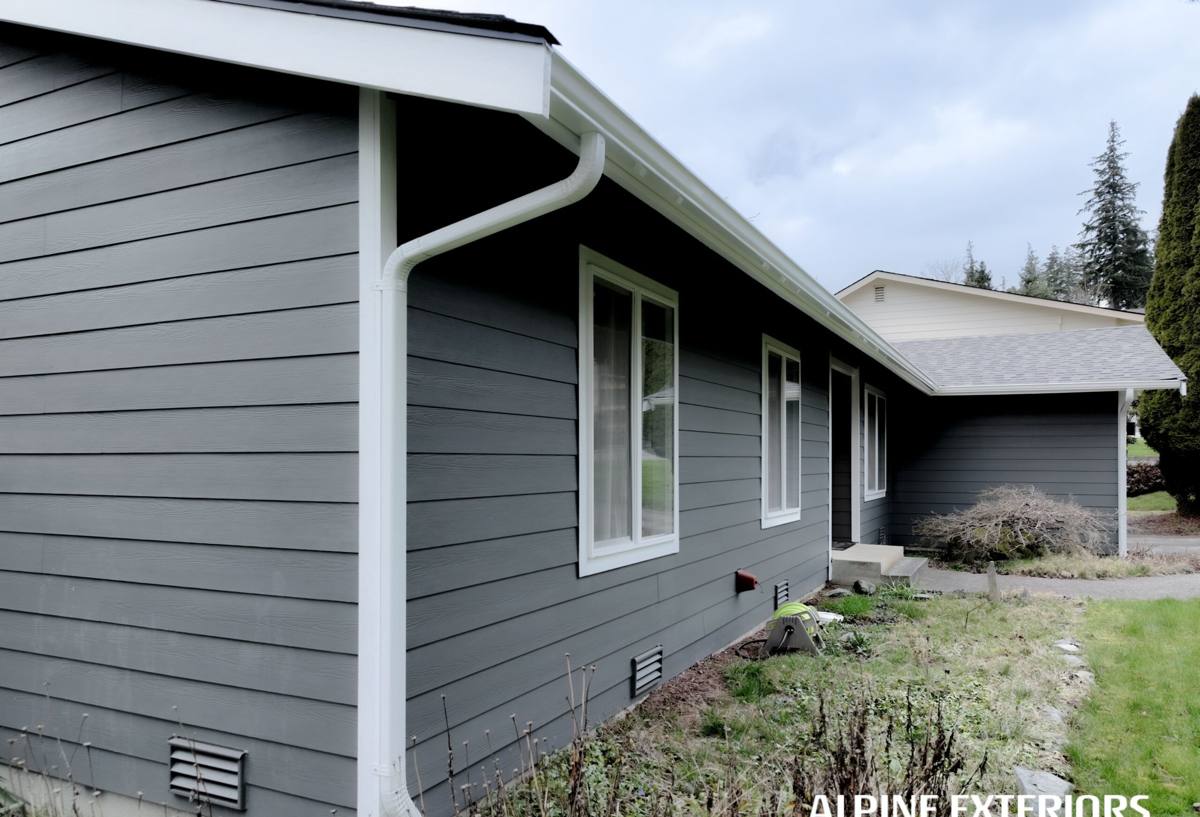
We install James Hardie fiber cement siding exclusively, and every job we do in Happy Valley is built around what this specific climate does to a wall over time — not around what looks good on the day the crew packs up.
What Happy Valley's Climate Asks of a Wall
Wind-Driven Rain and Marine Exposure
Bellingham sits right on the water, and Happy Valley's homes catch the same wind-driven rain that moves through the rest of the city. Rain that comes in at an angle finds horizontal seams, exposed fastener heads, and any gap in the weather barrier that a straight-down rain would never reach. Siding material and installation detail both matter here — a product that swells or a joint that wasn't lapped correctly gives that wind-driven moisture somewhere to get in.
Salt Air and Slow Corrosion
The steady salt content in the air across this part of Whatcom County is hard on anything metal, and it works slowly enough that homeowners often don't notice until a fastener has already started staining or weakening. Corrosion-resistant fastener specs aren't optional here — they're the difference between a wall that still looks tight in twenty years and one with rust streaks and loose boards well before that.
Moss Season and Shaded Walls
A lot of Happy Valley's lots have mature trees and established landscaping, which is part of the neighborhood's character but also means plenty of walls stay shaded and slow to dry for much of the year. That's exactly the condition moss and mildew need. Siding that can't shed moisture quickly, or that has no factory protection against organic growth, ends up needing pressure washing and repainting on a cycle that gets old fast.
Why We Only Install James Hardie Here
We don't offer LP SmartSide, vinyl, Cemplank, Allura, primed spruce, or cedar siding. That's not a knock on those products — other contractors install them competently, and each has legitimate uses. It's a professional standard we set because Happy Valley's combination of salt air, wind-driven rain, and long shaded moss seasons punishes moisture-sensitive materials and unprotected fasteners more than most inland climates, and we'd rather stand behind one system we trust completely than offer alternatives that shift maintenance risk onto the homeowner years down the road.
| Material | Moisture Behavior | Maintenance in This Climate | Realistic Lifespan |
|---|---|---|---|
| James Hardie fiber cement | Dimensionally stable; won't swell, rot, or delaminate | Low; factory finish resists moss and fading | 30+ years with proper install |
| LP SmartSide (engineered wood) | Vulnerable at cut edges and fastener penetrations if not sealed | Moderate; edge sealing needs ongoing attention | 15-25 years, climate-dependent |
| Vinyl | Can warp, gap, or crack with temperature swings | Low upfront, but hides moisture problems behind it | 20-30 years, variable |
| Cedar | Absorbs moisture readily without regular sealing | High; repainting or resealing on a recurring cycle | 15-25 years with consistent upkeep |
James Hardie's fiber cement core is non-combustible and doesn't expand and contract with moisture the way wood-based products do, which matters in a climate where walls stay damp for long stretches of the year. The factory-applied ColorPlus finish also means the color is baked on before the boards ever reach the jobsite, so field-cut edges are the only places we're priming by hand — not the whole wall.
What a Correct Install Actually Involves
Good fiber cement siding is as much about what's behind the boards as the boards themselves. A correct install in a climate like this one includes:
- House wrap or weather-resistive barrier installed and properly lapped before any siding goes up
- A drainage gap or rainscreen so moisture that gets past the surface can dry out instead of sitting against the sheathing
- Corrosion-resistant fasteners set at the manufacturer's specified spacing — not just enough to hold the board up
- Properly flashed and lapped transitions at windows, doors, corners, and the base of the wall
- Boards cut face-down and any field-cut edges primed to protect the factory finish
- Correct clearance from grade, decks, and roof lines so the siding never sits in standing water or debris
Skip any of these steps and a wall can still look fine on move-in day. The problems that come from cutting corners — trapped moisture, soft spots at the base, premature paint failure at the seams — usually take a couple of wet seasons to surface, which is exactly why they're easy for a rushed install to get away with until the homeowner is the one dealing with it.
Our Process for a Happy Valley Project
Walkthrough and Assessment
We start by walking the property and looking at each wall on its own terms — which ones take the most direct wind and rain, which stay shaded and slow to dry because of trees or neighboring structures, and whether there's any existing moisture damage that needs to be addressed before new siding goes up. Covering a compromised wall with new siding just hides the problem instead of fixing it.
Planning the Details Before Install Day
We map out flashing details, fastening patterns, and how the siding will meet trim, windows, and rooflines before crews start cutting material. Working these details out ahead of time keeps the crew from improvising in the field, which is where corners tend to get cut on a rushed job.
Installation to Manufacturer Spec
Every fastener, gap, and flashing lap follows James Hardie's published installation requirements for this climate zone. That's what keeps the manufacturer's warranty intact, and it's also what makes the difference between a wall that performs for decades and one that starts showing problems within a few years.
Final Walkthrough
We walk the finished job with you, explain what little maintenance fiber cement actually needs, and make sure you know what a healthy wall looks like so you can keep an eye on it yourself going forward.
Why Hire a Crew That Already Works Happy Valley
A neighborhood like Happy Valley, with its mix of older homes and mature tree cover, rewards a crew that's already seen how the local conditions play out on walls like these. That means knowing which orientations need extra drainage attention because of shade, how much clearance a board actually needs in a climate this consistently damp, and where the existing siding on an older home is likely to be hiding moisture problems before the tear-off even starts. That kind of judgment comes from doing the work here repeatedly, not from a generic install manual, and it's often the difference between a project that goes smoothly and one that turns up expensive surprises mid-job.
Cost Factors for Fiber Cement Siding in Happy Valley
Fiber cement generally costs more upfront than vinyl but less than many premium wood products, and the final number on any given home depends on more than just square footage. A few things that move the price on a typical Happy Valley project:
| Factor | Why It Matters |
|---|---|
| Existing wall condition | Rot or moisture damage found during tear-off needs repair before new siding goes up, which is common on older homes in this neighborhood |
| Home size and wall complexity | More corners, dormers, and transitions mean more cuts and flashing details |
| Siding profile chosen | Lap, shingle, and board and batten profiles each carry different material and labor costs |
| Trim and window count | More openings mean more flashing and finish work around each one |
| Site access | Mature landscaping and tighter lots common in older neighborhoods can add labor time |
We'll walk your specific home and give you real numbers based on what we actually find, rather than a rough estimate based on square footage alone — two homes with similar footprints can land very differently depending on what's underneath the existing siding.
Older Homes and What's Underneath the Existing Siding
Because Happy Valley has a good number of older homes, tear-off often turns up more than just the siding itself — sheathing that's softened from years of trapped moisture, missing or degraded weather barrier, or trim that was never properly flashed to begin with. None of that is unusual for a home of a certain age, but it does mean the honest approach is to address what tear-off reveals rather than sidestepping it to keep the number low. A wall that goes back together right, with the sheathing and barrier in good shape underneath, is what actually gets you the 30-plus year lifespan a Hardie install is capable of.
If you're considering new siding for a home in Happy Valley, we're glad to take a look at your specific walls, talk through what they need given their exposure and condition, and put together a straightforward, no-pressure estimate. There's a form below — reach out and we'll set up a time to come by.