 Bellingham Siding
 Roof Repair Built for Happy Valley's Climate
Happy Valley sits close enough to Bellingham Bay that salt-laden air is part of daily life, and it sits under enough tree canopy that shade and moisture linger on rooflines long after a storm passes. That combination is hard on a roof. Salt air accelerates corrosion on exposed metal fasteners and flashing. Driving rain off the water finds its way into any gap that's opened up around a vent boot, a nail head, or a valley seam. And a long moss season — realistically most of the wet months here in Whatcom County — means organic growth is constantly working to lift shingles and hold moisture against the roof deck. None of that is unique to any one house on any one street; it's simply what every roof in this neighborhood is up against, year after year.
A roof repair here isn't just patching a leak. Done right, it means understanding why that spot failed in the first place — usually some combination of age, moss, wind-driven rain, or a flashing detail that was never quite right — and fixing the actual cause, not just the symptom.
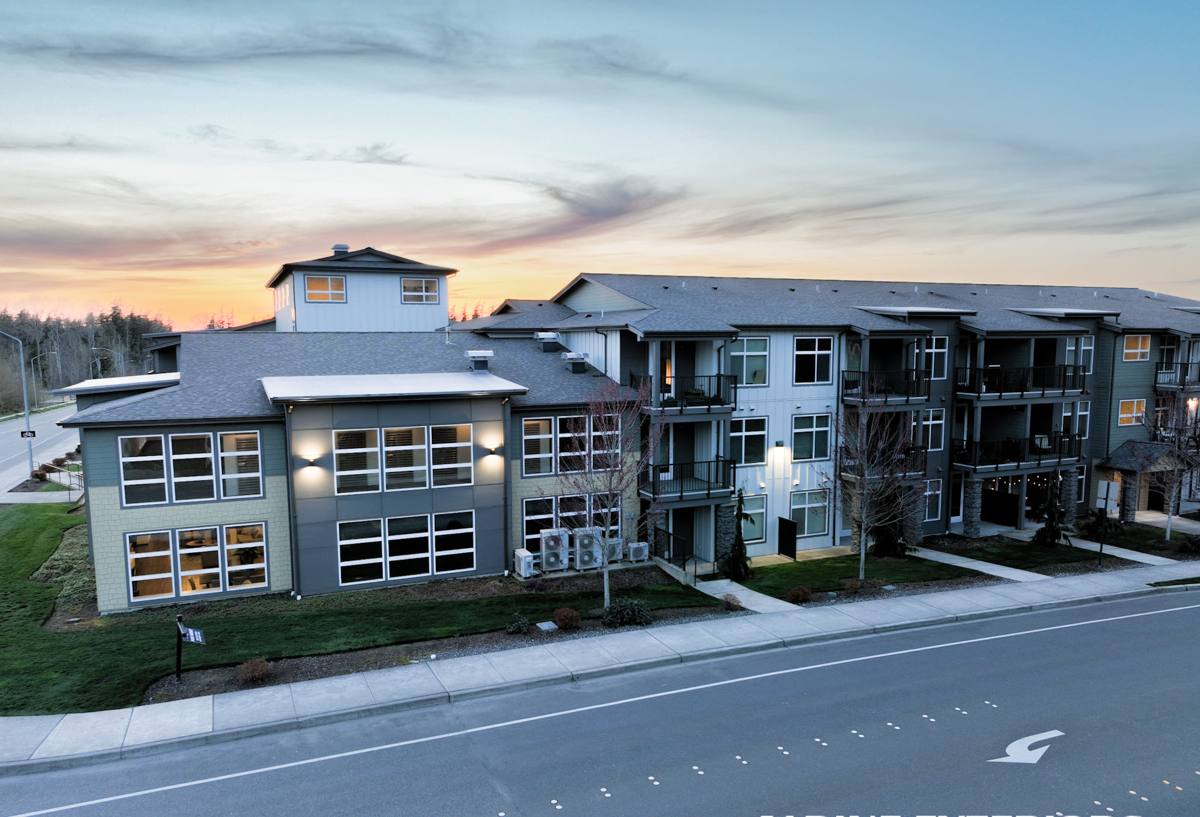
Signs a Repair Is Overdue
Most roof problems don't announce themselves with a dramatic leak. They show up as small, easy-to-ignore clues first. Catching these early is what keeps a repair a repair, instead of letting it turn into a full replacement.
- Dark streaking or thick moss patches, especially on north-facing slopes that stay shaded and damp
- Granules collecting in gutters or at the base of downspouts
- Shingles that look cupped, curled at the edges, or lifted along a seam
- Soft or discolored spots on interior ceilings, particularly near chimneys, skylights, or where two roof planes meet
- Rusted or visibly separated flashing around vents, chimneys, and sidewalls
- Daylight visible through the attic decking, or damp insulation below a valley
- Gutters or downspouts pulling away from the fascia, which lets water back up under the roof edge
If you're seeing one or two of these, it's usually still a repair-scale problem. If several show up at once, or the roof is already past the 20-year mark, it's worth an honest look before deciding which direction to go.
What's Actually Causing the Damage
Moss and Organic Growth
Moss doesn't just sit on top of shingles — its root structure works underneath the granule surface and holds water against the roofing material long after the rest of the roof has dried out. Over a full moss season that constant dampness breaks down the asphalt mat, and on wood or older composite roofing it can rot the surface outright. Left unchecked, moss growth is one of the most common reasons an otherwise sound Happy Valley roof starts leaking years before it should.
Flashing and Fastener Corrosion
Flashing — the metal that seals roof penetrations and transitions — is usually the first thing to fail, not the field of the roof itself. Salt air speeds up corrosion on exposed nail heads and lower-grade metal, and once a flashing seam opens even slightly, wind-driven rain will push water in sideways rather than needing to pool first. This is why so many "mystery leaks" trace back to a chimney, skylight curb, or sidewall flashing rather than the shingles people assume are the problem.
Valleys and Water Concentration
Roof valleys collect water from two planes at once, so any weakness there gets exposed fast. Debris and moss build up in valleys more than anywhere else on the roof, which slows drainage and gives water more time to find a way under the shingle edge.
How We Approach a Repair
A repair is only as good as the inspection behind it, so we don't start with a patch — we start by figuring out the actual failure point.
- Roof and attic inspection. We walk the roof surface and check the attic side too, since staining, damp insulation, or discolored decking often points to exactly where water is entering — which isn't always directly above the interior damage.
- Diagnose the cause, not just the symptom. A missing shingle is easy to see; a failed flashing seam or a saturated valley underneath it is the real issue. We identify what actually let water in.
- Clear moss and debris first. Any repair done over active moss growth just fails again in a season or two, so cleanup comes before patching.
- Repair with matched materials. We use materials that match your existing roofing as closely as possible in type, weight, and color so the repair blends in and performs the same as the surrounding roof.
- Re-seal and re-flash properly. Flashing gets replaced or resealed with materials rated for our climate, not just caulked over — caulk is a short-term fix, not a repair.
- Check drainage. Gutters, valleys, and downspouts near the repair get checked too, since a repair means nothing if water is still pooling against it.
- Walk the results with you. We show you what we found and what we did before we consider the job finished.
Repair or Replace? An Honest Comparison
Not every roof problem needs a full replacement, but not every roof is a good repair candidate either. Here's how we think through it.
| Factor | Repair Usually Makes Sense | Replacement Is Worth Discussing |
|---|---|---|
| Roof age | Under roughly 15-18 years | Nearing or past manufacturer's expected lifespan |
| Extent of damage | Isolated to one section, valley, or flashing point | Multiple areas failing, or granule loss across large sections |
| Decking condition | Solid, dry decking under the damaged area | Soft, rotted, or repeatedly wet decking |
| Moss history | First significant growth, caught early | Long-term, repeated moss damage across the roof |
| Leak pattern | Single, traceable source | Leaks appearing in new spots each season |
We'll always tell you honestly which category your roof falls into. If a repair will genuinely hold, we recommend the repair — a roof that's replaced too early is money that didn't need to be spent.
What Affects the Cost of a Repair
Every roof and every repair is different, so we won't quote a number without seeing the roof, but these are the factors that move the price up or down.
| Cost Factor | Why It Matters |
|---|---|
| Roof pitch and access | Steeper or harder-to-reach roofs take longer and require more safety setup |
| Number of repair points | One flashing seam is a smaller job than several scattered leak sources |
| Decking damage | Rotted decking has to be replaced before any shingle work goes back on |
| Material match | Older or discontinued shingle profiles can take longer to source a close match for |
| Moss and debris cleanup | Heavy growth adds cleaning time before the actual repair can start |
As a very general range, small, isolated repairs (a section of flashing, a handful of shingles, a resealed vent boot) tend to run in the low hundreds of dollars, while larger repairs involving valley work or deck replacement climb from there. The only way to get an accurate number is an in-person look — we'll give you a straight answer once we've seen the roof.
Materials and Methods We Rely On
We match repair materials to what's already on your roof rather than pushing a different product just because it's easier to source. For asphalt composition roofing, that means matching shingle weight and profile as closely as possible so the repair doesn't stand out or perform differently in wind and rain than the surrounding field. For flashing, we use metal and sealant systems rated for coastal, high-moisture conditions rather than economy-grade materials that corrode faster in salt air. Where a manufacturer's warranty is still active on your existing roof, we do the repair in a way that keeps that warranty intact rather than voiding it with the wrong fastener or underlayment.
We're straightforward about trade-offs, too. Some lower-cost patch materials look fine on day one but don't flex the same as the surrounding roof through freeze-thaw cycles and seasonal moisture, which just means a repeat call in a year or two. Our standard is to use materials and methods that hold up through a full Whatcom County wet season, not just through the next dry stretch.
After the Repair: Keeping It From Happening Again
A good repair should buy you years, not months. A short maintenance routine goes a long way toward making sure it does.
- Have moss treated or removed at the first sign of regrowth, before it re-establishes under the shingle surface
- Keep gutters and valleys clear of needles and debris, especially heading into fall
- Trim back overhanging branches that keep sections of the roof shaded and damp
- Do a visual check after major windstorms for lifted shingles or displaced flashing
- Have the roof looked at every couple of years even without an active leak — small issues are far cheaper to catch early
Why a Crew That Already Works Happy Valley Matters
Roofing advice that works in a dry inland climate doesn't automatically hold up here. A crew that regularly works Happy Valley and the rest of Bellingham already knows which flashing details tend to fail first in salt air, which slopes hold moss longest through the shaded, wet months, and how the wind off the bay drives rain sideways into places a roof further inland would never have to deal with. That's not something you can fully substitute with a general roofing checklist — it comes from doing the work here, repeatedly, through actual Whatcom County weather.
It also means showing up when we say we will, standing behind the repair, and giving you a plain answer about whether your roof needs a patch or something more — not the answer that's easiest to sell.
If you're seeing moss buildup, a stain on a ceiling, or just want a roof that's overdue for a look, we're glad to come out and give you a free, no-pressure estimate. Use the form below and we'll get you scheduled.