 Bellingham Siding
 Composite Decking Built for Lynden's Climate
Lynden sits far enough inland from the Sound that summers can run a bit warmer and drier than downtown Bellingham, but Whatcom County's core weather pattern still applies: long, wet winters, heavy dew and fog through the shoulder seasons, and a moss and algae season that can stretch from October into May. A deck out here spends more months damp than dry. That reality should drive every decision on a composite deck project — from board selection down to how the joists underneath are protected.
Composite decking has become the go-to choice for homeowners in Lynden who are tired of sanding, staining, and chasing rot on wood decks. Done correctly, it holds up to the freeze-thaw swings, the driving rain off the Nooksack valley, and the shade-and-moisture combination that turns a lot of local decks green by spring. Done poorly — wrong fasteners, no ventilation, ignored manufacturer spacing — it can trap moisture just as badly as a bad wood deck, just with a bigger price tag.
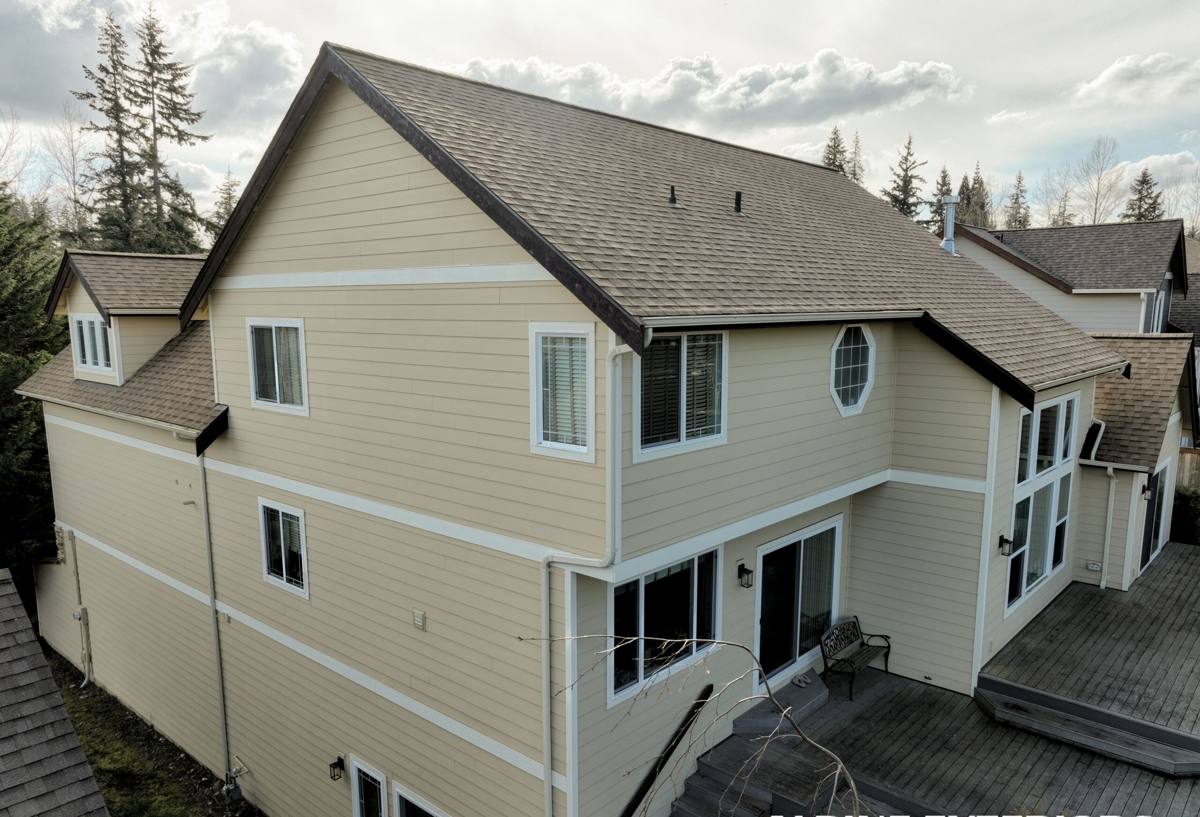
What Lynden Homes Actually Need From a Deck
Every deck we build or replace in this area has to answer to a few local conditions that don't show up the same way in drier climates:
- Moss and algae resistance: Shaded decks near trees or on the north side of a house stay damp longer, which is exactly what moss needs to take hold.
- Standing water tolerance: Whatcom County rain doesn't come in short bursts — it settles in for days. Boards and substructure need to shed water, not hold it.
- Temperature swings: Even without extreme cold, freeze-thaw cycles happen often enough in winter to stress fasteners and joints that weren't installed with proper gapping.
- Wind-driven rain: Open decks and ledger connections at the house need flashing details that keep water from working behind the band board.
None of this is exotic — it's the same maritime Pacific Northwest pattern homeowners from Bellingham to the Canadian border deal with. But it means a deck spec that works fine in a drier climate can fail here within a few seasons if it's not adjusted.
Why Moss Season Matters More Than People Expect
Moss doesn't just look bad — on a deck it holds moisture directly against the board surface and can make the walking surface genuinely slick, which matters on stairs and landings. Capped composite boards resist moss far better than wood or uncapped composite because there's no exposed wood fiber for spores to root into. But moss can still grow in the debris that collects in gaps between boards if those gaps aren't kept clear, so board spacing and airflow underneath the deck are part of the moss-prevention plan, not just the board material itself.
What a Correct Composite Deck Installation Involves
A composite deck is only as good as what's underneath it. We've seen decks with premium boards on top of substructure that was cutting corners — and those are the ones that come back with problems in a few years.
Substructure and Framing
Joists and beams need to be rated for the span and load, properly sized for the region's snow and wind load requirements, and protected from moisture where composite decking will sit directly on top. Joist tape or an equivalent moisture barrier on top of each joist is a small line item that prevents a much bigger repair down the road.
Ledger Attachment
Where the deck ties into the house, the ledger board connection is one of the most safety-critical parts of the whole structure, and it's also a common water-intrusion point. Correct flashing at this joint keeps rain from tracking behind the siding and into the wall assembly — a detail that matters even more on a house that's already dealing with regional wind-driven rain.
Spacing and Fastening
Composite manufacturers publish specific gapping requirements between boards and at butt joints to allow for thermal expansion and drainage. Skipping or guessing at these specs is one of the most common causes of buckling, squeaking, or uneven boards we get called to fix on decks other crews installed.
Hidden Fastener Systems
Most composite lines today use hidden clip systems rather than face screws. Installed correctly, these give a clean look and also reduce the number of penetration points where water could otherwise sit on a screw head.
Railing and Stair Details
Railings need to meet current code for height and baluster spacing, and stair stringers need proper support — not just for compliance, but because these are the components that take the most direct weather exposure and structural stress over the deck's life.
Comparing Decking Materials for a Lynden Climate
| Material | Moisture Behavior | Maintenance | Typical Lifespan Here |
|---|---|---|---|
| Pressure-treated wood | Absorbs water; needs sealing to resist rot and moss | Annual cleaning, periodic staining/sealing | 10-15 years before major repair or replacement |
| Cedar | Naturally moisture-resistant but still needs upkeep in this climate | Regular cleaning, staining every few years | 15-20 years with consistent maintenance |
| Uncapped composite | Can absorb moisture at cut edges and fade/stain over time | Periodic cleaning, less than wood | 15-20 years |
| Capped composite | Moisture and moss resistant surface; won't rot or splinter | Occasional washing | 25-30+ years, backed by manufacturer warranty |
We install capped composite as our standard recommendation for this area specifically because it removes the two biggest maintenance headaches local homeowners deal with — moss growth and moisture absorption at the board surface. That's a professional standard we hold to, not a claim that wood decks can't be built well; it's about matching the material to what this climate demands with the least ongoing work from the homeowner.
Our Process for a Lynden Deck Project
- On-site assessment: We look at drainage, sun/shade exposure, existing structure (if it's a replacement), and how the deck ties into the house.
- Material and layout selection: We walk through board color and profile options along with a substructure plan suited to the site.
- Permitting: Deck projects in Whatcom County typically require a permit depending on size and height — we handle that process as part of the job.
- Demo (if replacing an old deck): Removal and disposal of the old structure, with an inspection of ledger and framing condition once it's exposed.
- Framing and moisture protection: Joists, beams, footings, and ledger flashing built to code and protected against the wet season ahead.
- Decking installation: Boards installed to manufacturer spacing and fastening specs, with attention to drainage and airflow underneath.
- Railings, stairs, and finish details: Code-compliant railing systems and clean trim work.
- Final walkthrough: We go over the deck with the homeowner before calling the job done.
What to Check Before You Sign a Deck Contract
- Is the contractor licensed and insured to work in Washington State?
- Does the quote specify board brand, color, and fastening system — not just "composite decking"?
- Is joist protection (moisture barrier over the framing) included, or is it an upsell?
- Does the contract include permitting, or is that left to the homeowner?
- Is ledger flashing detail addressed for attached decks?
- What does the manufacturer's warranty actually cover, and does the installer's workmanship warranty match it?
Repair, Replacement, or New Build
Not every deck problem in Lynden means a full teardown. Sometimes it's a matter of replacing rotted joists while reusing sound footings, or swapping failing wood decking for composite on an otherwise solid frame. Other times — especially on older decks that were never properly flashed at the ledger — a full rebuild is the more honest answer, because patching around a structural or moisture problem just delays the same repair. We'll tell you plainly which situation you're in before quoting the job.
Why a Local Crew Matters for This Job
A deck built by a crew that doesn't regularly work in Whatcom County's climate can still look right on installation day and still run into trouble a year or two later — usually moisture-related, usually something a local crew would have caught. We work on homes throughout Bellingham and the surrounding communities, including Lynden, and that means we're accounting for this area's rain patterns, moss pressure, and permitting requirements as a matter of routine, not as something we're learning on your project.
We also stand behind the work after the trucks leave. If something about the installation isn't performing the way it should through a wet Whatcom County winter, that's on us to make right.
If you're planning a new deck or looking to replace one that's past its prime, we're glad to come take a look and give you a straightforward, no-pressure estimate — just fill out the form below.