 Bellingham Siding
 Lynden's Climate Is Harder on Siding Than It Looks
Lynden sits inland from Bellingham Bay in the Nooksack River valley, and that location shapes what siding has to deal with here. It's not the direct salt spray you get right on the water in Bellingham, but Whatcom County's marine-influenced weather still reaches Lynden in full force: long stretches of steady drizzle, heavy fog off the river bottomland, and short, mild summers that don't give wood or fiber cement much time to fully dry out between wet spells. Add in the shade from mature trees and farm windbreaks common on Lynden properties, and you get siding that stays damp longer than it would in a drier, more open location.
That combination — persistent moisture plus limited drying time — is exactly what drives moss, algae, and mildew growth on exterior walls. It's also what causes paint to fail early, wood to soften at the bottom courses, and poorly installed siding to trap water behind it where nobody can see the damage until it's expensive. Whatcom County's freeze-thaw cycles are mild compared to inland Washington, but even a handful of hard freezes a year can crack water-saturated material that wasn't given a chance to dry.
What This Means for Material Choice
Any siding installed in Lynden needs to handle repeated wetting and drying without swelling, rotting, or losing its finish. Fiber cement holds up to that cycle far better than wood or wood-composite products because it doesn't absorb water the way organic material does, and it doesn't feed the fungal growth that causes rot. That's the baseline reason fiber cement makes sense here before we even get into brand or product line.
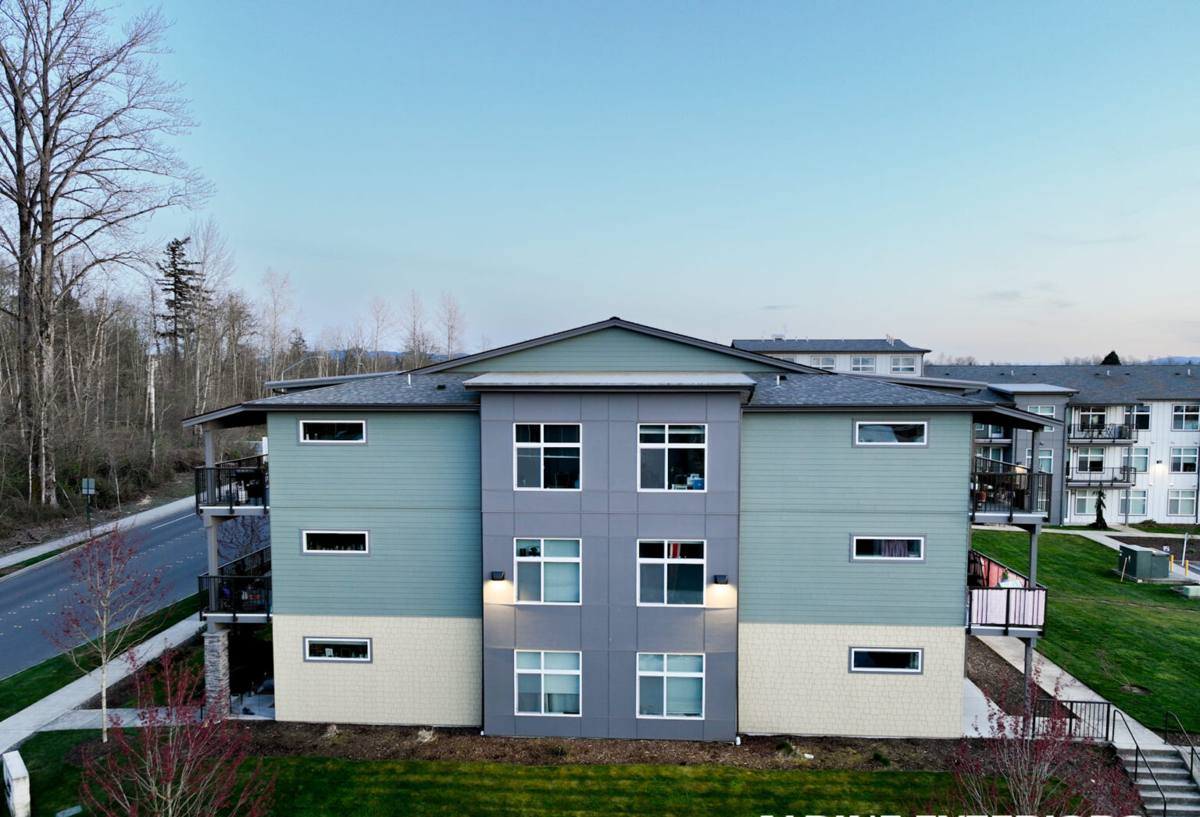
What a Correct Fiber Cement Job Requires Here
Fiber cement is only as good as its installation. In a climate like Lynden's, a handful of details separate a siding job that lasts decades from one that develops problems in five to seven years — often problems that are invisible from the curb until the sheathing underneath is already compromised.
- Proper clearance: siding needs a gap above grade, decks, patios, and roof lines so it isn't sitting in standing water or splash-back.
- Correct flashing: window heads, doors, and any horizontal trim need flashing detailed so water sheds outward, not behind the board.
- Weather-resistive barrier and rainscreen gap: a drainage plane behind the siding lets any moisture that does get in find its way back out instead of sitting against the wall sheathing.
- Fastener placement and spacing: manufacturer-specified nailing patterns keep boards from cupping or working loose as they expand and contract with moisture.
- Field-cut edges sealed and primed: any cut end exposed on site needs to be treated the same as a factory edge, or it becomes a moisture entry point.
- Caulking only where it belongs: modern fiber cement systems are designed to shed water through overlaps and flashing, not rely on caulk as the primary defense — over-caulking traps moisture just as often as it keeps it out.
None of this is exotic. It's just detail work that takes longer than a rushed install, and it's the difference between siding that shrugs off a Whatcom County winter and siding that starts showing streaking, soft spots, or panel movement within a few years.
Why We Only Install James Hardie
We install James Hardie fiber cement exclusively. We don't offer LP SmartSide, vinyl, Cemplank, Allura, primed spruce, or cedar as alternatives, and that's a deliberate professional standard, not a sales pitch. Fiber cement as a category performs well in wet Pacific Northwest climates, but not all fiber cement is engineered the same way, and the brand behind the product matters for long-term performance and warranty support.
James Hardie is non-combustible, which matters in Washington's current wildfire-exposure environment even outside dense forest zones. Its ColorPlus factory finish is baked on under controlled conditions rather than field-painted, which gives a more consistent, longer-lasting color than a job-site paint job exposed to Whatcom County's damp application windows. Hardie also engineers regional HZ5 product formulations specifically for climates like ours — freeze-thaw exposure combined with high moisture — rather than selling one national formulation everywhere. And the warranty is transferable, which matters to homeowners who may sell within the 30-year window.
We're not going to tell you every other fiber cement product on the market is bad. Some of them are reasonable products. But standardizing on one system we know inside and out — its trim details, its fastening requirements, its factory finish behavior over time — lets us install it correctly every time instead of switching specs from job to job. That consistency is worth more to a homeowner than having more options on the table.
Our Process for a Lynden Siding Job
- On-site walkthrough: we look at existing siding condition, moisture staining, trim, window flashing, and any soft sheathing before quoting anything.
- Tear-off and sheathing inspection: once old siding is off, we check the wall sheathing itself — this is where hidden rot from years of trapped moisture shows up, and it needs to be addressed before new siding goes on, not covered up.
- Weather barrier and drainage plane: a new water-resistive barrier and rainscreen system goes on to give the wall a way to dry.
- Flashing at every penetration: windows, doors, hose bibs, vents, and light fixtures all get properly flashed and integrated with the barrier.
- Hardie installation to spec: factory-primed, ColorPlus-finished boards or panels installed per James Hardie's fastening and clearance requirements.
- Trim, caulk, and touch-up: finish work done with attention to where sealant belongs and where it doesn't.
- Final walkthrough: we go over the job with the homeowner before calling it done.
We don't skip the sheathing inspection step to save time. On older Lynden homes especially, that's usually where the real story is — siding can look fine on the surface while the wall behind it has been absorbing moisture for years.
Fiber Cement Compared to Other Siding Options
| Material | Moisture Performance in Whatcom County | Typical Lifespan Here | Maintenance Burden |
|---|---|---|---|
| James Hardie Fiber Cement | Excellent — doesn't absorb water, resists rot | 30+ years | Low — occasional wash, no repainting for years with ColorPlus |
| Cedar / Wood Siding | Poor without diligent upkeep — absorbs moisture, feeds rot and moss | 15-25 years with heavy maintenance | High — regular sealing, painting, moss treatment |
| Vinyl Siding | Sheds water but traps moisture behind it if not detailed correctly; can warp with temperature swings | 20-30 years | Moderate — cleaning, occasional panel replacement |
| Primed Spruce/Composite | Variable — moisture-sensitive at cut edges and joints | 10-20 years | Moderate to high depending on product |
This isn't a claim that every alternative fails quickly — it's a reflection of what tends to hold up with the least ongoing homeowner effort in a climate that stays damp for most of the year.
What Affects Cost on a Lynden Job
| Factor | Why It Matters |
|---|---|
| Sheathing condition | Rot found during tear-off adds repair scope before new siding can go on |
| Home size and wall complexity | More corners, dormers, and trim details mean more labor and cut waste |
| Product line and profile | Lap siding, panel siding, and shingle-style Hardie products carry different material and labor costs |
| Existing siding removal | Multiple layers of old siding or extensive prep work adds time |
| Access and site conditions | Tree cover, fencing, and driveway access affect setup and staging time |
We give an honest, itemized estimate after seeing the property — broad ranges without a walkthrough don't mean much once tear-off reveals what's actually behind the old siding.
Maintenance in a Whatcom County Climate
Fiber cement lowers maintenance, it doesn't eliminate it. In Lynden's damp, shaded conditions, a few habits keep siding performing the way it should:
- Rinse siding annually to knock off moss spores and algae film before they take hold, especially on north-facing and shaded walls.
- Keep gutters clear so overflow doesn't run down the siding face or pool at the base of a wall.
- Trim back vegetation and tree limbs that keep siding shaded and slow to dry.
- Check caulking at trim joints every year or two and touch up if it's cracked or pulling away.
- Watch for staining or dark streaking, which usually signals a drainage or flashing issue worth a closer look rather than just a cleaning problem.
Why a Crew That Already Works Lynden Matters
Every Whatcom County property isn't the same. A Bellingham crew that regularly works out in Lynden already knows how differently these properties behave compared to homes right on the water — the shade patterns from windbreaks and mature trees, the way fog sits in the river valley longer than it does downtown, and how that affects drying time and moss growth on a wall. That local pattern recognition shows up in small decisions on site: where to add extra flashing attention, which walls need a closer look at the sheathing before covering it back up, and what maintenance schedule actually makes sense for the property's exposure.
It also means straightforward logistics — scheduling, material delivery, and follow-up don't involve a crew driving in from outside the county for a one-off job. If a question comes up two years after installation, it's the same local company answering it.
Signs It's Time to Look at Your Siding
- Persistent moss or algae growth that comes back quickly after cleaning
- Soft spots or visible warping, especially near the bottom of walls or below windows
- Paint that's peeling, bubbling, or fading unevenly
- Visible gaps, cracking, or boards pulling away from the wall
- Rising energy bills that might point to a compromised weather barrier
If you're seeing any of these on a Lynden-area home, it's worth getting a professional look before the underlying sheathing takes more damage.
If you're weighing a siding replacement or just want an honest read on what your home actually needs, we're happy to walk the property with you. Reach out for a free, no-pressure estimate — no obligation, just a straight answer about what's going on and what it would take to fix it right.